CRAFT, SIDE BY SIDE · 07 / 08
One Breath, Two Ways of Shaping
Hands and tools guide hot glass; a mould gives it a contour. Two demonstrations reveal the work that continues after the mould opens.
The film has English on-screen notes. A complete Traditional Chinese translation is available below.
English transcript and Traditional Chinese translation
0:00–0:05
Who gives hot glass its shape?
熱玻璃的形狀,由誰決定?
0:06–0:13
Free shaping • Taiwan
自由塑形:臺灣實例
0:14–0:23
Turn the pipe. Guide the glass.
旋轉吹管,引導玻璃。
0:25–0:29
Tools shape the hot surface.
以工具整理高溫中的表面。
0:30–0:40
The form keeps changing in the hands.
形體在雙手中持續改變。
0:41–0:46
Mould blowing • United States
入模吹製:美國實例
0:47–0:55
Place the hot glass inside the mould.
將熱玻璃放進模具。
0:57–1:02
Open it to reveal the moulded form.
開模,看見模具留下的形體。
1:03–1:08
The work continues outside the mould.
離開模具,工作仍繼續。
1:09–1:18
Even mould-blown glass still needs hands.
即使入模吹製,仍需要手工接續。
1:21–1:29
Two examples. Many decisions along the way.
兩個實例,一路都有選擇。
The glass is still hot and the pipe is already turning. In these images, shape is not settled by a single breath: tools continue to guide a surface, while another maker places glass in a mould and keeps working after opening it. This film moves from a vase example at Taiwan Glass Gallery to a bottle demonstration at Corning Museum of Glass in the United States. Together they invite a closer question: which decisions contribute to the outline of a glass object?
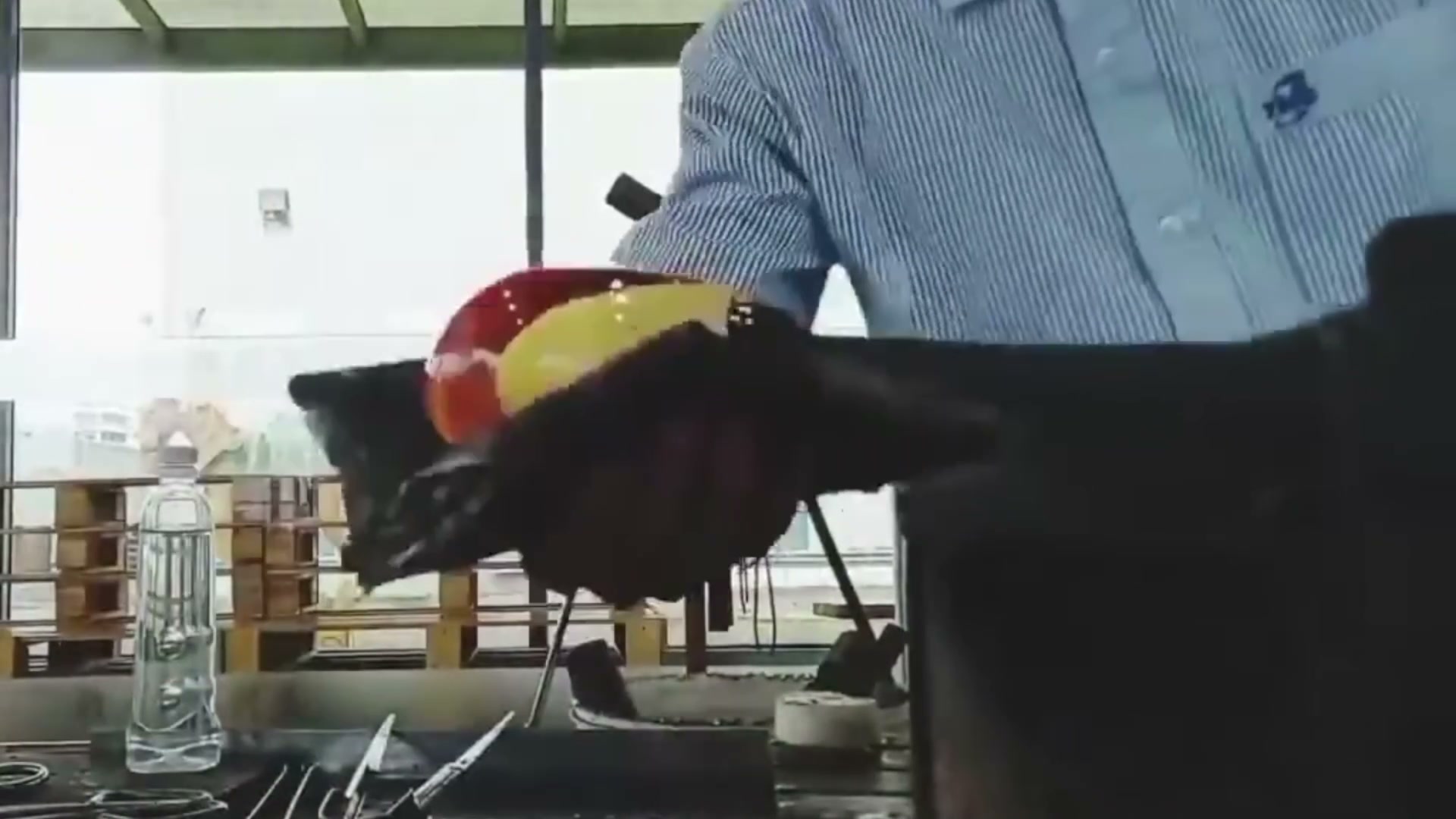
Watch the turning pipe as well as the breath
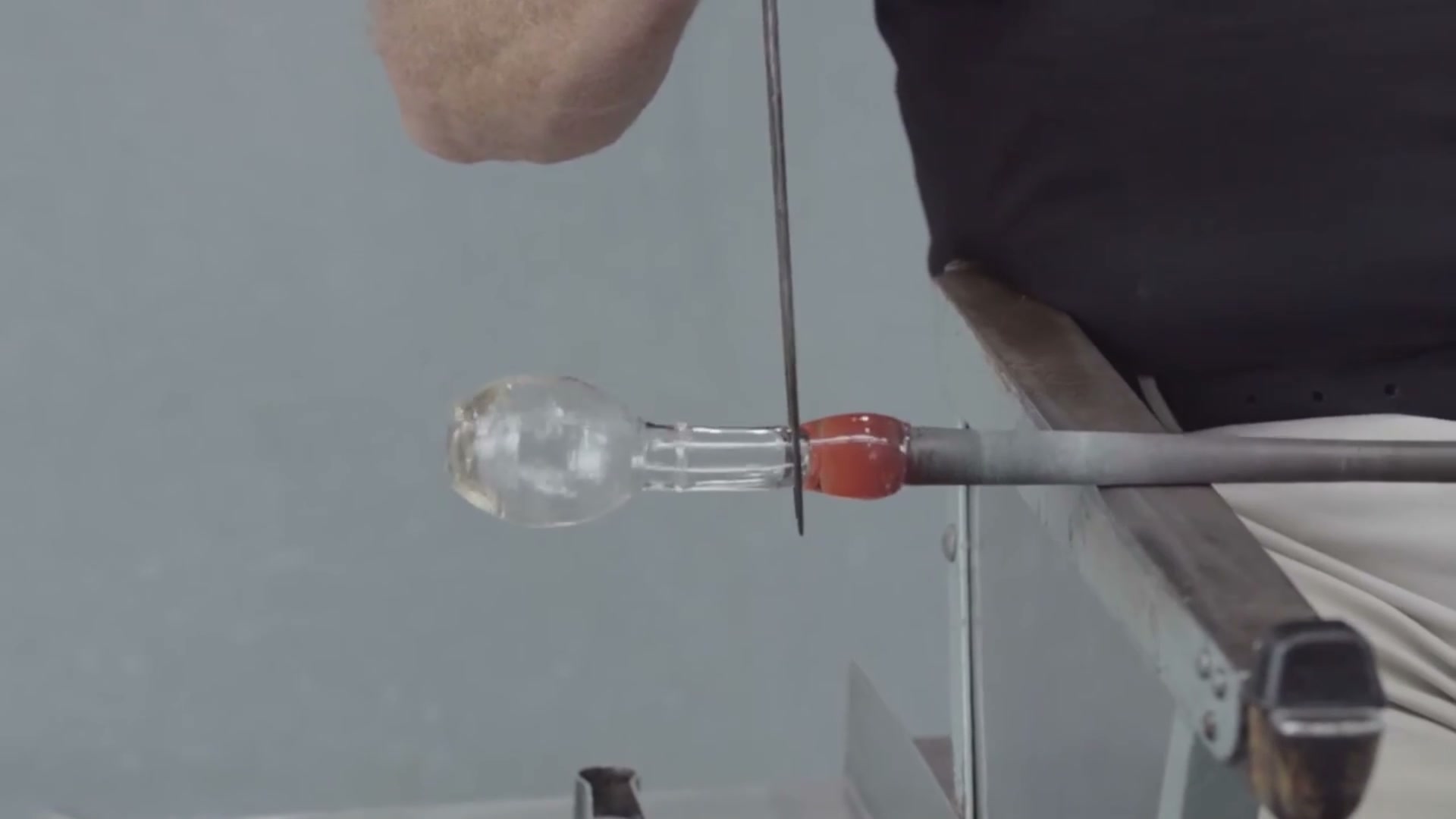
In the Taiwan example, pipe, glass and hands remain in motion together. The maker turns the pipe and adjusts where the work meets a tool. Wait only for a finished silhouette and this continuous labour is easy to miss.
Follow an identifiable patch of colour as it moves with the pipe, then notice when a tool approaches it. Turning becomes a clue to the treatment of the form rather than repetitive background movement. The footage offers that observation without establishing a measured rotation speed or temperature.
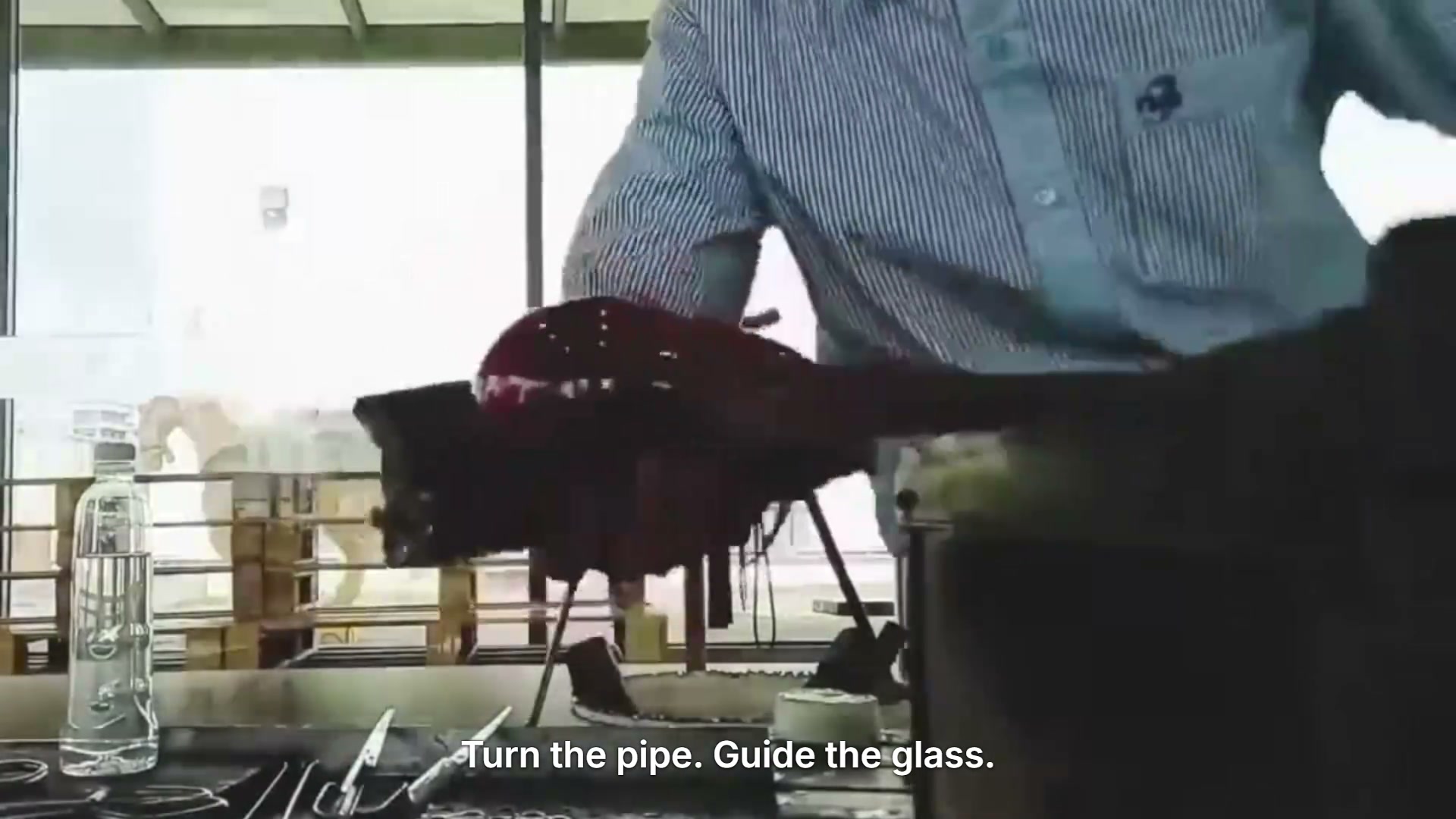
The surface continues to respond to tools
When a tool meets the glass, the hand has not left the forming process; it is acting through a different contact. The outline changes as work continues. “Free shaping” becomes something visible here: hand tools guide the form without the closed bottle mould seen in the later sequence.
Free shaping does not mean an absence of tools or sequence. Nor does this selected hot-work passage establish an annealed object ready for immediate use. Distinguishing a work in progress from a finished piece keeps the last shot from being mistaken for the end of every necessary stage.
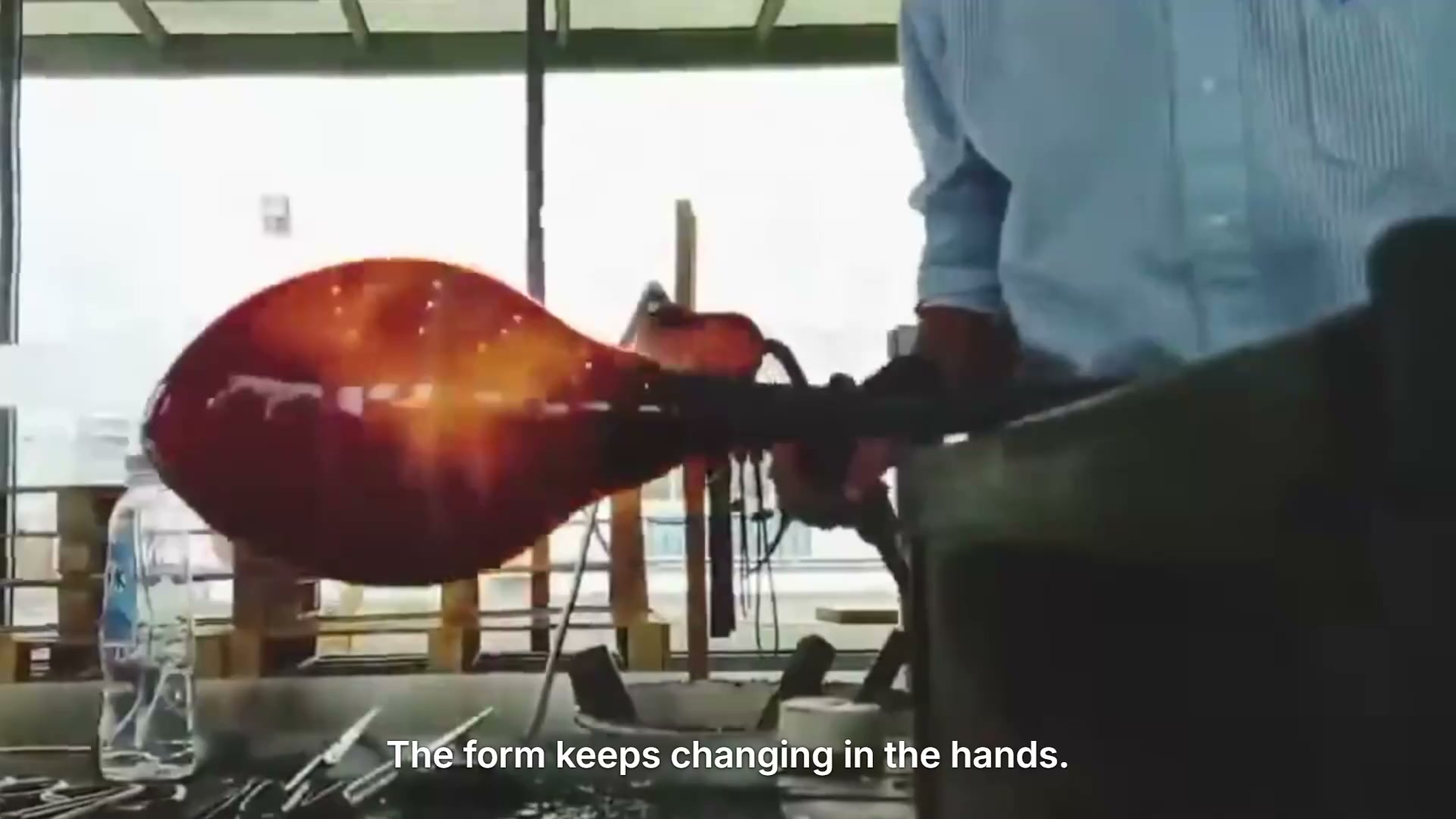
A mould gives part of the contour, with hands still present
In the Corning Museum of Glass demonstration, hot glass enters a mould. Its sides close and blowing continues. Watch where the glass goes in and comes out: an unseen interior contour becomes part of the bottle’s forming.
This is a contemporary museum demonstration in the United States, not footage from the Taiwan workshop and not a claim about where a historic collection object originated. The two examples do not match glass recipes, dimensions or working conditions. Their resulting contours therefore cannot establish which method is harder or more prestigious.
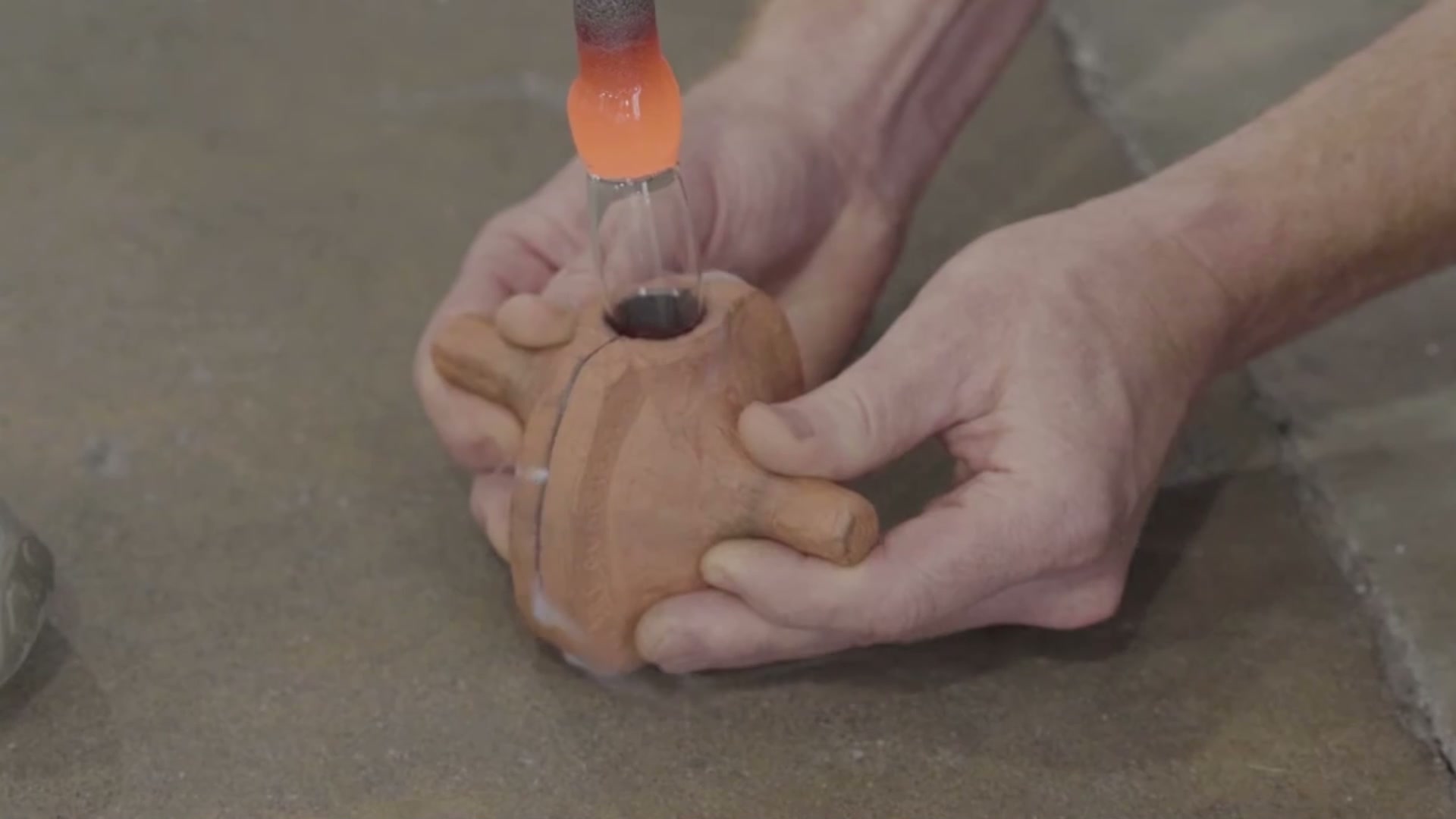
Opening the mould does not finish the bottle
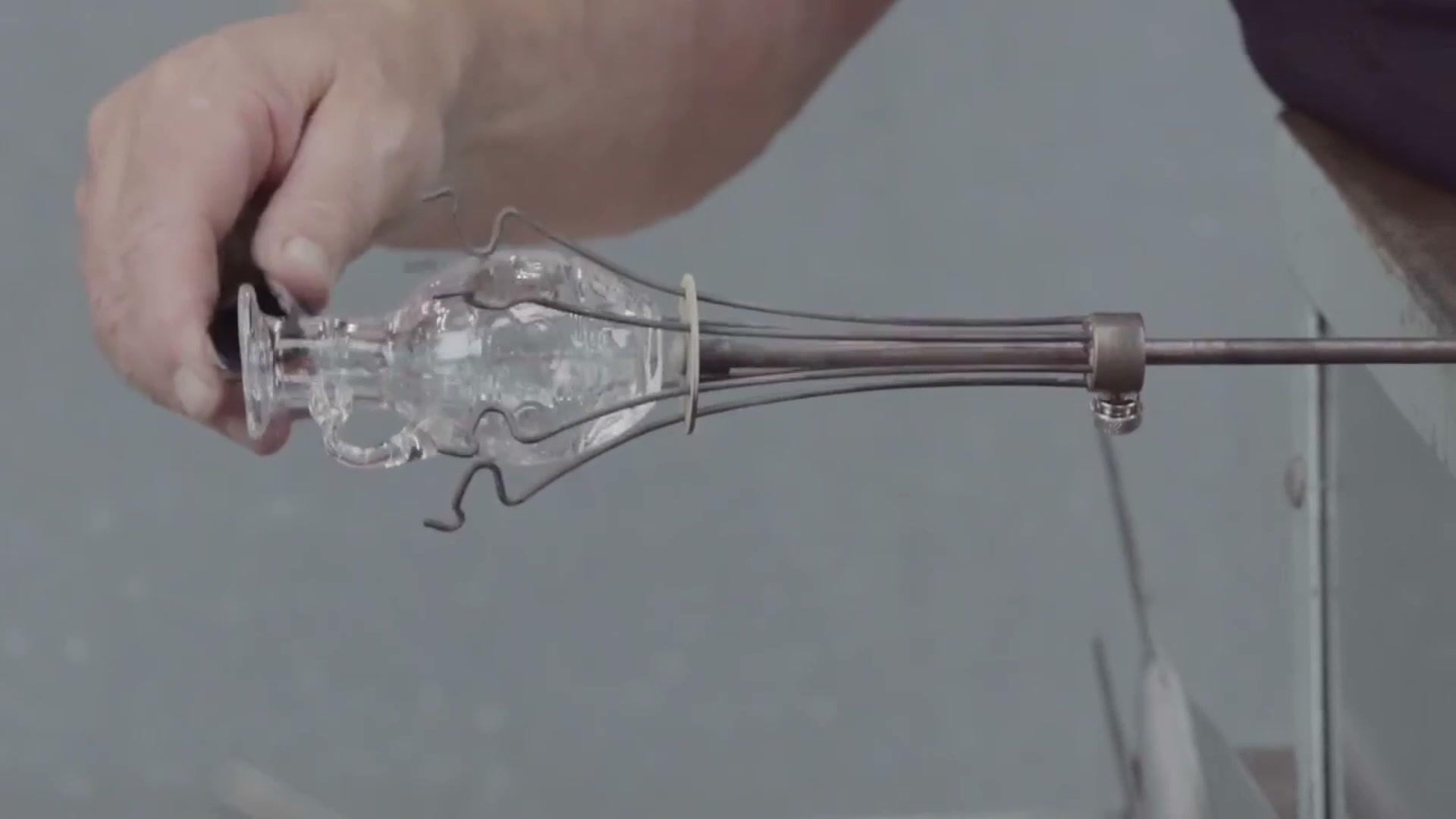
The mould opens and the bottle leaves its cavity, but the sequence does not stop. Tools return, and the maker continues shaping and adding detail. This passage challenges the assumption that a mould removes the need for handwork.
Different tools can contribute to an outline and its later treatment, and one object can combine several operations. The useful task is to identify what each tool does and which decisions remain with the maker. Hands and mould need not be arranged as opposites for that work to become visible.
A workshop visit reveals the waiting beyond one breath
In Taiwan, the official Lukang workshop page lists colour selection, demonstration, guided blowing, shaping and annealing. Spring Pool Glass Studio’s DIY page in Hsinchu lists a hand-blown glass cup. Both bring visitors close to hot material, but the checked information does not promise the mould-blowing activity seen in the film.
Finishing your turn at the pipe also does not mean taking the object away immediately. Both providers describe subsequent cooling. Notice when the teacher takes over and which actions you perform, then allow the piece to be completed. The experience becomes easier to understand when it includes that work and waiting beyond a few seconds of breath.
Research and image sources
Article photographs are frames from the corresponding film, kept in their original proportions. Demonstration publishers and related Taiwan venues are listed below.