CRAFT, SIDE BY SIDE · 08 / 08
Where Does Lacquer’s Glow Begin?
Watch brushes, powder and grinding tools meet a lacquer surface. Decoration and polishing can contribute to the same work.
The film has English on-screen notes. A complete Traditional Chinese translation is available below.
English transcript and Traditional Chinese translation
0:00–0:04
Look beyond the shine.
看進光澤之下。
0:04–0:12
Lacquer brushwork • Japan
漆面刷塗:日本實例
0:14–0:24
A brush works along the edges.
用刷具整理器物邊緣。
0:26–0:32
Sprinkle powder onto the design.
向圖案撒下裝飾粉末。
0:34–0:41
Decoration builds on the surface.
裝飾在表面逐步累積。
0:43–0:50
Another workshop: Wakasa lacquer, Japan.
另一間工坊:日本若狹塗。
0:50–0:56
Arrange the decorative details.
配置裝飾細節。
0:57–1:05
Work the surface with a grinding tool.
以磨具處理漆面。
1:07–1:13
Decoration and polishing can work together.
加飾與推光,也能相互配合。
The glow of a lacquer box can stop us without revealing how much work lies behind it. This film moves closer to a brush and an edge, watches decorative powder fall, then enters another workshop for arrangement, grinding and polishing. These Japanese examples do not rank methods. They turn the impression of shine back into observable actions. Take that way of looking into a Taiwan lacquer venue, and even a small everyday object can open a longer story of making.
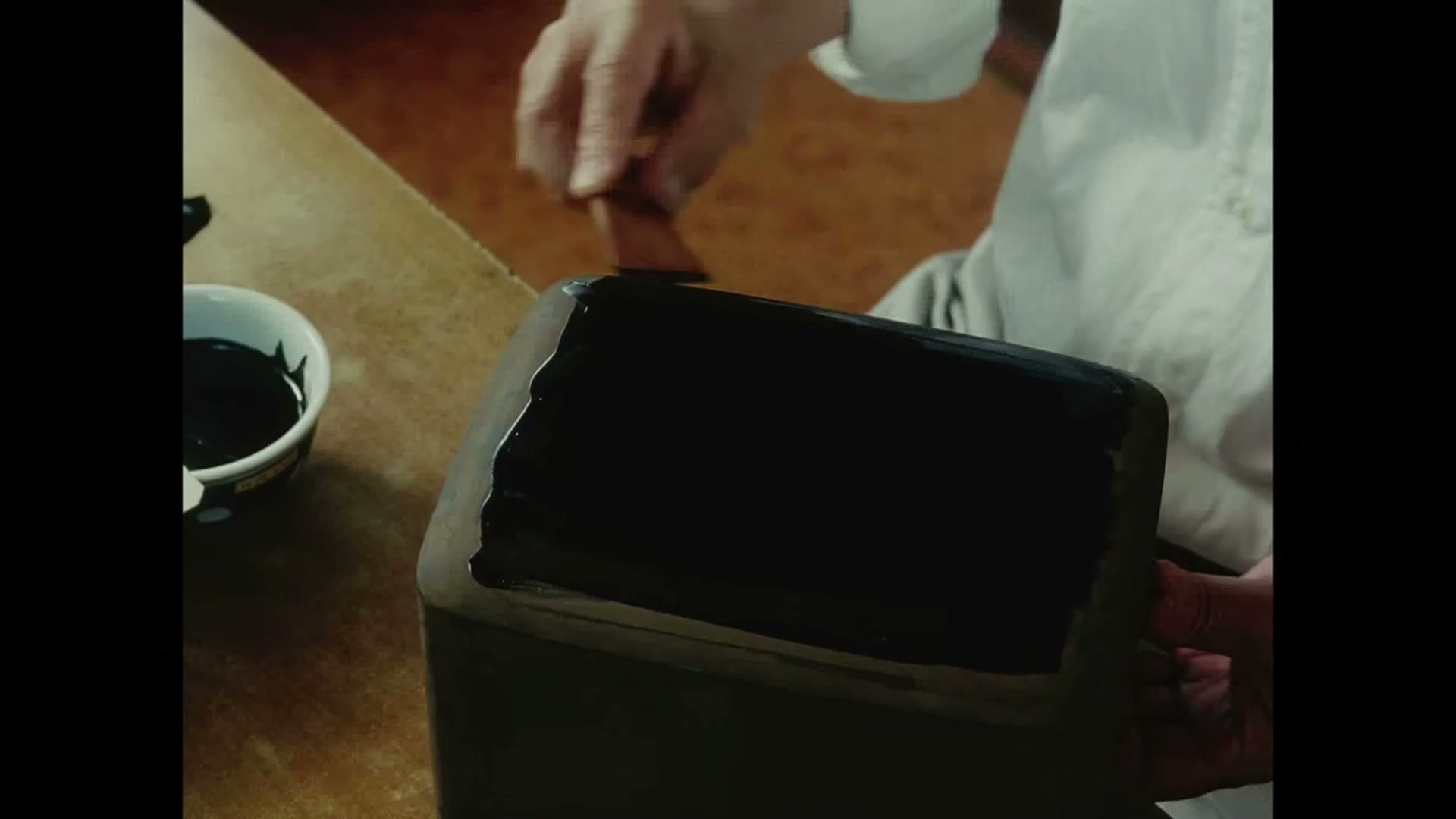
Begin at the edge, where the brush comes close
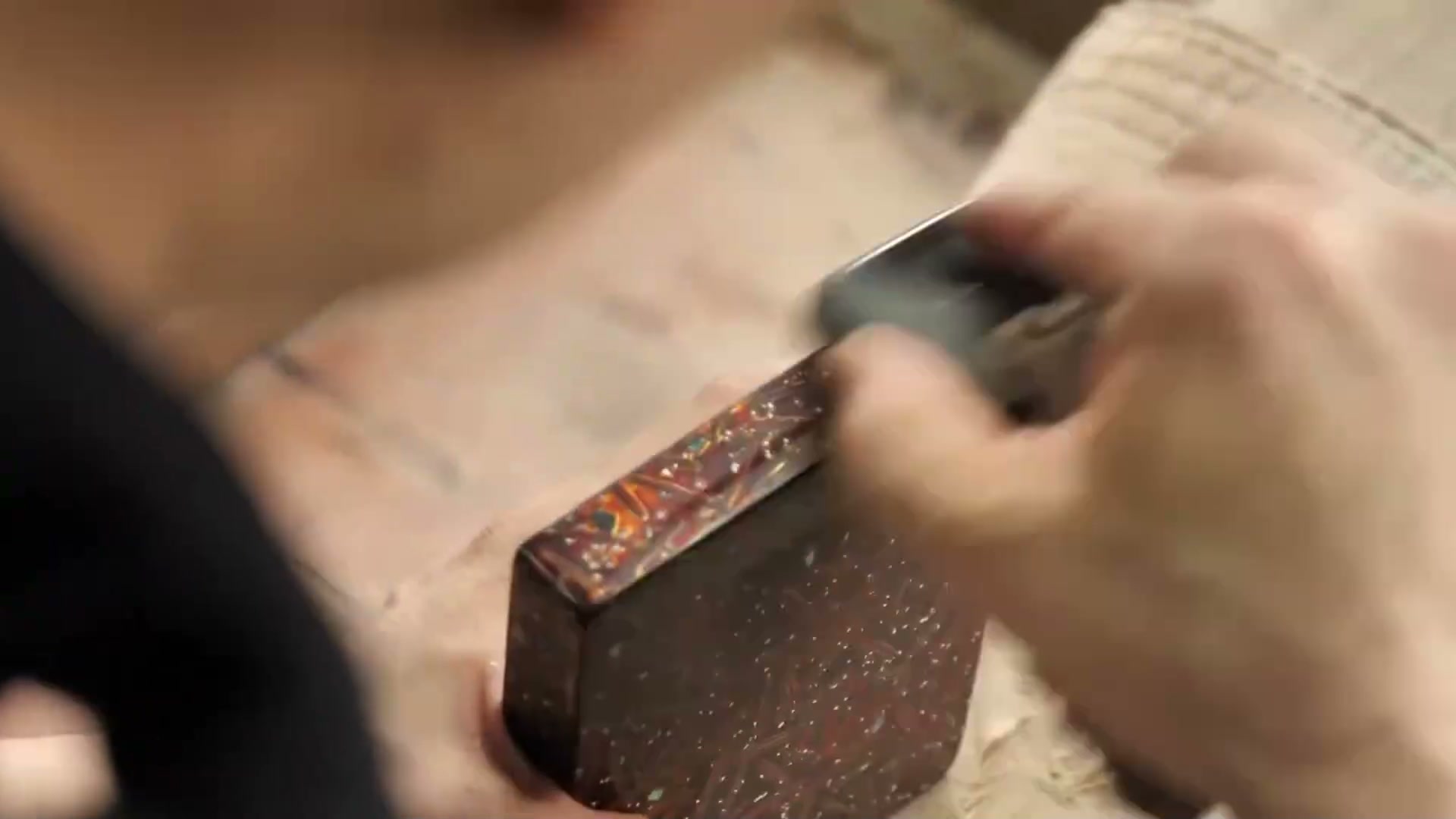
Japan’s Agency for Cultural Affairs film documents Nakano Koichi in the context of nikuai togidashi maki-e. The brushwork selected for this short makes contact with the object’s edges visible. The hand travels only a short distance, yet each contact happens at a particular surface.
There is no need to name every brush movement as the same decorative method. The complete technique described by the source extends beyond the stages included in the short. Begin with the brushwork that can actually be seen and keep the later layers in mind.
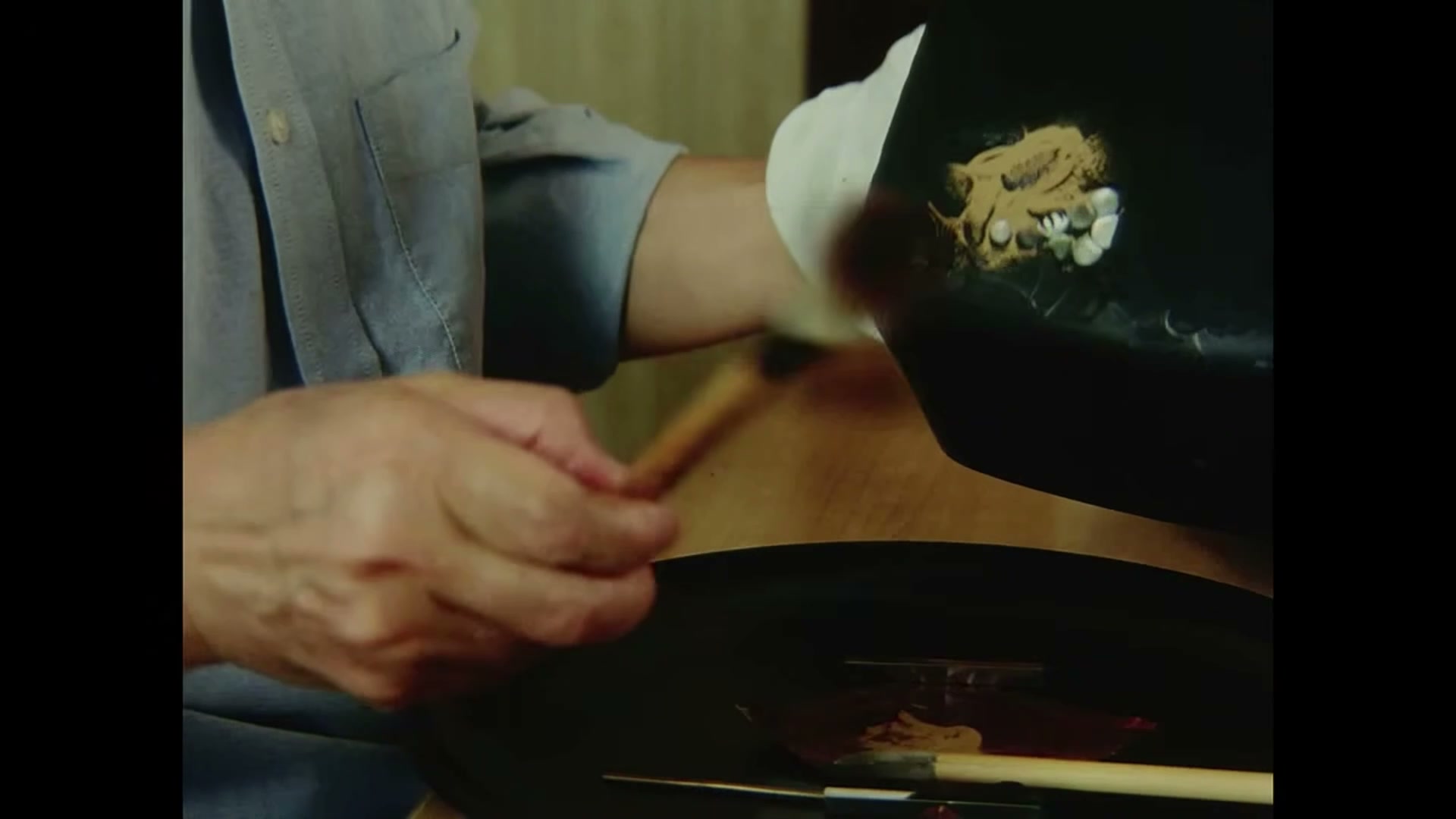
Powder falls as a design is built
The maker then sprinkles decorative powder onto the design. This is material meeting a surface, not a luminous effect placed over a finished box. Position and gesture are visible, but the selected shots do not establish every powder composition or mixture.
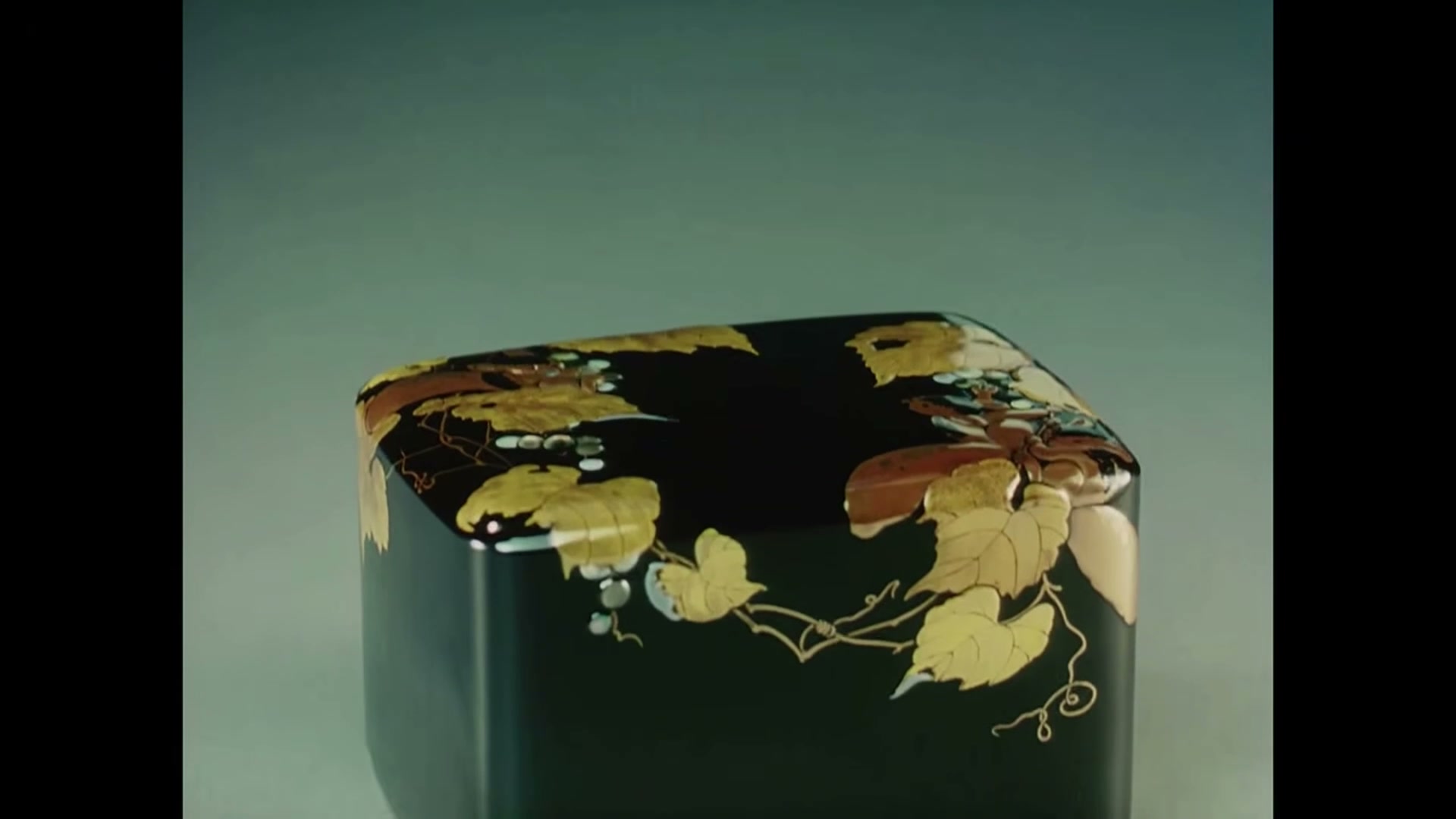
The finished design can be viewed alongside these close actions. A few seconds of sprinkling, however, do not explain every layer of the work. In particular, this example should not be renamed flat maki-e and set against grinding as though the two could never belong to the same process.
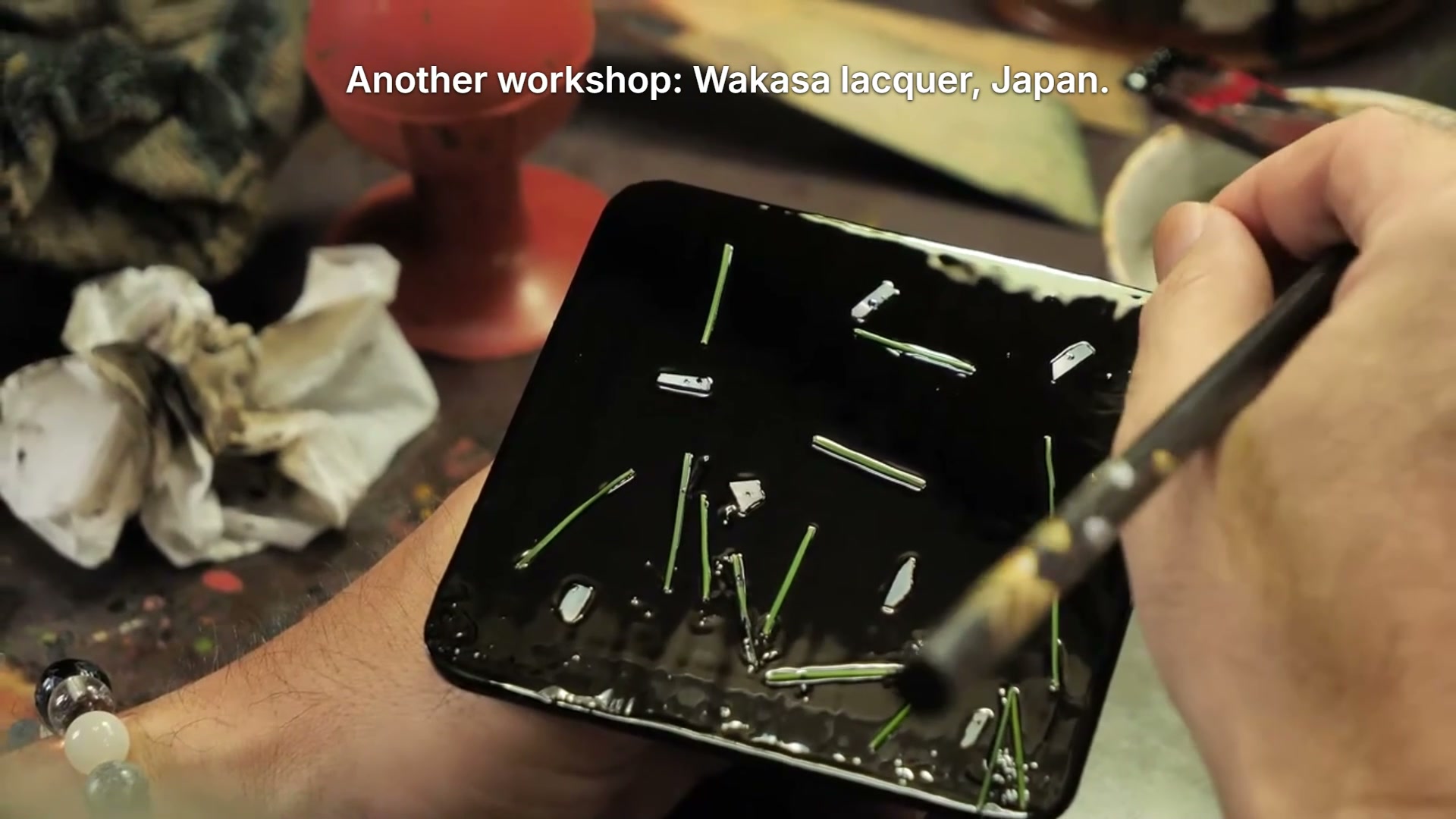
Another workshop begins with an arrangement
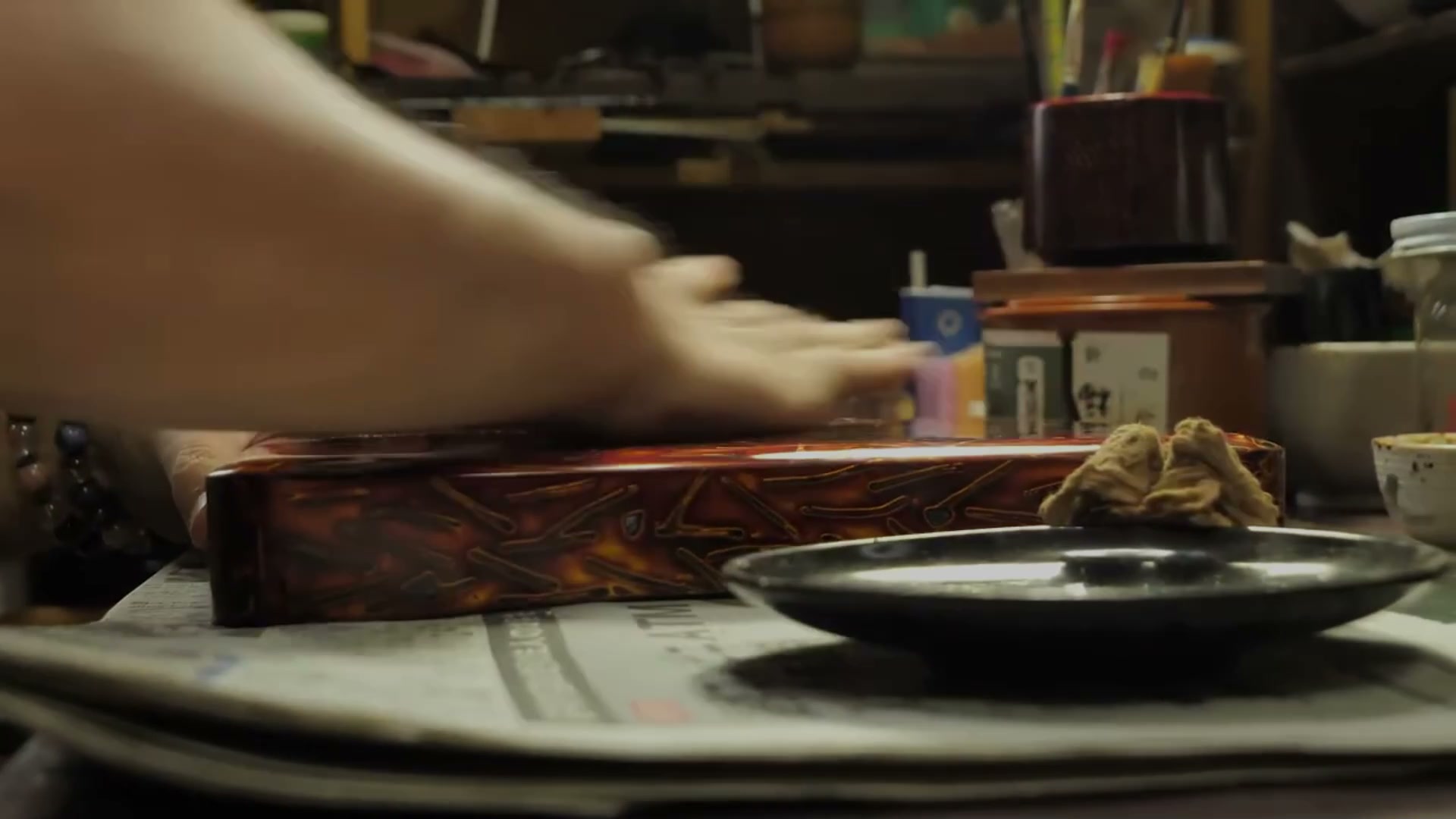
Wakasa Kobo’s source introduces both Wakasa lacquer and Wakasa agate; only the lacquer passages are used here. In the arrangement sequence, slender pieces and fragments are placed on a dark surface. Their directions, spacing and overlaps show that surface variation is being prepared well before a final reveal.
This article does not identify those materials from appearance alone. Nor does it join a separate pair of chopsticks or an agate process into one vessel’s history. The shots offer workshop observations, rather than proof that one object has been followed from beginning to end.
Grinding and polishing bring another kind of contact
A grinding tool meets a lacquer surface, followed by hand polishing. Beside brushing and sprinkling, these actions make another kind of surface work visible: material is not only added; the surface is also worked to bring about its appearance and feel. No gloss measurement is supplied, so a reflection in one frame cannot become a performance result.
Decoration, grinding and polishing can belong to one production process. They need not replace one another. These two Japanese examples widen the field of observation; their different objects cannot fairly be used to declare a winning method.
Continue with a lacquer encounter in Taiwan
In Taiwan, Fengyuan Museum of Lacquer Art officially lists introductory activities including leaf maki-e on a lacquer plate and decorated chopsticks. Kousan Craft’s chopstick experience uses pieces prepared beforehand with multiple lacquer layers, allowing participants to work on grinding and polishing. A single class should not be described as completing all coating, drying and layering on site.
Confirm current availability and content before visiting. Ask what preparation the blank has received, where your work begins and how a surface change becomes visible. Placing a short encounter within that longer period of labour gives lacquer’s glow a more concrete origin than the word beautiful.
Research and image sources
Article photographs are frames from the corresponding film, kept in their original proportions. Demonstration publishers and related Taiwan venues are listed below.