CRAFT, SIDE BY SIDE · 04 / 08
Where Bamboo Strips Meet
Watch the strips, then the spaces. Two examples of square and hexagonal openwork lead towards hands-on bamboo activities in Taiwan.
The film has English on-screen notes. A complete Traditional Chinese translation is available below.
English transcript and Traditional Chinese translation
0:00–0:05
What changes when the strips cross?
篾條交錯,改變了什麼?
0:05–0:13
Square openwork • Japan
四角孔編:日本實例
0:15–0:23
Build a grid, one crossing at a time.
一次一次交錯,建立編面。
0:26–0:33
Guide each strip over and under.
引導篾條,一上一下穿編。
0:35–0:43
Square openings emerge.
方形孔隙逐漸出現。
0:45–0:53
Hexagonal openwork • Taiwanese demonstration
六角孔編:臺灣工藝示範
0:55–1:05
Now the strips meet in three directions.
這次,篾條從三個方向交會。
1:08–1:18
Keep watching the spaces between them.
繼續看篾條之間留下的空隙。
1:22–1:29
Different crossings. Different openings.
不同的交錯,留下不同孔隙。
A bamboo pattern exists not only in the strips but also in the spaces between them. Where Bamboo Strips Meet begins with square openwork from Japan’s UKI bamboo workshop, then turns to a hexagonal-weave demonstration by Taiwanese craftsperson Chiu Chin-tuan. This is not a competition between makers from two places. It asks us to look twice with one question: how does changing the direction of a strip change the opening?
Follow a single strip
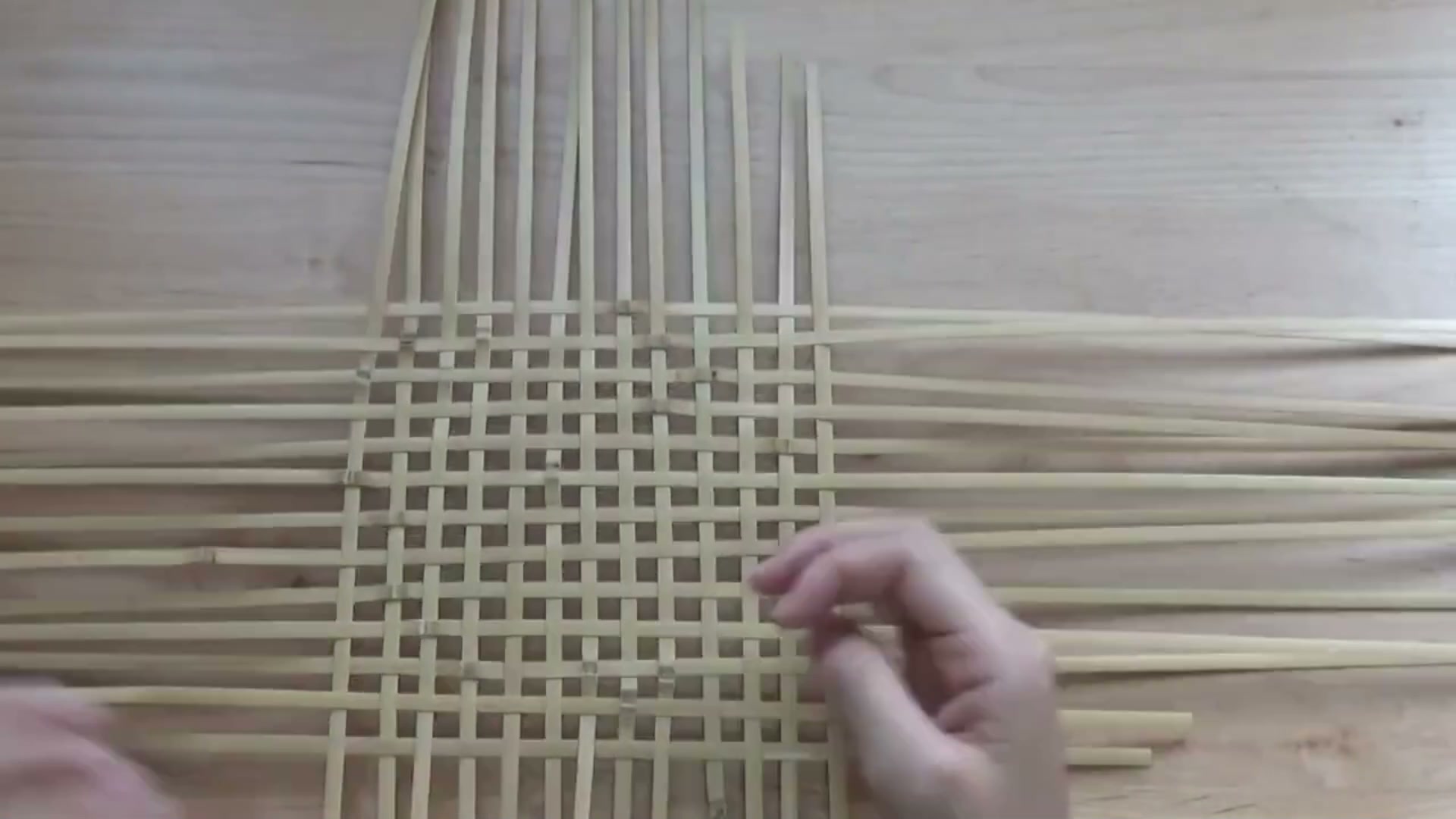
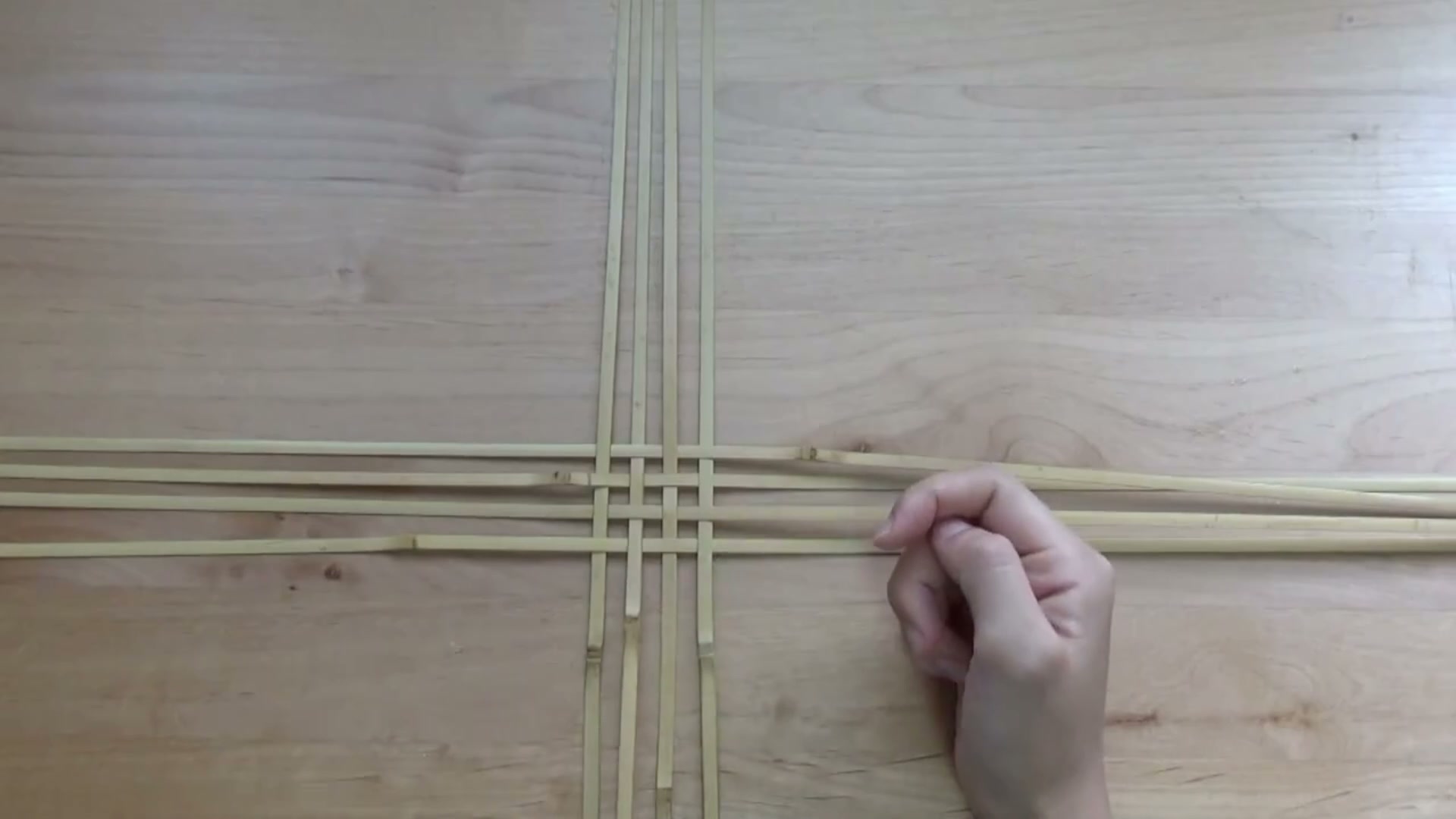
In the square-openwork example, strips cross in two main directions. A new strip is not simply laid across the top: it passes between existing material to establish an over-and-under relationship. Looking at the whole surface can leave only an impression of a grid. Follow one strip with your eyes to see the placement required at every crossing.
The original demonstration comes from Japan’s UKI bamboo workshop. The article and photographs retain that overseas context rather than replacing it with a Taiwan workshop story. The original teaching continues to a later rim-finishing stage. The flat grid selected for this film explains the initial weave and crossings; it does not show a basket’s complete journey from preparation to finishing.
A third direction changes the space
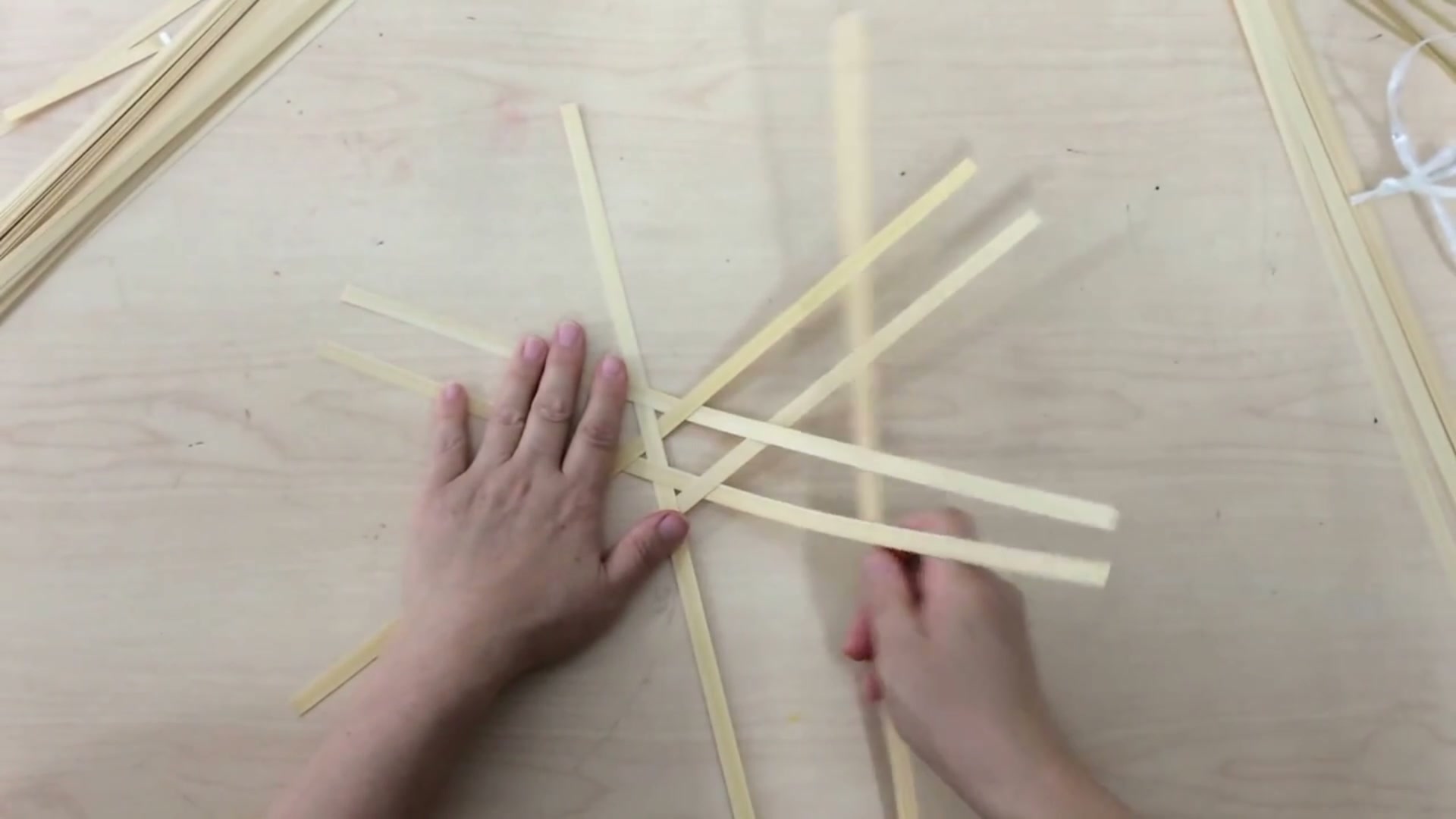
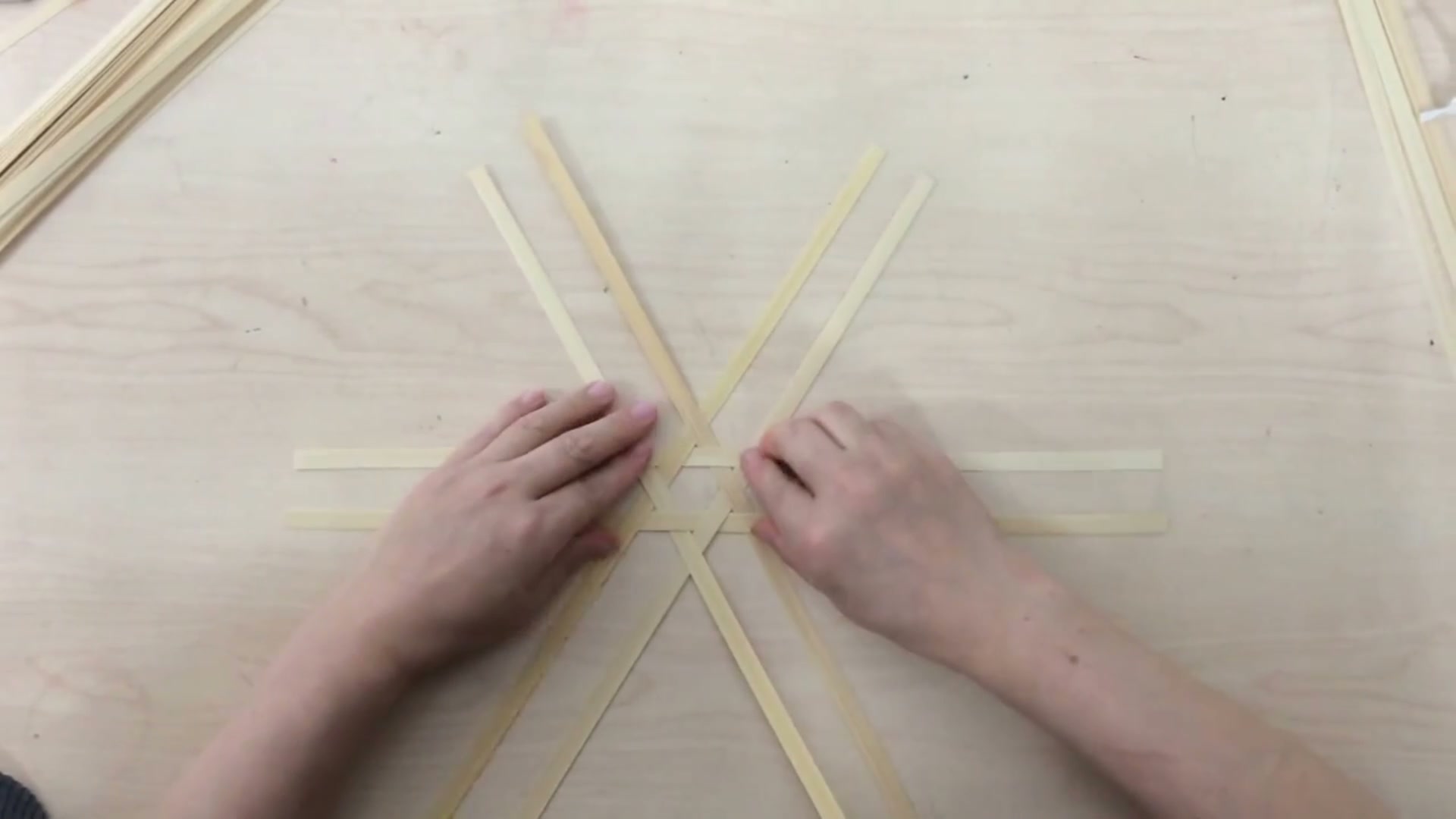
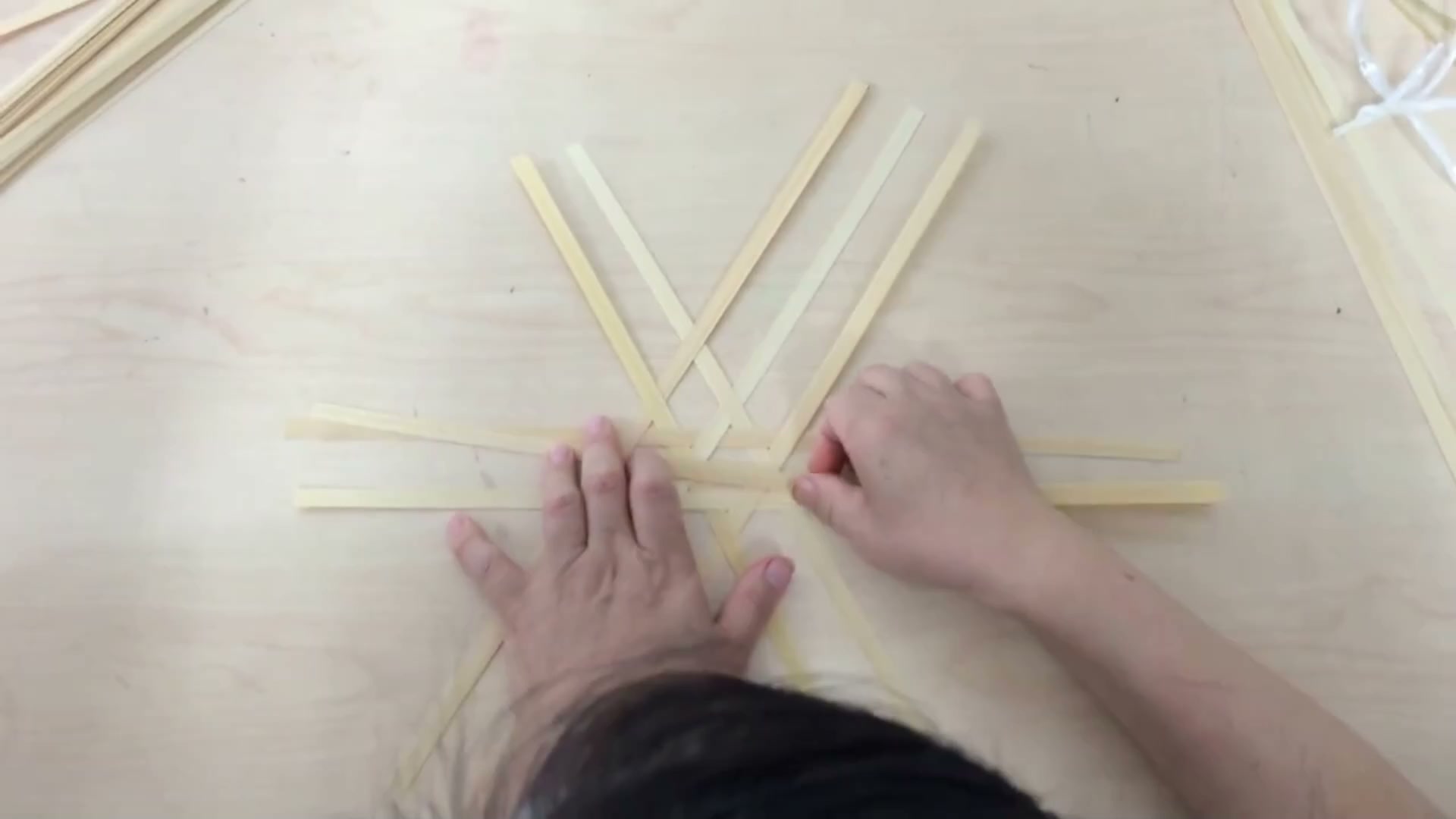
The hexagonal example brings strips together from three directions. During Chiu Chin-tuan’s demonstration, one hand holds existing crossings while the other adjusts a new strip. If you follow only the moving hand, you may miss the opening at the centre. Return your gaze to the spaces between the strips and the relationship forming a hexagonal hole becomes clearer.
This recording was published by Y. Y. Cheng and identifies Chiu Chin-tuan as the demonstrator; publisher and craftsperson are distinct roles. Official cultural records document her making and teaching in Taiwan. That evidence connects the example with Taiwanese bamboo craft, without inventing a filming address, student background or teaching lineage between her and the Japanese workshop.
Look at the crossings as well as the holes
The most obvious difference between the two surfaces is the shape of their holes. Look a step earlier and that difference begins with direction and crossing. Where the fingers hold a strip, and where the next strip enters, affect the structure before us. The opening is not merely material missing from a surface; it is a shape produced by weaving.
The film does not give both makers identical bamboo species, strip widths, dimensions or uses, and contains no load or time measurements. A larger opening does not establish that one weave is lighter or less secure. What travels beyond the screen is a way to identify the work: find the directions, locate the crossings, then watch space emerge with the next strip, rather than ranking techniques from a few seconds of footage.
In Taiwan, confirm the material and project
At Cangzhi Studio in the Taiwan Craft Culture Park, Caotun, the official programme introduces interlacing bamboo strips through projects including a frog, a flower-shaped bowl and a small fan. It lets a viewer carry the film’s observations into their hands, but a woven frog is not a hexagonal-openwork basket. Describe the technique you hope to understand and let the studio confirm a suitable project and level.
Liudui Hakka Cultural Park’s Earth’s Umbrella programme combines exploring the park with DIY. Its official material choices include a bamboo placemat, subject to the kits available. Confirm that option if bamboo is the purpose of your visit. Rush and shell-ginger weaving have their own stories, but their classes should not be presented as the same bamboo techniques shown in this film.
Research and image sources
Article photographs are frames from the corresponding film, kept in their original proportions. Demonstration publishers and related Taiwan venues are listed below.