CRAFT, SIDE BY SIDE · 03 / 08
How Clay Becomes a Vessel
One example thins clay between the fingers; another shapes it on a turning wheel. Watch the movements before exploring pottery classes in Taiwan.
The film has English on-screen notes. A complete Traditional Chinese translation is available below.
English transcript and Traditional Chinese translation
0:00–0:05
How does clay become a vessel?
泥土如何成為容器?
0:05–0:13
Pinching • Germany-based example
手捏:德國教學實例
0:14–0:24
Pinch from inside and outside.
從內外兩側捏塑器壁。
0:25–0:33
Thin the walls, pinch by pinch.
一捏一捏,慢慢修薄器壁。
0:35–0:42
Turn the clay in your hands.
讓泥土在手裡轉動。
0:44–0:49
The fingers shape the rim.
用手指整理口緣。
0:50–0:59
Wheel throwing • London-based example
拉坯:倫敦陶藝師的實例
1:00–1:10
The wheel turns. The hands guide.
輪盤旋轉,雙手引導。
1:14–1:22
Shape the wall and the rim.
整理器壁與口緣。
1:24–1:29
What would your hands choose?
你的雙手會選擇哪一種?
A vessel can take shape in more than one way. How Clay Becomes a Vessel moves from a pinched cup to a bowl on a wheel, making different relationships between fingers, clay and rotation visible. The educators are based in Germany and London; these are not recordings of Taiwan workshops. Their examples offer a way of looking that can travel with us into a pottery classroom in Taiwan.
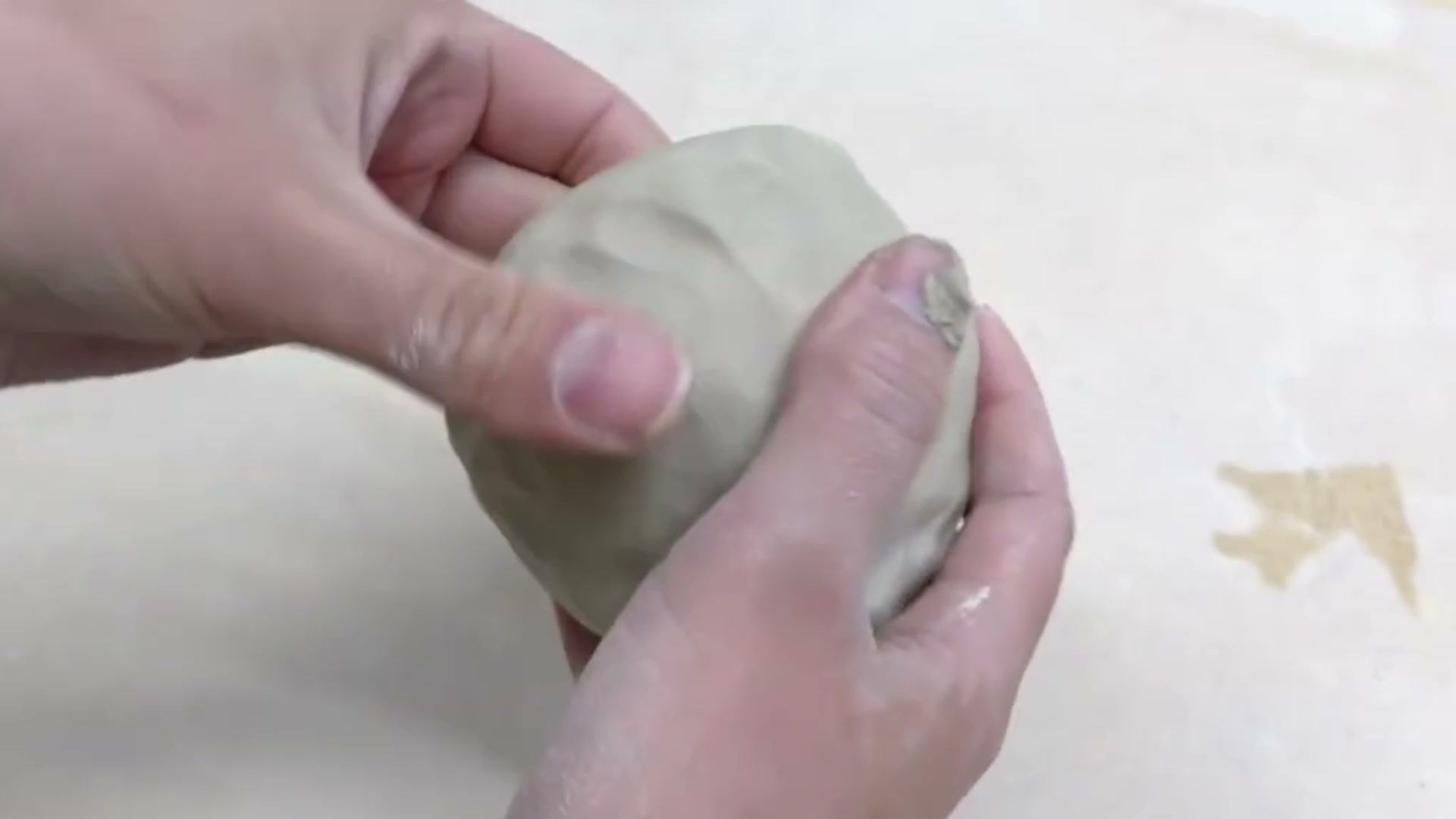
Making space inside a lump of clay
In the pinching sequence, a thumb enters the lump while the other fingers support the outside. Work on both sides creates an interior that can eventually hold something. Rather than watching only for a finished rim, notice the points of contact. Support on one side and pressure on the other gradually establish the wall of a container.
This example comes from Mia Mueller of Pottery to the People. Her official biography describes living and teaching in Germany; the film uses her pinch-cup tutorial, not evidence of a Taiwan classroom. It makes handbuilding legible without turning its clay quantity, shape or number of movements into a standard for every workshop in Taiwan.
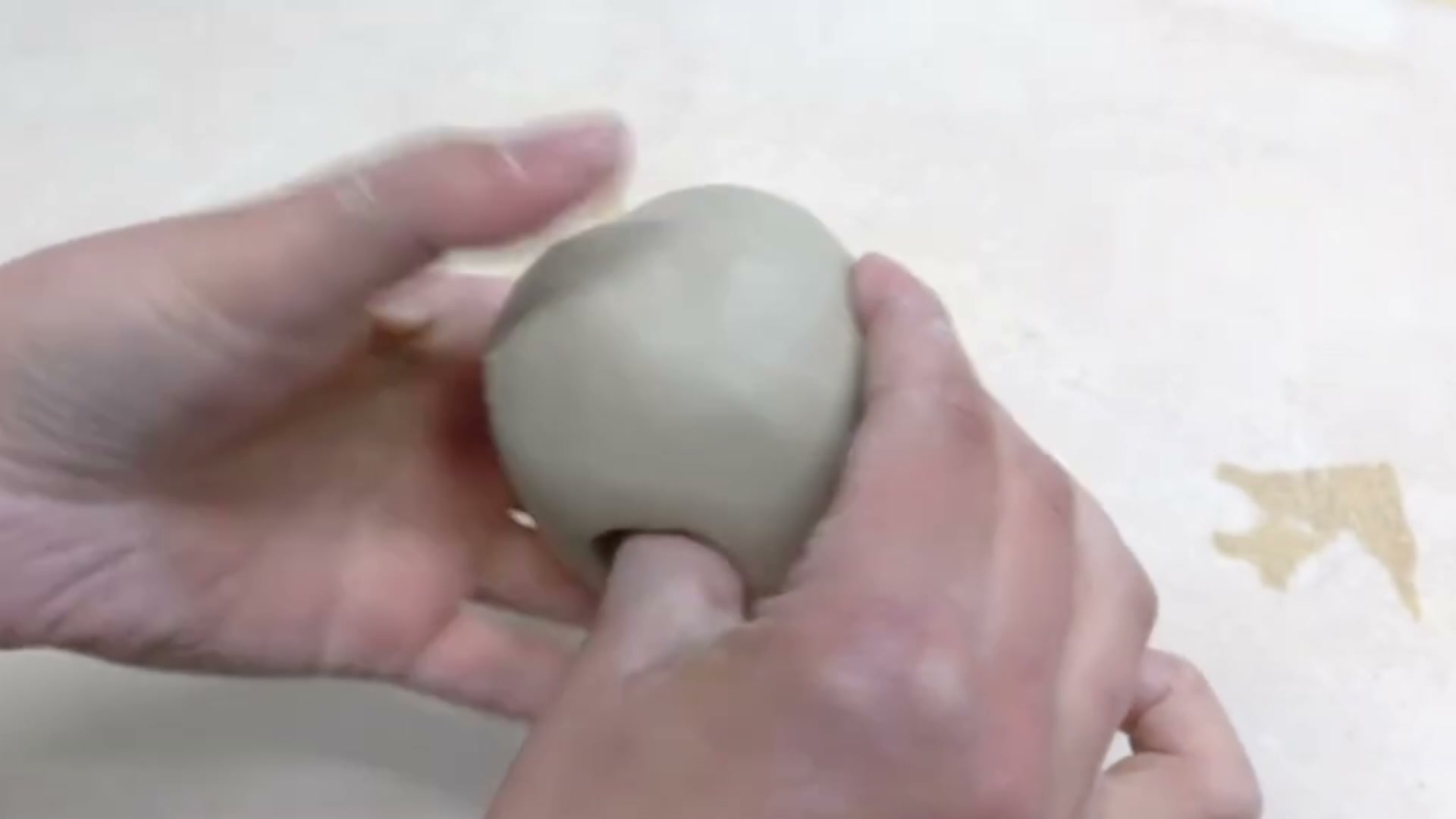
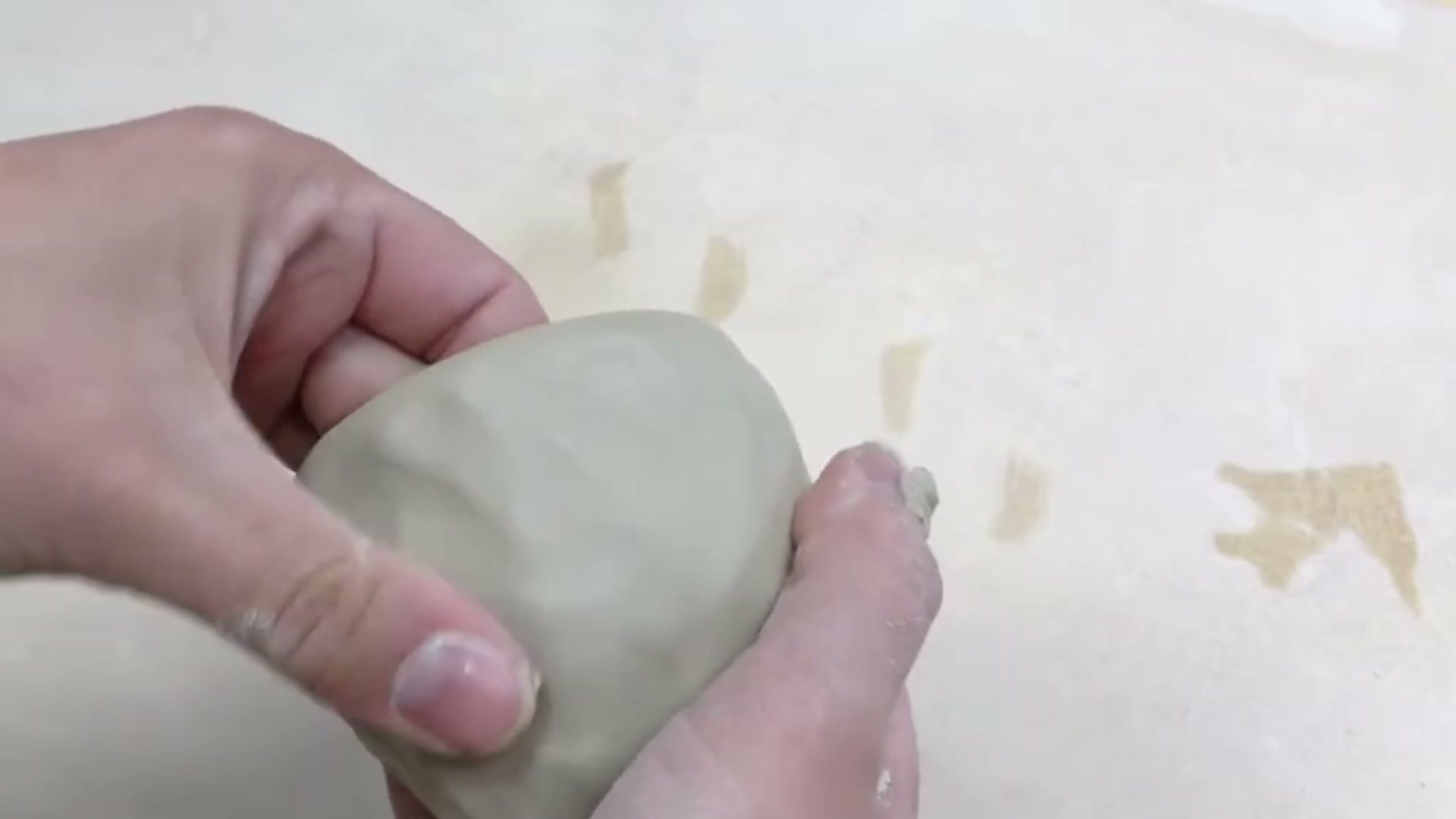
Turn the clay, then pinch again
The wall is not formed by force from one direction alone. The clay turns between the hands, allowing the fingers to work on different areas until a hollow form and a rim emerge. Those changing points of contact are worth watching. They make “handmade” visible as a series of adjustments, rather than merely a description of a finished surface.
The opening briefly shows a cup body with a handle before the film returns to an earlier forming stage. This is an edit from a later result back to the process, not a handle appearing without work. The film does not show that cup’s complete firing process either. A wet form that stands on its own is not yet the same as a vessel ready for drinking.
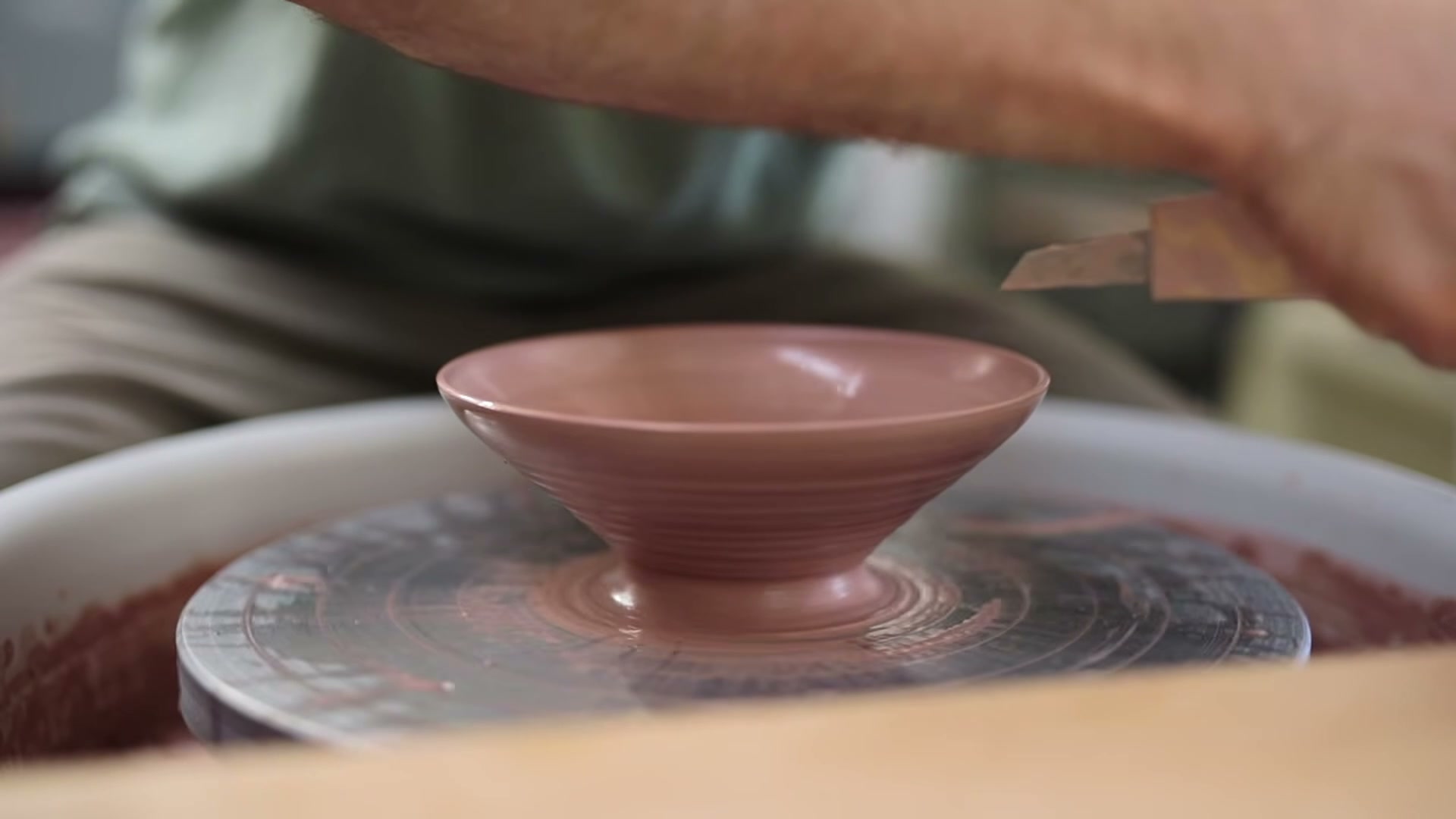
The wheel turns; the hands still decide
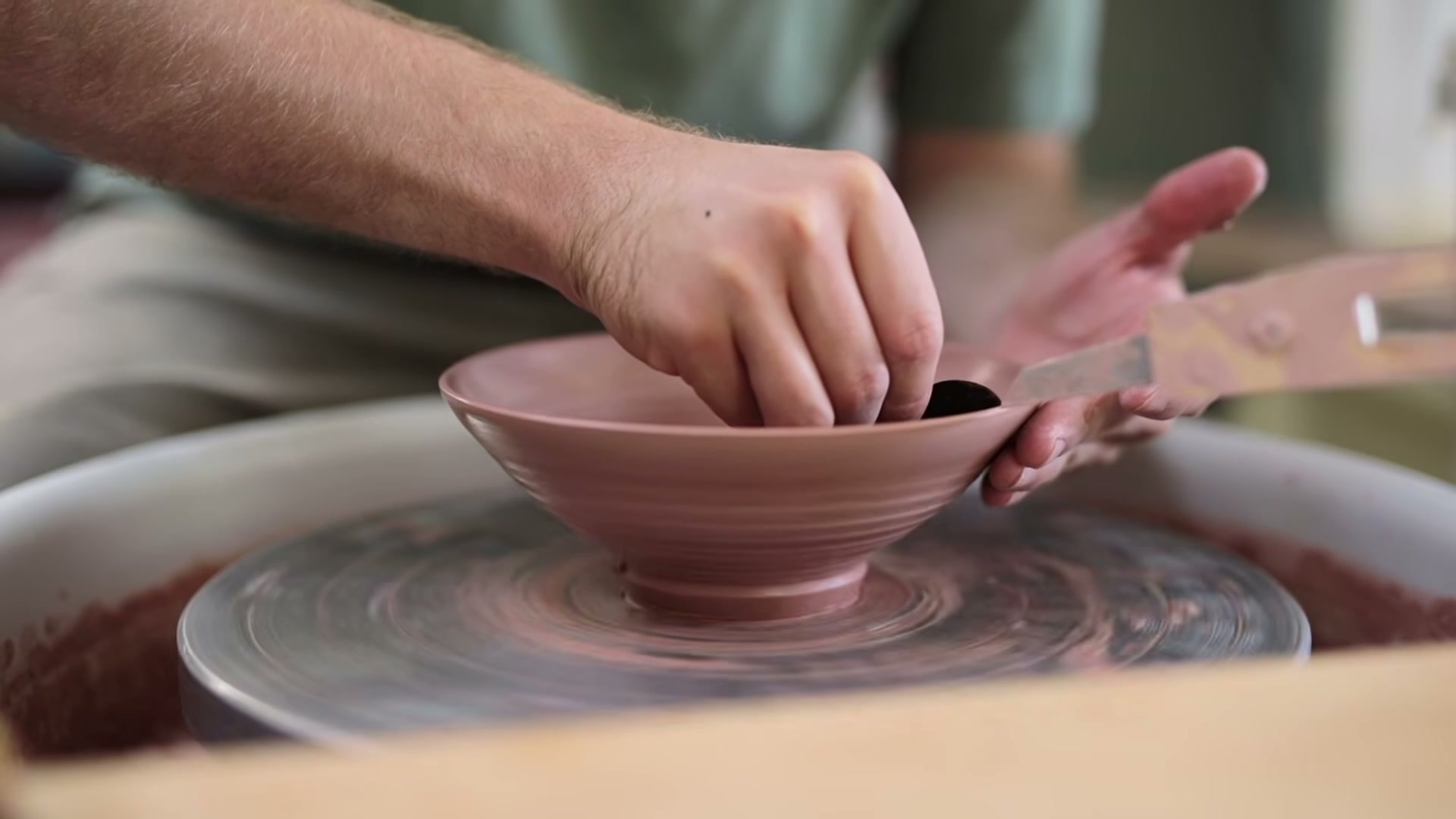
In Florian Gadsby’s example, the clay is carried around by a wheel rather than turned chiefly between the hands. Fingers enter the form while the other hand works near the outside wall. The wheel supplies continuous motion, but it does not choose the opening, curve or rim. Even when a machine is visible, keep watching where the hands remain and how they respond.
Gadsby’s official biography identifies him as working in London, UK. The film draws from one bowl-forming chapter without joining a later demonstration using another lump of clay into the same object. The pinched cup and thrown bowl differ in purpose, clay and size. They demonstrate relationships between actions; they do not test which method is faster, thinner or more durable.
Choose the making stage in Taiwan
Shuili Snake Kiln’s official activity information lists both handbuilding and wheel throwing, with teachers helping beginners discuss their intended form. To explore the finger-by-finger shaping in the film, ask about handbuilding. To feel clay moving with a wheel, confirm the throwing option. Naming the movement you want to learn is more precise than simply asking to make pottery.
The Shu’s Pottery in Yingge also lists an official wheel-throwing programme. Its description covers shaping cups, bowls or plates with the wheel and hands, followed by firing. Choosing a colour is not the same as applying glaze yourself. Neither Taiwan programme is the teaching location of the overseas examples. Bring your observations to the local teacher, and confirm drying, firing and collection as part of participating.
Research and image sources
Article photographs are frames from the corresponding film, kept in their original proportions. Demonstration publishers and related Taiwan venues are listed below.