CRAFT, SIDE BY SIDE · 02 / 08
What a Surface Leaves on Paper
One sheet rests on a textured surface; another waits beneath a screen. Follow rubbing and screen printing, then find related paper workshops in Taiwan.
The film has English on-screen notes. A complete Traditional Chinese translation is available below.
English transcript and Traditional Chinese translation
0:00–0:05
How does a surface leave an image?
表面如何在紙上留下圖像?
0:06–0:13
Rubbing • Taiwan
拓印:臺灣示範
0:14–0:20
First, prepare the patterned surface.
先處理帶有紋樣的版面。
0:22–0:27
Lay the paper over it.
將紙覆在版上。
0:28–0:40
Press the paper into the details.
讓紙貼入紋理細節。
0:44–0:53
Load and even out the ink.
蘸墨,調勻拓包上的墨色。
0:56–1:04
Build the image with repeated taps.
反覆拍拓,逐步顯出圖像。
1:06–1:10
Screen printing • Taiwan
絹印:臺灣示範
1:11–1:20
Push ink through the prepared screen.
透過預先製好的網版刮印。
1:22–1:28
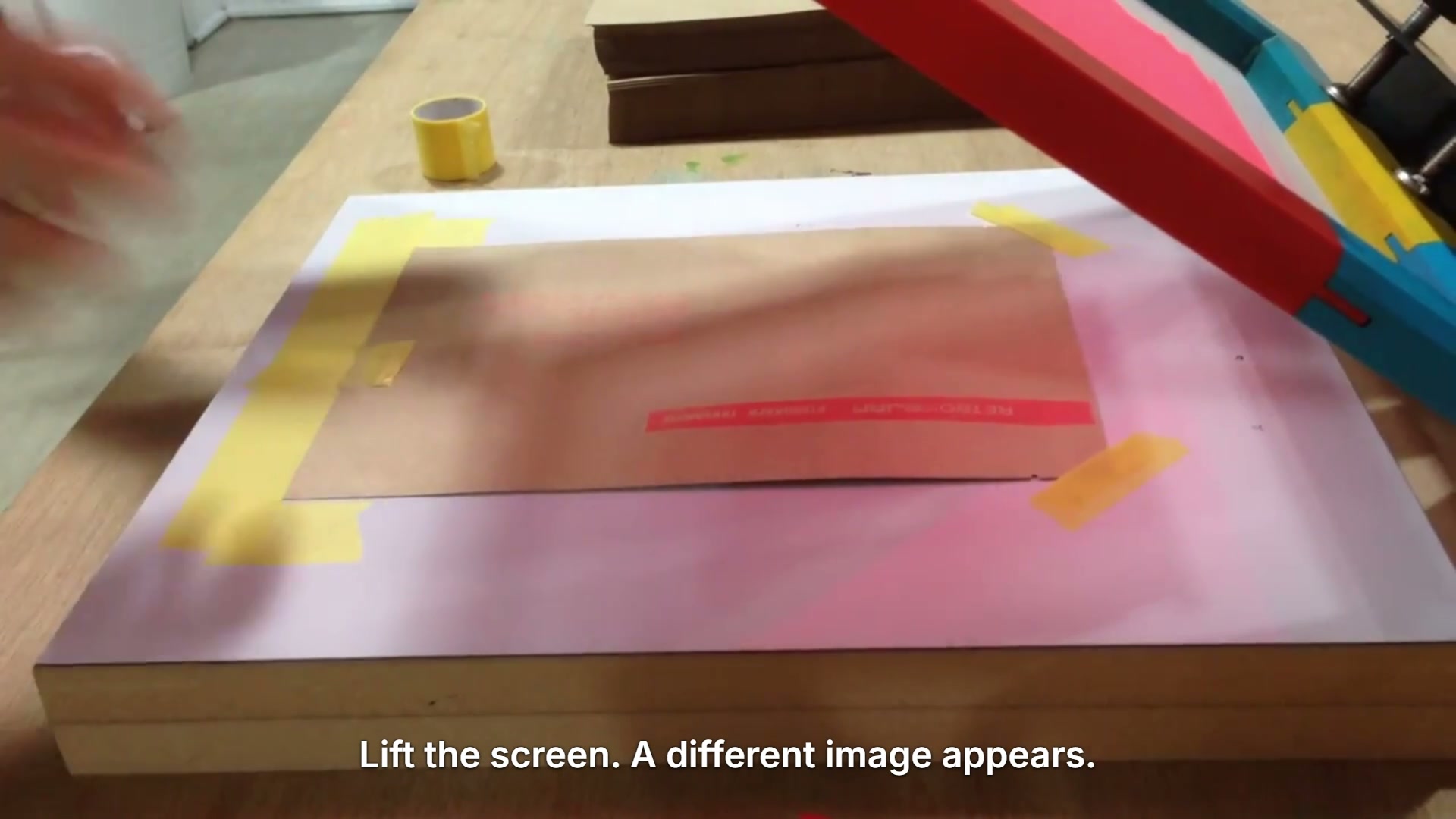
Lift the screen. A different image appears.
提起網版,另一種圖像出現。
Before an image appears on paper, hands work on another surface. What a Surface Leaves on Paper brings together two demonstrations from Taiwan: rubbing brings paper against a patterned surface, while screen printing pushes ink through a prepared screen. Instead of choosing the prettier result, follow the positions of the paper, brush and ink pad. Notice when an image becomes visible.
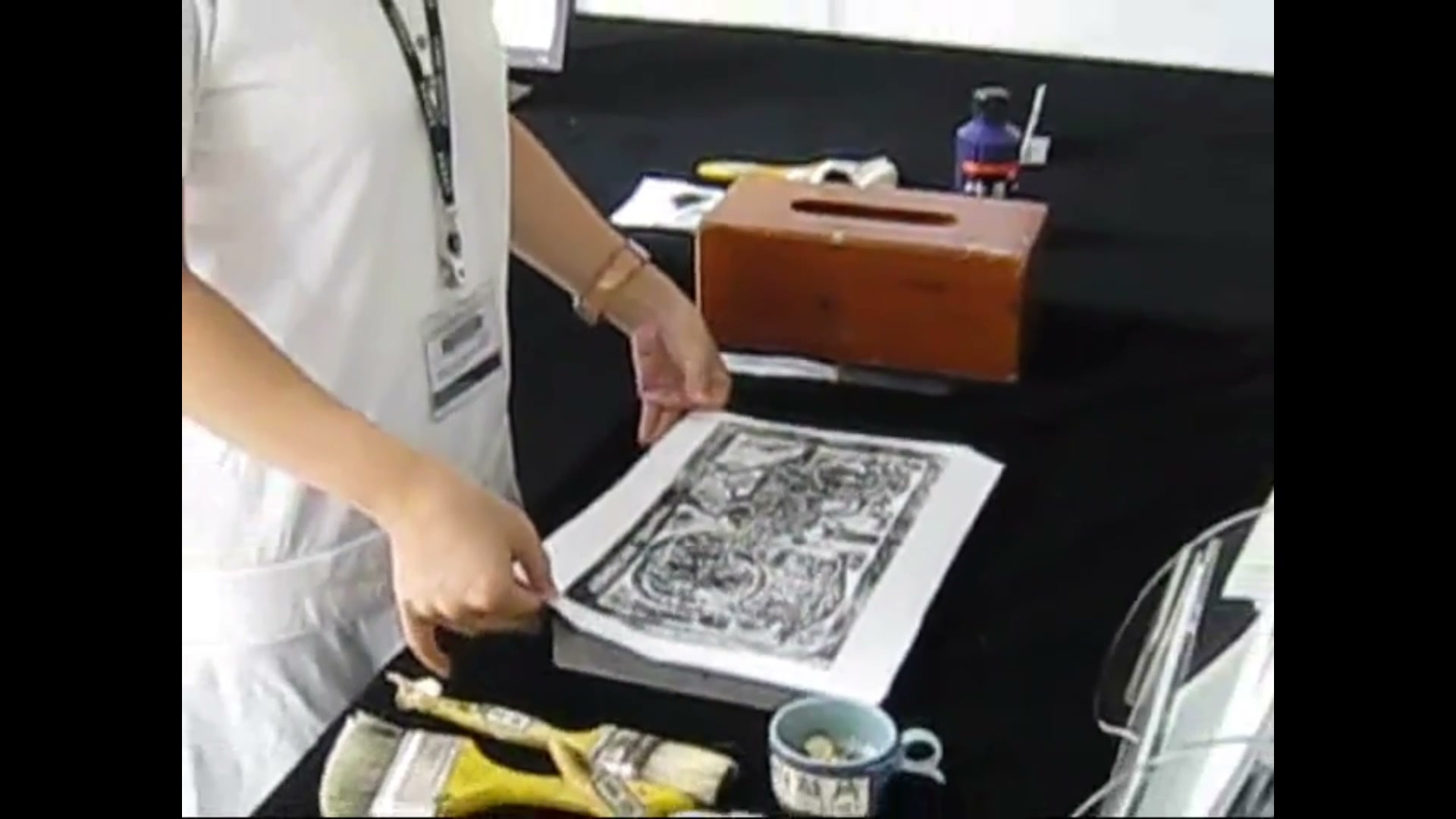
Before the paper is laid down
The film briefly shows a sheet already carrying a dark pattern, then returns to the bare surface. The demonstrator works over it with a brush before laying down white paper. Keep that order in mind: the pattern is not first drawn on the sheet. It already exists on the underlying surface, and contact brings its details into another material.
Watch the paper’s edge and the point where the brush touches it. Just after placement, the sheet still looks ordinary; brushing makes the relief increasingly legible. This is part of a teaching demonstration, not a complete record beginning with carving the block. The short sequence does not stand in for all the work needed to prepare that patterned surface.
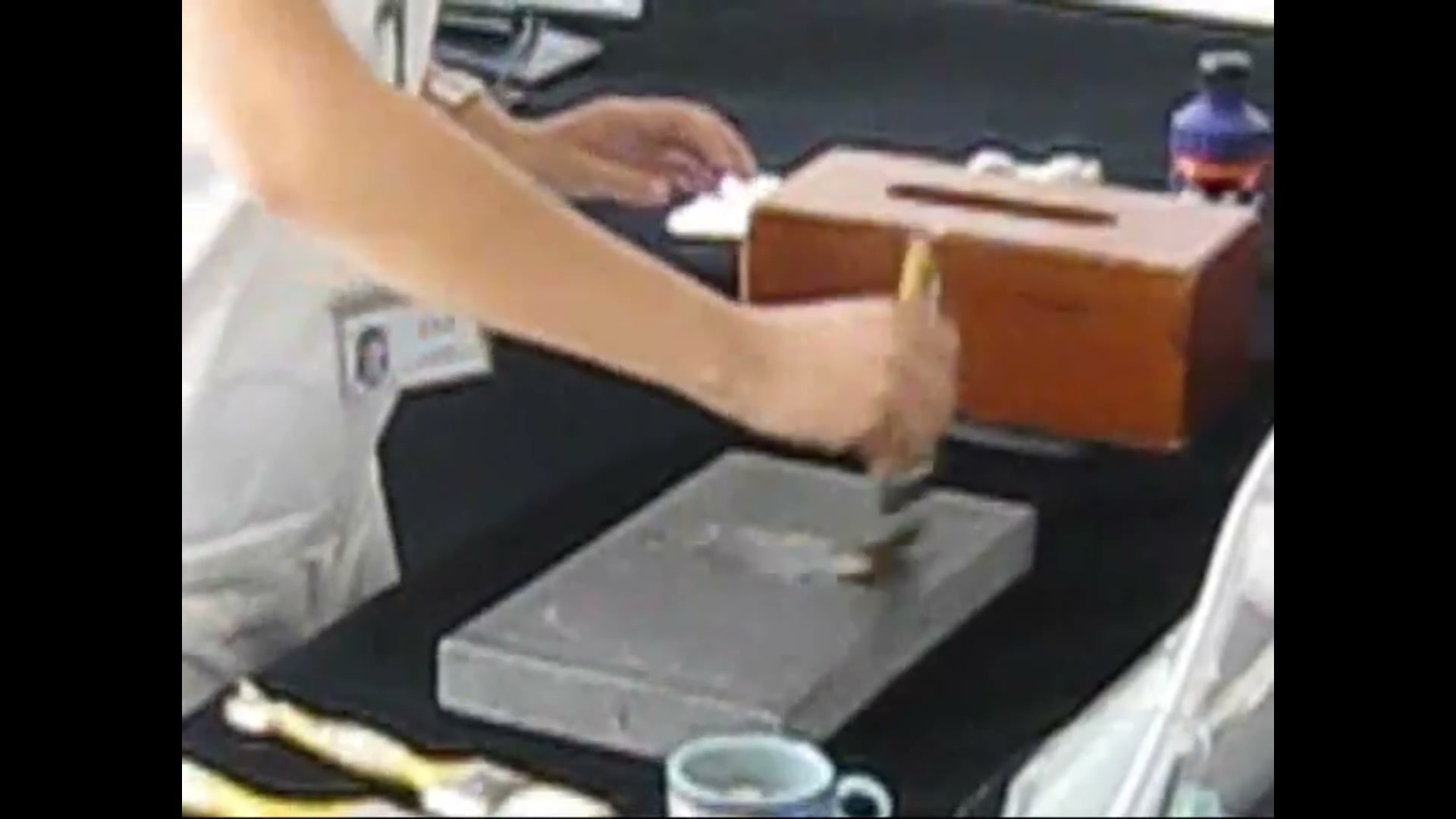
Helping paper meet the texture
The brush continues after the paper is in place. Repeated tapping and brushing bring the sheet against the pattern. This differs from the later inking stage: we are seeing how paper conforms to detail, not an already completed black rubbing. Looking only at the final print would skip the preparation that helps those details become readable.
In a workshop, ask how the paper’s fibres and thickness relate to the particular block. Following the teacher and watching the sheet change is more useful than copying a number of brush strokes from a film. Different classes use different papers and designs. A count of visible movements cannot become a universal instruction for another set of materials.
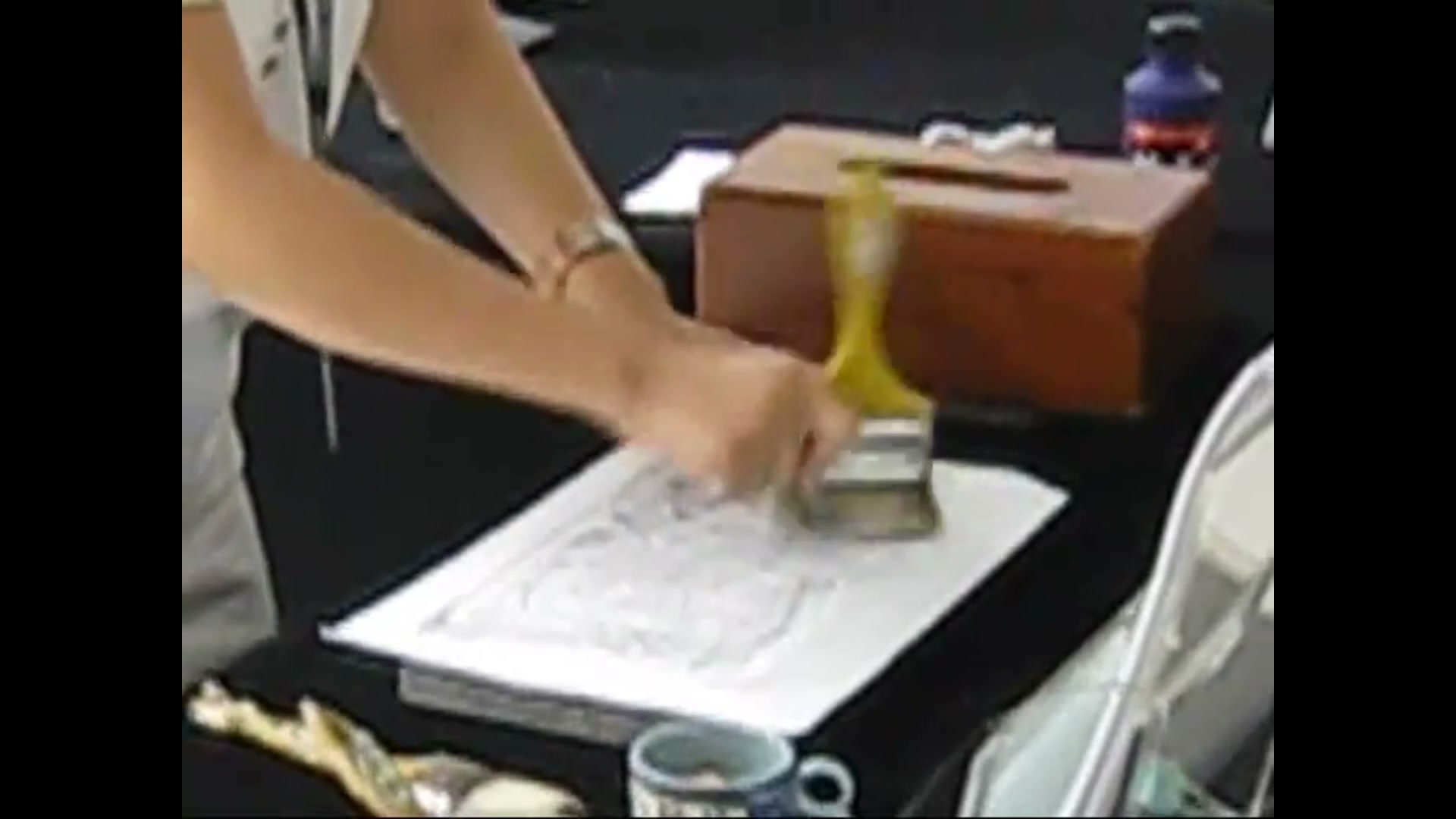
Building the image with ink
The demonstrator first evens out the ink pad on a smaller sheet, then returns to the larger covered surface and taps repeatedly. Dark marks accumulate as the hand moves towards areas that still need work. Preparing ink and applying it are distinct actions. Separating them explains why the hands can be busy before the main image visibly develops.
The second example is RETRO Printing JAM’s screen printing on paper packaging. Ink is placed on a screen and moved with a squeegee; lifting the screen reveals the design below. The screen was prepared beforehand, and its manufacture is not shown. These examples use different papers and images. They reveal ways of making contact and moving ink, without testing speed or print quality.
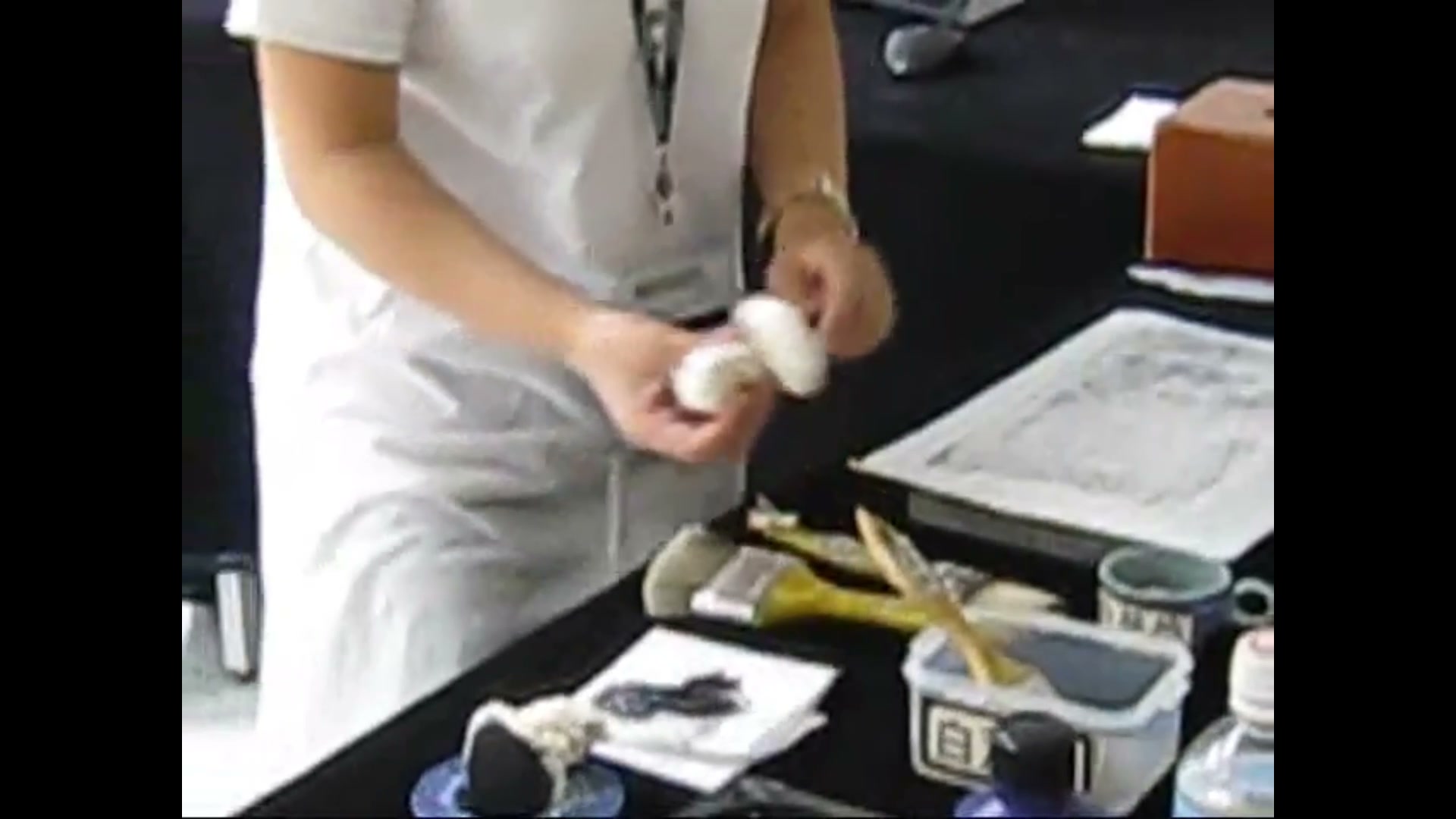
Take the observation into a Taiwan workshop
To turn observation into a feeling in your hands, start with the official DIY choices at Guang Xing Paper Mill in Puli. B1 combines making a sheet with either rubbing or screen printing. B2 uses ready-made handmade paper for screen printing. The distinction shows that making paper and placing an image on it can be linked activities or separately arranged stages.
The Taiwan Printing Discovery Center in Dali, Taichung, provides another route. Its official group-visit scheme combines screen printing with hand-stitching a notebook. That is a different object from the packaging in the film, but connects ink moving through a screen with a usable book. Confirm the activity and booking conditions, then enter the classroom with a question: how will an image remain on my paper?
Research and image sources
Article photographs are frames from the corresponding film, kept in their original proportions. Demonstration publishers and related Taiwan venues are listed below.