
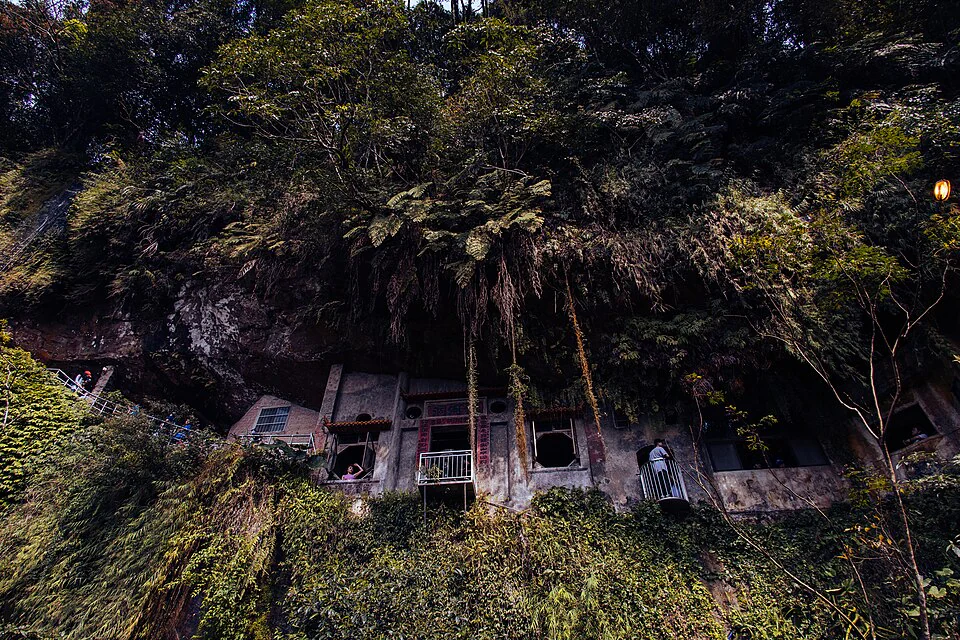
A temple within the scenery
A 2024 CREA hiking feature introduced Yinhe Cave near Taipei: a temple against a rock face beside a waterfall. The setting gives an excursion a clear destination. Arriving there, however, also opens a way to read what lies inside the composition.
Steps from Yinhe Road in Xindian lead towards a space with a continuing religious purpose. The temple was built in 1914; a Lü Dongbin statue was added in 1958. Alongside the waterfall is a building with its own history of use and additions.
A table and vases become a tiled arrangement
When Taiwan’s Museum of Old Taiwan Tiles researchers Hsu Chia-pin (徐嘉彬) and Chien Ling-chieh (簡伶潔) documented Yinhe Cave, they examined the shrine. Images of an offering table and vases turn three-dimensional objects into elements arranged on a flat surface. The scale of attention changes from the rock face to individual tiles.
The point is more than choosing a pretty pattern. Neighbouring images and their relationship to the place of worship shape the shrine as a whole. Here, a building material also participates in an arrangement of devotion.
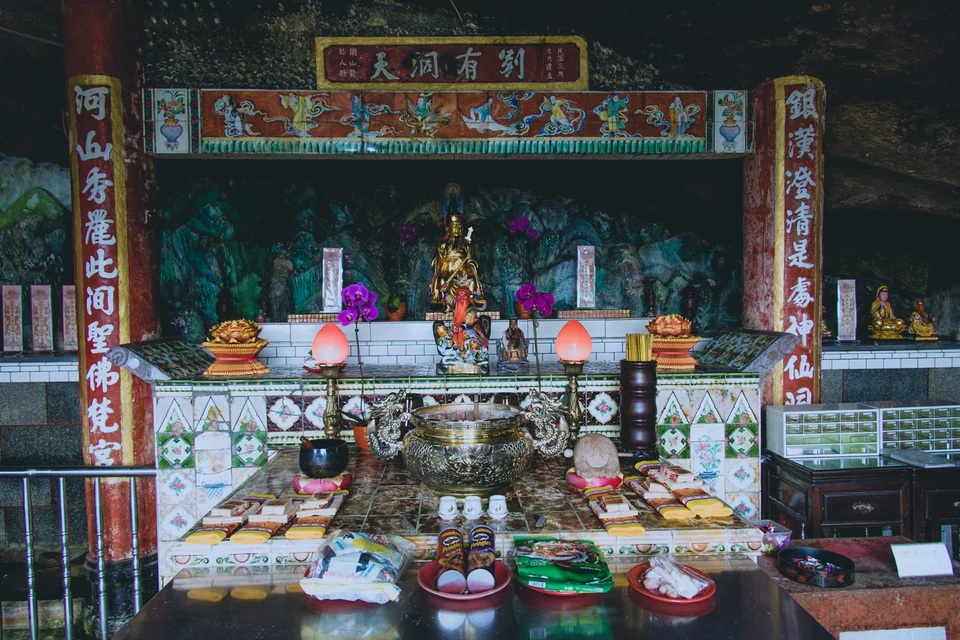
Imported material, a local arrangement
The record places these decorative tiles in the context of imports from Japan around 1915–1935. An industrial product arriving from abroad could be used in a Taiwanese religious space and given meaning through its arrangement and purpose.
The researchers suggest that damp conditions and transport may have influenced the choice of material. This is a later hypothesis. What can be examined is how tiles organise representations of offering objects into a flat arrangement. Their overseas origin and local use belong in the same reading.
Allow time for the details
The waterfall may define the trip, while the tiles invite another pace. At the cave, identify visitor passages and worship areas before looking from an appropriate position. The religious setting explains the images more fully than a photograph of one isolated pattern.
This visit approaches from Xindian and returns by the same route from the cave. Steps can be slippery after rain. Wear shoes with grip, go in daylight and decide whether to continue according to your condition. Leave enough time to return.