A fishing vessel carried more than its crew
Huang grew up in Vũng Tàu, the Vietnamese coastal city, and taught at her former school after 1975. In the interview notes recorded by filmmaker Asio Liu in 2016, she dates her family’s departure to 31 July 1978. Their vessel, Qun Yuan No. 2, reached Penghu on 16 August after travelling through Southeast Asian waters. A family of nine had left together; they had not sailed directly from one settled home into another.
The crew had their own constraints. The filmmaker’s later production record states that the Kaohsiung-registered vessel had been detained by the Vietnamese navy and was required to carry Vietnamese Chinese passengers before it could be released. Its captain and crew were Indigenous men from eastern Taiwan. The people directing the boat were therefore part of the displacement story too, not anonymous rescuers outside it.
The crossing left a debt of memory
In Huang’s account, the navigation equipment had been removed. She remembered the crew bringing the vessel home through their experience at sea, and singled out Pan Hsin-fa, who could communicate with the passengers in Mandarin. Her gratitude was attached to particular people and a practical skill, rather than to a vague image of Taiwan.
Her family moved to Taiwan’s main island in March 1979, first staying at National Taiwan University and then settling in Banqiao. In 2016, when Bright Time Books advertised a talk with Huang, Liu’s notes ended with her wish to contact Pan and the captain. The speaker at a New Taipei bookshop had once been a passenger who could not choose when she would be allowed ashore. Now her own account could supply names absent from a broad migration story.
Some answers arrived too late for a reunion
The 2021 record for Liu’s Refugee Boats to Penghu names the captain as Kuo Hsiu-hsiung and records that both Kuo and Pan had died. The caption describes a passenger seeking them only as Ms Huang. It does not document a reunion. The seafarers’ recorded deaths leave a distance between wanting to offer thanks and still being able to do so in person.
The person who filmed before the buildings disappeared
Liu had served in Penghu in the 1990s. In his 2013 essay, he explains that hearing about the camp’s impending demolition in 2003 made him seek evidence on site. He photographed a notice recounting the camp’s history. Even that object needed checking: some wording was obscured, and he compared photographs taken from different angles. The notice could locate an institution, but it could not speak for everyone who had lived under its rules.
His later project followed individual boats and their passengers across countries. By the 2021 production account, he had located people connected with twenty-five boats. The filmed record could thus grow beyond an empty site: routes, names and families supplied another way to understand the camp after its buildings had disappeared.
A guide with her own history to tell
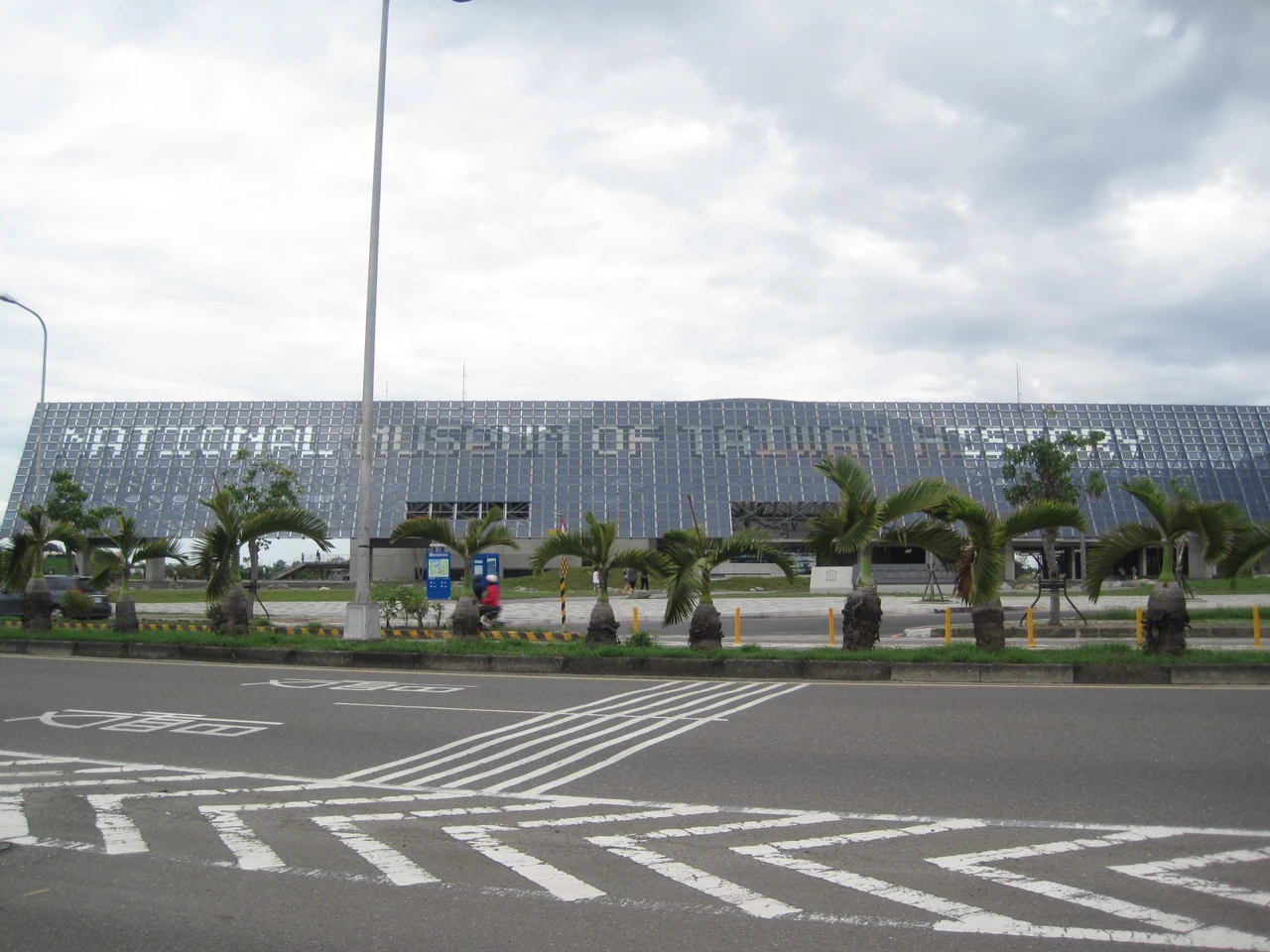
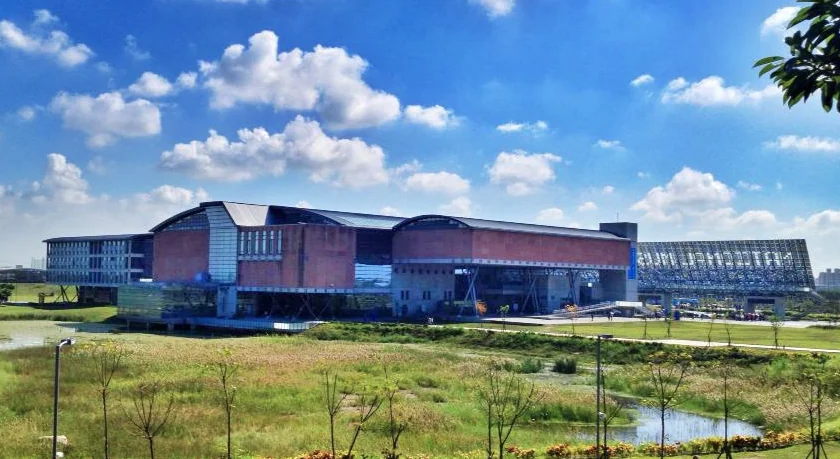
A 2017 National Museum of Taiwan History program in Tainan paired Huang’s tour of a Vietnamese Chinese section with a rough-cut screening and discussion with Liu. Curator Shih Wen-cheng’s program description placed these overseas Chinese and migrant histories inside Taiwan’s relationship with Southeast Asia. Huang was invited to guide visitors through material connected to the history she had lived.
That program is now a historical record, not a current booking. The former camp buildings are also no longer a preserved destination. What can still be followed is the work of naming: Vũng Tàu, Penghu and Banqiao are connected through Huang’s account, while Liu’s photographs and interviews keep the people steering, waiting and remembering from disappearing behind the word refugee.
The museum that scheduled Huang’s tour offers a place to take the story further in Tainan. Its permanent section You Too Are a Maker of History considers how people record their own lives from different social positions. After following Huang’s account and Liu’s search, a visitor can ask who is named in an exhibit and who gets to explain it. The 2017 special exhibition has ended; the question can continue without expecting its objects or speakers to be there.