A gondola reaches Maokong—and the work begins at the station
POMA’s French ropeway engineering brought visitors to Maokong. Road planning, tea businesses and local teaching shaped what happened after arrival; a teapot and the leaves inside it bring the hillside’s work into focus.
Before the first passengers
Before the Maokong Gondola opened in July 2007, Taipei’s transport department was already planning for what would happen when passengers stepped out. Mountain roads were narrow, cars struggled to pass and parking was scarce. Its June announcement arranged circulating buses and one-way road sections around the new service.
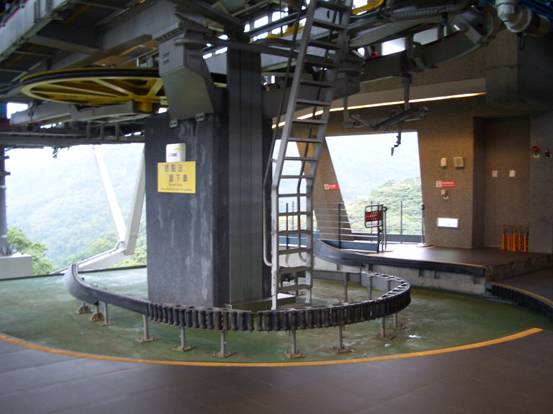
Maokong Station’s rotary platform, in the gondola operator’s system-introduction photograph. The image explains the arrival infrastructure; it does not document the 2007 opening-day arrangements described above. The exact public 553 × 414 photograph is retained whole.
The ropeway supplied the overseas connection. POMA, whose official contact address is in Voreppe, France, lists Maokong among its projects. Opened on 4 July 2007, the system linked the zoo area with stations uphill, carrying passengers above terrain that roads had to wind through.
A tea hillside receives visitors
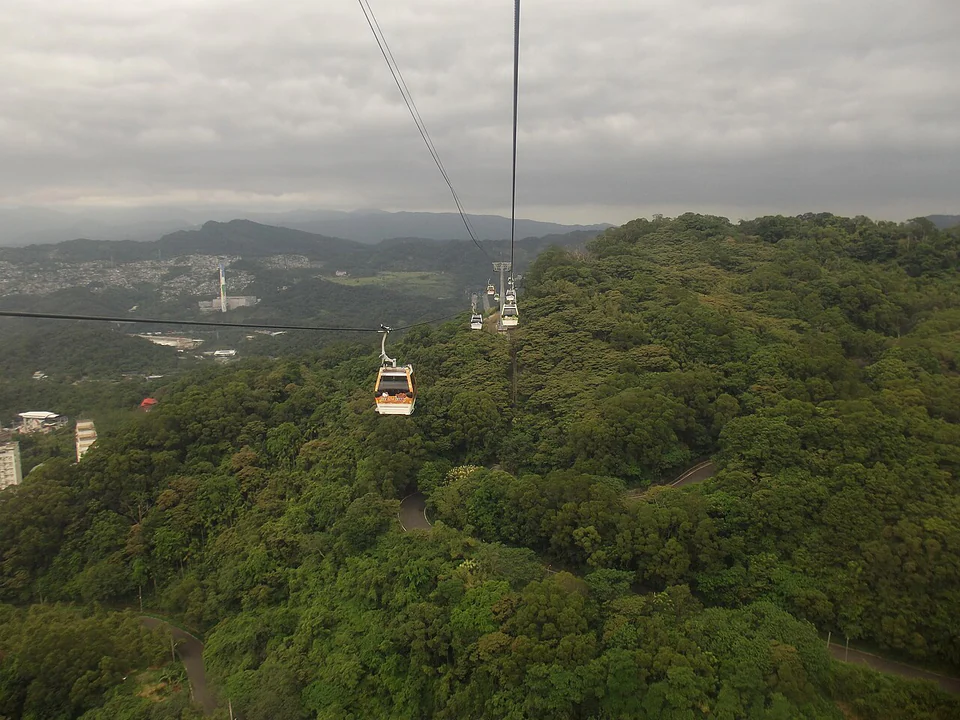
Maokong Gondola above Taipei’s wooded hills in 2014.
On opening day, the city promoted visits to tea paths, the tea promotion centre and local tea businesses. The Muzha farmers’ association and the tea-growing community association were among those involved in activities. The new transport line depended on existing places and people to give passengers a reason to stay.
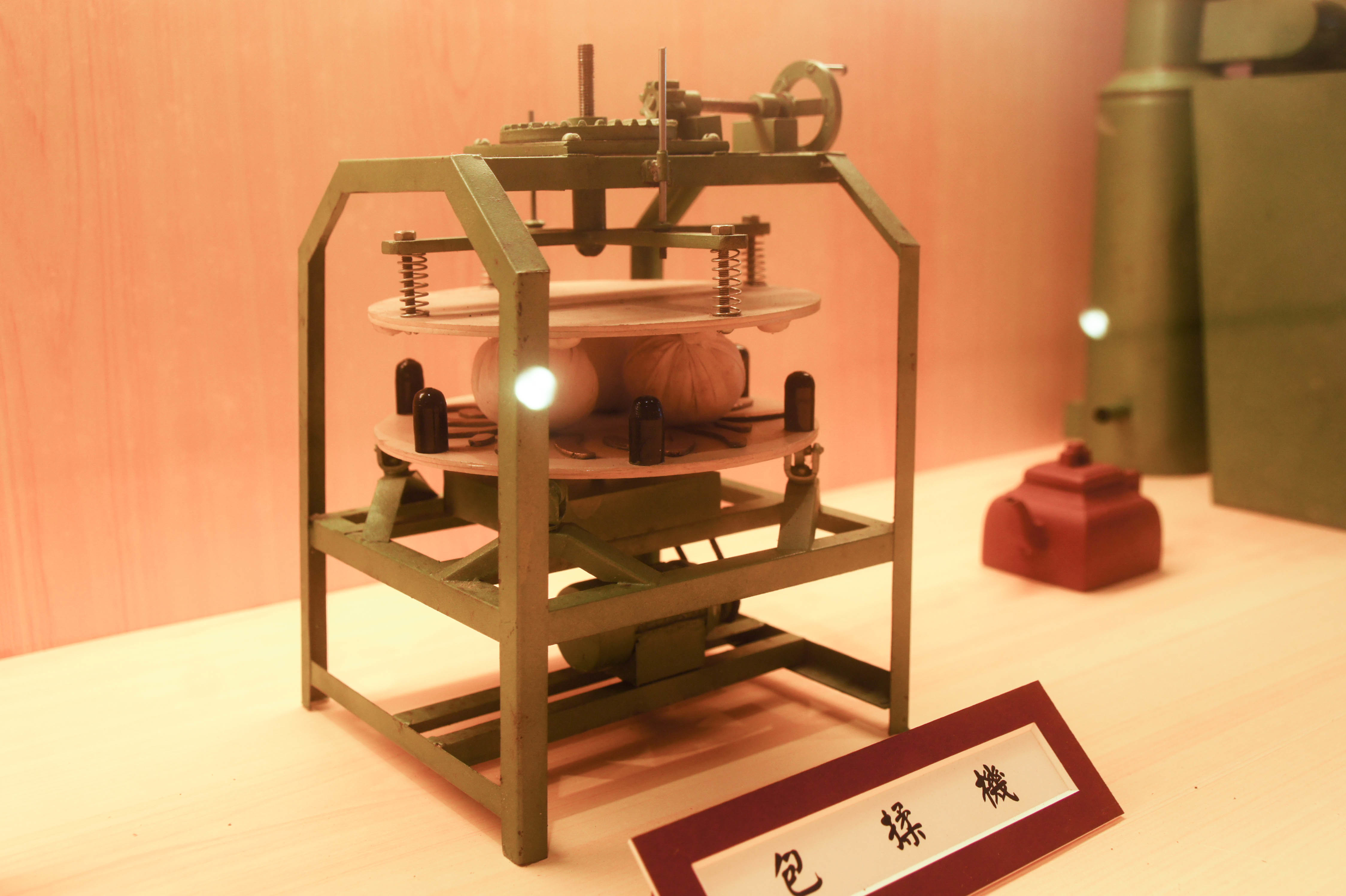
A tea-kneading machine model in Tea Master Chang Nai-Miao Memorial Hall. The museum’s actual exhibition photograph provides a concrete tea-processing object for an onward visit; this is a model, not an operating production line or a photograph of the 2007 opening-day activities.
More visitors brought a difficult change. Taipei’s account of the recreational agriculture district describes tea gardens and restaurants expanding as the area turned increasingly toward tourism. It also records concerns that quick consumption could obscure the region’s agricultural history and that crowds placed pressure on the environment.
Tea returns to the centre
Local efforts continued to bring tea back into the encounter. In 2023, the city, the Maokong Leisure Industry Community Development Association and the metro company held tea gatherings that combined a visit to the gondola storage area with brewing instruction and tastings at tea businesses. Engineering and agricultural knowledge became parts of one visit.
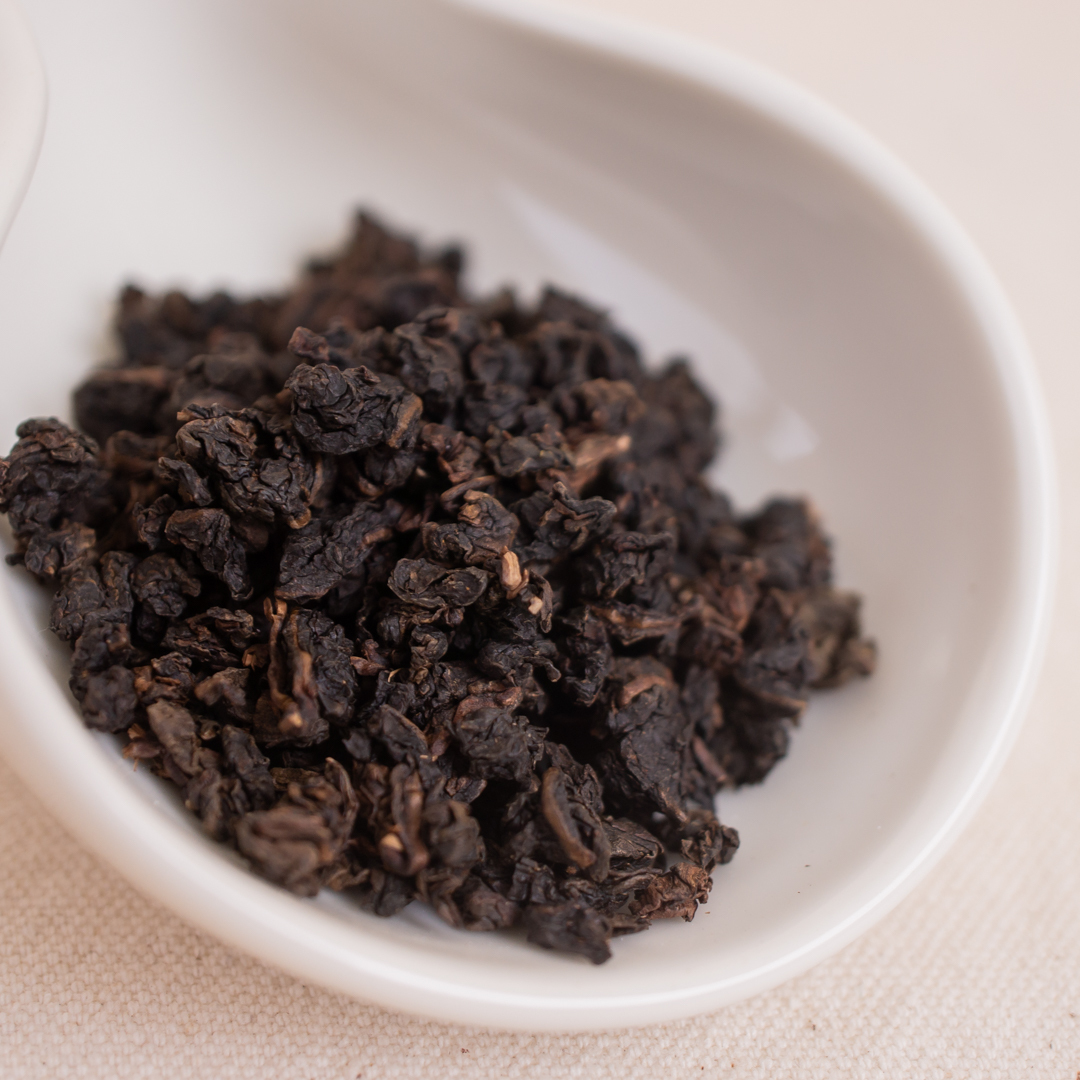
Rolled tea leaves in the memorial hall shop’s actual Muzha Tiekuanyin product photograph. The source page identifies a spring 2026 product variant; it does not state the photograph’s shooting date, and the image is not evidence of the 2023 depot-and-tea programme.
The work continues in individual teas. The Chang Nai-Miao Memorial Hall’s shop describes its Muzha Tiekuanyin as slowly roasted over gentle heat and supplies brewing instructions with the leaves. Look at the rolled dry leaf, then the tea in the cup: a teahouse visit gives processing and preparation a scale that a distant hillside view cannot show.
The station marks their meeting point. Towers and cables explain how people arrive; tea leaves, brewing and the work of local hosts explain what they have arrived to see. Following the French connection uphill opens onto a Taiwanese question that remains practical: how can a busy destination keep its own work and history visible?
Muzha Tiekuanyin tea leaves, a teapot and brewed tea from Chang Nai-Miao Memorial Hall’s shop.
Find the story in Taiwan
View the Taipei Basin and tea hills from the gondola, then explore a public path or visit a teahouse around Maokong Station.
Take the Wenhu MRT line to Taipei Zoo, walk about 350 metres to the gondola's Taipei Zoo Station, then ride to Maokong.
Gondola hours: weekdays 09:00–21:00; holidays 09:00–22:00. The announced October 2026 maintenance closure is 12 October. The ride takes about 17–37 minutes, excluding queues.
Check the annual closure calendar before travelling. The linked half-day route descends from Maokong Station towards NCCU; a gondola-and-tea visit can stay around the station instead.
Film, images and visit-check dates
The film follows twelve mutually different genuine photographs from the gondola’s hillside view and lower station to Taipei Zoo South’s cabin platform, Maokong’s rotary platform, memorial-hall tea samples, old tins, a kneading-machine model, purple-clay test pieces, leaves and a cup of tea. All images remain still and whole. The 2014 original view is explicitly dated on screen.
The operator’s English system-introduction page confirms the French POMA connection and separately identifies Taipei Zoo South’s lateral platform and Maokong’s rotary platform. The Tourism Administration titles its lower-station photograph “MRT Taipei Zoo Station”; the film describes it as the lower station near Taipei Zoo, without identifying an unverified MRT building.
The memorial hall’s own public exhibition page supplies the actual tea samples, old containers, tea-kneading model and purple-clay test pieces. Product harvest names are not treated as photograph dates, and the second leaf photograph is not labelled as an after-brewing demonstration without explicit evidence.
Visit information was read from the memorial hall’s normal public pages on 7 November 2026. Its address is No. 53-2, Lane 34, Section 3, Zhinan Road, Wenshan District, Taipei. The operator describes a walk of about ten minutes after leaving Maokong Station, crossing the road and following the route. The public contact number is +886-2-29382579; call before a planned visit because occasional business trips or days off are announced. The listed shop hours are Monday–Saturday 10:30–17:00 and Sunday 12:00–17:00. The second-floor exhibition has separate guided-entry arrangements, with the last exhibition entry at 16:30 and advance booking for groups of ten or more. Photography and video are prohibited inside the exhibition; the film uses the operator’s public photographs rather than suggesting visitors should record the displays.
The 2023 gondola-storage-and-tea gathering is a historical programme, not an activity promised for a present visit. The original 12 October 2026 maintenance notice is a past dated notice as of this 7 November check; it is not a claim that the gondola is closed throughout November. Check the operator’s actual service and annual closure calendar for the day of travel, then arrange the memorial-hall or teahouse visit separately.