A city arrives in a reader’s plans
Travel + Leisure included Taipei in its 2026 destination list. For an American reader deciding where to travel, that small piece of print can be the beginning of a journey. What happens after the name has been circled is a different story.
In Taipei, one school’s use of a hill offers that starting point. Its story begins before the children reach the view: with the work that makes an outing possible.
Before the hill, there were stairs at school
In May 2026, Hulu Elementary School took its special-education class to Jiantan Hill. The children had practised climbing stairs at school before reaching the Laodifang viewing area with staff and classmates. Teacher Li(李美香) was among the adults supporting the lesson.
The sequence matters. Preparation belongs to the outing just as much as the final view does. Read the class’s journey that way, and a scenic point becomes a place reached through practice and support.
For a visitor, it is also a useful way to plan: choose an approach, leave time for the people walking together, and decide where to turn back. The experience is shaped by those decisions long before a photograph is taken.
A line on a map needs continuing care
In September 2018, Taipei announced a 92-kilometre version of its Grand Trail. The city’s trail-information work helped connect separate places into a journey residents could plan. The figure belongs to that launch, rather than describing every route available today.
A map makes a connection visible, but keeping it usable is continuing work. Steps, junctions and an approach from the street are part of the same public space. A school lesson adds another layer: the route must make sense for the people who will use it.
At Jiantan Hill, a construction notice photographed in February 2026 lists work from 22 October 2025 to 15 March 2027, with some older paths closed and detours marked. Treat the hill as a separate daytime extension and check the current notices before choosing a path.
The market grew around a neighbourhood
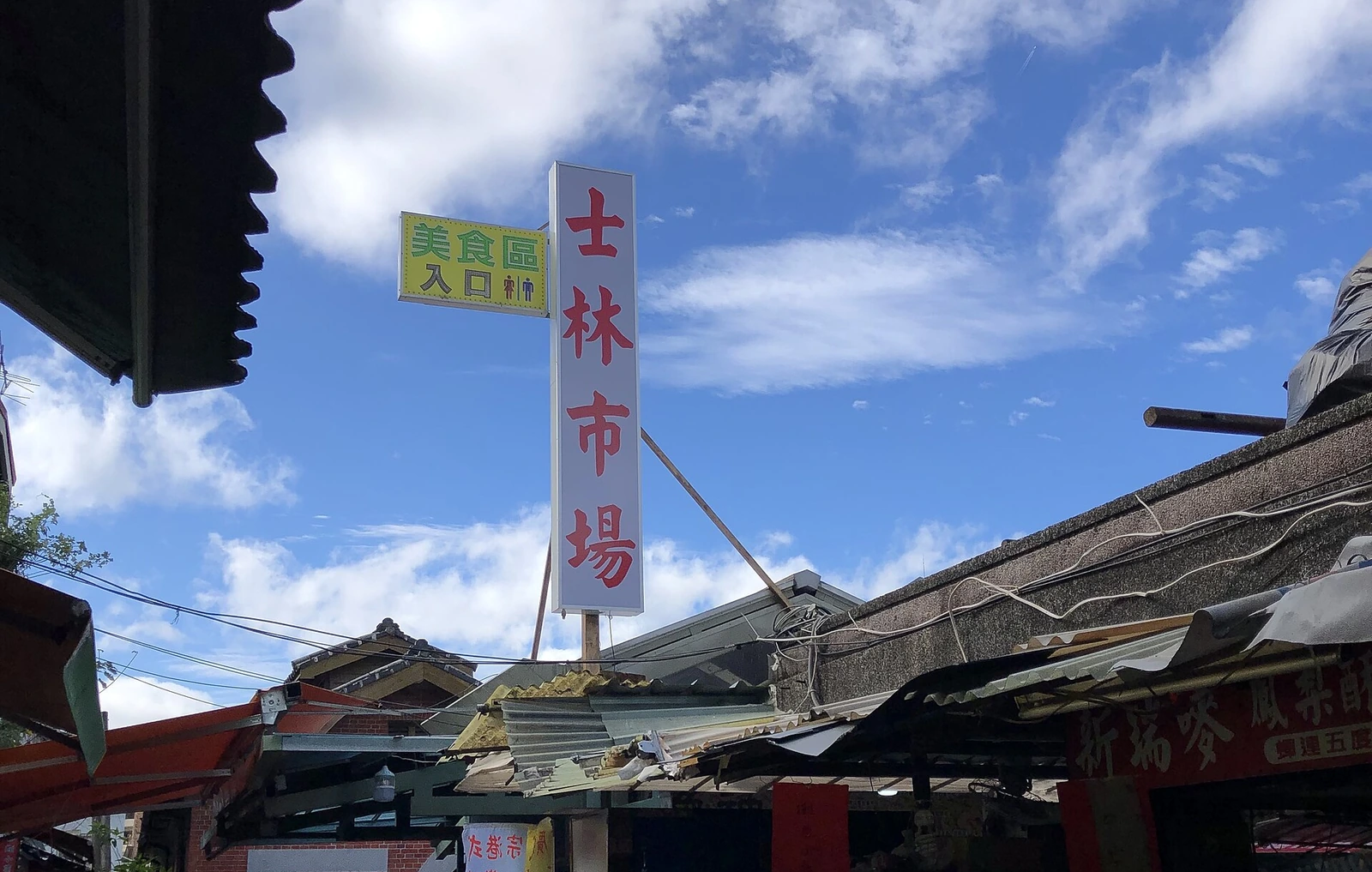
Around Cixian Temple, Shilin’s market developed alongside neighbourhood life and nearby schools. The surrounding streets give the evening visit a different scale: temple, shops and food stalls share a district people also pass through and use.
Start by noticing the edges of a queue and the space left for someone to pass. Then choose a stall and look at how ordering, preparation and collection fit together. Those are practical ways to see a working place without needing to turn its workers into a spectacle.
The market office’s account of Da Shanghai pan-fried buns follows work behind the queue: cabbage leaves are cut larger and stems smaller by hand. Scallions, cabbage and pork need different storage conditions, so they go into separate cold rooms. Choosing one bun opens a story of cutting, keeping ingredients and cooking to order, rather than just a list of flavours.