
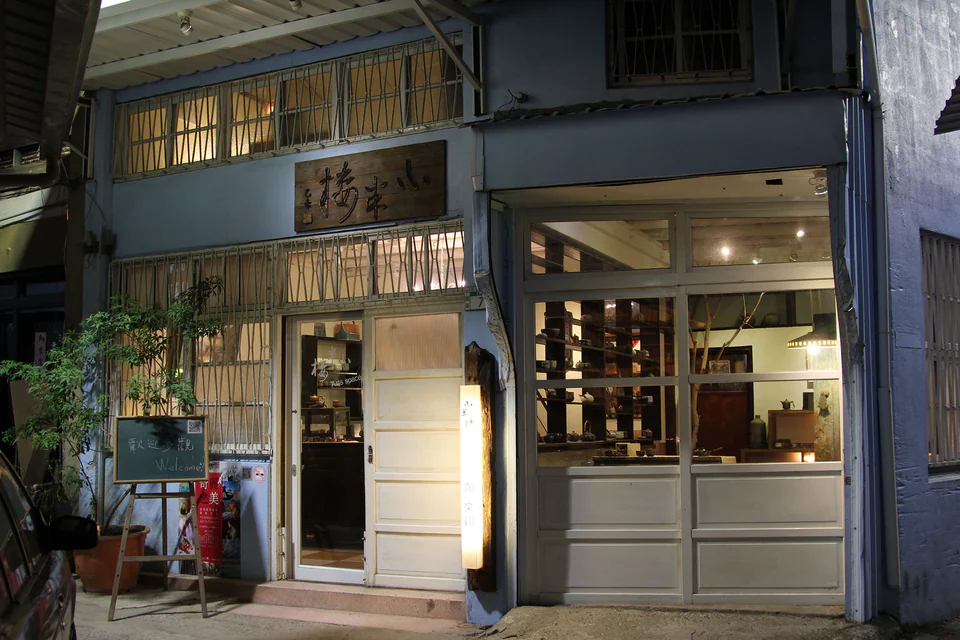
A scene becomes a destination
The doorway of 32 Record Store in Someday or One Day can feel familiar before a visitor reaches Tainan, the city in southern Taiwan where it was filmed. A drama-themed tour featured by Korea's Travel Plus in 2024 included the building. On screen it held a fictional meeting; before filming, it had already been given a new life by two local people.
For Korean viewers, there is another direct link: A Time Called You (2023) is a Korean remake of Taiwan's Someday or One Day. Netflix locates the Korean production in Jeonju and Incheon. Xiaobanlou belongs to the Taiwanese original; it is not a filming site of the Korean remake.
The people who made room for clay
In 2014, ceramic artist Fang Qiwen (方啟文) and his wife Liu Huiya (劉惠雅) turned a disused pharmacy into Xiaobanlou. They kept its medicine cupboards but removed the back panels, opening them on both sides to display pottery. An old wooden bed was reused as part of the tea room. The building changed purpose through adjustments to things already inside it.
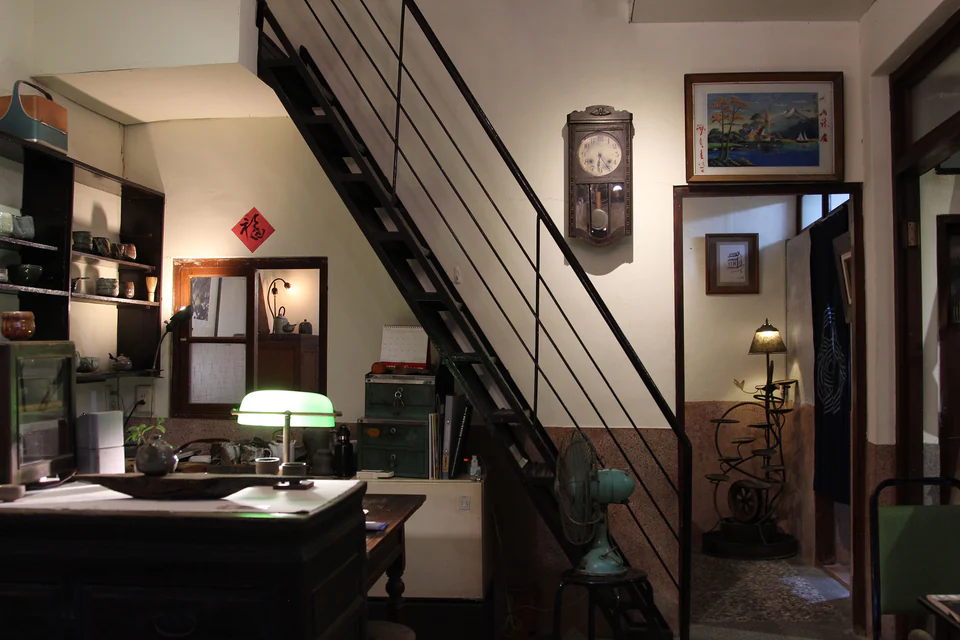
Before Xiaobanlou, Fang had worked at I Nian Jian, his ceramics studio. Bringing pottery into the old pharmacy continued an existing practice; the house was not a workshop invented for the drama.
A tea bowl made by a neighbour
In the municipal interview, Liu recalled passers-by looking inside without feeling able to enter. The couple hoped the familiar setting of an old house would make pottery more approachable. Showing the work was only one part of opening the space to its neighbours.
They also organised pottery activities with the community. Older residents made tea bowls, then used their own pieces to try matcha. A ceramic vessel moved from something to look at into something its maker could hold and use; the shared activity gave the tea room another connection to the neighbourhood.
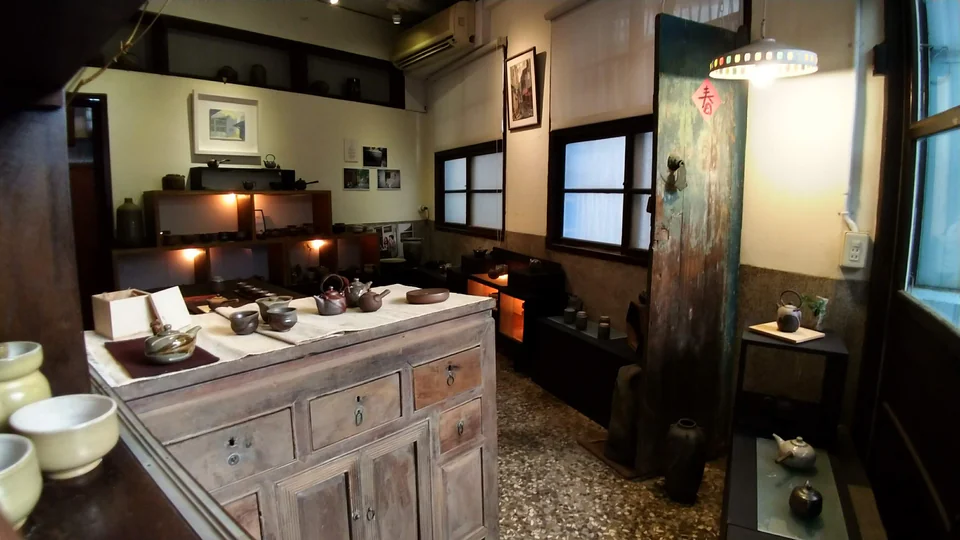
In a later account preserved by the National Cultural Memory Bank, Liu described a different difficulty: drama visitors affected viewing quality and day-to-day operation. They added tea and snacks and invited visitors to sit, helping control numbers and allowing better conversations. The response was to give the house room for people to stay, rather than only pass through.
The city continues after the scene
Xiaobanlou's original operator has moved out and the building has changed use. Its pottery displays and role in the drama belong to earlier stages of the house. The surrounding streets remain a living neighbourhood, with doors now serving different purposes.