Along the shore, look closely at Tongxin Bridge
For a short ride at Sun Moon Lake in central Taiwan, the Shuishe–Xiangshan section offers a clear beginning and turnaround: about 3.4 kilometres each way. Start at Shuishe, follow the shore to Xiangshan Visitor Centre, then return along the same section. There is time to stop without committing to a circuit of the lake.
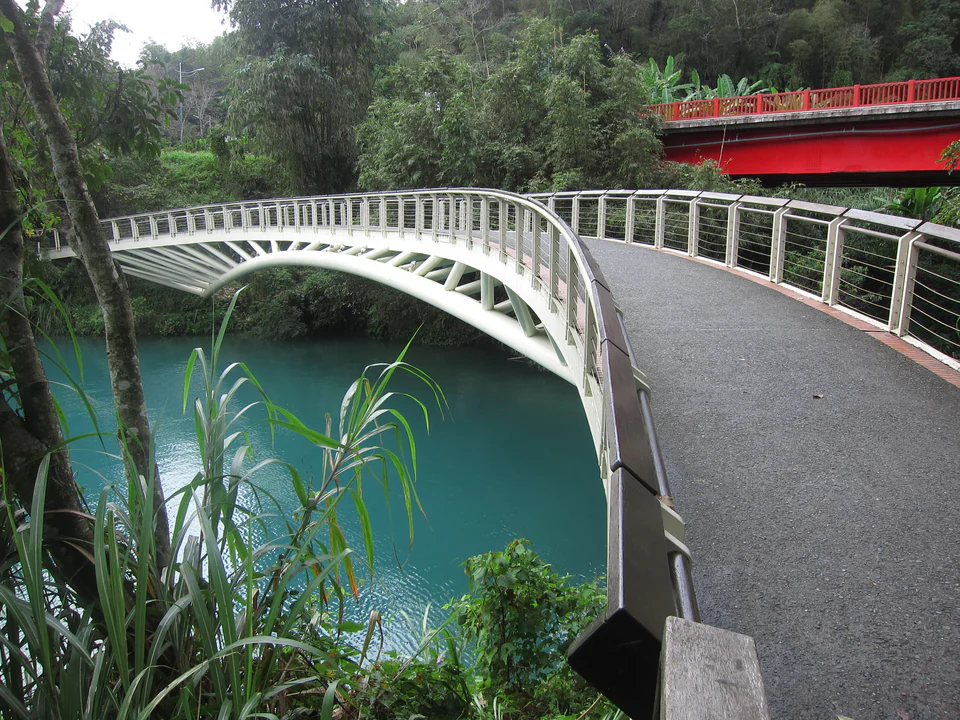
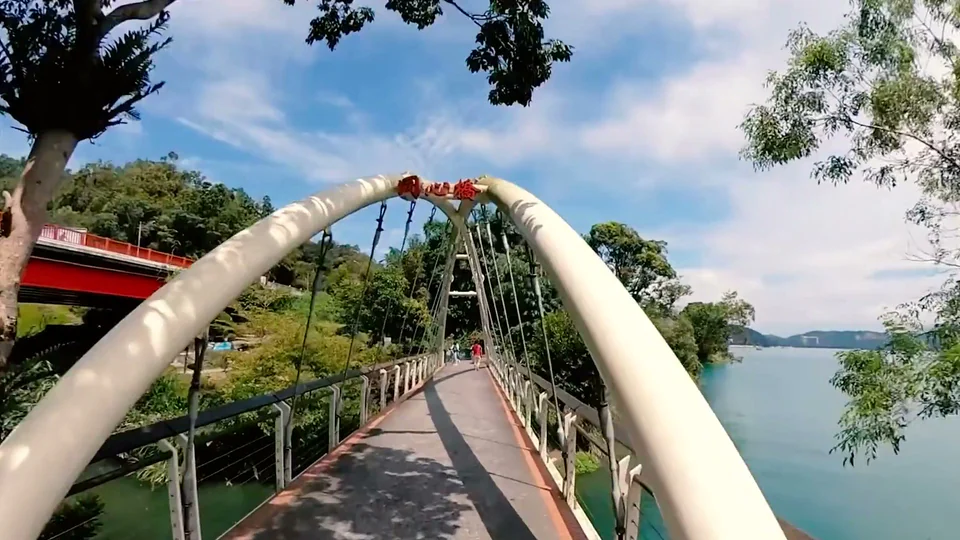
The Korean travel magazine Travie featured lakeside cycling in a 2026 excursion from Taichung. A bicycle brings a visitor close to the water; a detail on the route opens a different story. Near Xiangshan, Tongxin Bridge uses white steel arches and cables, with a form inspired by the four-handed fishing net associated with the Thao at Sun Moon Lake.
Also known as a four-corner lift net, this fishing gear was placed at the front of a bamboo raft. Fishers lowered the net into the water, waited for fish to gather, then raised it. The Thao also used this method on the lake. The shape recalled by the bridge belonged to equipment for making a living on the water.
When approaching the bridge, look at the arches above the deck and the cables running down towards it. Knowing the reference changes what there is to notice: alongside an attractive crossing is a trace of fishing life. Beyond the bridge lies a larger question—how did households travel across this water before visitors cycled around its edge?
The water was also a way to work
The Thao are an Indigenous people whose life is connected with Sun Moon Lake. In a 2022 account, cultural association member Dan Junjie (丹俊傑) described canoes carrying households between places and enabling fishing. A boat belonged to the equipment of daily life.
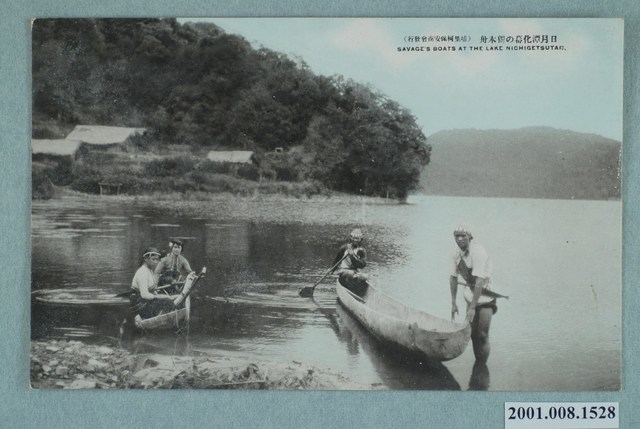
A historical postcard shows canoes beside the shore and people using paddles on the water. These small boats put another scale of movement beside today’s lakeside route: a household could travel over the water, rather than follow its perimeter. For visitors looking out from the shore, the lake becomes a place where journeys happened, as well as a view.
That everyday use also gives canoe-making a purpose. A craft passed between generations carries knowledge of what the boat was for. By the time of the 2022 account, finding suitable timber had become an obstacle to teaching it again.
A tree, a chance to teach
In June 2022, Xuanguang Temple donated a dead camphor tree. Young Thao residents prepared the material and loaded the trunk onto a truck to take it back to the community. Chen Zhongjun (陳忠駿) noticed that although its diameter was modest, the trunk was relatively straight. It offered material for teaching with a smaller demonstration canoe.
In the report, the Thao cultural association’s chair (巴努‧嘎巴暮暮) explained that trees could not simply be cut down at will. The donated dead tree offered a chance to practise canoe-making again. Dan placed the emphasis on the next generation: learning how to make a canoe also meant understanding its role in travel and fishing. Other forms of transport on the lake had not removed the reasons for passing on that knowledge.
Back to Shuishe
On the return from Xiangshan, the bridge, lake and boats can be read together. Tongxin Bridge recalls a fishing net through its design; the historical canoes point to household travel and fishing; the donated tree in 2022 shows the practical beginning of another attempt to teach boat-making. Each gives the water a different role.
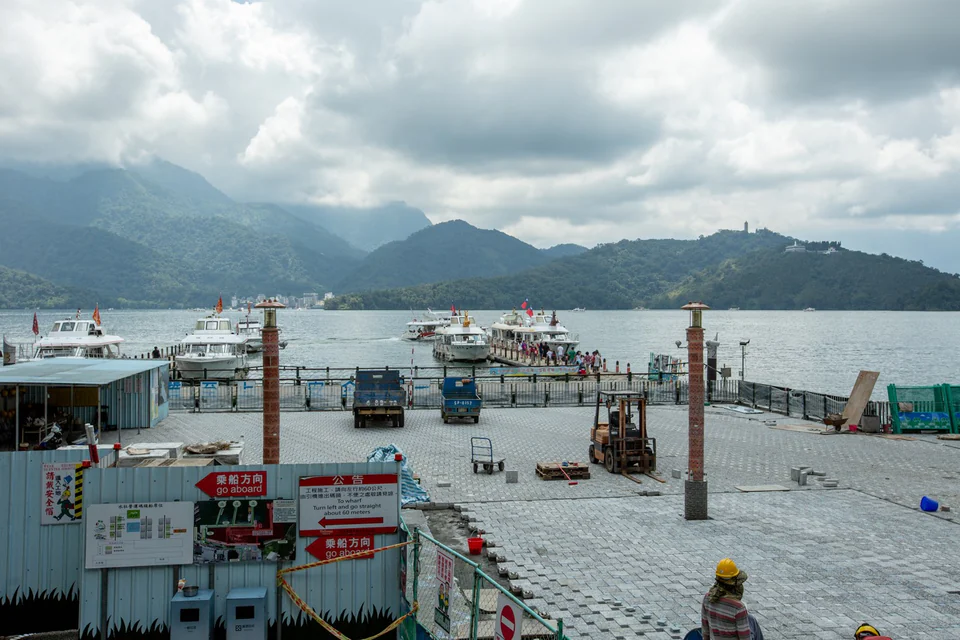
Leave time for a stop on the public lakeshore, then return to the original bicycle-hire point at Shuishe. The passenger boats at the pier offer a present-day view of movement on the lake. After the film’s brief journey through these scenes, a visit can take a little longer to notice how water connects places and people.