
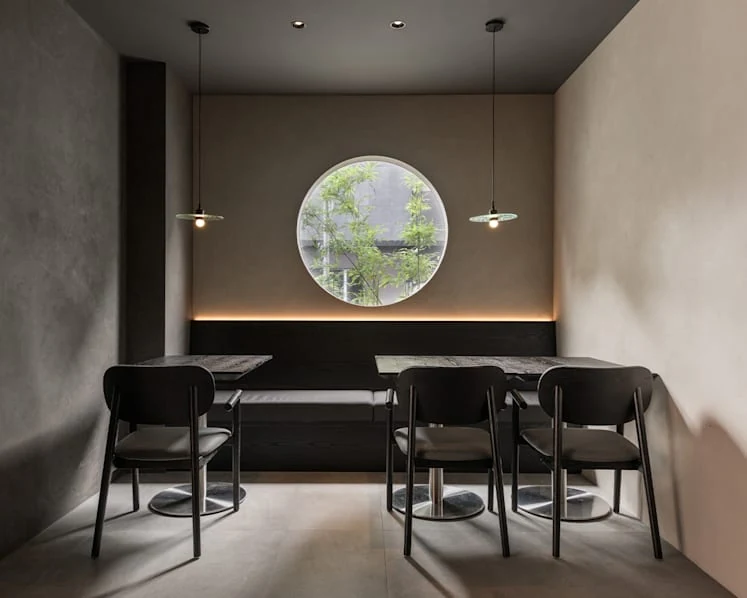
A Singapore writer changes the scale of Taipei
In January 2025, design writer Luo Jingmei spent time in Da’an, a central district whose lanes accommodate cafés, small shops and restaurants. Her choices included HOOD Coffee by day and Yamasan for a meal. The interesting change of scale is from a city landmark to a table at which someone has decided how visitors should spend their time.
At HOOD, coffee and cocktails appeared together in her account. At Yamasan, the restaurant, bar and art collection shared a room. These are two businesses with different stories. Following the people behind them explains why an afternoon drink and an evening meal can occupy different parts of the same neighbourhood life.
Sean brings a cold-brew idea back to a counter
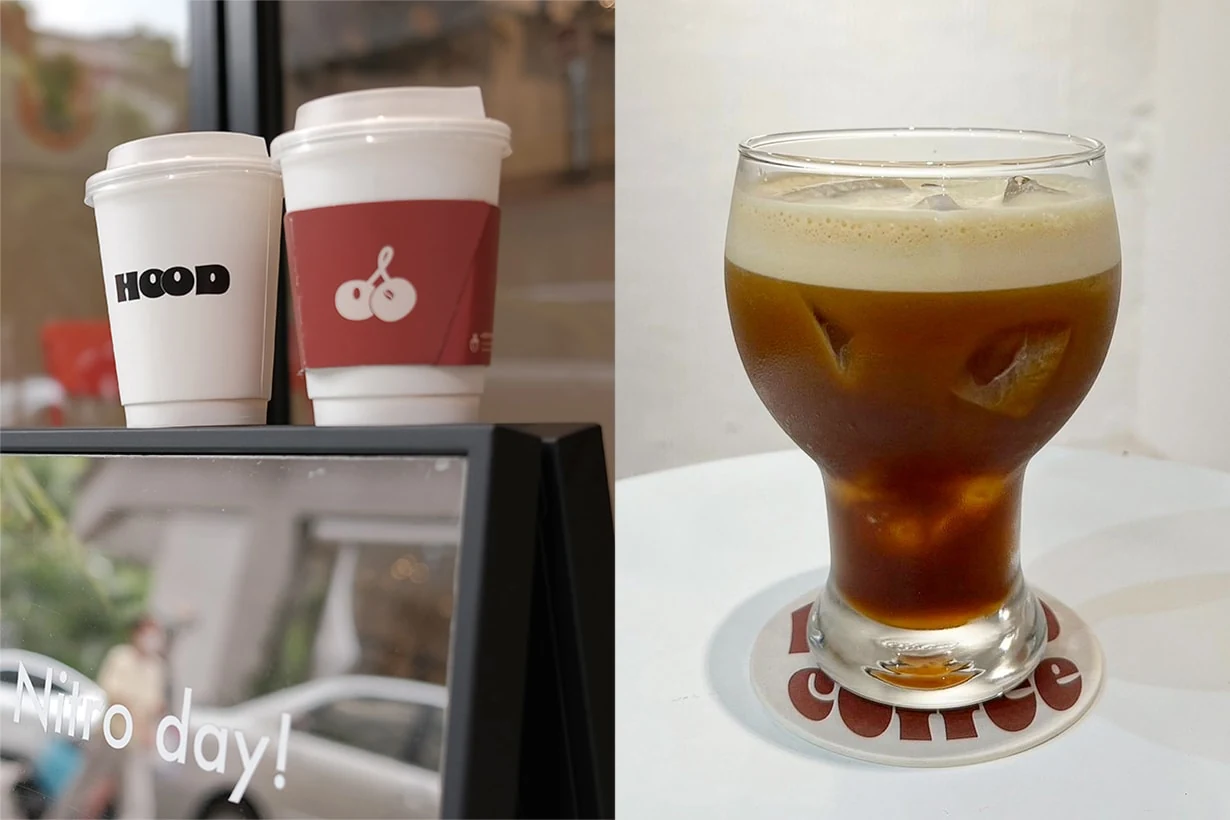
One of HOOD’s founders, Sean, had lived abroad for years. A visit to a Brooklyn shop specialising in nitrogen-infused cold brew provided a starting point. In 2023, the café used high pressure to introduce nitrogen into cold coffee near freezing point, changing its texture without turning it into a milk drink.
The café used different beans for espresso and cold brew: a medium-roast blend for the former and a lighter Ethiopian single origin for the latter. That distinction matters before the drink reaches a table. A coffee shop’s identity is built partly through decisions about beans and preparation, then made visible through how a cup is served.
Team member Zoey extended the cherry symbol into clothing and accessories. The café’s design therefore continued beyond its cups, with people taking a visual detail back into their everyday wardrobes. By 2025, Luo was also stopping for coffee cocktails. Different preparations gave her a reason to return for more than one kind of drink.
A promise between classmates takes ten years
Yamasan began with Ishan Wong (王一山) and Liam Tsai (蔡孟儒), high-school classmates who had agreed to open a restaurant together. Wong studied business administration before a part-time job drew him into food. He brought Tsai into restaurant work, then pursued culinary training and worked in overseas kitchens. Their paths also met at Taipei’s MUME.
In June 2019, roughly a decade after their promise, they opened Yamasan. They chose a modern izakaya: dishes they wanted to eat, careful preparation and a setting less formal than the fine-dining kitchens in which they had trained. The shared business required deciding what should carry over from that training into a neighbourhood evening.
One early pairing joined a slowly cooked pork-cutlet sandwich with bartender Tammy’s smoky mezcal and coffee-kombucha drink. Wong also dried leftover chillies and stock-used kombu into powders. The work extended to the ingredients left after service, alongside the food and drink arriving together at a table.
A changing menu has to leave room for returning guests
Wong soon found that changing a menu every month put pressure on the kitchen and disappointed guests who returned for a dish that had vanished. In 2020, he described slowing the changes to every two or three months, following seasonal produce. Experimentation had to acquire a pace that both cooks and customers could live with.
Seasonality could mean taking something off the menu. He removed white asparagus when the summer supply became more fibrous, and preserved green mangoes from May for a later pork dish. In another preparation, northeastern Taiwan octopus was frozen, thawed and cooked slowly before receiving black-garlic and fermented-black-bean seasoning with grilled pineapple.
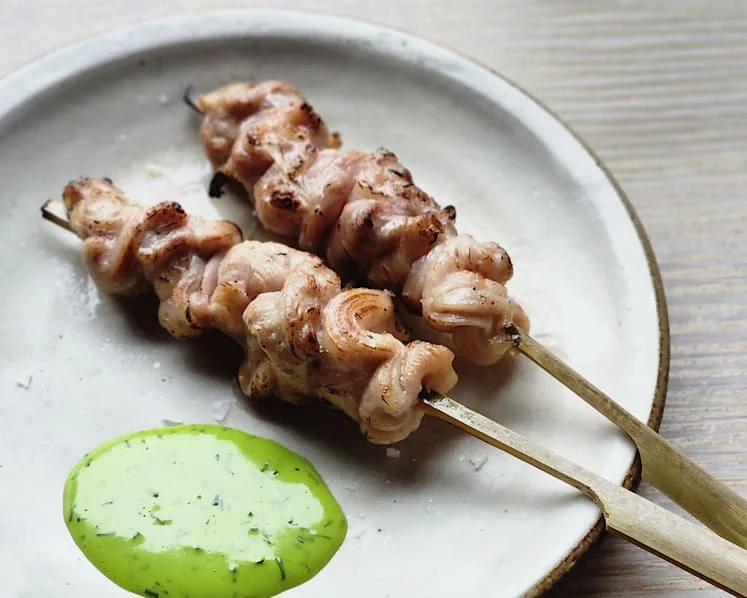
The chicken-neck skewers published in 2025 show a different, compact result: grilled meat with dill mayonnaise. Looking at a plate like this, one can ask what was prepared earlier, what was cooked for service and what changed with the season. A relaxed meal still has an organised sequence behind it.
The current address, and tonight’s table
Yamasan now receives guests on a lane off Section 2 of Dunhua South Road. The earlier Guangfu South Road address belongs to the shop’s history. Its current restaurant listing offers an evening à-la-carte service, so visitors can decide how much to eat and how long to stay within the stated dining period.
Bring one question from the story to the table: how do two cooks with different journeys make a meal feel coherent? Choose from the current menu, notice the pairing of main dishes and smaller plates, and give the room time beyond a quick photograph. A daytime coffee at HOOD can be arranged separately, leaving the evening for the meal and conversation.