
A column before the famous books
The China Critic was a Shanghai weekly about public affairs and culture. Lin began his English column in July 1930. For readers who know him through the Chinese essay magazines Lunyu and Renjianshi, the sequence is revealing: the English conversation was already under way before those magazines appeared. Shanghai was both the place where he wrote and a meeting point for readers working in different languages.
Scholar Qian Suoqiao’s account of Lin’s Shanghai years identifies two audiences for the weekly: English-reading Chinese residents and foreign residents who read English. Qian also identifies Pearl S. Buck as a reader of the column. This makes the later overseas career less mysterious. Before an American book appeared, a writer had been testing how to address people who did not share all his background.
The reader who helped a book cross the ocean
The house’s chronology records Buck encouraging Lin in 1933 to write about China in English. My Country and My People followed in 1935, with her help in publication. In 1936, Lin and his family moved to the United States. The overseas step was therefore also a household move, rather than a book simply travelling by itself.
Returning to Chinese writing, then waiting for a house
His move to Taiwan came thirty years later. In 1965 he accepted Ma Hsing-yeh’s invitation to write the Chinese column Wusuo Butan. In June 1966 he settled on Yangmingshan, temporarily renting a house while waiting for a new home. This was another change in where writing entered everyday life: after the English-language career abroad, a regular Chinese column was reaching readers in Taiwan.
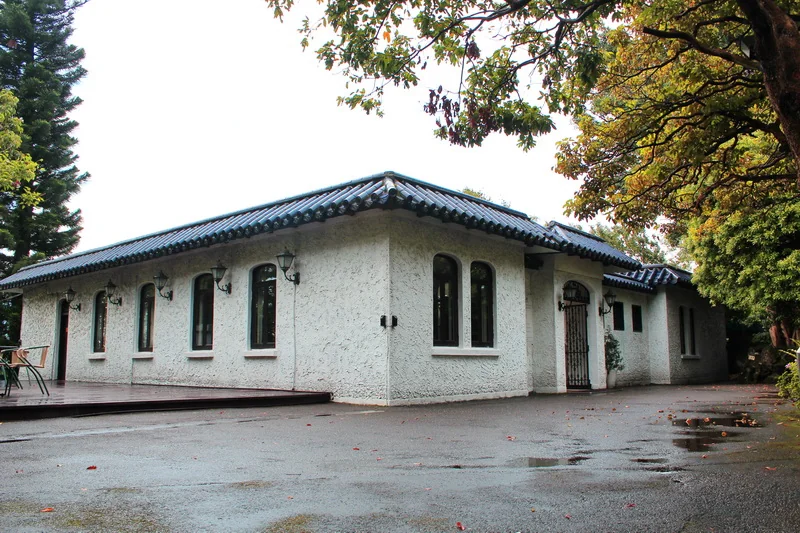
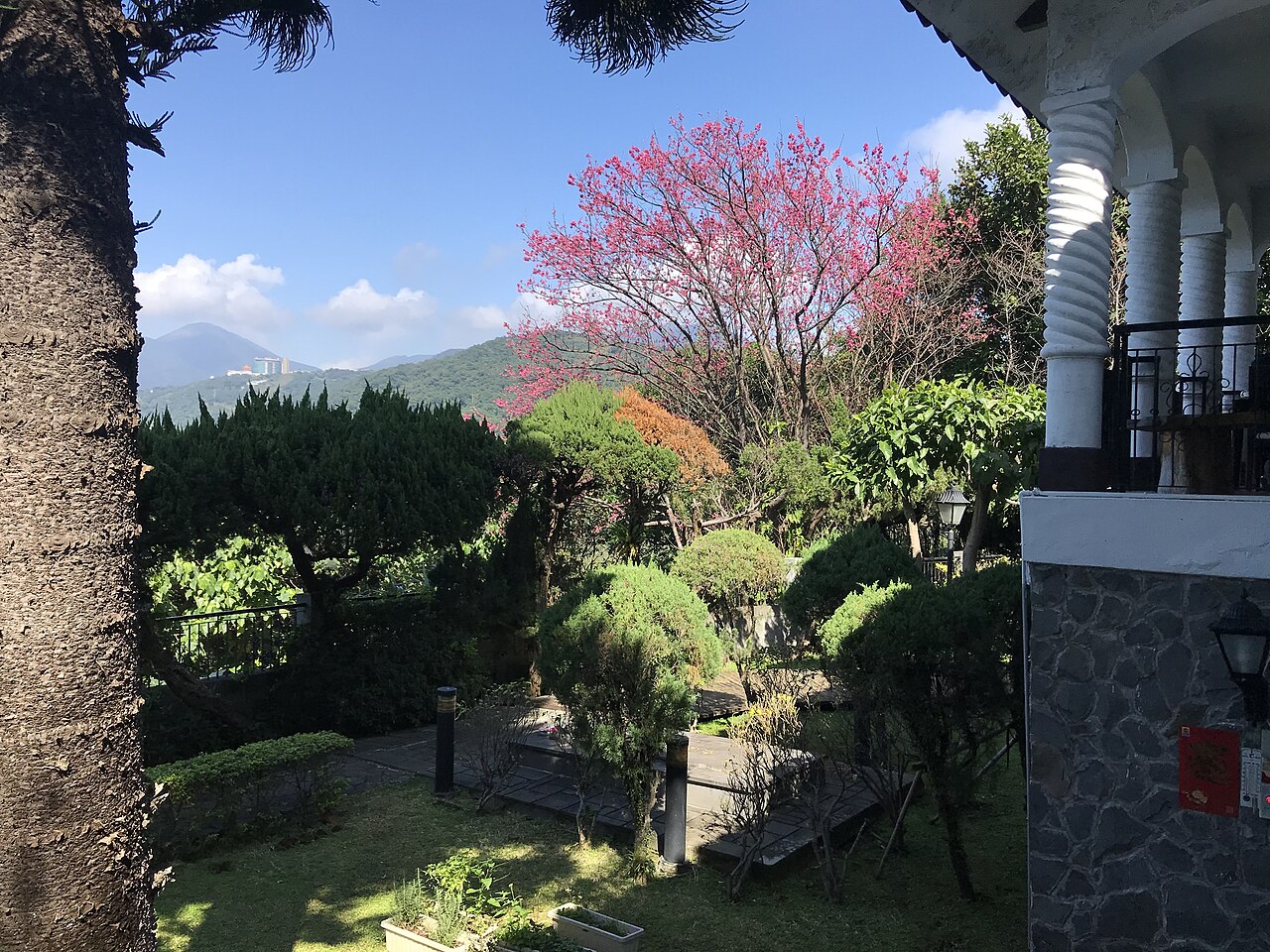
The new house required an architectural collaboration. Lin planned it himself; the house’s chronology names Taiwan-based architect Wang Dahong as the person who brought it to completion. Its courtyard arrangement combines with Spanish-influenced arches and columns. In Lin’s own description, quoted by the house, the home unfolds through a garden, courtyard and trees towards the sky and moon. That sequence gives the resident a voice alongside the architectural record, rather than leaving the house as a facade to photograph.
The house was also a place of work
In 1967, Lin took charge of a Chinese-English dictionary for the Chinese University of Hong Kong. The chronology records its completion and publication in 1972. The house’s room guide identifies the study with his reading and writing and with dictionary manuscripts. That record shifts attention from the famous writer’s balcony to a task still requiring comparison, ordering and revision. It describes the house’s past use; it is not a promise that those manuscripts are on display now.
What made a private home available to later readers
After Lin’s death in 1976, Liao Tsui-feng donated his books, manuscripts, writings and belongings. Taipei established a memorial library in the house, opening in May 1985. The family’s action matters as much as the address: the papers and books did not become a public resource automatically. They were given over to preservation, and the former home took on a different responsibility.
That responsibility also includes a period when visitors must wait. Taipei’s Department of Cultural Affairs lists the house as temporarily closed in its 2 October 2026 update. For now, the Shanghai column and the Taipei house can be connected through reading. When the house reopens, the courtyard and study will make a useful pair of questions: how did one family arrange its life here, and how was its working material kept for people who came later?