Reading the material
In April 2018, Macau’s Exmoo reported on an invited media visit organised by the Taipei Economic and Cultural Office. In Sanyi, the group watched Kang Mu-xiang carving in his studio. The old report opens a question that outlasts that trip: what does a carver see in a piece of wood?
A local cultural record describes how Kang worked with unusual pieces and remnants of wood. He used their existing forms and grain, reducing the visible traces of cutting. The material was a collaborator: choosing what to leave became part of making the figure.

A trade finds new uses
This work belongs to a town whose market changed. The government’s industrial history records Sanyi’s earlier export trade and the later growth of domestic demand. Carvers had to find new customers and purposes for their skills. The workshop had to change with them.
Kang eventually worked with another discarded material. In 2013 he used retired Taipei 101 elevator cables to make Infinite Life. The Culture Ministry records that the cables reminded him of the straw hats and baskets woven by his parents. Wood carving led him towards a form he could weave in steel.
That history records training for successors and art students in 2014, and furniture skills in 2019. Teaching brought carving into new uses; these past programmes do not guarantee a class available today.
The public place to continue
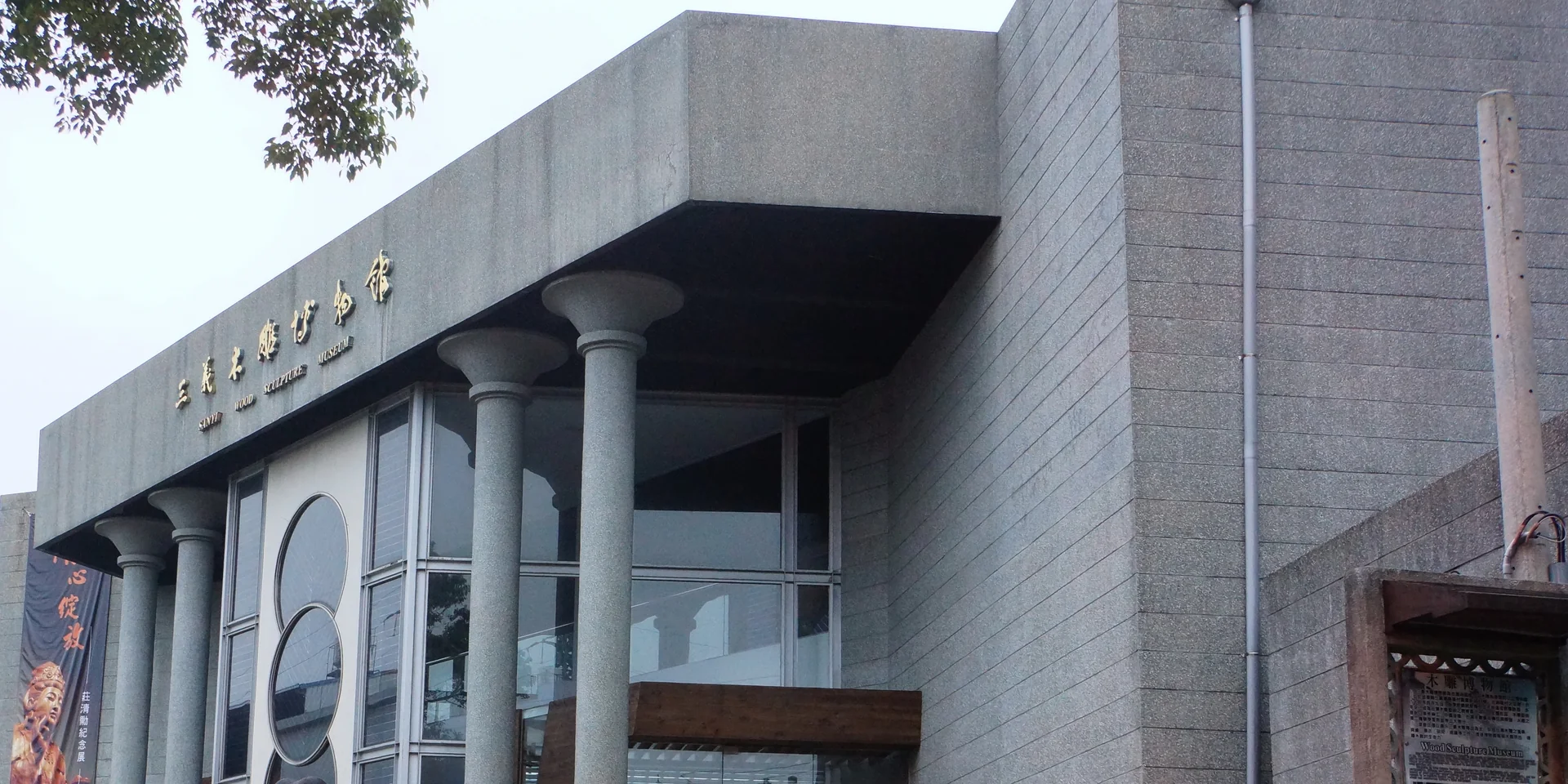
The public museum provides a place to follow that wider story. Its 2022 renewal traced local carving history alongside tools and work used in buildings and furniture. This lets a visitor move from admiring a finished form to asking how an industry organised materials, skills and work.
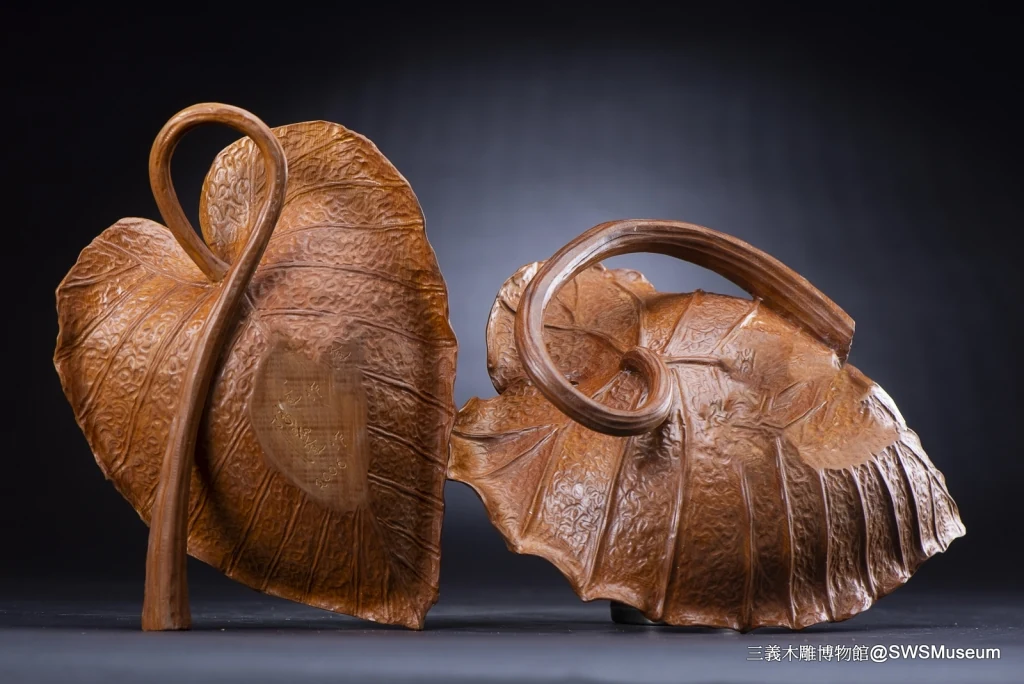
The museum’s collection offers a specific example beyond Kang’s studio: Chen De-long’s 2006 Encounter, carved in incense cedar as fruit dishes. Its curling, leaf-like edges turn wood into a usable vessel. If it is not on display during your visit, choose another labelled wooden object and compare grain, cuts and function.