
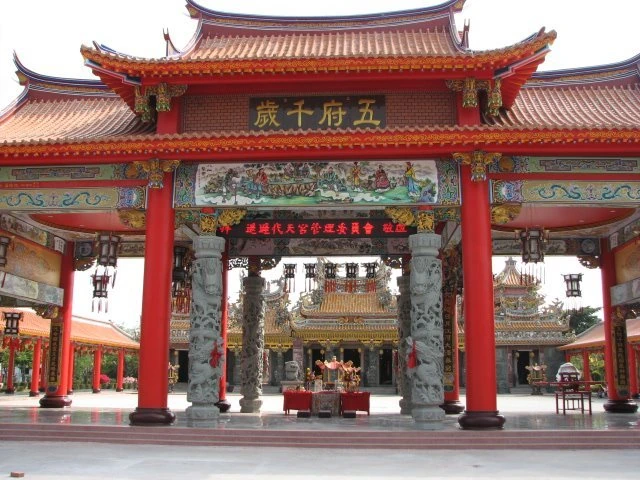
Visitors change the meaning of a home
After the gods arrived in Thailand in 1976, they were first housed at Zheng Jingyao’s residence. Visitors then needed easier access. A private home offered the first place of welcome; continued worship raised a different question about who could enter, and how an invitation could become a shared daily place.
The temple’s own history identifies Zheng as a Thai-Chinese businessman from Fengshun, Guangdong. His working life crossed Thailand, Japan and Taiwan. That distinction matters to this journey: the first host brought his own connections, while the introduction to the Taiwanese temple came from someone else.
An introduction becomes a cross-sea undertaking
Taiwanese agricultural engineer Tsai Cheng-hsiung introduced Zheng to the Five Royal Lords of Nankunshen. Zheng arranged to receive their images in Thailand in 1976. The connection was carried by people who could introduce, organise and host; a temple name acquired a journey that others could follow.
A temporary shrine near the Asok bridge subsequently offered a place outside the residence. A management committee was registered in 1978. Moving the gods involved a change in responsibility too: access, upkeep and decisions could now be organised among people, beyond one family’s front door.
Bridges come before the main hall
Lin Binghuang and his wife, Lin Shi Hongxia, donated the Samut Prakan land. Lai Shuwang and Zhang Changchun funded a river bridge; Lai Nanxing provided another over the drainage channel. The land alone was insufficient: people and materials needed access. Bridge builders therefore belong inside the temple’s story.
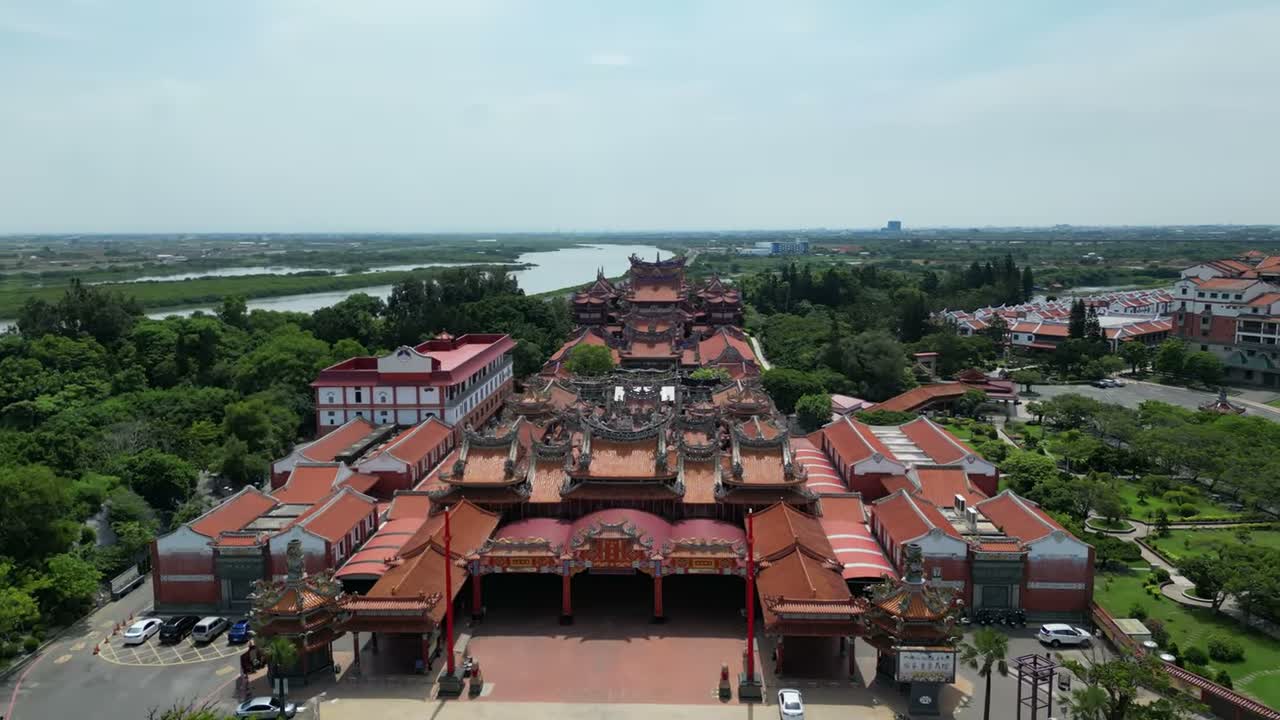
The main building was ready to receive the gods in 1992. For people familiar with Samut Prakan’s shrine, this longer preparation gives the familiar entrance another meaning. Passing through it completes work begun at a household threshold, then extended across waterways and into a place maintained by a community.
The builders go back to the mother temple
The Thai temple’s history says the architect visited Nankunshen to survey and take models for the new building. Here the transmission had a material task. Looking at an existing structure, then making something usable elsewhere, required more than recognising the same gods or repeating a familiar name.
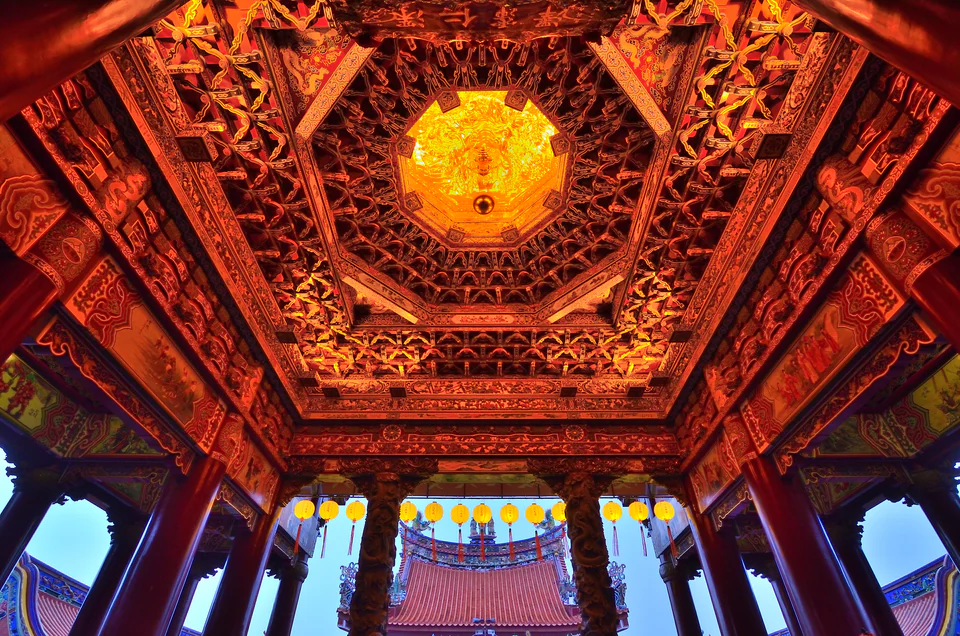
At Nankunshen, the front worship pavilion has a round caisson; the rear one is octagonal. Follow the layers and the different edges with your eyes. Details such as these allow the mother temple to be approached as a place of skilled making, alongside its importance as a source of worship.
A relationship continues through return visits
The Thai temple records organised return pilgrimages to Nankunshen. Such a return brings the overseas temple back among people who also use the mother temple. The long relationship includes renewed arrangements—travelling, receiving visitors and making room—after the first journey of the images has ended.
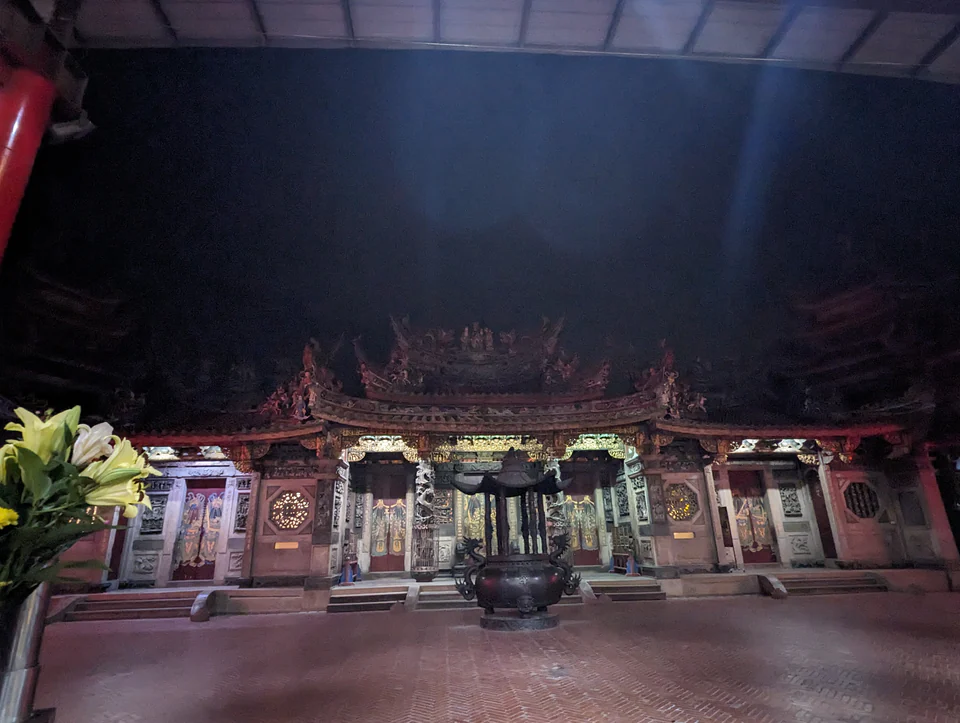
When viewing the main-hall eaves, distinguish the work from the people using the space below. A visitor can pause at a carved support without stopping a worshipper’s route. That small decision continues the question raised by the original private shrine: how can different people share a place of devotion?
Arrive with the return already planned
Nankunshen’s current visitor page lists the temple open daily from 06:00 to 21:00. It separately says Dakun Garden is closed for works. A temple visit can still be arranged around the open areas, with the garden kept outside the plan; the route should follow what is available now.
From Xinying, current city bus information lists Brown 1 via Nankunshen, with a return service towards Xinying. Choose both legs before leaving. The people who built the Thai shrine once had to make access possible; today, planning a way back lets the visitor spend time looking without turning a temple’s closing time into a transport promise.