
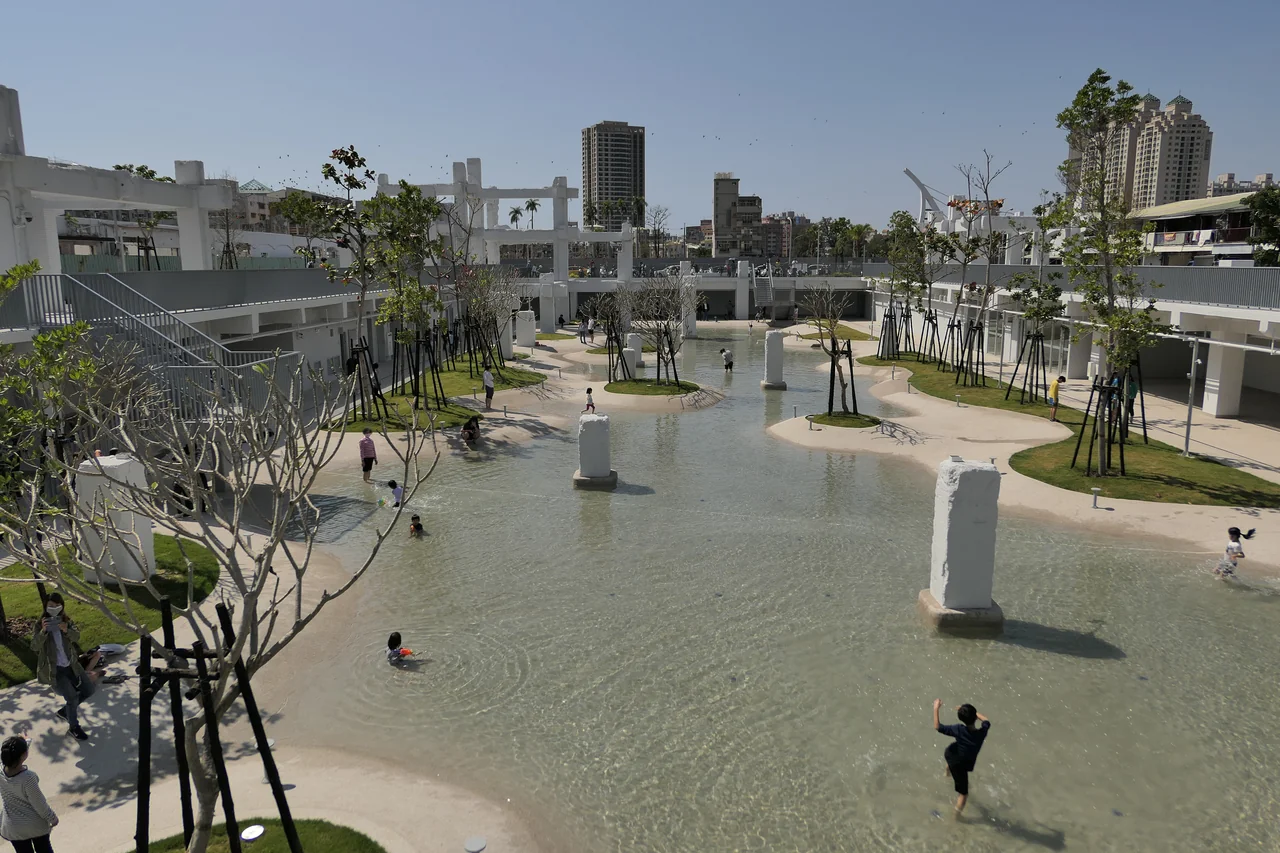
From a market beneath an arch
In Rotterdam’s Markthal, apartments form a large arch around a covered market square. Visitors encounter an architectural answer to how shopping, housing and public space can fit together. The same practice, MVRDV, later worked with Tainan’s city government on another commercial site. This time, the central question was what to do after a shopping mall no longer served its original purpose.
A harbour became a mall; the basement became a square
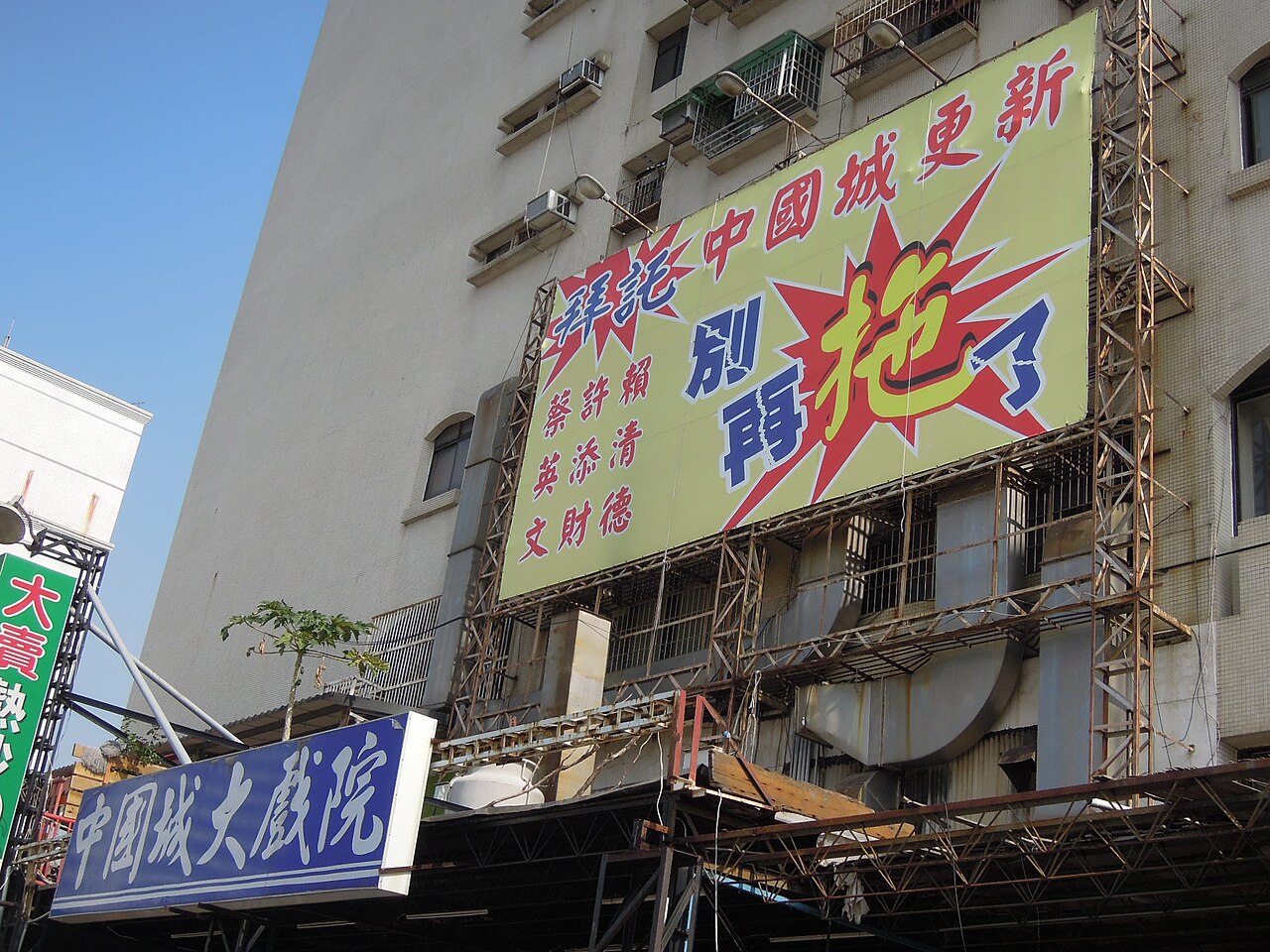
China Town Mall was built in 1983 on the former harbour beside Tainan Canal. The design team did not restore the harbour exactly as it had been, or preserve the entire mall. It removed much of the building and transformed its underground parking level into a sunken public space with water, planting and shaded circulation. Some concrete remains stayed visible.
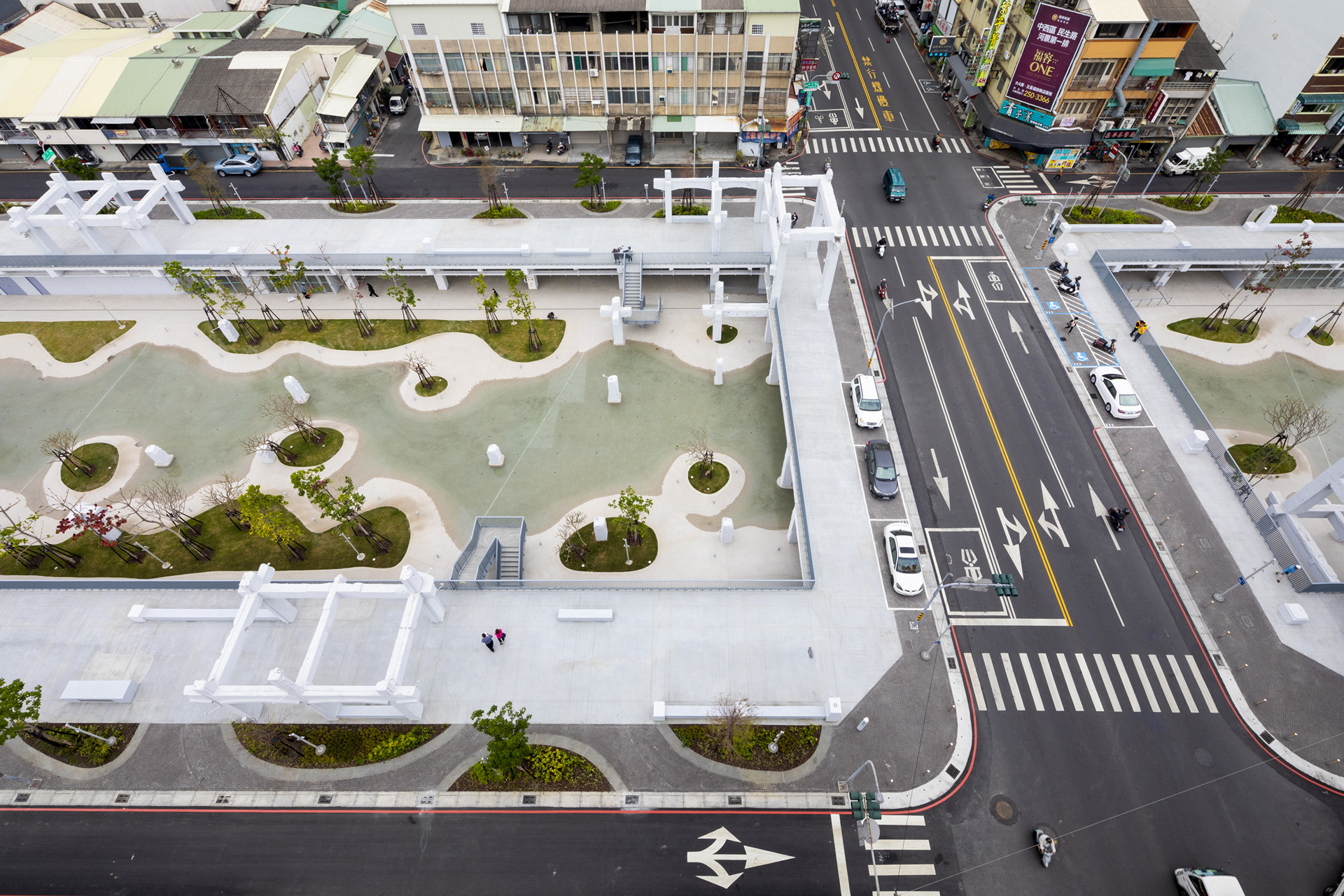
MVRDV co-founder Winy Maas described water and vegetation as sources for the project. The decision makes the old building readable through what is missing as well as what remains. A column that once belonged inside a commercial structure can now stand beside people gathering at water level. The former use has not disappeared from the scene, even though people use the site differently.
A Dutch commission had Taiwanese working partners
Tainan Spring was a city-government commission, completed with Taiwanese partners including The Urbanists Collaborative and LLJ Architects. The city also credits the lighting work of LHLD. These are not names to append after a celebrated international practice: urban planning, architectural coordination and lighting help decide how a drawing becomes a place that can be used across different parts of a day.
Opening day did not finish the work
The square opened on 7 March 2020. Within days, crowds and damage to public facilities had prompted a city meeting on maintenance and operation. On 12 March the city described a trial period and planned a weekly cleaning closure. The popular new image immediately required another kind of work: protecting equipment and keeping access usable.
That early maintenance problem gives the cross-border design a consequence beyond photographs. An international team can propose a pool; local staff and users inherit how to keep the surrounding space working. The current tourism listing still includes a Tuesday closure. Its hours are a practical part of the public place, not an interruption to the architectural story.
Stand first at street level, then follow the descent
At No. 343, Zhongzheng Road, compare the surrounding street level with the sunken square before descending by an open public route. Look for the surviving columns and beams, the shaded perimeter and the edges between water and planting. The point is not to imagine the mall exactly from a ruin, but to recognise decisions about what could stay and how people could move around it.
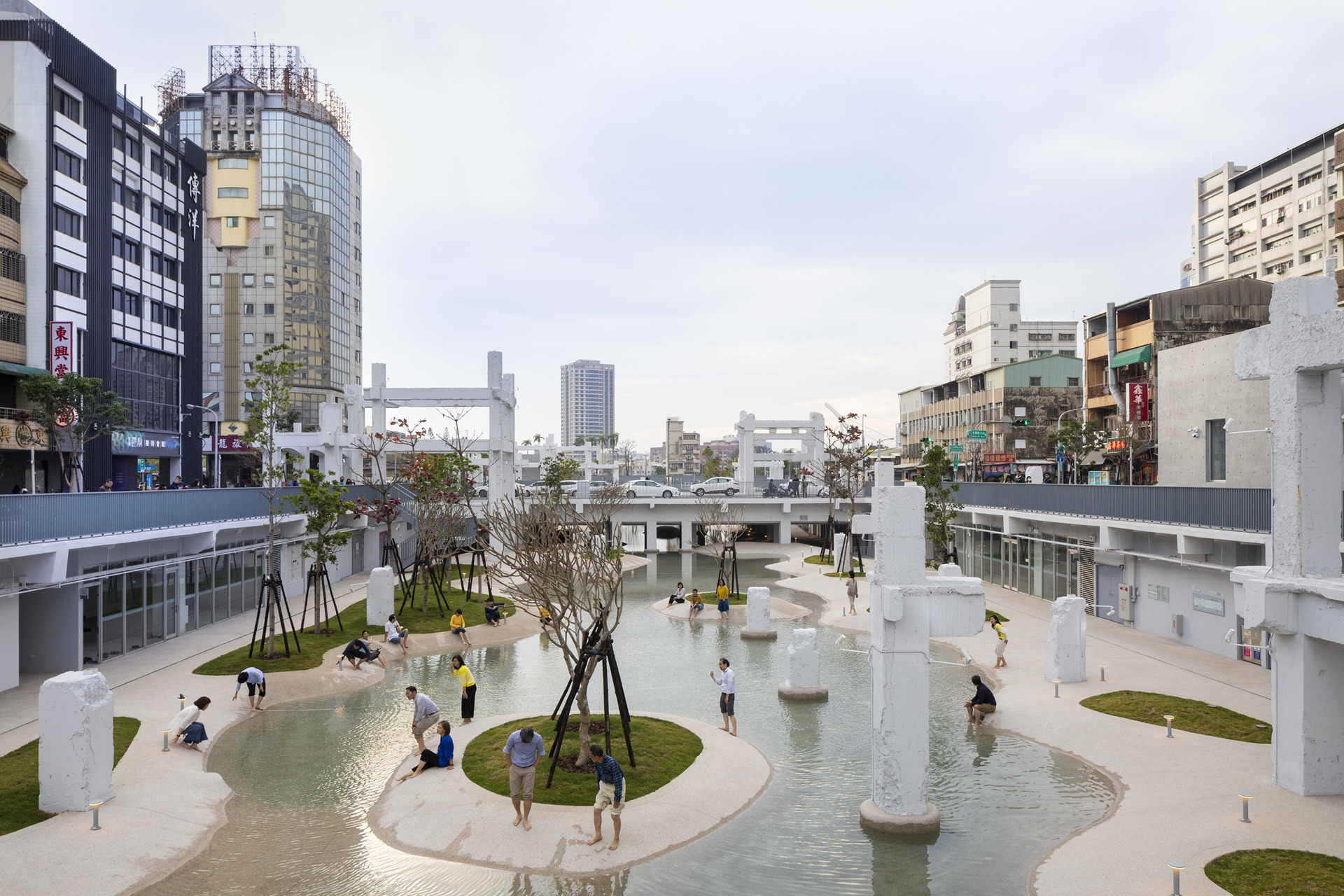
Rotterdam supplies an entry through a familiar design practice. Tainan supplies the former mall, the municipal commission, the working partners and the continuing care. Following that sequence lets a visit become more than recognising a Dutch name abroad: it becomes a way to read how a Taiwanese city changed the use of a difficult piece of its centre.