
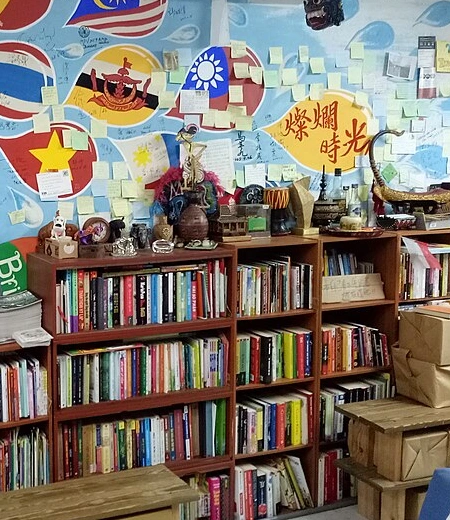
A piece of paper changes meaning
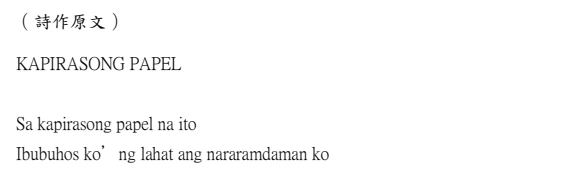
In Kapirasong Papel, a marriage certificate first witnesses a promise and later becomes an object of pain. A Filipino reader can begin with the title, then follow how the speaker’s relation to the same object changes. The paper does not have to move for the story to travel through different stages of a life.
The poem’s speaker works overseas to support a family and eventually faces a broken relationship. That sequence puts distance inside the object. Read it as a constructed voice with choices, actions and consequences; its first-person form alone does not establish that the events happened to the author.
A dormitory call became someone else’s voice
Factory worker Melinda Babaran drew inspiration from an overheard dormitory phone argument about a partner’s infidelity. Hearing something and writing it are different actions. The writer must decide what can become a narrative, where it starts and whose voice carries it. A familiar workplace experience becomes an artistic responsibility.
Babaran chose a male narrator, explaining that she wanted to honour her faithful father and uncle. That choice gives the poem a relationship to her life without collapsing character and author into one person. It also lets a reader ask how remembrance can guide the voice of a story drawn from someone else’s trouble.
A translator made another reading possible
The preserved award collection prints the Tagalog poem with a Chinese translation. The two versions can be approached side by side. Look at where the speaker returns to the paper, and what has happened between those returns. Even without reading every word in both languages, a reader can follow the structure before reducing the work to a message.
The published Chinese version credits translator 陳慈治. Keep that name beside Babaran’s when reading. This second person’s work helped a voice cross into Chinese, making a meeting with Taiwan’s readers possible. Translation enters the story as an action someone performed, rather than an invisible convenience.
Recognition did not turn every story into autobiography
Babaran received a merit award for the poem at the sixth migrant literature awards, held in Alishan in 2019. A public ceremony brought the writer and the work into a shared space. The mountain setting is part of that completed event; it does not make every visit to Alishan an encounter with the author, or place the award there permanently.
Her earlier work, The Traces of the Whip, dealt with her own experience of family violence and acceptance as a lesbian. Keeping the works apart respects the writer’s range. She can write from her own life and choose a different narrator for another poem. A literary prize recognises a work; it does not require its author to be only a witness to personal suffering.
A book needs someone who can read it
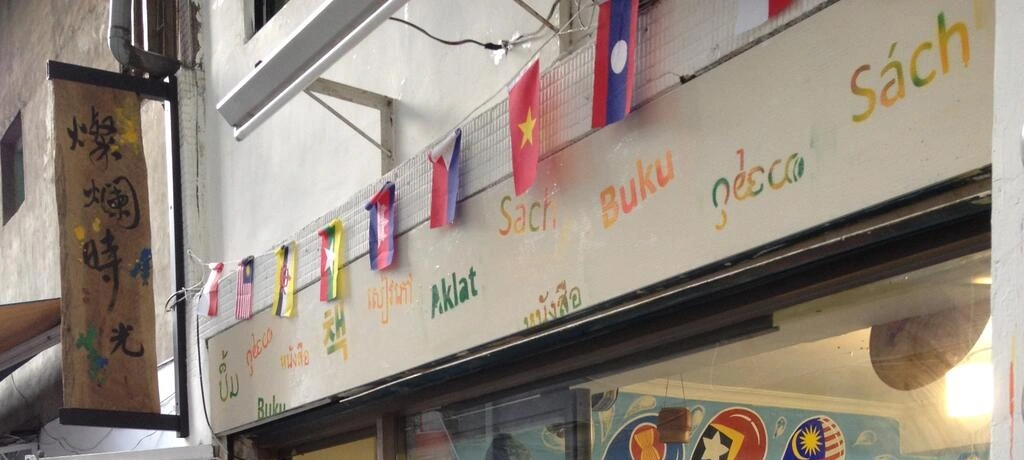
Brilliant Time in Zhonghe receives books through a campaign asking travellers to bring back books they cannot read. The traveller’s limit becomes a beginning for another reader. Place a language unfamiliar to you on a shelf, and someone else may find an ordinary book rather than an exotic object. The act of carrying changes according to who opens it.
The bookstore lends its books against a refundable deposit and encourages readers’ marginal notes. A later reader can meet more than the printed text: a previous reader has left a response. This is a reading visit suggested by the story, without assuming that Babaran works here or that her poem is always on the shelf.
Choose a time to read with care
The visitor page directs readers from Nanshijiao MRT Exit 4 to the bookstore. Bring the author’s and translator’s names with you, then ask what is available that day. A question about language or a book is enough to start; no one needs to become a spokesperson for an entire country.
On the return journey, keep the poem’s different voices separate: the speaker on the page, the author who chose him and the translator who brought him to another language. The visit can begin with a book you know, and end with a more careful way of asking who made the words you read.