A moon lute that leads back to Penang
Ang Eng Bok arranged to have his moon lute bought in Taiwan. Its place in his music began with a memory of Penang. As a child in George Town’s Sia Boey area, he had watched the itinerant singer Chen Tongtong (陳同同) go from house to house, interpreting fortune slips and singing with the lang tin tang, the local name for a Hokkien moon lute.
Years later, Ang considered making an instrument especially for Penang. Without the skills of an instrument maker, he set that idea aside. He remembered the moon lute, arranged to get one from Taiwan and learned from online videos, applying what he already knew about the guitar. A childhood sound became something he could play himself.
Finding room for different instruments
Playing local songs also meant finding a way to keep making music. Ang left accounting and helped establish yNot Music Studio in 2007. Recording services and commercial production supported the practical work; his independent label, Uah Music Culture, continued the work of making albums and organising stages for local musicians. Maintaining that space required years of effort.
In Culture Shot, Ang’s singing and moon lute work alongside musicians with different musical backgrounds. Kasiman bin Basman plays rebana; Sivasilan A/L Muniandy plays gendang. Erhu, accordion and Chinese percussion add other parts to the ensemble. The collaboration takes a concrete form in the instruments and roles credited to each musician.
An invitation from Hengchun becomes Marilah
At the other end of the sea was the Hengchun singer Chu Ting-shun. He taught folk songs in schools and communities across Taiwan’s southern peninsula. In 2007, Chen Ming-chang’s music company released his album 卜聽民謠來阮兜 (If You Want to Hear Folk Songs, Come to My Place). Chen produced it, with Taiwanese-language writing by Wang Chao-hua and cover artwork by Kao Hsien-chih. Recording gave later musicians a work they could return to.
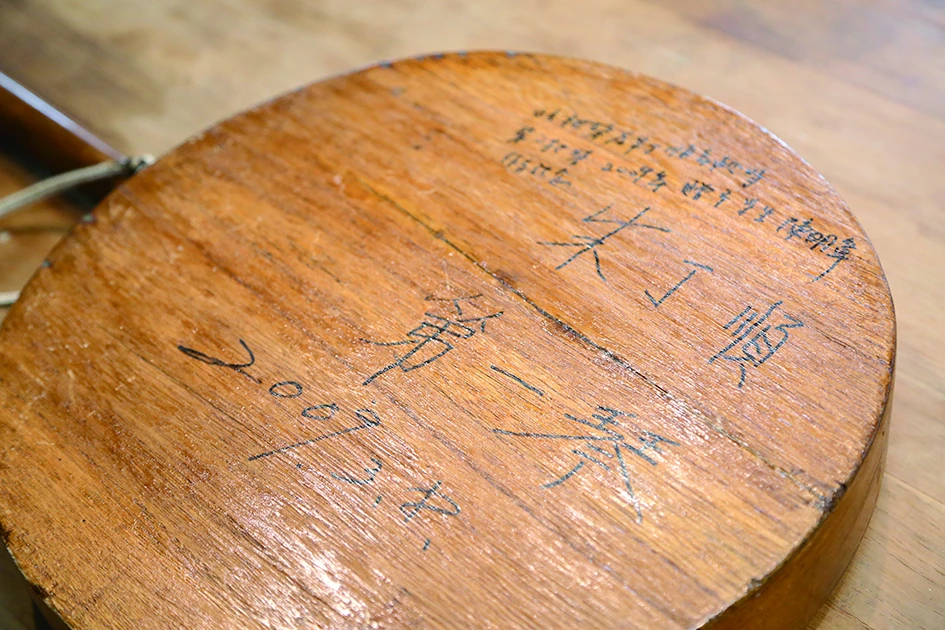
Chen had also needed time to understand the instrument. He recalled going to Hengchun at forty-seven to learn from Chu: three years working through Chen Da’s music, then another four understanding old moon-lute tunes. In 2009, Chu gave him a lute bearing his signature. The inscribed instrument in the photograph belongs to that teacher–student relationship. Ang’s self-directed learning in Penang followed a different route; the two experiences show distinct ways of continuing work with the same kind of instrument.
Taiwan’s Dabangni Band and Penang’s Culture Shot reworked that song as Marilah 來聽民謠, released on 21 January 2025. Marilah is a Malay invitation to come along. The new arrangement brought in the Malay folk melody Jong Jong Inai and a disco-funk rhythm, with Malay, Penang Hokkien, Taiwanese Hokkien and Hakka among its vocal materials.
The people who rewrote the song
The collaboration has named responsibilities. Dabangni’s leader, Richard Liu (劉榮昌), and Ang Eng Bok wrote the lyrics together; Shih Wei Hsiao and Shih Yu Liu arranged the music. Both bands took part in production and recording, with Shih Yu Liu coordinating production and Andres Lai mixing. Yun Ju Liu handled administration and Yi Fen Huang coordinated overseas promotion. The invitation needed lyrics and an arrangement, then the work of recording, mixing and bringing the finished piece to listeners.
Liu sings and plays guitar and moon lute; Shih Yu Liu brings bamboo flute. Suona, keyboards, bass and a drum kit form part of Dabangni’s contribution. Culture Shot adds rebana and gendang, erhu, accordion, guzheng and percussion. The two bands also shared the Islander Surge programme at Bsync Live in Kuala Lumpur in November 2024. Their work includes a shared stage as well as a recording listeners can return to.
The official video credits identify another set of tasks in Malaysia. Ken Hor directed, shot the moving images and handled editing and post-production. Yew Kok Hong produced the video, took still photographs and designed the graphics; Stanley Wei supplied the title calligraphy. BSYNC LIVE is credited as the filming venue. The music and its image had their own makers, leaving a completed video through which the collaboration could also be encountered.
Hengchun first, then the stage in Penang
On 3 January 2026, Dabangni performed Marilah at the theatre of Hengchun Cultural Center. They also shared the concert with the local band Folk Take. A song developed through an overseas collaboration was being played in the place from which its original folk song came, alongside musicians working on the peninsula today.
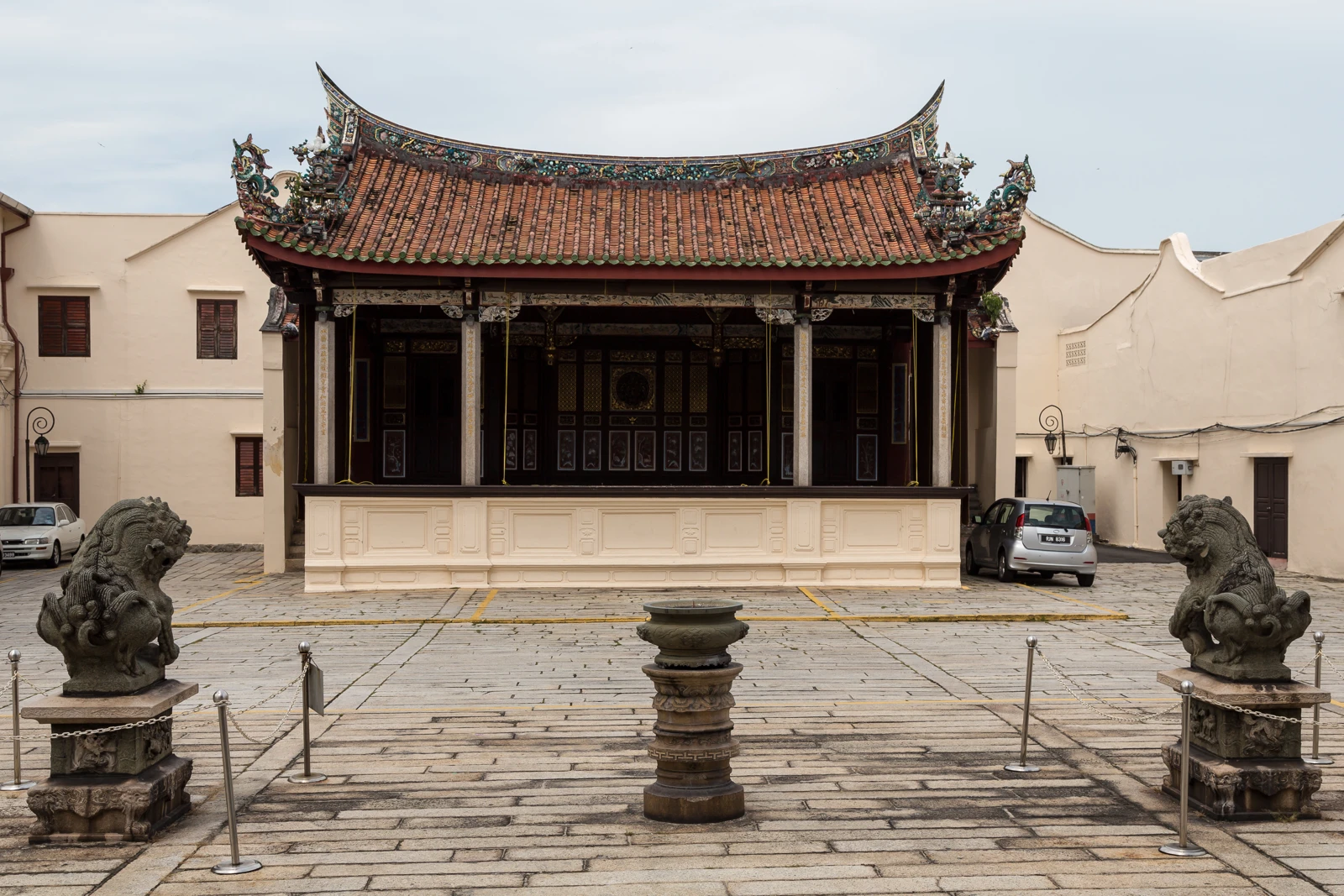
On 8 August, the song reached Leong San Tong Khoo Kongsi in Penang through Islander Surge 3.0 at George Town Festival. Uah Music Culture’s account records Dabangni and Culture Shot performing Marilah together with their full line-ups for the first time. The journey had become two distinct events: Dabangni playing the piece in Hengchun, and the two bands sharing it on stage in Penang.
Go to Hengchun and follow the song into a classroom
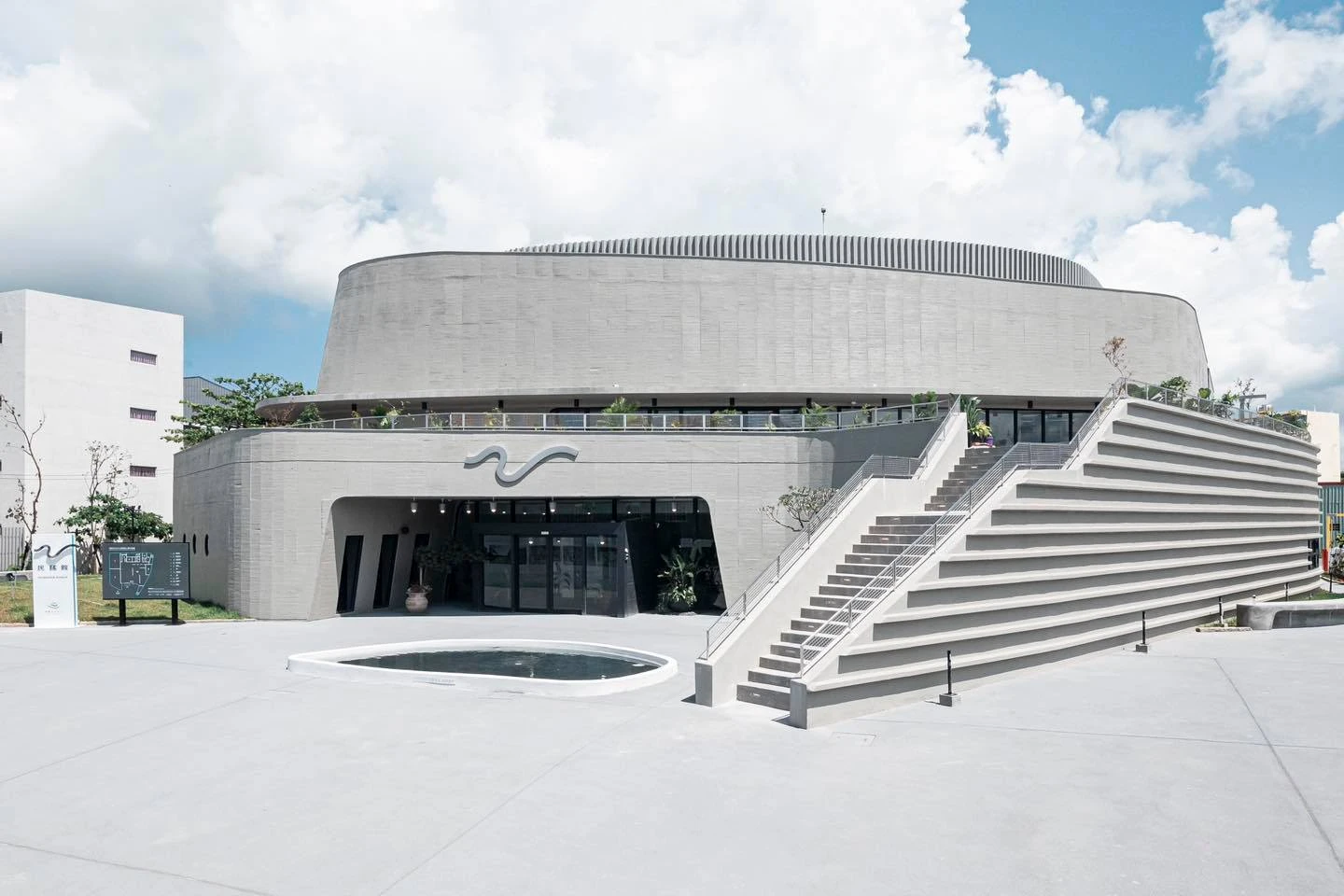
Hengchun Cultural Center gives a visitor several ways to continue listening. Its folk-song museum opened in June 2024, and its theatre opened in December 2025. The ground-floor permanent exhibition 風土生歌 育民謠 traces the relationship between the peninsula’s environment and folk songs through five sections. The sound museum uses six areas to connect natural landscapes, human stories and music. Recordings and explanations give those experiences a public place on the same floor as a folk-song teaching room.
Begin with the folk-song displays, then listen to the peninsula through the sound museum. If you want to learn an instrument or attend a performance, check the current teaching and theatre programmes with the center. Following Marilah from Penang to Hengchun leads to this continuing work: people keeping recordings, teaching songs and giving those songs another place to be played.