A Taiwanese lychee loaf reached Paris; a mother’s name stayed in Kaohsiung
At the Europain trade fair near Paris in March 2010, Wu Pao-chun won the bread category of the first Masters de la Boulangerie. His lychee-rose loaf carried Taiwanese ingredients into the competition. The story continued in Kaohsiung, where he opened a bakery—and put his mother’s name on a different kind of cake.
One competition, three kinds of work
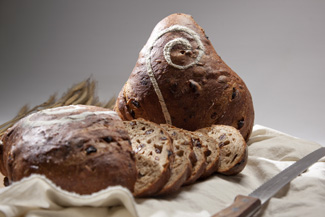
The independently published lychee loaf in Kaohsiung’s 31 March 2010 municipal publication. The original caption identifies 米釀荔香 and credits 哈肯鋪. The complete 325 × 217 photograph is retained; it is not claimed to be the actual loaf on the Paris competition table.
Europain at Paris-Nord Villepinte brought a trade’s skills into public view. Over four days, the first Masters de la Boulangerie gathered 24 individual competitors from 17 countries. On 10 March 2010, it named winners in bread, viennoiserie and artistic bread-making. The bread title went to Pao-Chun Wu of Taiwan.
He entered this first individual competition with experience gained in Taiwan, through travel and in earlier contests. The French bakers’ association recorded his wish to push himself further. He had already been part of Taiwan’s silver-medal team in the 2008 Bakery World Cup. This time, the next step was an individual title, with another Taiwanese ingredient at the centre of his work.
Letting Taiwanese fruit enter the dough
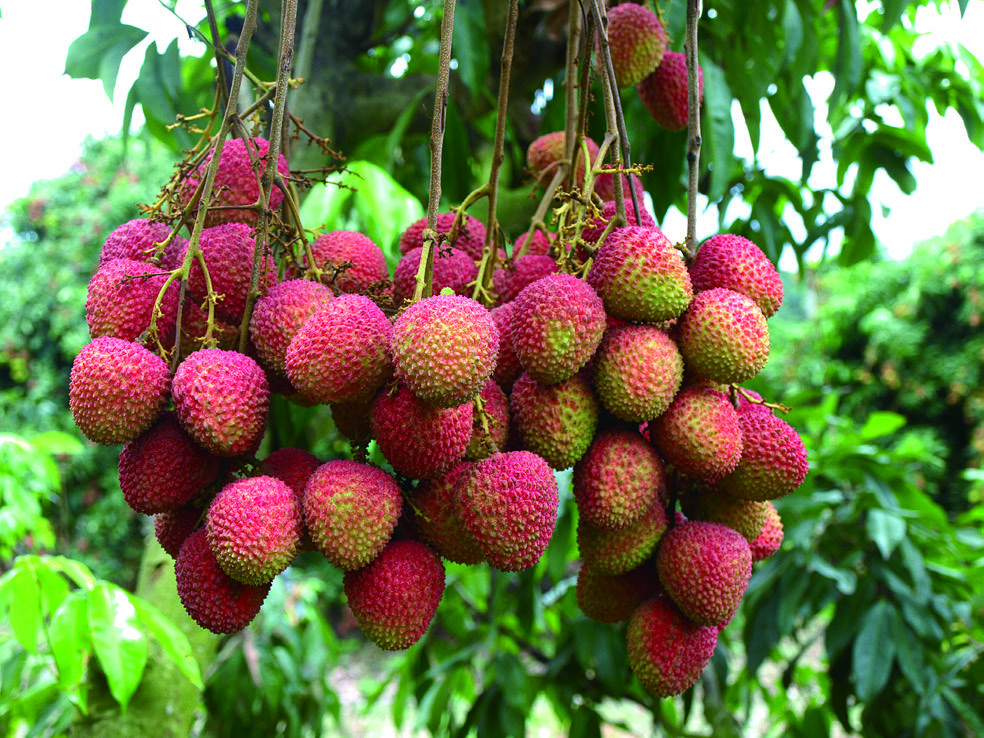
A complete lychee-fruit photograph from the Agriculture and Food Agency’s public postharvest handbook, PDF page 6, Figure 13. It is an ingredient reference, without a claim about the bakery’s actual farm, supplier, cultivar or ingredient batch.
Fruit had already given him a way to bring Taiwan into European-style bread. For the 2008 competition, he used traditionally smoked longan from Dongshan in Tainan with French red wine. In 2010, his lychee-rose loaf continued that choice of working with Taiwanese ingredients. A familiar baking form could hold something from the island’s farms.
In his account of his work, Wu connects using local produce with the farmers who grow it. His task as a baker is to make those ingredients taste good in bread. The names of the fruit therefore lead beyond the competition table, towards people working in Taiwan. That is the connection his choice makes visible.
Today, the bakery describes more of the work behind its lychee-rose bread: at least 15 hours of fermentation for the dough, and black-leaf lychees and roses soaked overnight in lychee wine. Bringing fruit into bread also means deciding when and how it enters the process. The ingredient name opens a way to ask about the making.
After the prize, a place to keep learning
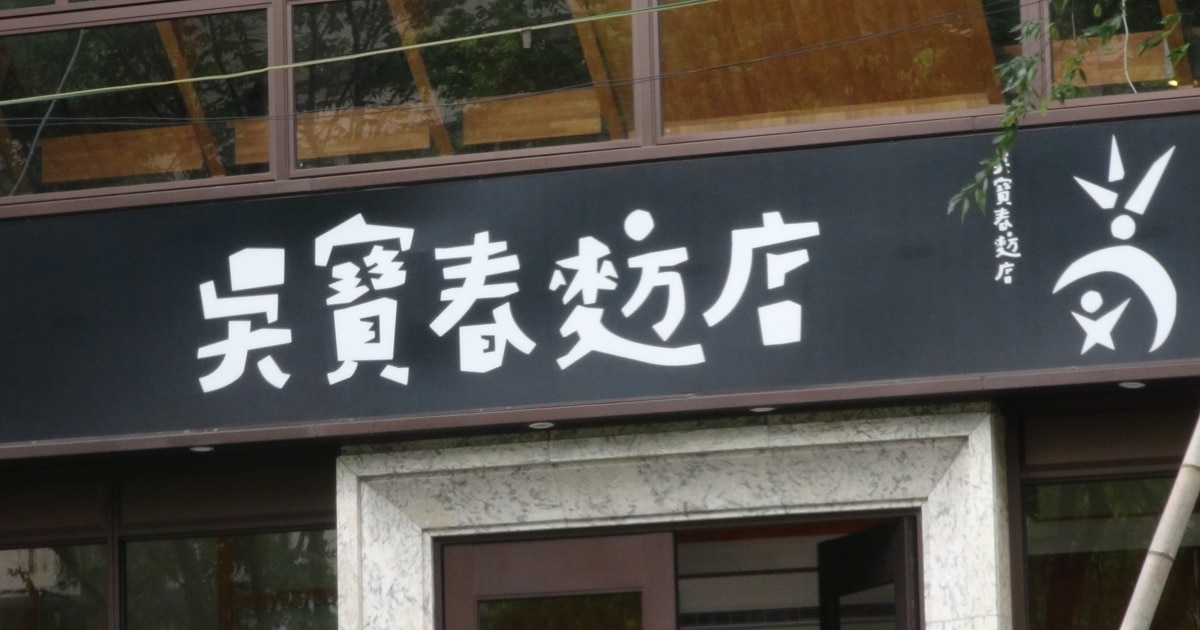
The Kaohsiung shop sign in the exact 1200 × 630 image declared by the original 29 June 2013 report’s og:image metadata. The whole returned image is preserved without changing the URL or making a local crop. It records the historical sign, rather than establishing the present facade or daily stock.
In November 2010, Wu opened his first bakery in Kaohsiung, a port city in southern Taiwan. He later explained opening a shop through the difficulties of learning a trade: he wanted apprentices to learn properly, and bakers to see a future in their work. The bakery gave those intentions a place to be put into practice.
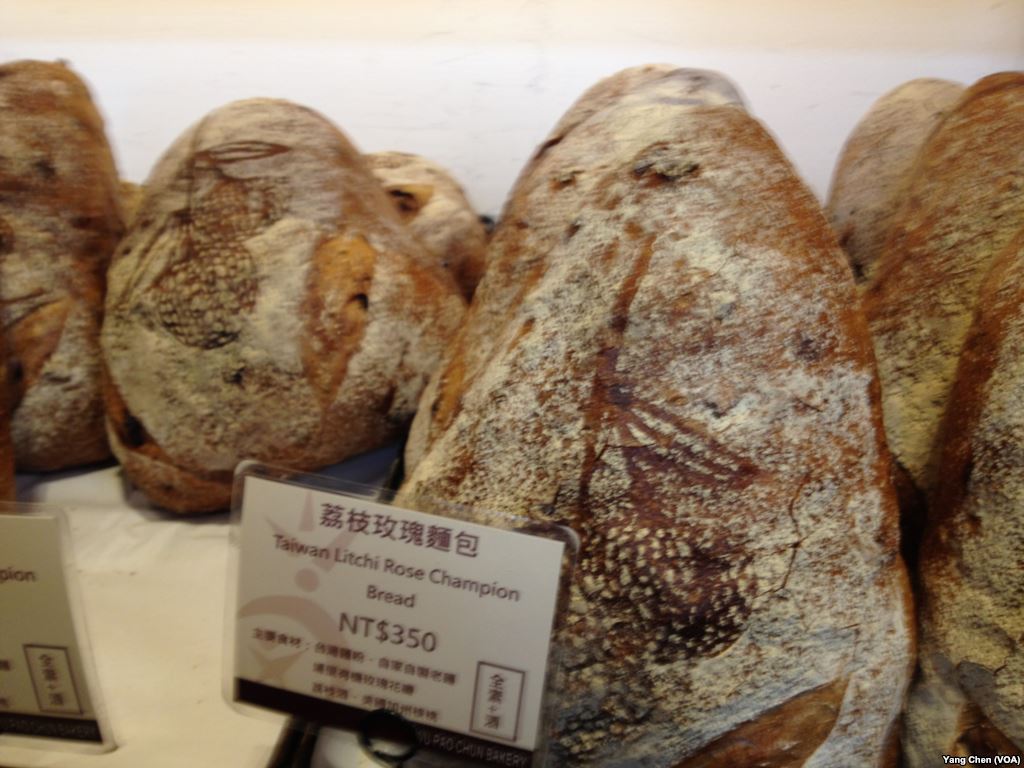
Lychee-rose loaves made by Wu Pao-chun, photographed in Kaohsiung in 2013.
By June 2013, Voice of America reporter Yang Chen was photographing lychee-rose loaves for sale in that Kaohsiung bakery. The label names the bread, and the photograph records its life after the award: a competition creation had become something the shop continued to make and customers could take home. These are later retail loaves, three years after Paris.
A mother’s name on the wrapper
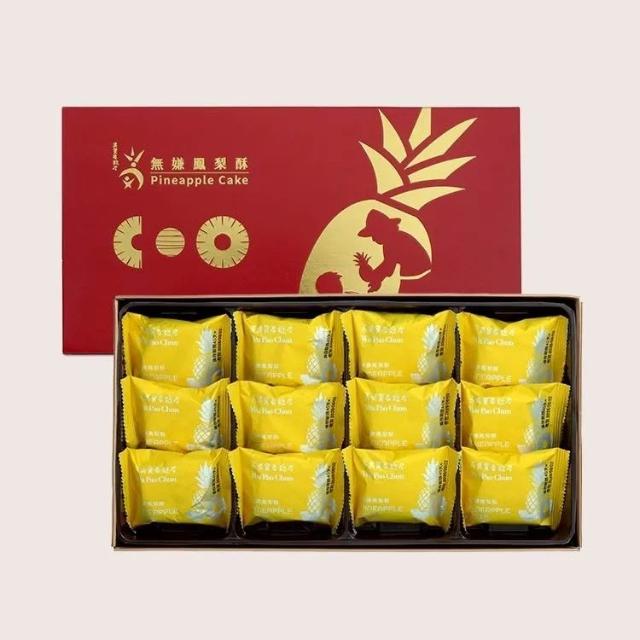
Wu-hsien pineapple-cake box and separate yellow wrappers in an independently published product photograph. This is the literal R4 image supplied on the public retailer page, not a locally edited copy of the retailer’s advertising card. The photograph’s date is not supplied; it is distinct from the signed 2013 original image retained above.Chen Wu-hsien pineapple cakes, named after Wu Pao-chun’s mother, in his Kaohsiung bakery.
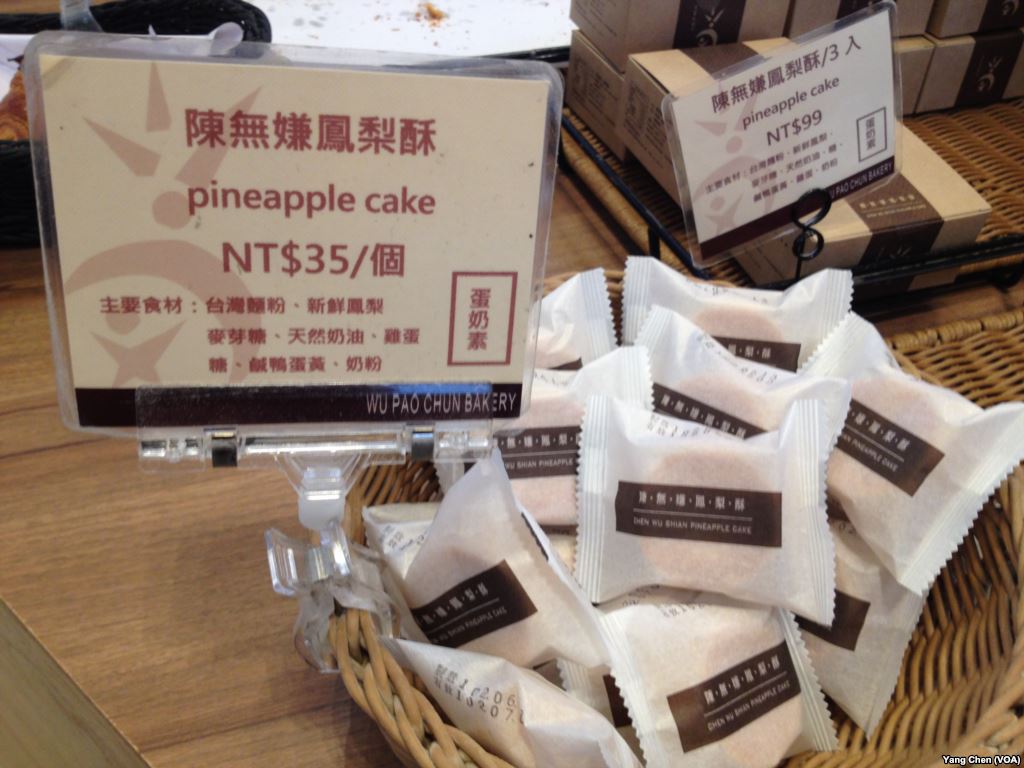
Yang also photographed packets of Chen Wu-hsien pineapple cake in the shop. Pineapple cake is a small Taiwanese pastry, distinct from the loaves that took Wu to Paris. Her report explains the name: Chen Wu-hsien was his mother, who had raised eight children. Wu named the cakes after her.
In 2011, Wu also applied to establish an education foundation in his mother’s name. The bakery’s account states its purpose as helping students from families with limited means enter vocational education and learn a skill. Beside the international prize, another concern becomes visible: who might get the chance to learn next. The product name and the foundation application carry that family connection in different ways.
Following the loaf back to Kaohsiung
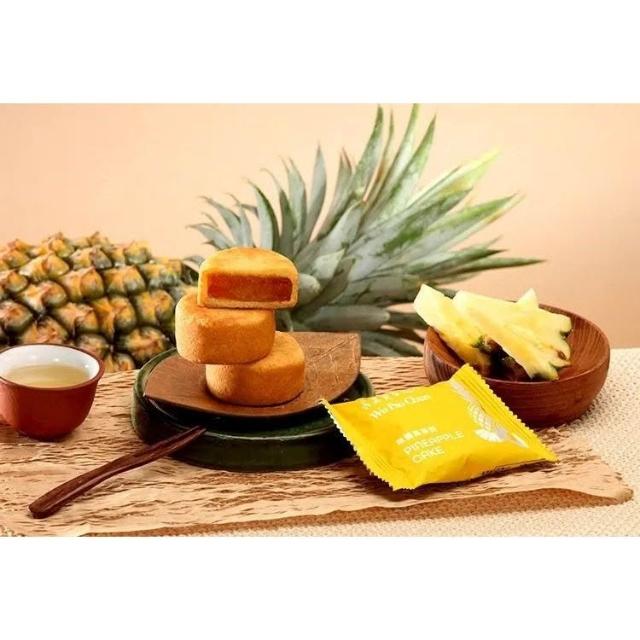
A different complete photograph of the named pineapple cakes and their cut filling, with the yellow wrapper visible. It shows the pastry as an object, not a current in-store display or a promise of availability at a particular branch.
The bakery’s current official listing still places its Kaohsiung flagship at 19 Siwei 3rd Road. Its introduction describes an open kitchen, with brick and metal used in the shop’s design. A visit can begin with the product labels: look for the fruit named in a loaf and read how the bakery describes its ingredients. Availability depends on what the shop has that day.
Bring the two histories with you: the Taiwanese ingredients carried into a French competition, and the learning and family commitments that followed at home. They give a loaf and a packet of cakes more to say than a medal alone. In Kaohsiung, this overseas story ends at a working bakery, where the next batch still has to be made.
Wu Pao Chun Bakery — Kaohsiung flagship
Follow the award story into Wu’s first bakery in Taiwan. Read the product and ingredient labels, and compare the bread with the family naming recorded in 2013; do not expect the historical display to remain unchanged.
The official store page, read on 29 October 2026, lists 19 Siwei 3rd Road, Lingya District, Kaohsiung; opening hours 08:30–20:00; telephone +886 7 335 9593, extension 715. Confirm any temporary changes before travelling.
If using the MRT, R8 Sanduo Shopping District is a Red Line station that can serve as a transfer point; arrange the remaining connection using the bakery’s address. Return to the same station for the MRT. No shop-to-station walking route, journey time or bus connection has been verified for this draft.
Use the official store’s telephone to check a specific product before making a special journey. This is a retail visit; a baking class, a meeting with Wu or access to the production area has not been arranged.
Allow 30–45 minutes to read labels and choose products; add travel and any queue separately. This is an editorial planning allowance.
The film uses eleven genuinely different, whole photographs: a named 2010 lychee loaf; a lychee orchard, flowers with a bee and ripe fruit; dried lychee; rose flowers with loose petals and dried petals; dried-longan products; Wu-hsien packaging and a separate cake cross-section; and one historical Kaohsiung shop sign. Photographs remain still throughout.
Agricultural and raw-material photographs are visual references, not evidence of the bakery’s actual suppliers, ingredient batches or manufacturing premises. The dried-lychee photograph accompanies agricultural research into colour retention; that method is not ascribed to Wu’s bread. The dried-rose photograph does not establish the precise form of rose used in the loaf.
The handbook photographs show the grass-covered orchard in Figure 4 on page 4, a bee on lychee flowers in Figure 9 on page 5, and ripe fruit in Figure 13 on page 6.
The memorial to Wu’s mother is a product-naming story. The red box and yellow wrappers identify Wu-hsien pineapple cakes, and a separate photograph shows a cake and its filling. A donation arrangement, current recipe, prices or present stock cannot be inferred from these photographs.
The 2013 article photographs are credited to Yang Chen / VOA. The Kaohsiung shop-sign photograph was also published in 2013.
The address, hours and phone in the article are the dated 29 October 2026 record, not newly confirmed opening information. Before a special journey, contact the store about opening and the product you want. This is a retail visit; production-area access, a class or a meeting with Wu is not included.
The named bread sold in Kaohsiung in 2013, not the actual loaf or scene at the 2010 competition. Visible prices are historical; the original credit is retained.
Yang Chen/楊晨,Voice of America/美國之音(原報導逐張標記美國之音楊晨拍攝) · Source report: 29 June 2013. Commons date field: 5 September 2013, near upload time; not treated as the capture date. · Public Domain/PD-VOA