
The Great Hall commission
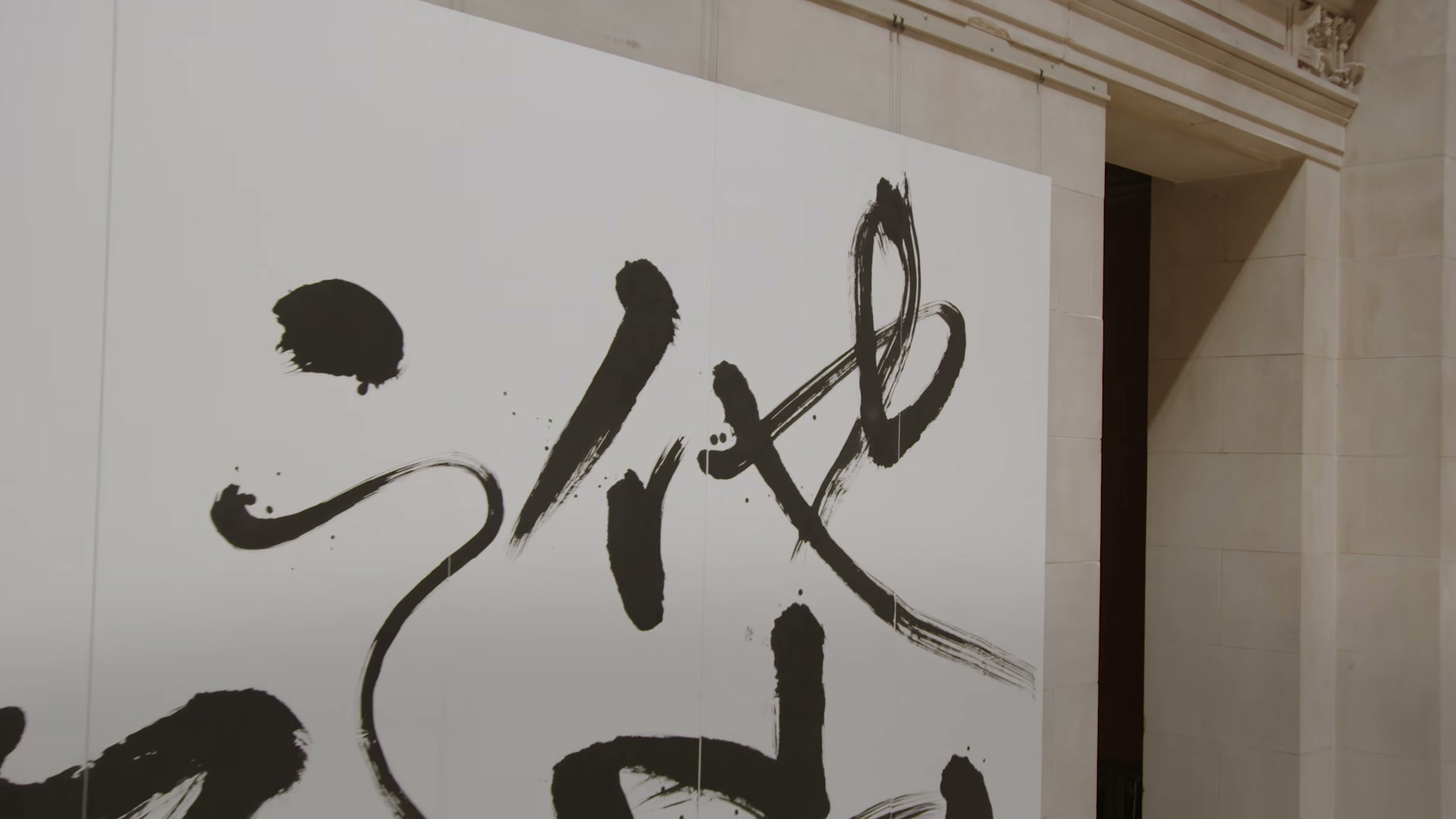
Visitors entering The Metropolitan Museum of Art often start by finding the stairs and galleries. In November 2024, two monumental calligraphic works became part of that arrival. These were new works in ink on paper by Taiwan-based artist Tong Yang-Tze. Her commission posed a practical artistic question: how could writing meet the proportions of a vast public hall and people arriving from different places?
The Great Hall Commission: Tong Yang-Tze, Dialogue ended on April 8, 2025. The story does not promise those works are still hanging there. It follows how she made them, then asks where her decision to bring writing into public life can be encountered in Taiwan.
Ink will not wait for a correction
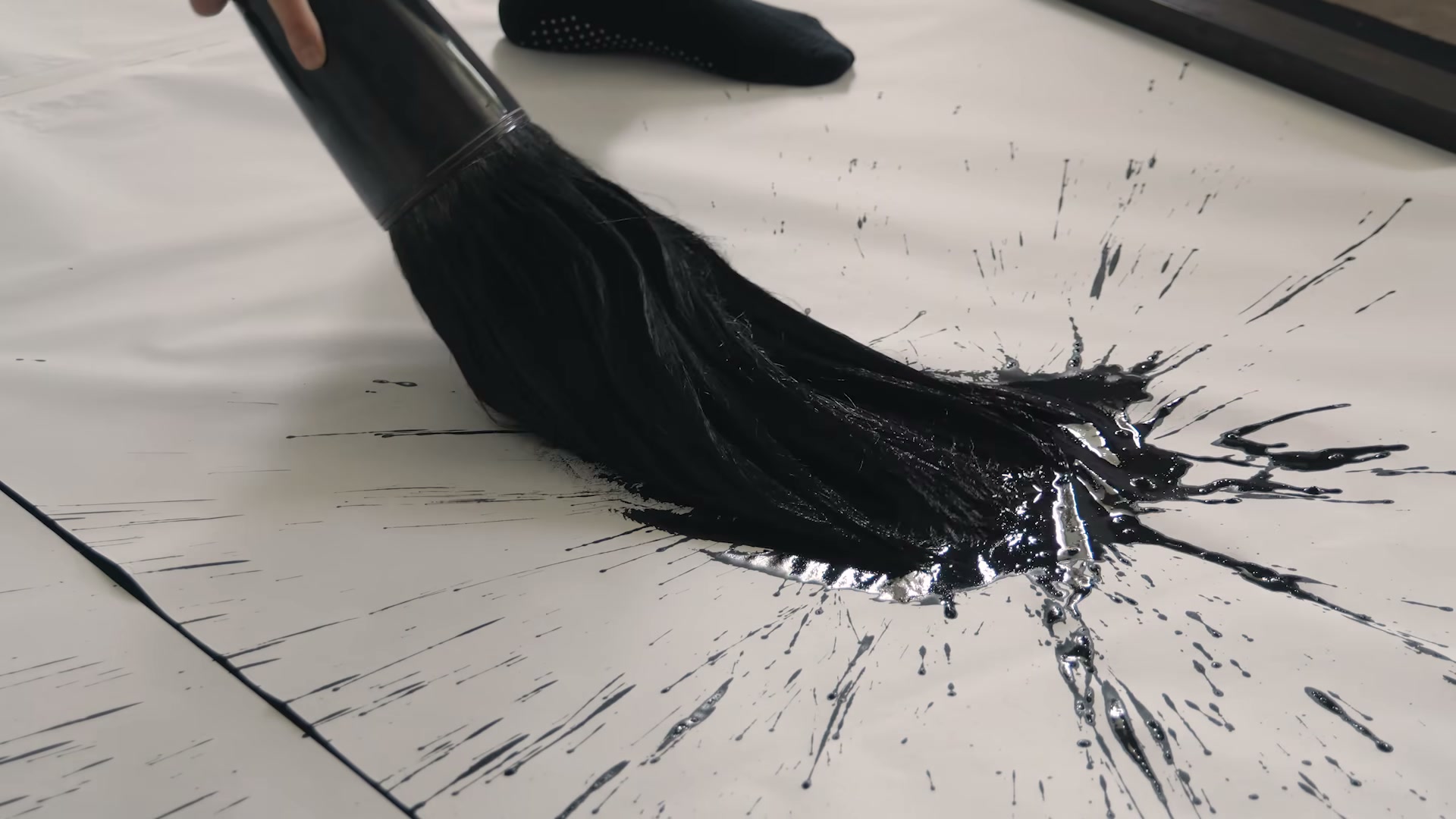
The Met’s film brings us close to a large brush meeting paper. Tong adjusts its direction and pressure with her body; the work has moved from a writing desk into the scale of a room. She explains that ink does not offer the same opportunity as painting to wait for a surface to dry and make corrections. An unwanted stroke or stray trace can determine whether she will sign a work.
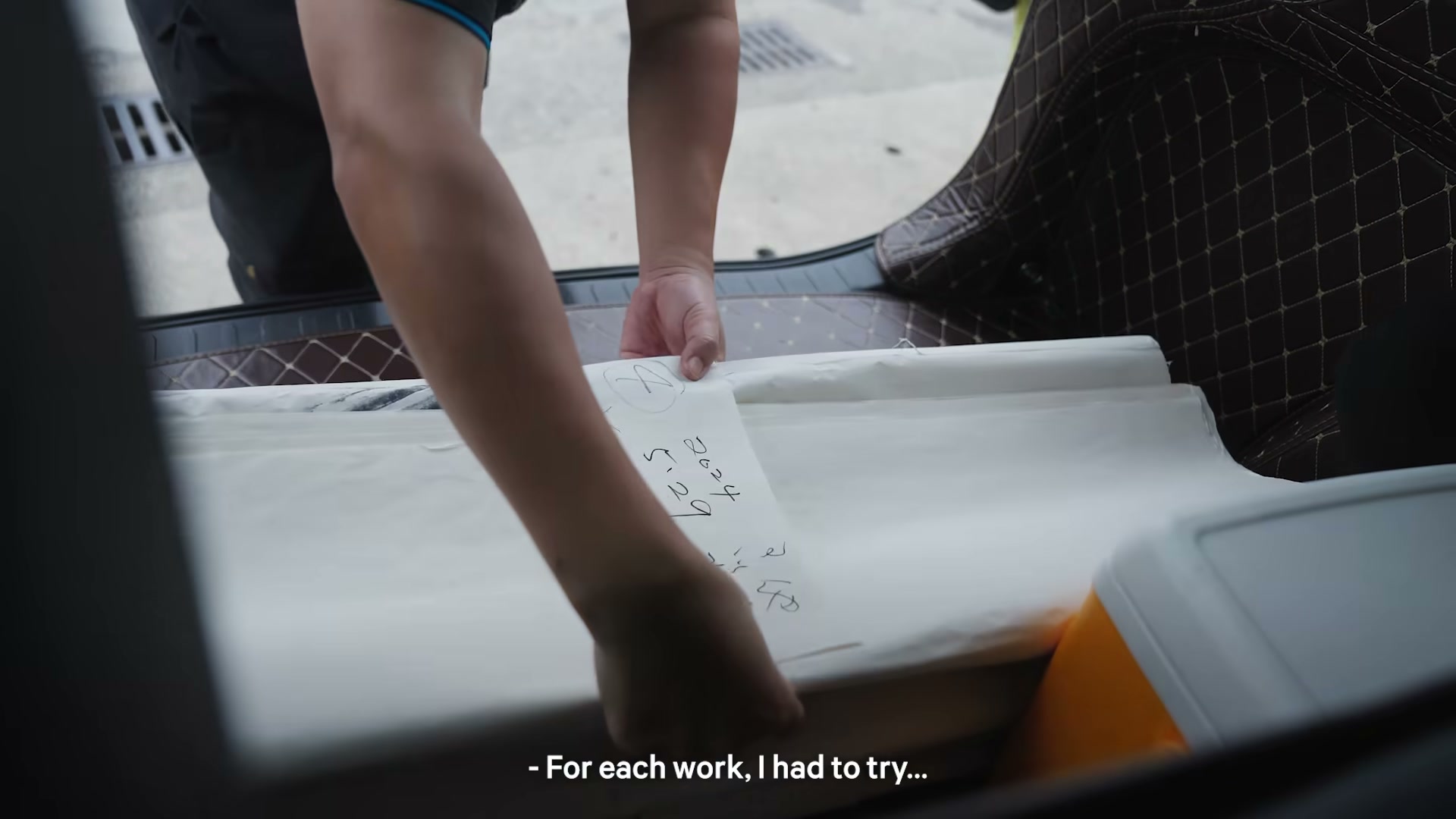
Enlarging calligraphy is therefore more than printing small writing at a larger size. The ink load, a turn in a line and the space needed by the next character must be negotiated through action. The film also records the preparation and presentation of the works. Making something for the Great Hall requires writing, followed by the labour that lets the finished paper be seen.
Familiar phrases, new decisions
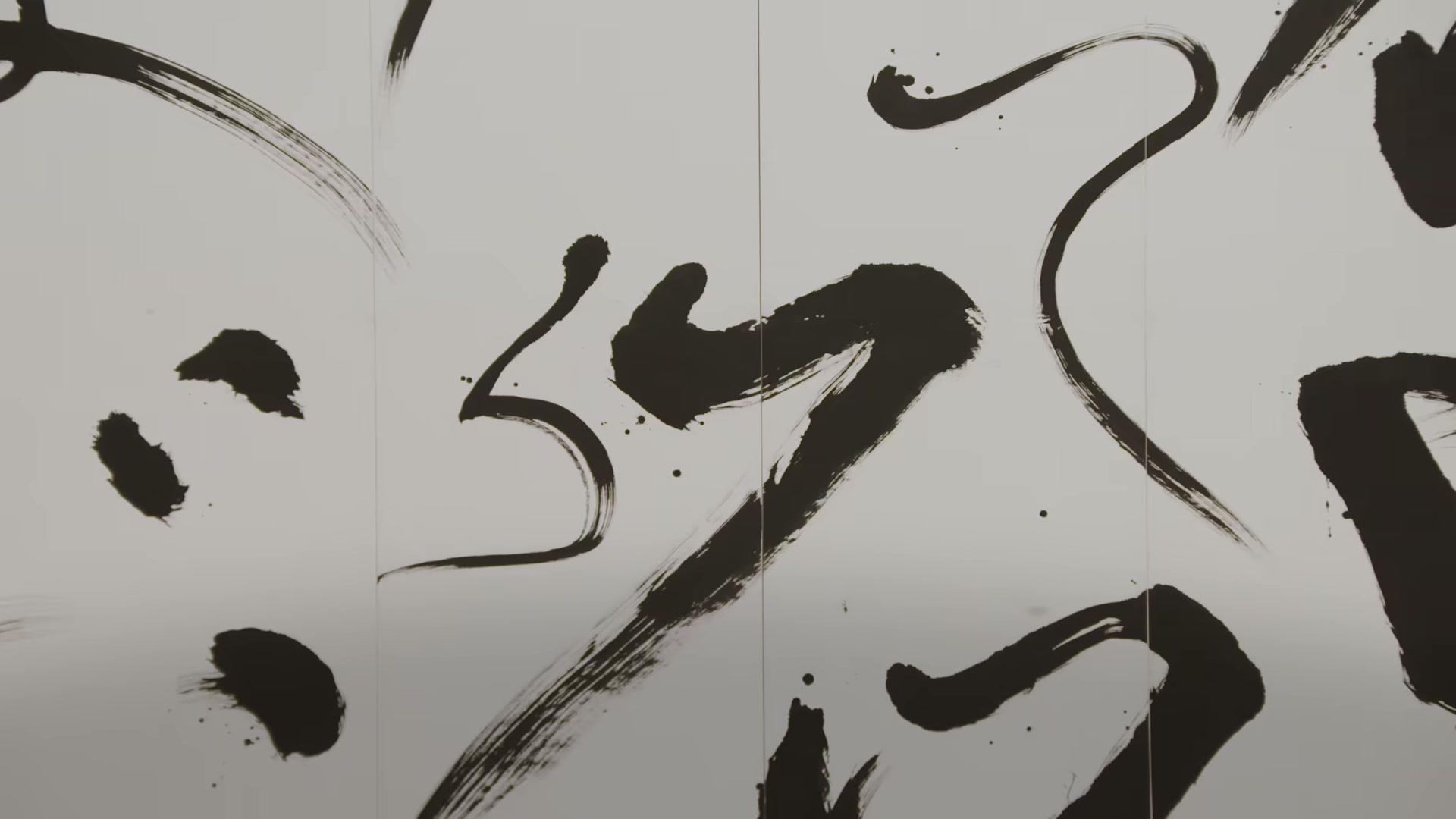
Tong selected two classical phrases for the commission: “Stones from other mountains can refine our jade,” from the Book of Odes, and “Go where it is right, stop when one must,” from Su Shi. She had written these texts before. Rather than simply enlarge an earlier work, she reconsidered their arrangement, scale and rhythm. Met curator Lesley Ma’s comparison of different versions makes those decisions visible.
Many people crossing the Great Hall cannot read every character. The work nevertheless remains writing. Its density, empty spaces and changes of line offer another way to approach it. For this public entrance, Tong used a combination of regular and running scripts that was more legible than some of her cursive experiments. Her training in painting informed her calligraphy without turning its characters into decoration alone.
In Taiwan, writing also meets people catching a train
The connection is more specific than an artist from Taiwan exhibiting in America. The Met commissioned a practice Tong had developed over decades in Taiwan: keeping the written character while changing its relationship to the body, the picture plane and public space. A Taiwan unit from CNEX participated in The Met’s film, connecting the working process with the eventual New York presentation.
Taipei Fine Arts Museum identifies her lettering for Taipei Main Station, Cloud Gate Dance Theatre and books as part of this everyday cultural presence. The four characters above the Taiwan Railway ticket counters in Taipei Main Station’s ground-floor hall offer one concrete example. Travellers may first use them to identify a place. Once they know the artist, they can look again at the meeting of strokes, the gaps between characters and the way a station name can do more than direct traffic.
The station lettering is not presented as the origin of the two Met works, or as another display of the same objects. The connection is the artist’s continuing work with writing in different public settings.
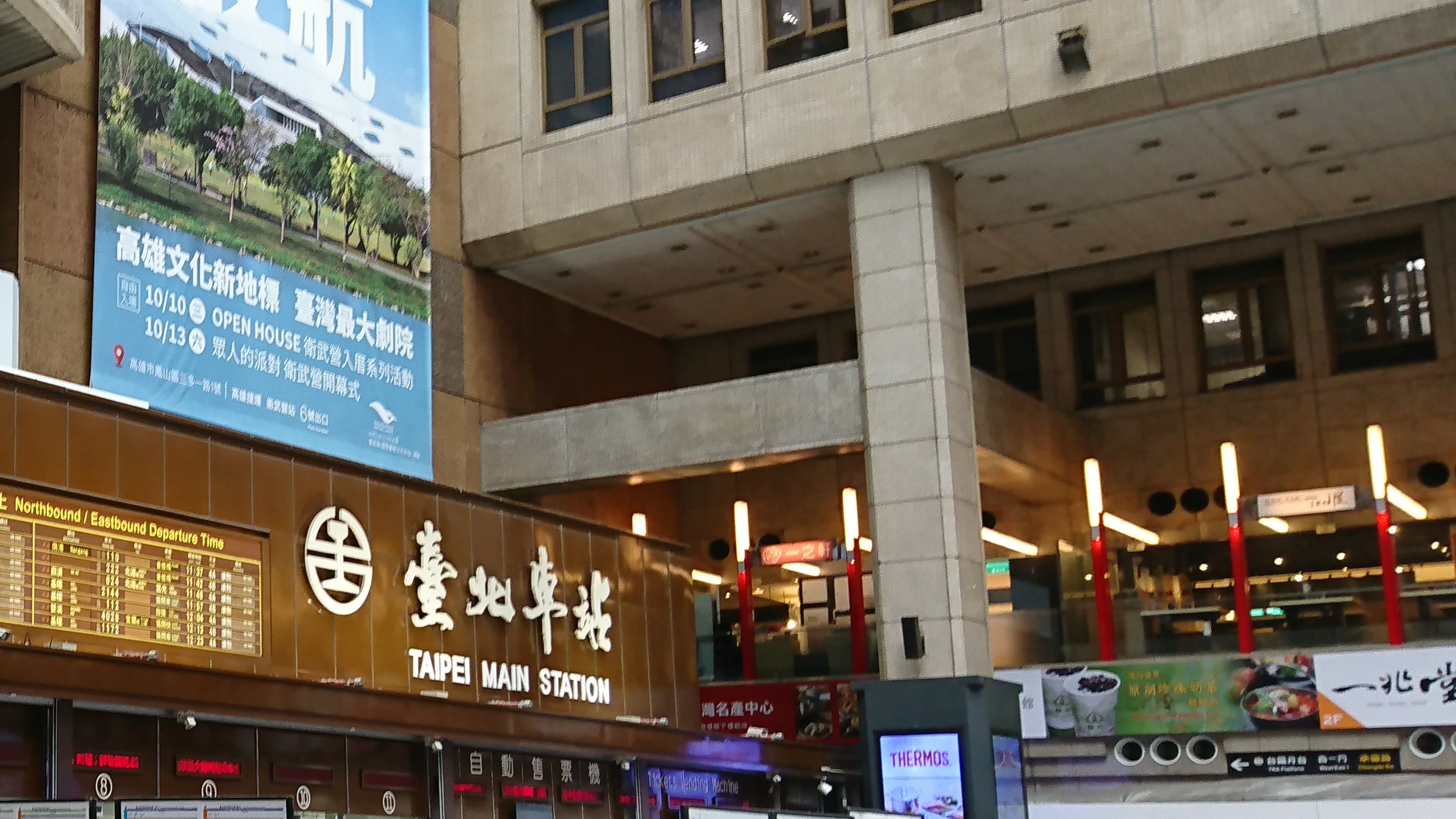
Today’s stop: look up before continuing
At Taipei Main Station, approach the public area of the ground-floor Taiwan Railway ticket hall and locate the lettering above the counters. This is an operating transport space. Pause without blocking queues or circulation; looking at a station sign does not require passing through a paid gate. Follow current signs for entrances, works and counter arrangements rather than expecting historical photographs to reproduce today’s layout.
There is no need to invent a current Tong exhibition around this stop. Allow a few minutes within an arrival or transfer, compare the writing with the surrounding space, then continue your journey. Following a New York commission back to Taipei reveals a part of Taiwan’s contemporary culture in which writing remains involved in work, movement and public life.