
The cage arrived without another year inside it
A wooden enclosure in a New York gallery could look like a stage waiting for its performer. For Performance 1: Tehching Hsieh in 2009, however, MoMA brought together the cage and furnishings from a work already completed in 1979. There were photographs, announcements and statements. Looking at these objects meant encountering the remains of a year, rather than watching that year happen again.
Hsieh worked with curators Klaus Biesenbach and Jenny Schlenzka on materials and installation. The Taiwanese artist was therefore also making decisions about how a past action could become visible to later viewers. His role did not end when the cage door opened; preserving the work required another kind of labour.
Before the rules, there was a difficult beginning
Hsieh had stopped painting before leaving Taiwan. He reached the United States in 1974 and settled in New York without authorised immigration status. In his later account, language and cultural difficulties accompanied a period when he made little work. The cage was a decision made by someone searching for an artistic form, not an assignment issued by a museum.
In a 2003 interview, he explained why he chose a year: it was a unit through which people measure time and existence. He also described renting out parts of his loft to sustain the first project. The strictness of the artwork rested on arrangements for ordinary living. Neither his circumstances nor his choices should be made to stand for every Taiwanese migrant.
Choosing isolation still required other people
For One Year Performance 1978–1979, Hsieh set restrictions on speech, reading, writing and entertainment. A friend delivered necessities and removed waste. Visitors were admitted on designated occasions; Hsieh later recalled eighteen visits, rather than a continuously open exhibition. His separation from others was carefully organised, not a claim that he survived without assistance.
MoMA’s installation included 365 self-portraits recording the passage of time. They could provide evidence of change, but a viewer could move past them far faster than the artist had lived them. That difference is central to following this work across an ocean: the documents travel, while the elapsed time cannot be shipped along with them.
Taiwan received documents, not the New York cage
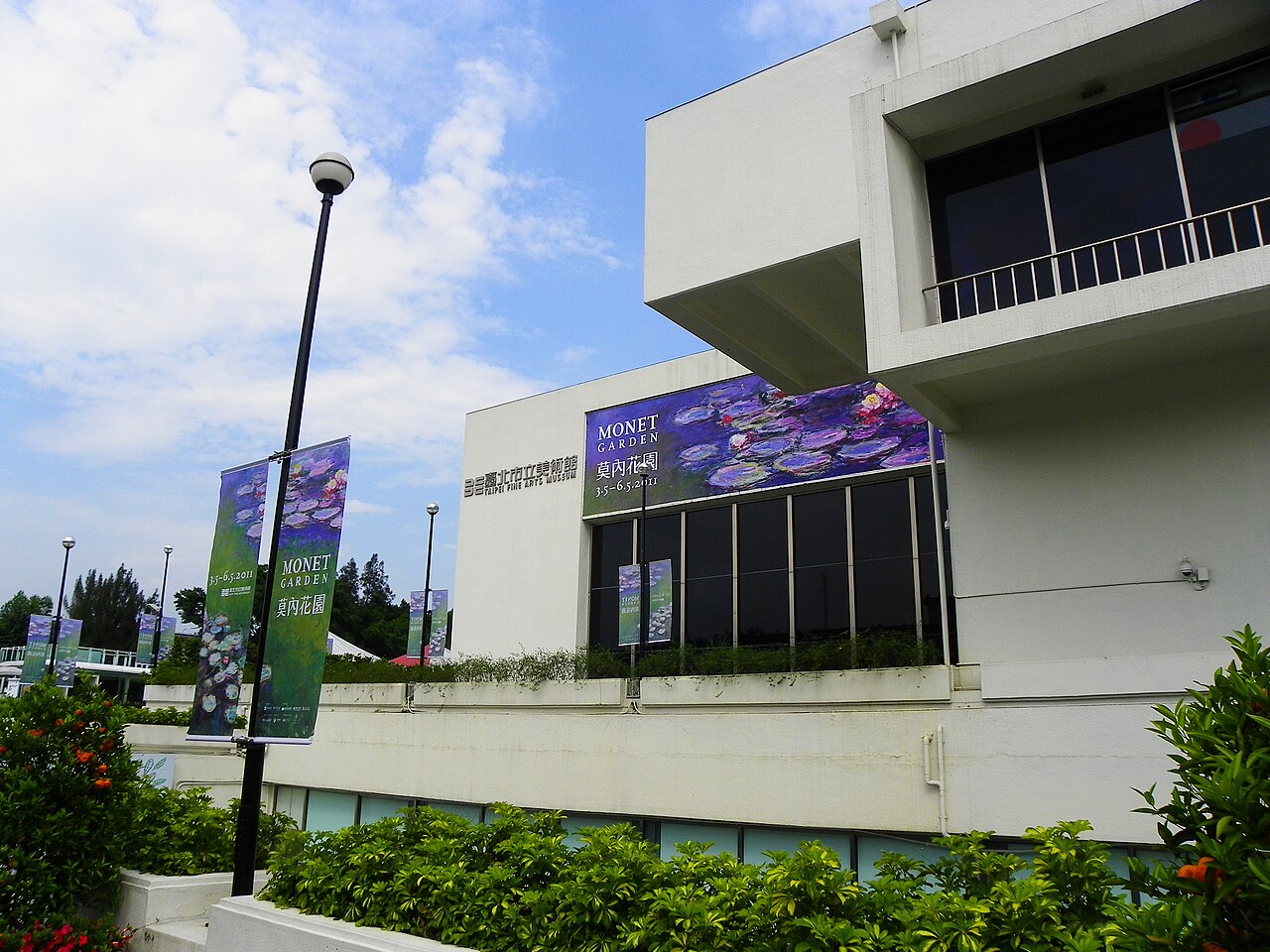
Taipei Fine Arts Museum’s 2017 collection catalogue records a donation associated with One Year Performance 1978–1979: a silkscreen, poster and statement. It does not list the complete wooden cage as that donation. The distinction matters. Cataloguing the title, medium and individual components lets Taiwanese readers identify what entered a public collection instead of imagining the entire New York installation had moved to Taipei.
The same catalogue describes a different act of recovery. The original film of Exposure, an early work made in Taipei in 1973, had been lost. For the Taiwan Pavilion’s Doing Time project, Hsieh returned and remade the action in 2016 for a new record. A missing film remained missing; a dated restaging made another layer available. Taiwan’s part in this story includes that active work of recording and distinguishing versions.
Start with the catalogue in Taipei
At Taipei Fine Arts Museum, use the published catalogue as the starting point, and consider the public library and documentation centre as a place for further reading. The link is the museum’s documented collecting and research work. This is neither Hsieh’s New York loft nor a promise that the donated papers, Exposure or a cage are currently on display.
The useful question to take into the museum is a modest one: when an artwork consists of a person’s sustained action, how do labels, records and new presentations keep its history legible? A familiar New York museum story then opens onto a Taiwanese decision about what to collect—and what a collection should carefully avoid pretending to reproduce.
