
From the shop shelf to the painter
A 2024 Japanese feature on Taipei’s Maji Treats singled out bowls from Lijing Kiln in Yingge. A shopper can begin with the maker’s name and trace an everyday object backwards: whose work left those patterns on the shelf?
Su Cheng-li (蘇正立) established Lijing Kiln in 1995. His family worked in ceramics, but his path was more than continuing one product. Between art pottery and everyday vessels lay a turn outward—and then another turn towards learning at home.
Travel brought a question back to Yingge
In a ceramics-museum journal interview, Su recalled noticing how local elements entered pottery during exchanges in Japan. Back in Taiwan, he reconsidered what could represent Taiwan and Yingge, turning towards the family’s blue-rimmed bowls.
The answer after travelling abroad was not simply another place’s shape. Exchange made a familiar object worth questioning again: how was it made, who used it, and could its techniques continue?
Retired parents become teachers again
A 2018 interview recorded Su asking his retired parents to teach hand painting, learning while making. His father, Su Ho-hsiung (蘇和雄), had worked in ceramics. What continued was not only the look of a bowl, but control between brush, pigment and hand.
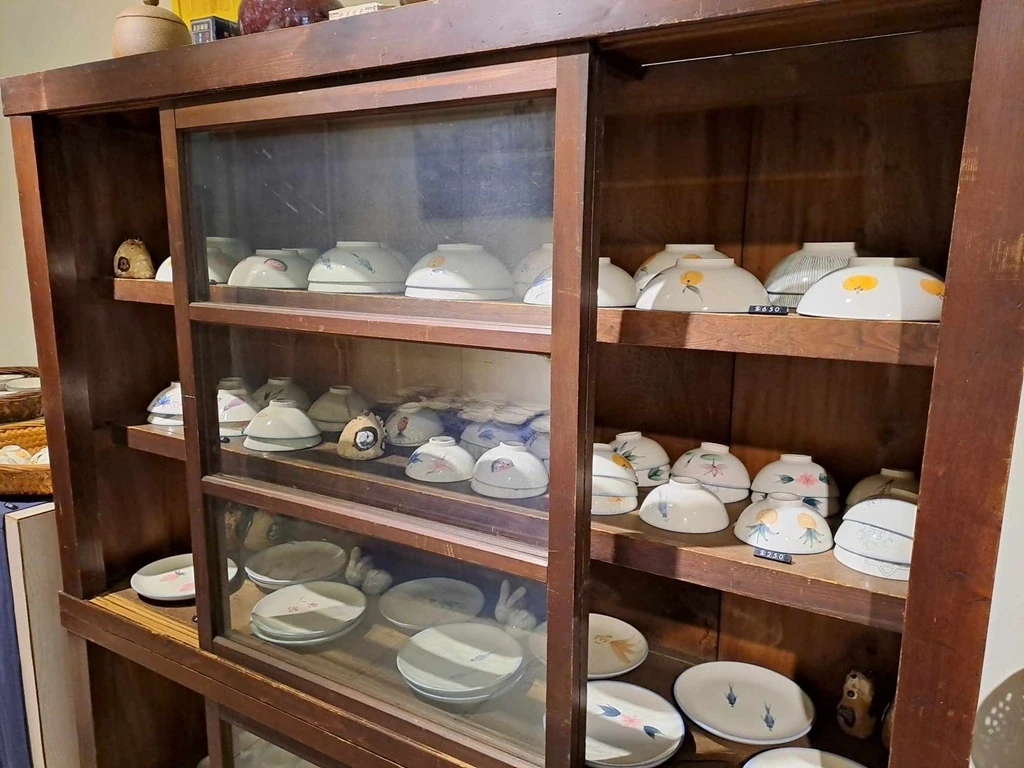
Persimmons, roosters, shrimp and crabs appear among these familiar motifs. Su continued the tradition while adapting the painting, allowing everyday vessels to carry blessings and family memory. Their value also connects to moments when people actually use them.
In 2026, hand painting reached Tobe
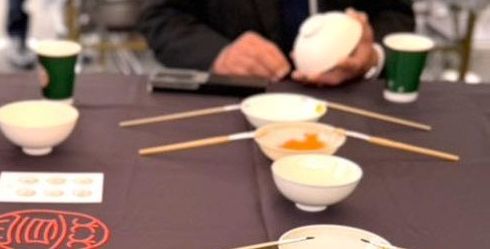
On 18–19 April 2026, Lijing Kiln participated in the 41st spring Tobe-yaki festival, demonstrating overglaze painting. The Matsuyama tourism association introduced Su’s wares beforehand; Tobe’s June town newsletter recorded the event and its Taiwanese exchange. The location was Tobe, Iyo District, Ehime.
This adds a specific return journey. A potter who reconsidered local vessels through exchanges in Japan later brought Taiwanese making there to be introduced publicly. Craft remained in the selected object, and also offered others a way to approach how it was made.
Take the maker’s name home
Maji Treats’ selection work sits between producers and customers. In the 2024 interview, Lee Hui-chun (李慧君) and Huang Chi-yung (黃琦詠) discussed relationships with local producers. Names and places on labels offer a way to read those relationships backwards.
At the Nanxi shop, look at a vessel’s size, motifs and use, then identify its maker. The retail shop and Yingge kiln are separate stops. Remembering a name can connect the bowl taken home to work that is still continuing.