
Many kinds of rice in Los Baños
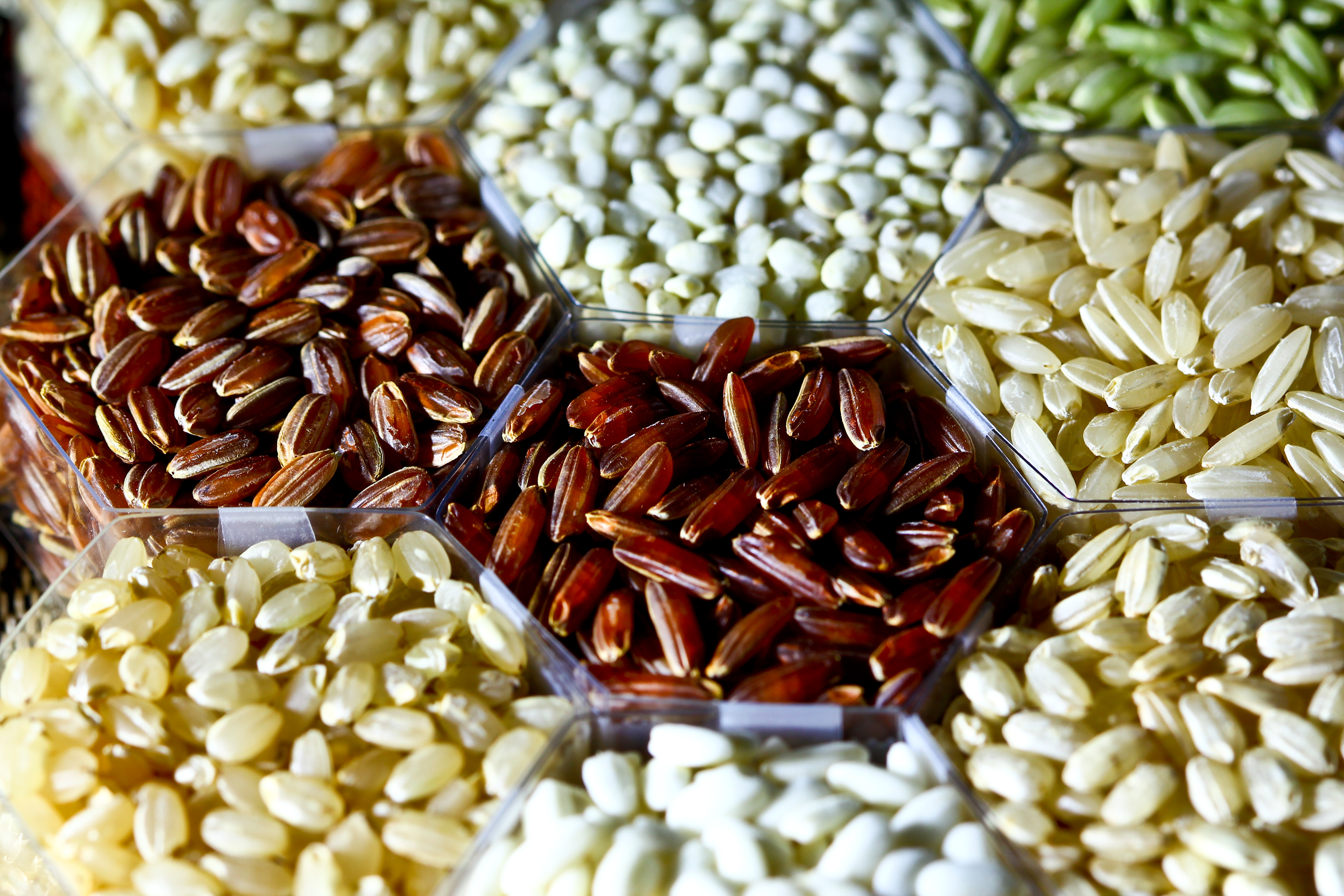
In an IRRI photograph, reddish-brown and pale rice grains fill separate clear containers. Their colours and shapes make diversity visible before a visitor encounters any technical description. In Los Baños, Laguna, the International Rice Research Institute has built a collection intended to keep rice’s many possibilities available for future research and breeding.
Te-Tzu Chang spent thirty years at IRRI collecting and conserving rice varieties before retiring in 1991. The institute later named its Genetic Resources Center after him. His work also reached Taiwan in another form: when Taiwanese researchers needed to plan a genebank of their own, they turned to him for help with the task of keeping living material safe.
A sample must keep its identity
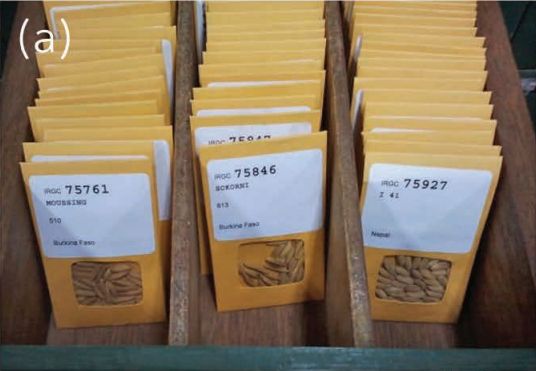
A second IRRI photograph, published in 2021, shows rows of paper packets with windows and identifying numbers. The caption calls them samples from the genebank’s physical seed file. These reference samples allow later material to be checked against what was kept before. The packets make another responsibility visible: a collection has to remain identifiable as well as alive.
This depended on people maintaining records. In a 2019 interview, genebank manager Flora De Guzman recalled joining IRRI in 1978 to work on long-term storage. Her work included a complete inventory linking physical accessions with their descriptions and viability. Chang’s founding work continued through colleagues who checked collections, maintained data and trained the next staff.
Taiwan asks for help
Taiwan’s planning began after recommendations made in 1986. At the Taiwan Agricultural Research Institute, director 杜金池 assigned 范宗宸 to convene the planning group. 范宗宸 later wrote candidly that agricultural researchers had little experience of constructing this kind of facility. They sought an experienced adviser, visited existing genebanks and worked with a public building agency.
Chang agreed to help. The team examined facilities in the United States, Japan and the Philippines. 范宗宸’s account identifies the IRRI genebank as their model, with an added emphasis on safety. Their choice favoured equipment they could keep reliable and supported the need for backup systems. What crossed the sea was experience that Taiwanese planners still had to translate into a building.
Planning for a drawer to stay shut
In Wufeng, safety appeared in small fittings and large systems. Drawers had spring catches to stop them sliding out when shaken. Cooling equipment had a second set for backup, and generators were installed for power failures. These choices treated a loss of service as something to prepare for during construction.
Water also shaped the design: the ground floor was raised above the surrounding ground and drainage was widened. 范宗宸’s account explains that the pool in front of the building served as a fire-fighting water supply. Features that might appear incidental belonged to the same practical question: how would the collection remain protected when normal conditions failed?
The collection after the earthquake
Design work began in 1989, construction in 1991, and the national genebank opened on 10 August 1993. Six years later, the 21 September 1999 earthquake caused severe damage in Wufeng. The decisions made for a future emergency were now part of the collection’s immediate circumstances.
In a 2023 interview, TARI agronomist 陳述 said one storage rack had bent, but no seeds were lost. The material survived to remain available for the work that followed. Conservation here continued beyond a successful building project: it involved checking and renewing collections, maintaining their records and making suitable material available for research.
Read Wufeng through its records
The genebank’s public information system offers a way to follow that work today. A search for rice returns names alongside permanent accession numbers and fields for the availability of traits and images. One current entry, Taikeng No.7, is listed with permanent number 00007394. A familiar crop name becomes a particular, recorded item in a continuing collection.
For an in-person visit, the institute currently directs agriculture-related research groups, farmers’ groups and agricultural schools to request arrangements in advance. General readers can begin online, comparing names, numbers and the information recorded for different accessions. From the packets in Los Baños to the records in Wufeng, keeping seeds also means leaving the next person a way to know what has been kept.