
A distillery’s name at Guildhall
London’s Guildhall was the setting for the IWSC awards banquet on 15 November 2017. Kavalan, a distillery in Yilan County, received the Distiller of the Year trophy. The organiser’s report confirmed the award. For a reader accustomed to seeing a whisky’s origin on its label, this was a reason to look across the map towards Taiwan.
The award recognised the distillery. It followed years of work by King Car founder Tien-Tsai Lee and his team: the plant was established in 2005, and its first whisky reached the market in 2008. Long before the London ceremony, they had to decide what kind of whisky to make, and what machinery could make it in Taiwan.
Choosing a shape in Scotland
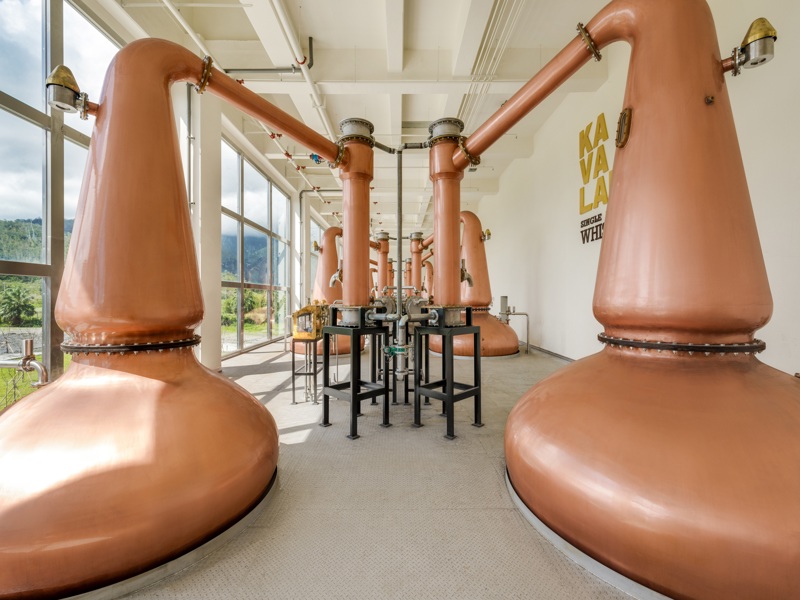
In King Car’s own magazine in 2013, master blender Ian Chang described Lee taking the research and development team to visit whisky producers abroad. After comparing equipment and tasting different spirits, they chose stills from the Scottish maker Forsyths. Chang linked that decision to Lee’s preference for a whisky with a body between the lightest and heaviest styles.
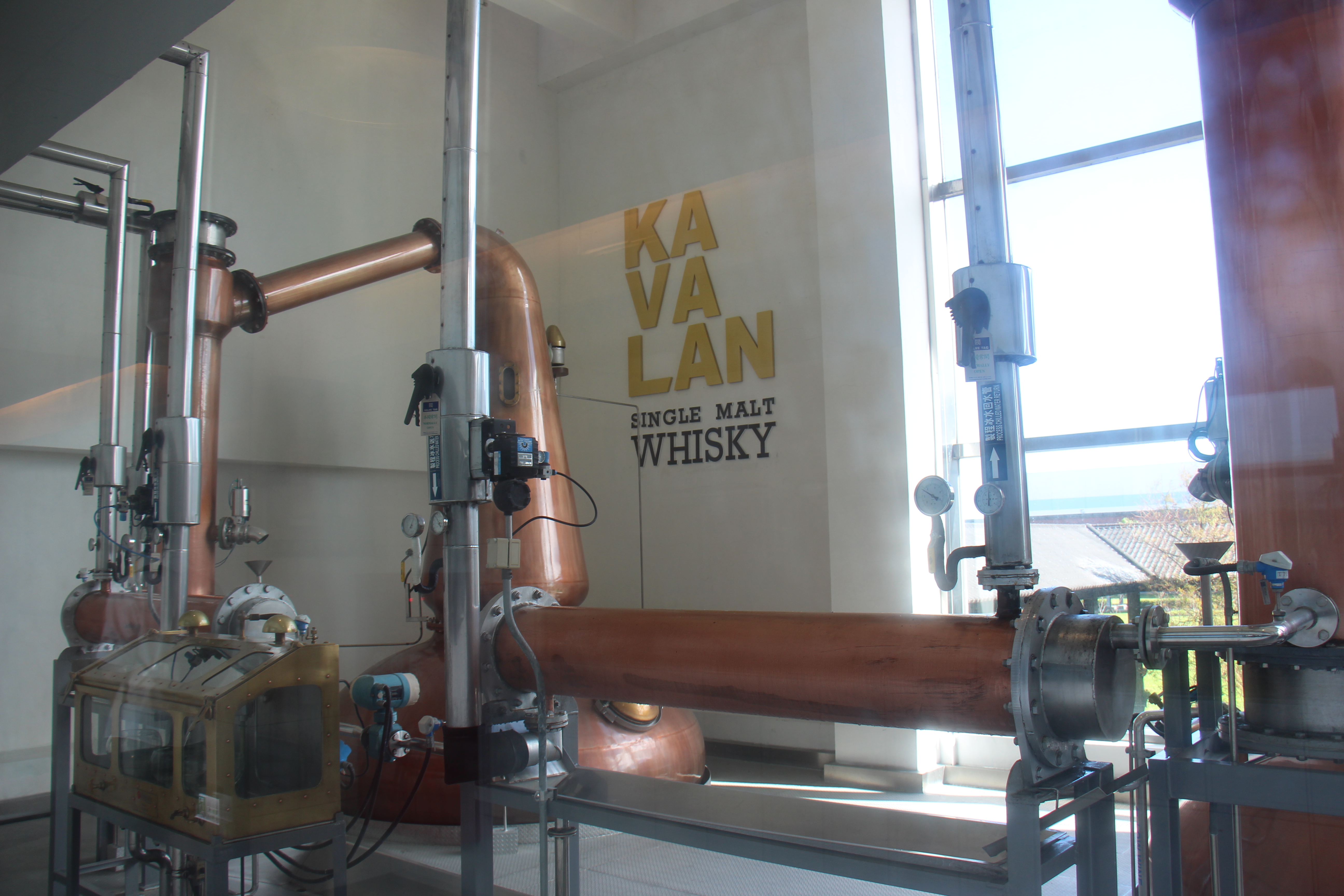
The still was therefore part of a decision about the finished drink. Its height, the route taken by the vapour and the point at which the team collected the spirit all entered the discussion. A visitor’s photograph from October 2016 shows copper vessels and pipework behind glass, with the Kavalan name on the wall: some of the physical equipment that turned those choices into everyday production.
The equipment had to work in Yilan
Bringing Scottish equipment to Taiwan also brought a practical problem. Chang explained that the vapour pipe, known as the lyne arm, was inclined downwards at Kavalan, and that Yilan’s humid climate called for two sets of condensers. The team worked with the designer on these adjustments. The equipment’s place of manufacture could be shared; the conditions in which it worked were different.
The 2013 account also described cleaning and upkeep: after every three or four distillations, the inside of the still was washed with high-pressure water; the copper exterior was polished with copper polish once a year. These details describe the work at the time. Behind the copper that visitors see was a routine the team had to carry out repeatedly.
After distillation, the work moves into wood
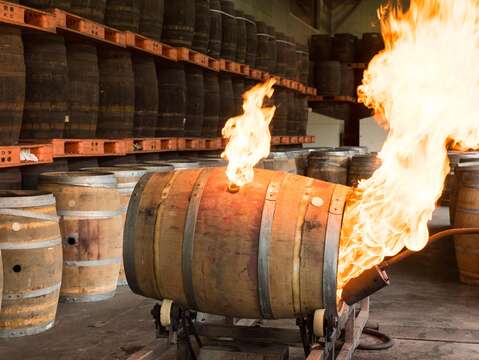
The work then moved from copper into casks. In its 2017 report, the IWSC connected Kavalan’s sherry-cask reputation with the Lee family’s approach to sourcing barrels. Chang travelled to Spain each year to visit suppliers and inspect casks. Selection abroad was followed by maturation in Yilan, where summer heat and humidity shaped the process.
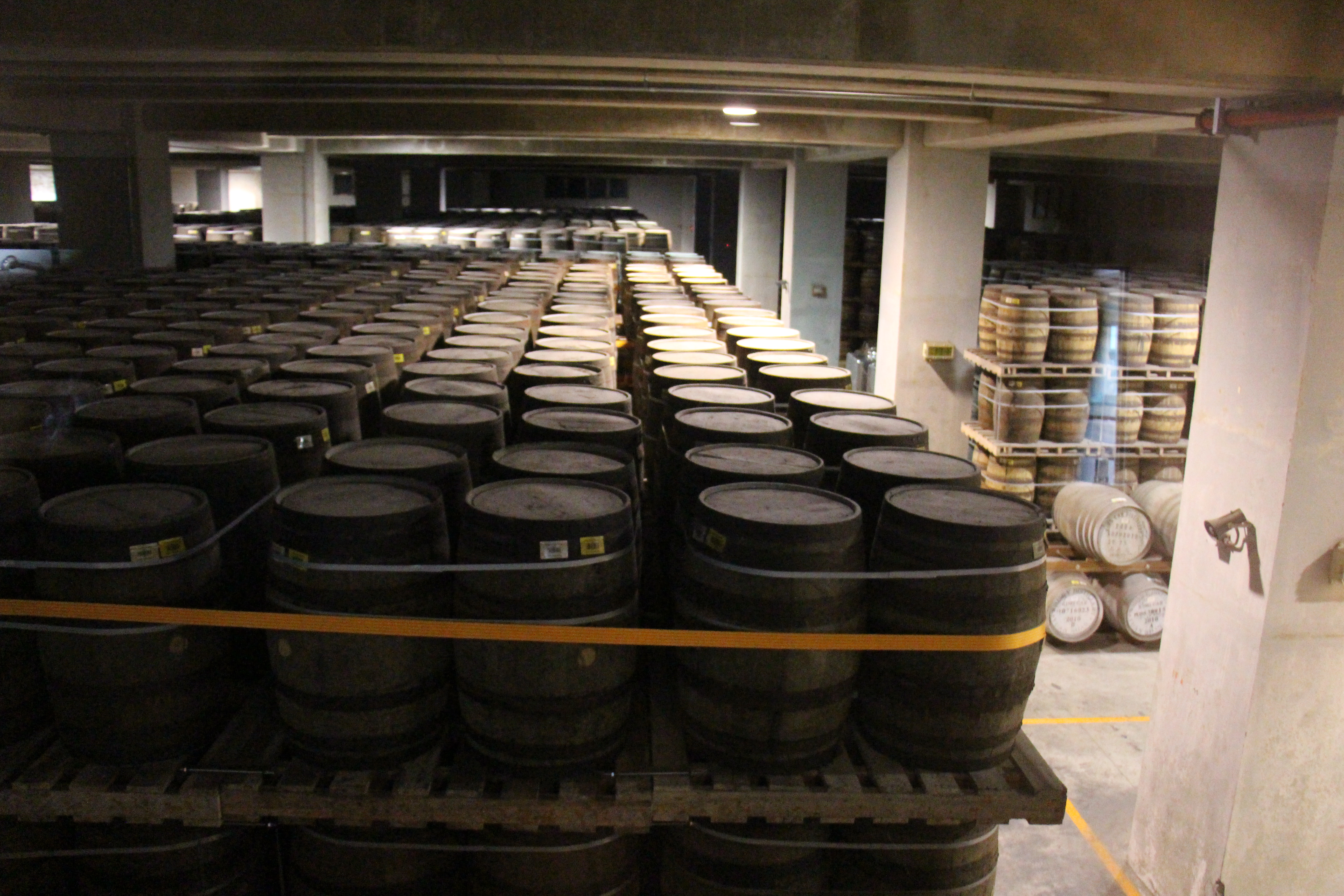
The second photograph, also taken in October 2016, records rows of casks in Kavalan’s warehouse. It does not identify their former contents or a particular award-winning batch. It does show why the distillery’s story cannot stop at buying a still: the Taiwanese team also had to choose, house and look after the vessels in which its whisky matured.
Following the story back to Yuanshan
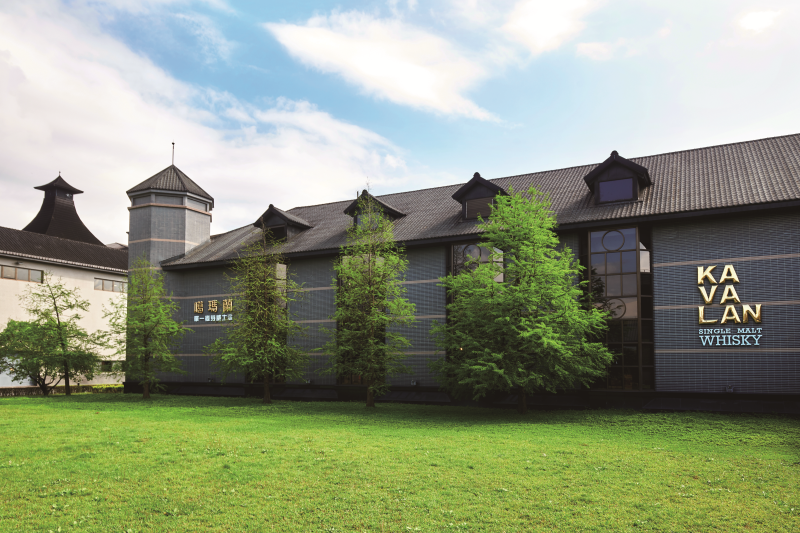
The story now leads to Yuanshan Township in Yilan County. The county’s tourism office still lists the Kavalan distillery as a place to visit, and describes a blending experience there. King Car’s account of the visitor centre also describes spaces for tasting and whisky blending. The same site supports both production and the work of explaining the drink to visitors.
The address is No. 326, Section 2, Yuanshan Road. A county tourism page updated on 29 July 2026 lists opening hours of 09:00–18:00; check the distillery for current access and any booked activity before travelling. Set aside time to understand the equipment and casks. A London trophy is easier to read when it leads back to the people making those decisions in Taiwan.