Two works across the sea
Kyoto’s Shichijo Bridge opened in 1913 as part of major works that brought new roads, tramways and water infrastructure to the city. Shibata Keisaku designed its structure; architect Moriyama Matsunosuke and others shaped its appearance. Its original metal railings have disappeared, while the bridge itself remains.
Moriyama’s name appears again near Taipei’s North Gate. The Railway Department’s main office, completed in 1920 under Japanese colonial rule, combined a brick lower level with timber above, using large quantities of Alishan cypress. Red brick and pale decorative surfaces gave a transport administration building a conspicuous public face.
An empty office needs a future
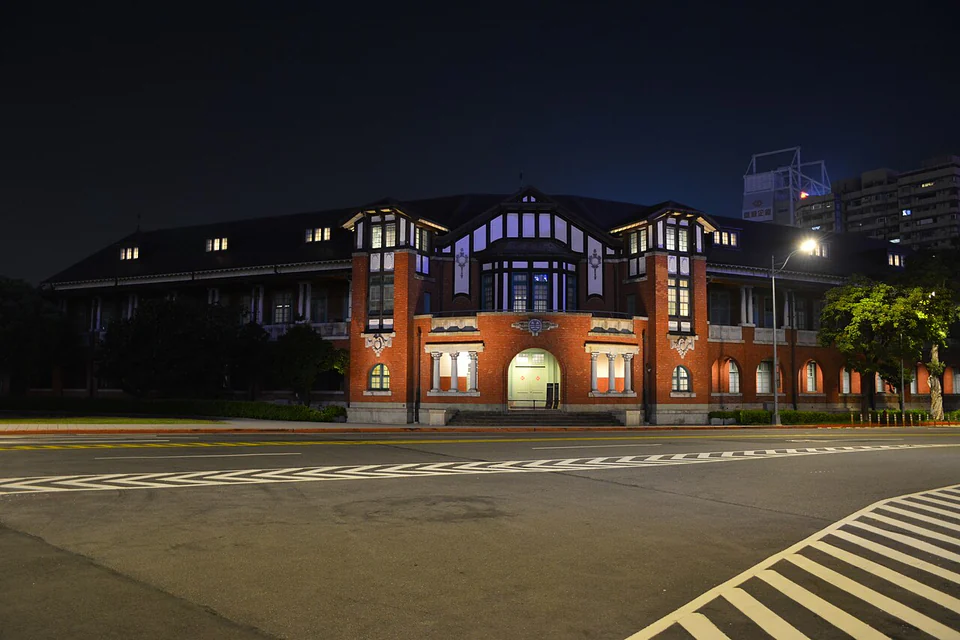
Railway administration eventually moved on. After Taipei’s new station opened in 1989, the railway headquarters left and the site became vacant. In 2006, the National Taiwan Museum and the railway administration began working together to turn it into a museum complex.
The task involved more than opening an old door. Restoration ran from January 2014 to October 2016, with architect Chang Yi-chen’s office and Ching Yang Construction handling design supervision and repair respectively. Different structures required different methods; Japanese specialists and master craftspeople joined exchanges over difficult work.
A ceiling becomes a story
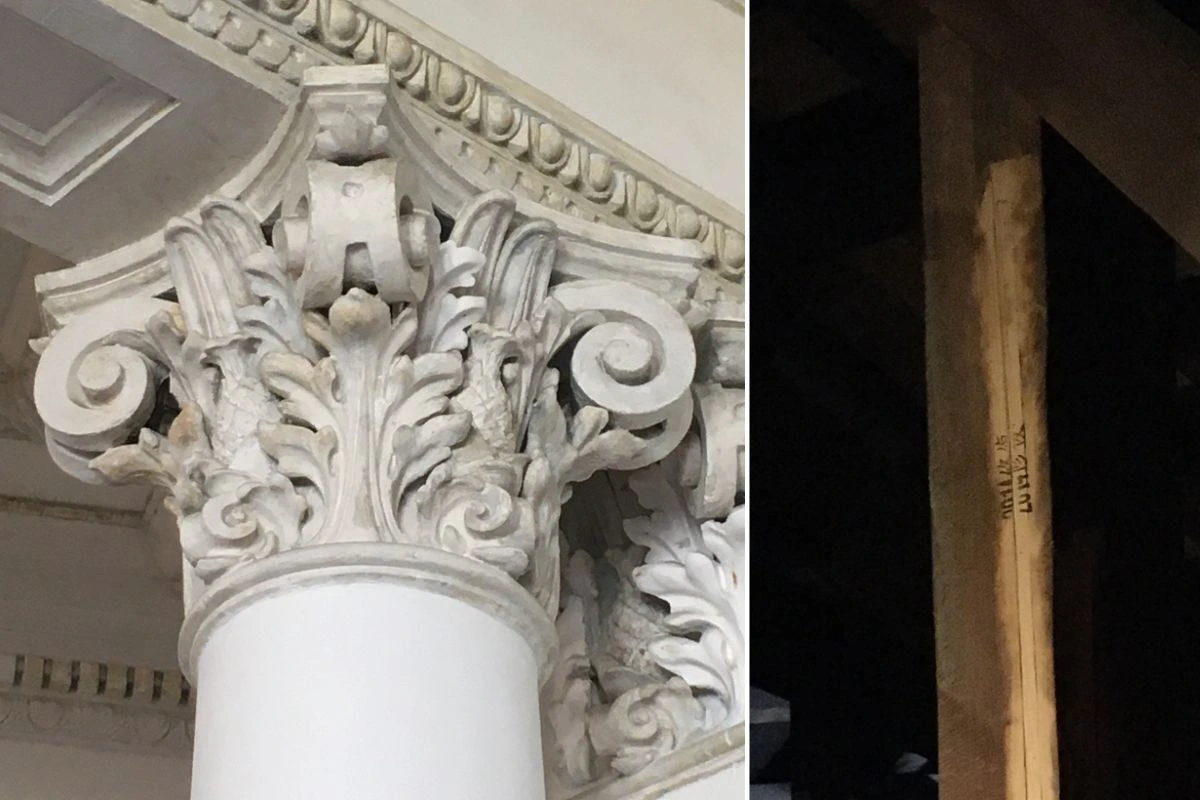
A plaster ceiling that had fallen away became one of those challenges. The museum’s restoration exhibition explains how its decoration was recovered, alongside displays of materials and traces found during dismantling. Attention moves from the architect who designed the building to the people who learned how its parts had been made.
The bridge in Kyoto still carries people across a river. In Taipei, the former office now allows visitors to examine the work behind a building. Its plasterwork, timber and exposed construction traces bring a century of use, vacancy and repair within reach of the eye.
In the Railway Department rooms, the restored plasterwork retains differences in colour between old and repaired areas. Look from a column capital to the timber above: the building makes repair legible through material details, not simply a newly painted facade.