
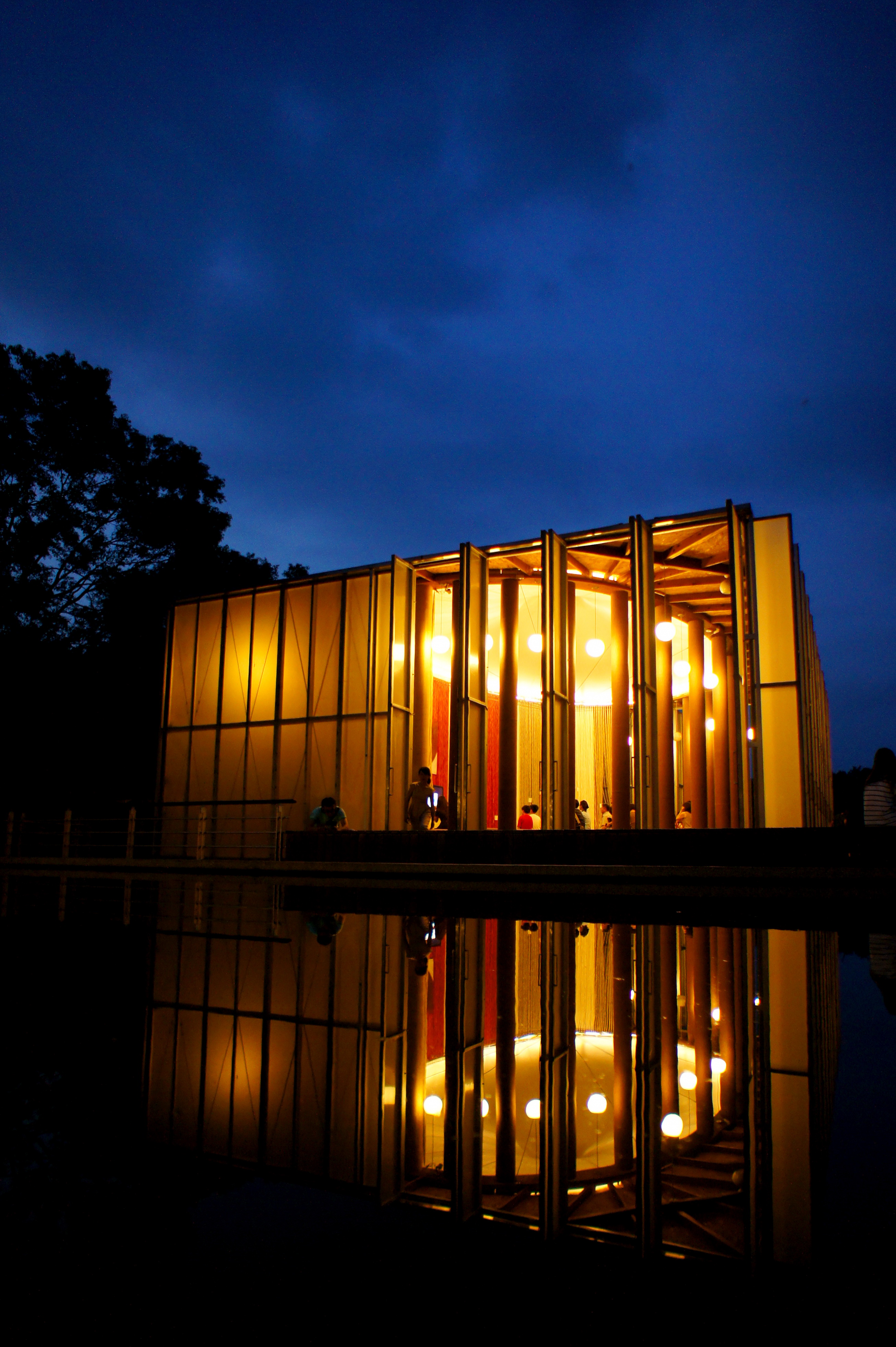
An unexpected proposal in Kobe
At the tenth-anniversary events for the Great Hanshin earthquake in 2005, Liao Chia-chan heard that the temporary church at Takatori would be removed to make way for a permanent one. Speaking as a visitor from Taiwan, he proposed moving it across the sea. His later account recalls how small the building initially seemed; raising it again would prove much harder than simply finding an empty plot.
For readers who know Kobe’s reconstruction, the building belongs to a specific period of collective work. Shigeru Ban’s office records that the original church site had burned after the 1995 earthquake. The replacement became both a place of worship and a community centre: 160 volunteers assembled donated materials in five weeks. Its design anticipated that it might be taken apart and used again.
Taomi had already begun rebuilding
Taomi, in the hills near Puli in central Taiwan, had suffered in the earthquake of 21 September 1999. Liao and his wife, Yen Hsin-chu, had founded the New Homeland Foundation only months earlier. They stayed in Puli, connected local needs with outside assistance and later worked with Taomi residents. The relocation would join a community already rebuilding its own life.
Their work turned attention towards things residents already lived among. Ecological surveys, guide training, accommodation management and local food became parts of a different livelihood. In an account of Liao’s lecture at National Taiwan University, he stressed residents’ willingness to participate. The visitors were a means of making the community visible; cooperation and trust were what made the work possible.
A building still needed land and people
A record written by Yen Hsin-chu preserves a smaller negotiation behind the relocation. Retired police officer Tu Lung-hsiung travelled between Taipei and Taomi to care for his father. At first he doubted the foundation’s ideas about community participation. Watching the changes, and hearing relatives and friends speak about the work, gradually changed his view.
In 2005, local guide Chiu Fu-tien introduced the foundation team to Tu. They brought a computer to his Taipei home and explained the Paper Dome’s history and its proposed use in Taiwan. Tu agreed to lease the land. The structure’s new address therefore came from a local relationship and a practical decision, not just an international donation.
Reconstruction continued after the move
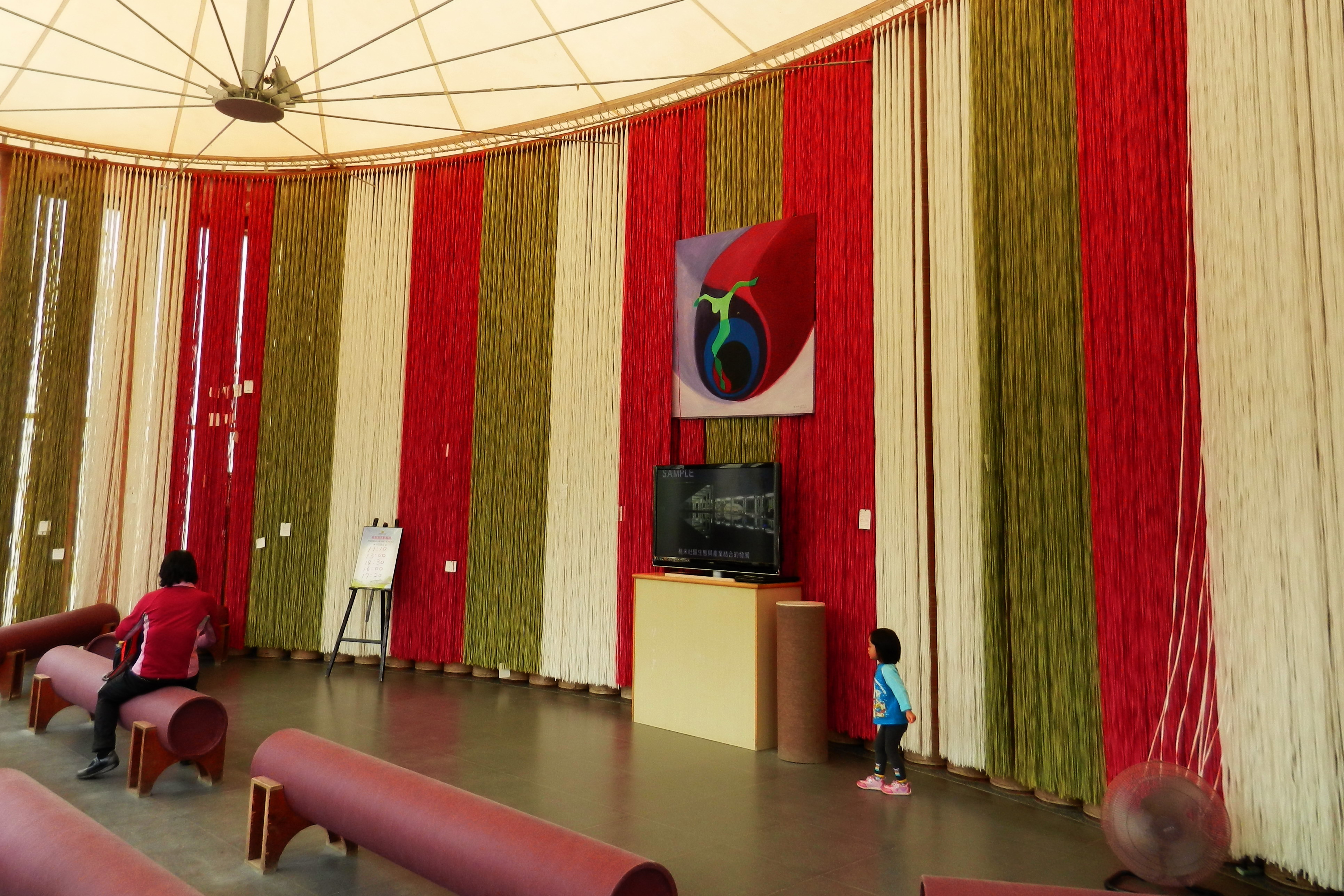
The parts left their original site in 2005; the Taomi park opened in 2008. Those dates describe different stages, rather than a single instant when an intact church simply arrived. Liao later recalled worrying about whether the project could be completed. The building needed funds, reconstruction and an organisation prepared to keep it in use.
The project also arrived as the foundation reconsidered how to sustain its work after reconstruction support ended. Its later activities included gatherings, arts events, learning visits and a natural farm. The team needed a place that could bring people together and support continuing work beyond an emergency. The Paper Dome joined that search for livelihoods and cooperation.
Read the columns, then look beyond them
At the Paper Dome today, look first at the repeated paper tubes and the circulation around them. The tourism authority identifies 58 tubes supporting the building. Then turn towards the neighbouring learning centre and ecological grounds. These are different parts of the site: their relationship helps explain how a former emergency church became part of a longer programme of community learning.
A visit cannot reproduce either earthquake, and the public park is not the whole of Taomi. Its value as an entry point is more precise: it lets a visitor follow the decisions that connected volunteers in Kobe, workers at New Homeland and people who made land available in Taiwan. The building travelled because several groups agreed to take responsibility for its next chapter.