Arriving with an image
Jiufen’s red lanterns offer a ready-made image for a trip from Korea. The steep lanes also pose a less obvious question: before visitors filled them, how did people move supplies through this hillside town northeast of Taipei?
At the junction of Shuqi Road and Qingbian Road, Shengping Theater provides a starting point. One street climbs in steps; the other carries the name of a light railway. Korean-language travel guides such as Informaticsview bring visitors here through film-like scenery and transport advice. Following the street’s former use leads further back, to the movement that made the mining settlement function.
Park Chan-wook chose the title of Hou Hsiao-hsien’s A City of Sadness for the socially engaged competition section of Korea’s Mise-en-scène Short Film Festival. Following that title back to Jiufen leads to the square outside Shengping Theater, where Wen-ching buys grilled food in the film.
A railway for everyday necessities
In 1931, rails were laid along what became Qingbian Road. Small carts carried mining tools and daily supplies as well as passengers. A town on steep terrain depended on such connections to bring work and ordinary life together.
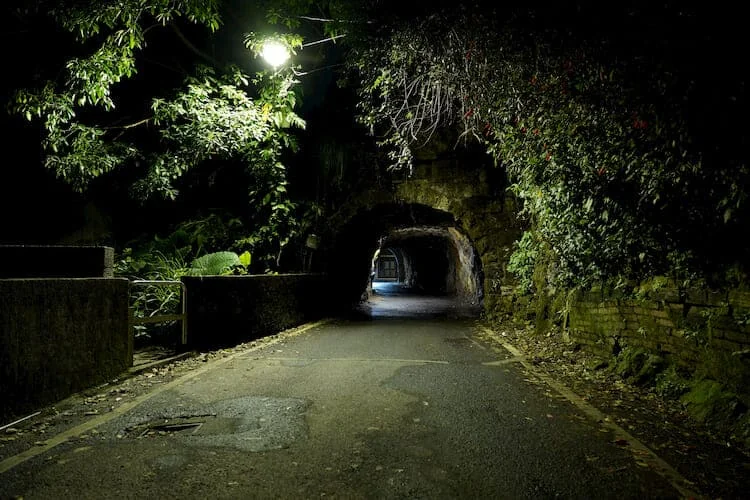
The short Bangkeng tunnel belonged to this transport landscape, rather than being a mine entrance. Its tracks were removed in 1954. Seen only as a picturesque opening, it can seem detached from the street; read beside the road's former use, it becomes part of an effort to move through difficult ground.
The distinction changes a walk. A curve or a gentler stretch is no longer just convenient for today's visitor. It can prompt questions about gradients, loads and the labour of moving goods.
Learning a place well enough to tell its story
The mining district has also been interpreted by people who arrived from elsewhere. In a Gold Museum account updated in 2020, volunteer Li Renzong (李仁宗) had first come to Ruifang for police work. His wife, who came from Shuinandong, helped him become familiar with the area. He later joined a district cultural-guiding volunteer team and served at the museum.
His story adds a different kind of work to the landscape: learning how its scattered remains fit together, then helping others read them.
This wider mining region includes Jiufen, Jinguashi and Shuinandong. Reading them together does not make them the same place. A good visit allows time for the distances between them as well as the histories that connect them.
A cinema at the junction
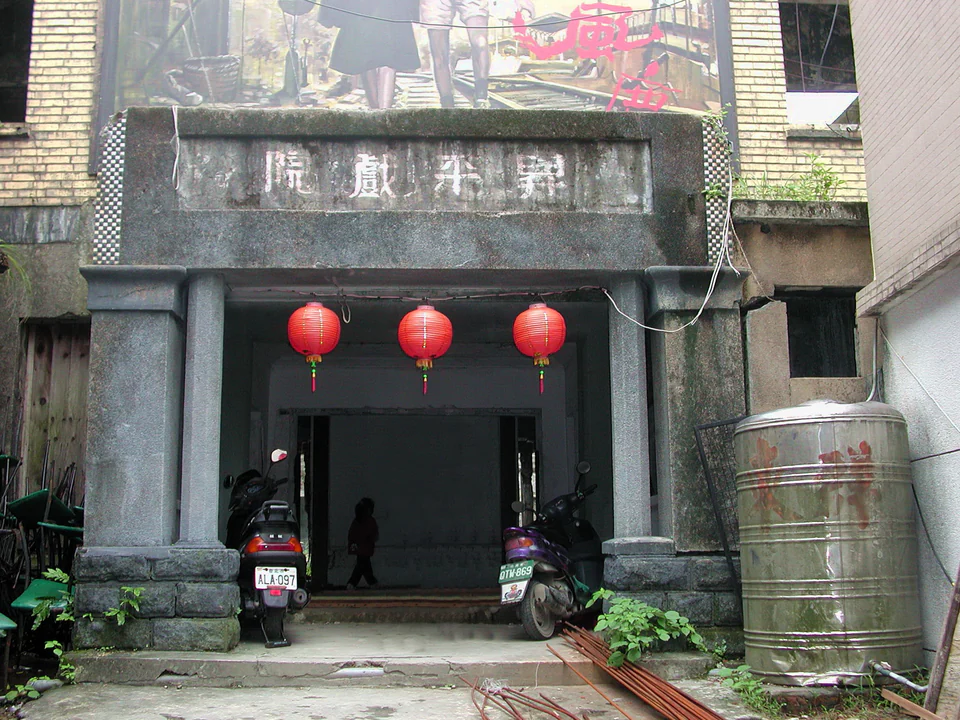
Shengping Theater adds leisure to the story of work and transport. The surviving venue occupies the junction of Qingbian and Shuqi roads. Today's cultural use includes film programmes that bring the mining district's stories back into a shared room.
After disuse and roof damage in the 1994 typhoon, donation in 2009 and restoration beginning in October 2010 allowed Shengping Theater to reopen in August 2011. At a reopening celebration that September, Wu Nien-jen gave live benshi-style commentary alongside excerpts of Tokyo Story. Today’s recreated concession counter, ticket window and seats bring the rituals of shared viewing into a visit; check the current programme before expecting a screening.
The photograph here records its entrance in 2001, before the later restoration. Compare its doorway with the building you encounter today. Places are altered, repaired and given new uses.
For a first visit, spend time around the theater and the public streets nearby. Read the street names, then look back at the hillside. Lanterns remain part of the scene, but the scene now contains a town that had to move goods, make a living and find time to gather.