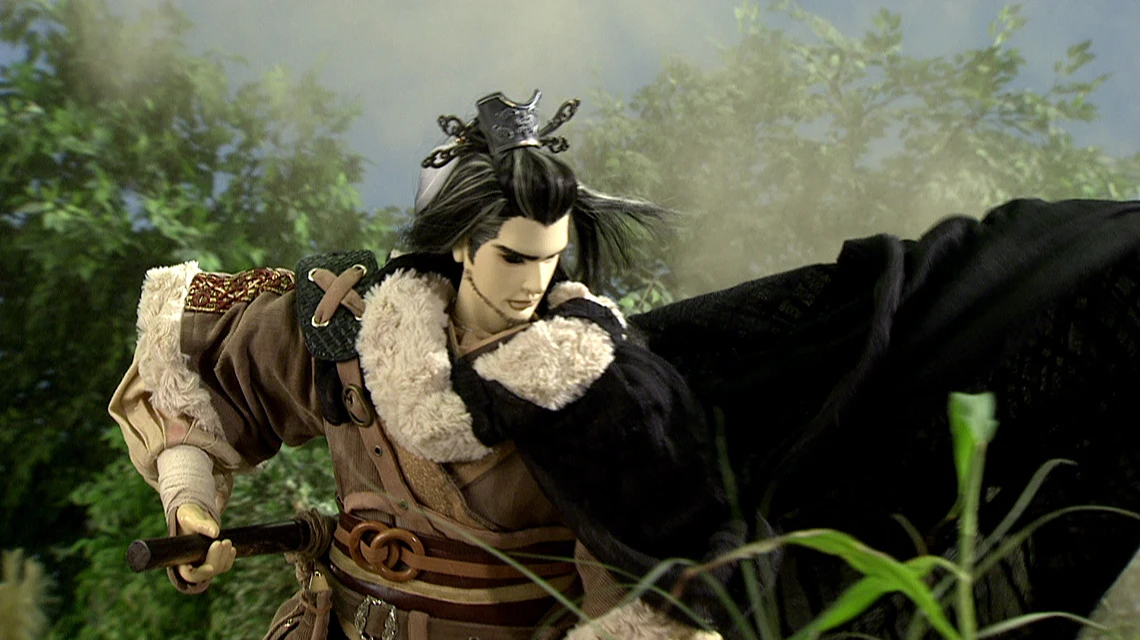
A puppet arrives at a Tokyo anime event
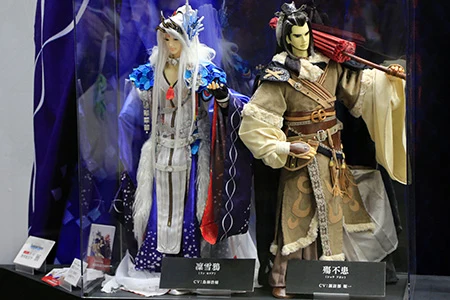
Visitors to Tokyo Big Sight’s AnimeJapan on 25 March 2017 could encounter a character before his film was finished. At the Nitroplus booth, Chen Yi-fang of PILI presented Tie Di Xian, a puppet he had brought from Taiwan. Four puppets were displayed as the team announced the screen adaptation Thunderbolt Fantasy: The Sword of Life and Death (生死一劍).
The official event photograph shows Lin Xue Ya and Shang Bu Huan behind glass, with their names on display cards. For someone accustomed to character illustrations and figures at Japanese events, these were also working objects: puppets made to appear before a camera. Seeing the costume, hair and weapons close up offered a different way into the characters from watching a trailer.
A shared production with work on both shores
Urobuchi encountered Taiwanese glove puppetry on a visit to Taiwan and wanted to introduce it to Japanese audiences. The resulting project assigned the original concept, screenplay and overall supervision to him at Nitroplus. PILI International Multimedia handled puppetry performance and filming, while Good Smile Company served as a puppet modelling adviser. The division of work placed Taiwanese manipulation and camera production inside a new Japanese-language viewing experience.
The Taiwanese production team also addressed that audience directly. At the advance screening in Shinjuku on 25 June 2016, the organisers played a video message from PILI’s Huang Chiang-hua, the series’ chief director. He introduced the joint work by PILI, Nitroplus and Good Smile Company and invited Japanese viewers to follow its television broadcast. The puppets on screen carried a message from the people who made them move.
Looking past the costume to the working puppet
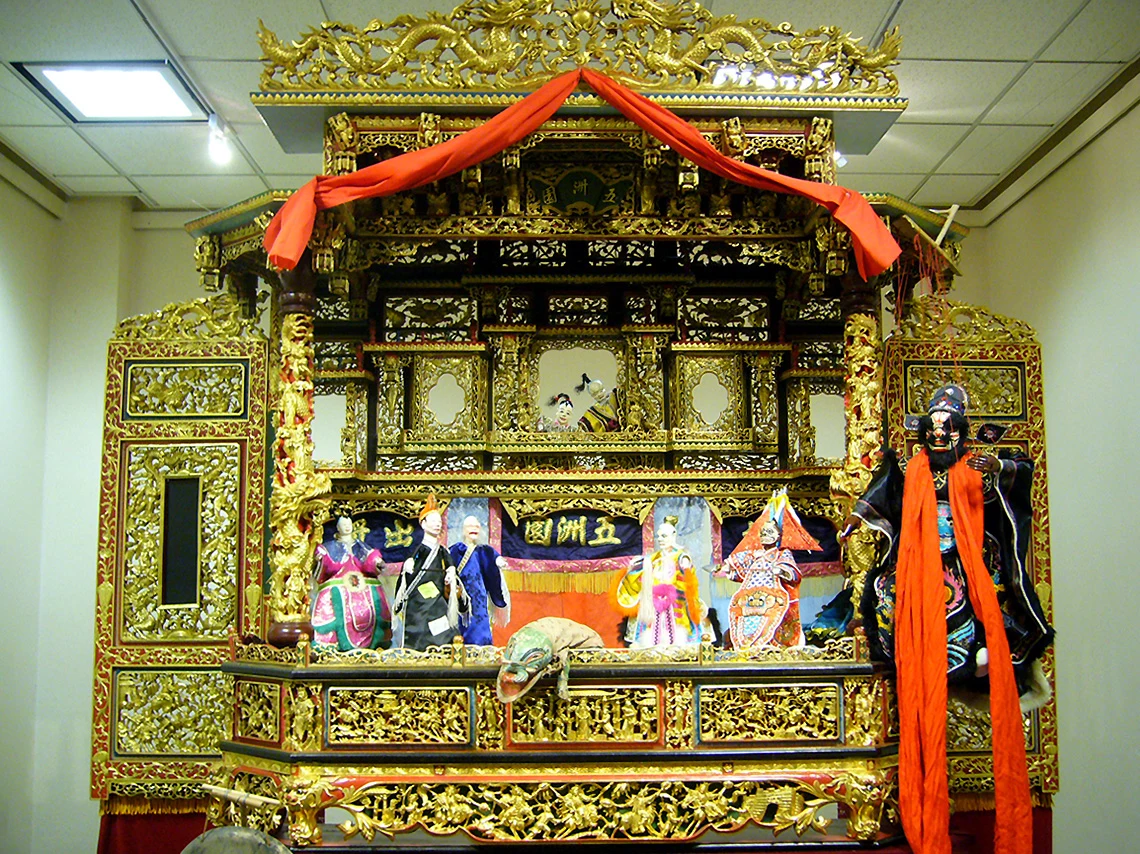
The Japanese project introduction explains the traditional form through a cloth body: the performer puts a hand into its bag-shaped torso to operate the puppet. Alongside that explanation are photographs of traditional puppets and a richly decorated stage. They provide a useful starting point for noticing the physical work behind a face and costume, before looking at the more elaborate filmed production.
The same physical craft crossed into Japanese collecting culture. In December 2016, Nitroplus announced limited collector’s replicas made individually by PILI in Taiwan. The listed set included weapons, a display support and maintenance tools such as a comb. This historical release reveals how a screen character became an object whose hair, clothing and pose needed care; it is a record of that release, with no promise of current stock.
The collaboration continues back in Taiwan
The relationship continued through the final film in 2025. PILI’s account records a Taiwan premiere on 14 February, attended by Urobuchi, voice actors including Kohsuke Toriumi and Takanori Nishikawa, and PILI general manager Huang Liang-hsun. A fan event followed the next day. The final production retained Taiwanese director Huang Wen-chang, also known as Chiang-hua, together with the Japanese writing and design team.
Today the Japanese project website presents the completed series and keeps its earlier event reports available. It also links to the final film’s home-video and streaming announcements. Those records let a visitor follow the work from a photographed puppet to a screen production, while current viewing access depends on each provider’s catalogue and region. The Tokyo exhibition and Taiwan gatherings described here were past events.
A public place in Taipei to keep looking
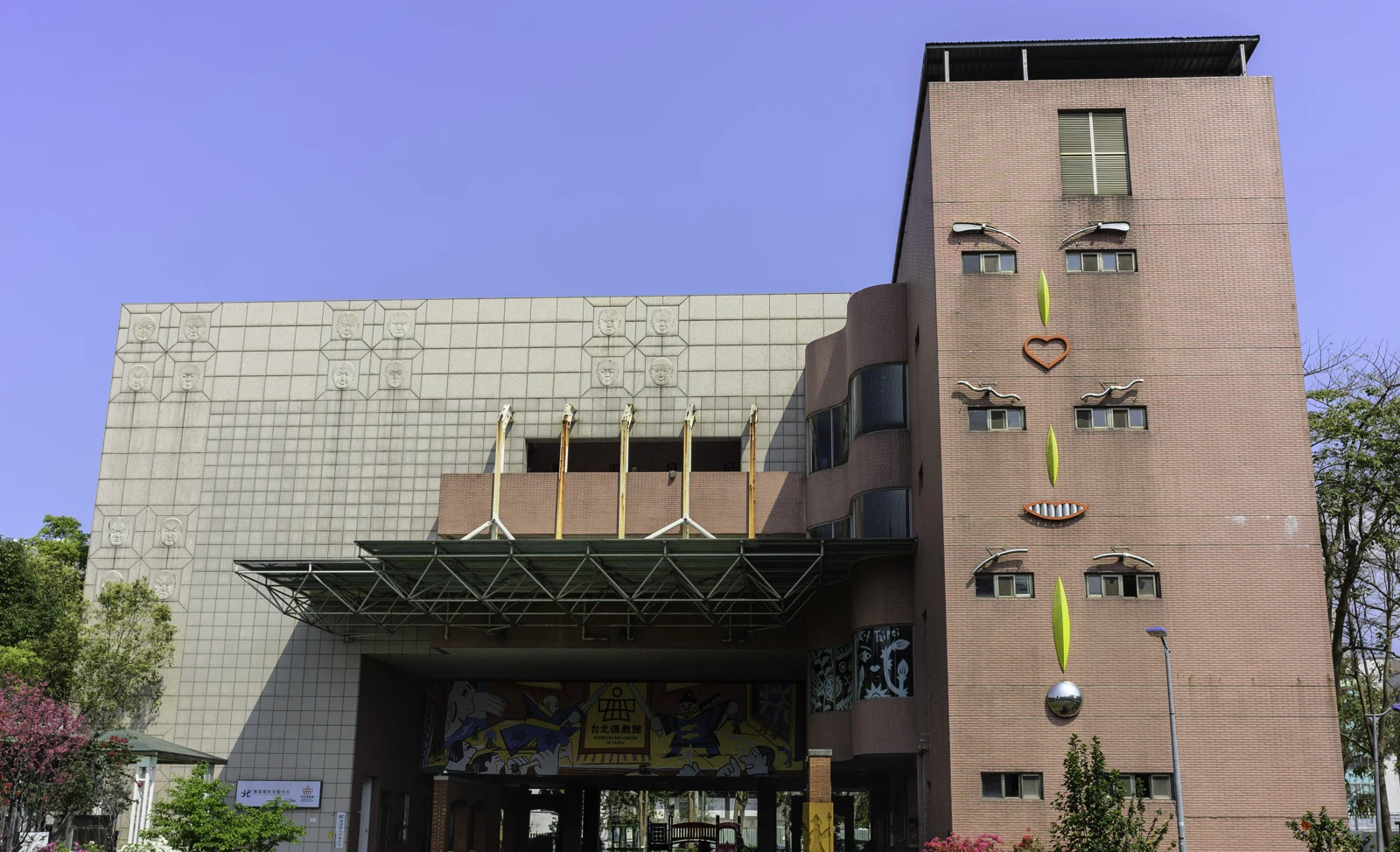
In Taipei, the Puppetry Art Center offers a public next stop. Lin Ching-fu of the Taiyuan Arts and Culture Foundation donated puppets from decades of personal collecting in the hope of establishing a permanent home for preservation and display. The museum opened in August 2004. Its permanent exhibition brings puppets, performance knowledge and interactive displays into a space a visitor can enter independently.
Begin with the glove-puppet displays, then compare them with the shadow-puppet area. Look for how the head, clothing and stage give a performer different ways to make a role visible. These observations can accompany a later return to Thunderbolt Fantasy’s screen characters. The museum is a place to learn about puppetry more broadly; a specific Thunderbolt Fantasy puppet display should only be expected if the museum announces one.