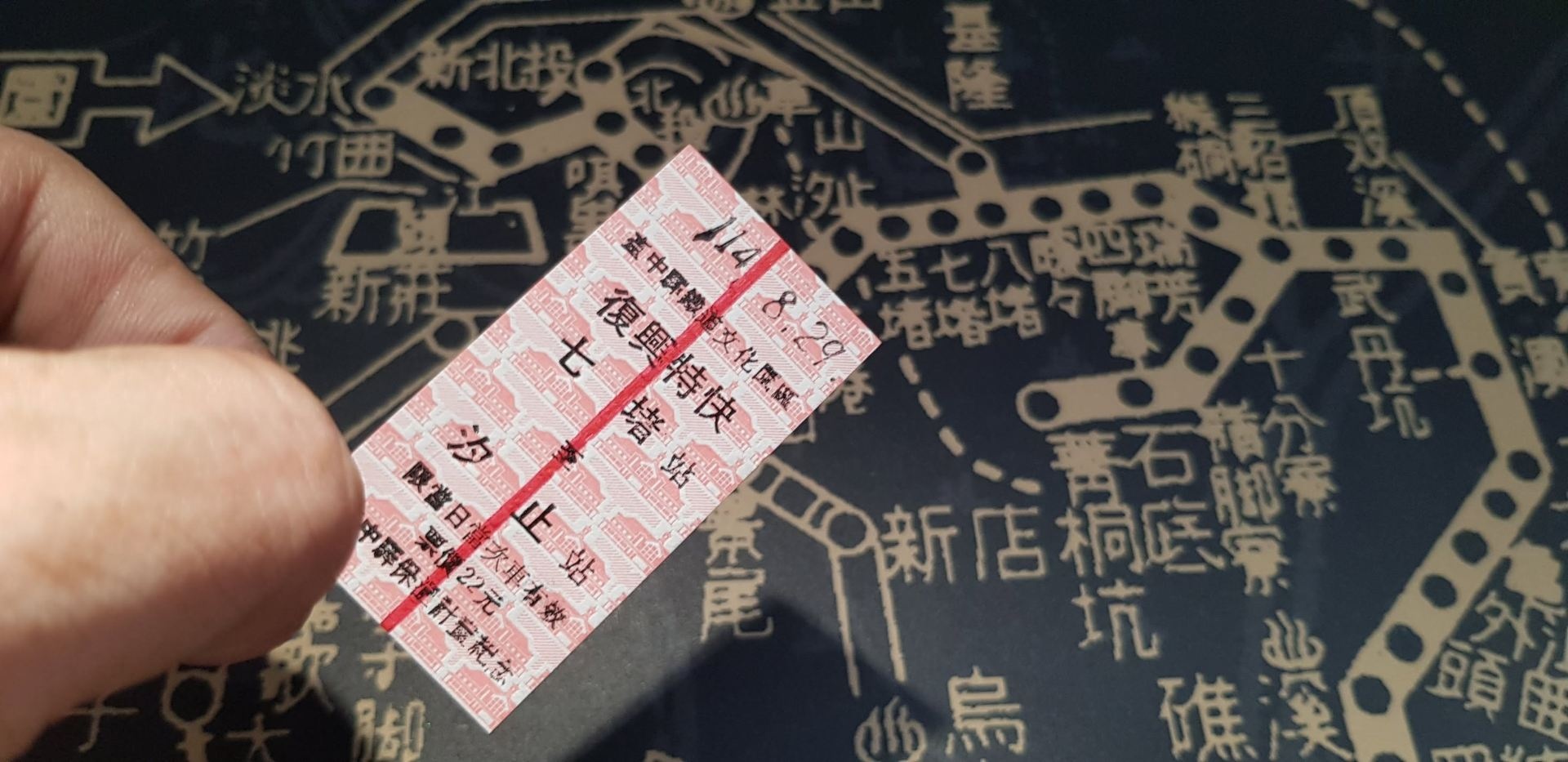
A press arrived. A teacher was still missing.
Huang Tsung-tang bought a German Heidelberg press online and brought it to Taichung. Having the machine did not settle the next problem: he struggled to find someone who could teach him to use it. A different kind of letterpress machine had been common in Taiwan. Buying equipment did not automatically bring back the experience needed to run it.
He was also returning to work once done by his family. His father had worked in letterpress printing, but the industry’s decline and the 1999 earthquake were followed by the loss of equipment and type. A report about Ri Xing Type Foundry renewed Huang’s interest in 2007. He began gathering tools and type, and founded Letian Letterpress in 2015.
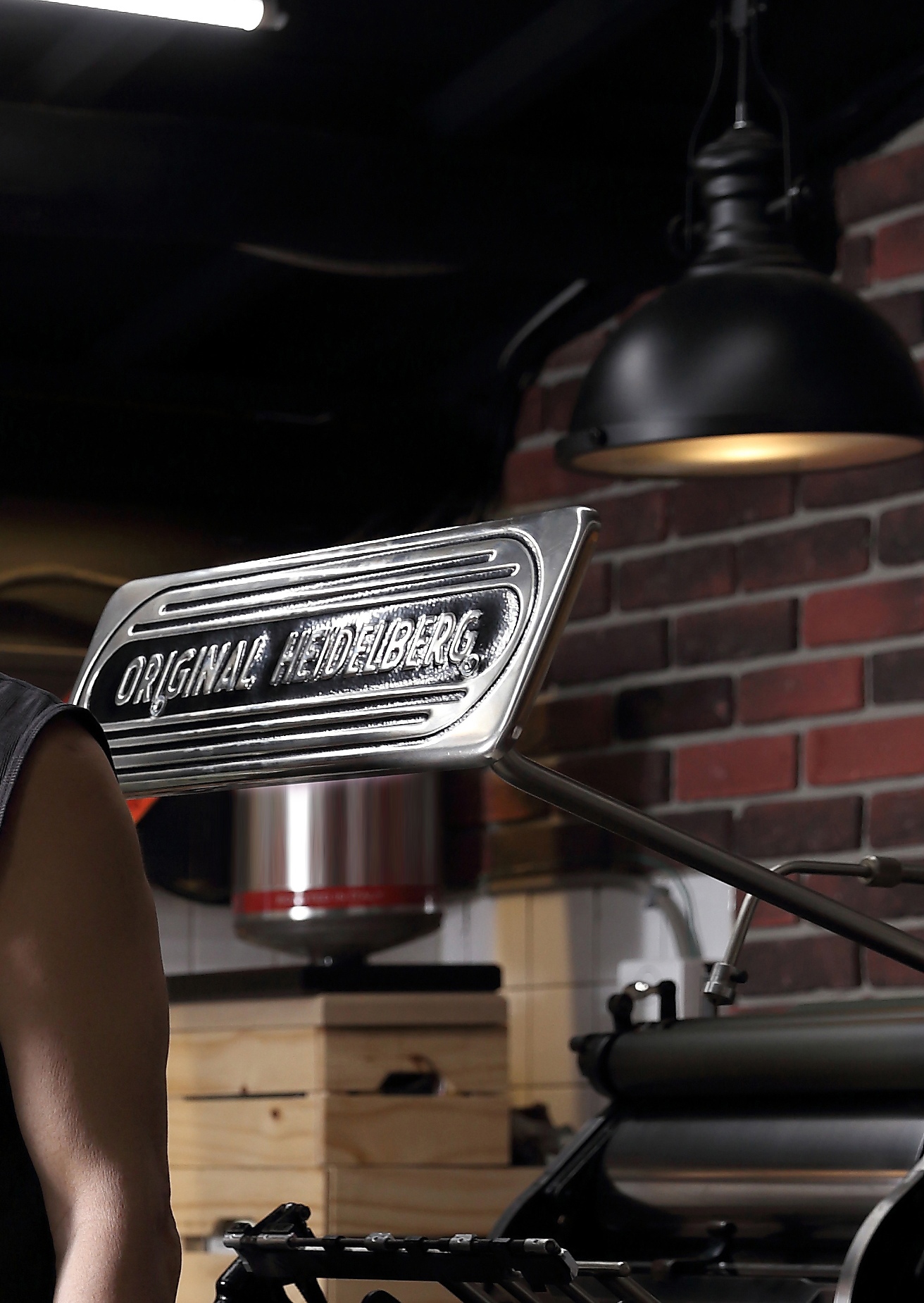
A Hong Kong printer came to teach
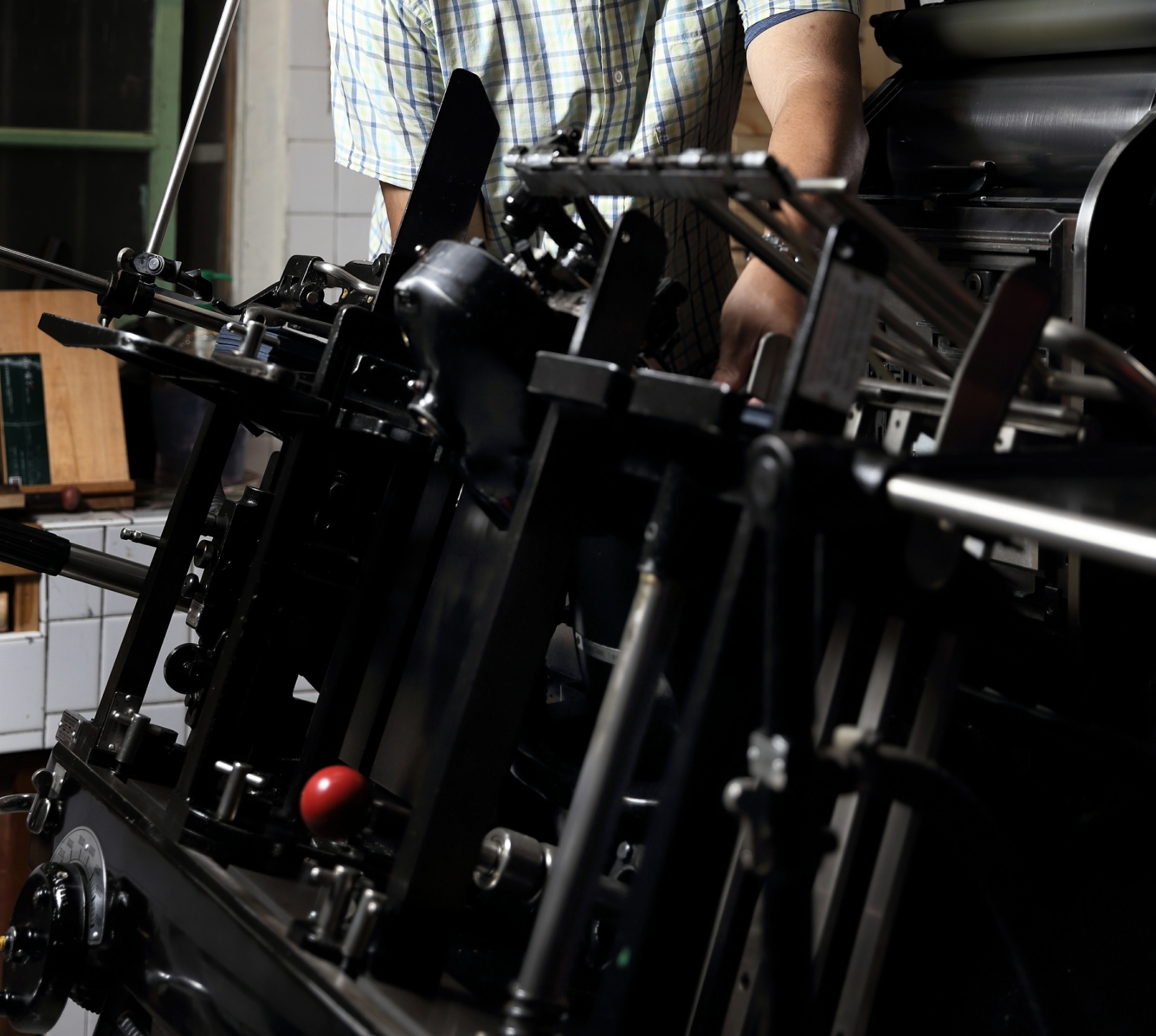
The search reached Yam Wai-sang of Kwong Wah Printing in Hong Kong. He had helped in his family’s shop from childhood, learning the work of finding type, arranging it and printing. As the trade declined, he shared those skills through workshops. For Huang, Hong Kong held more than another machine: it held someone with practical experience to ask.
An introduction brought them into contact. During a trip to Taiwan, Yam made time to go to Taichung and teach Huang in person. That journey connected machine knowledge with design on paper. Huang continued practising how an image in the mind could pass through an old press and become something held in the hand.
Give each piece of type its place
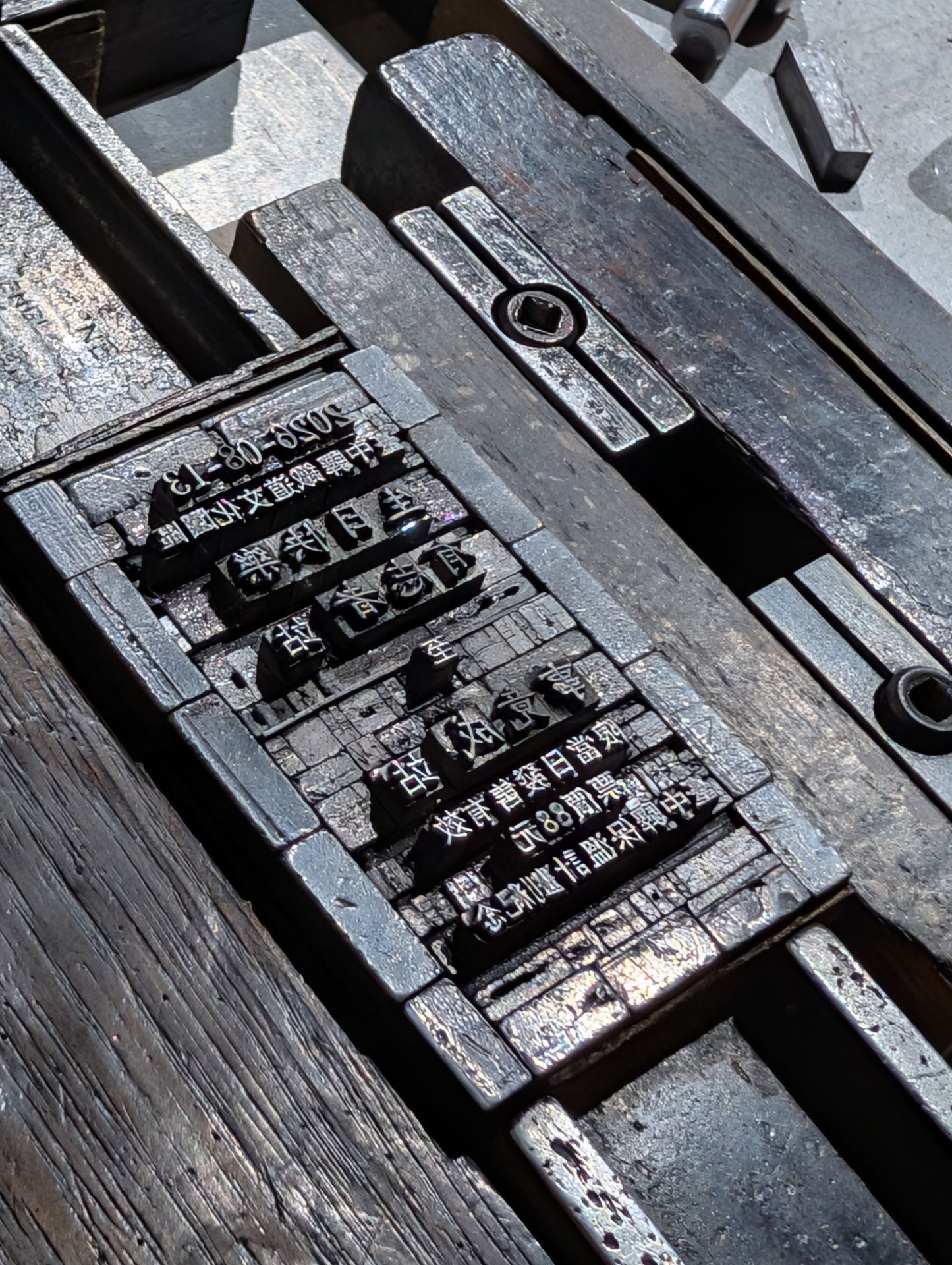
Movable type gives the work a tangible scale. Individual raised characters must be found in the case and arranged into a printable form. A 2023 Providence University report recorded the visitor process at Letian: selecting type, composing, inking and printing. A small ticket carries a sequence of jobs that must be handled in order.
In that interview, Huang distinguished experience in running a machine from the knowledge needed to make a finished work. Once the press can run, the maker still has to consider placement, paper and the printed result. The type cases and worktable make those decisions visible: a simple-looking print depends on repeated arrangement and judgement.
An old press makes new images
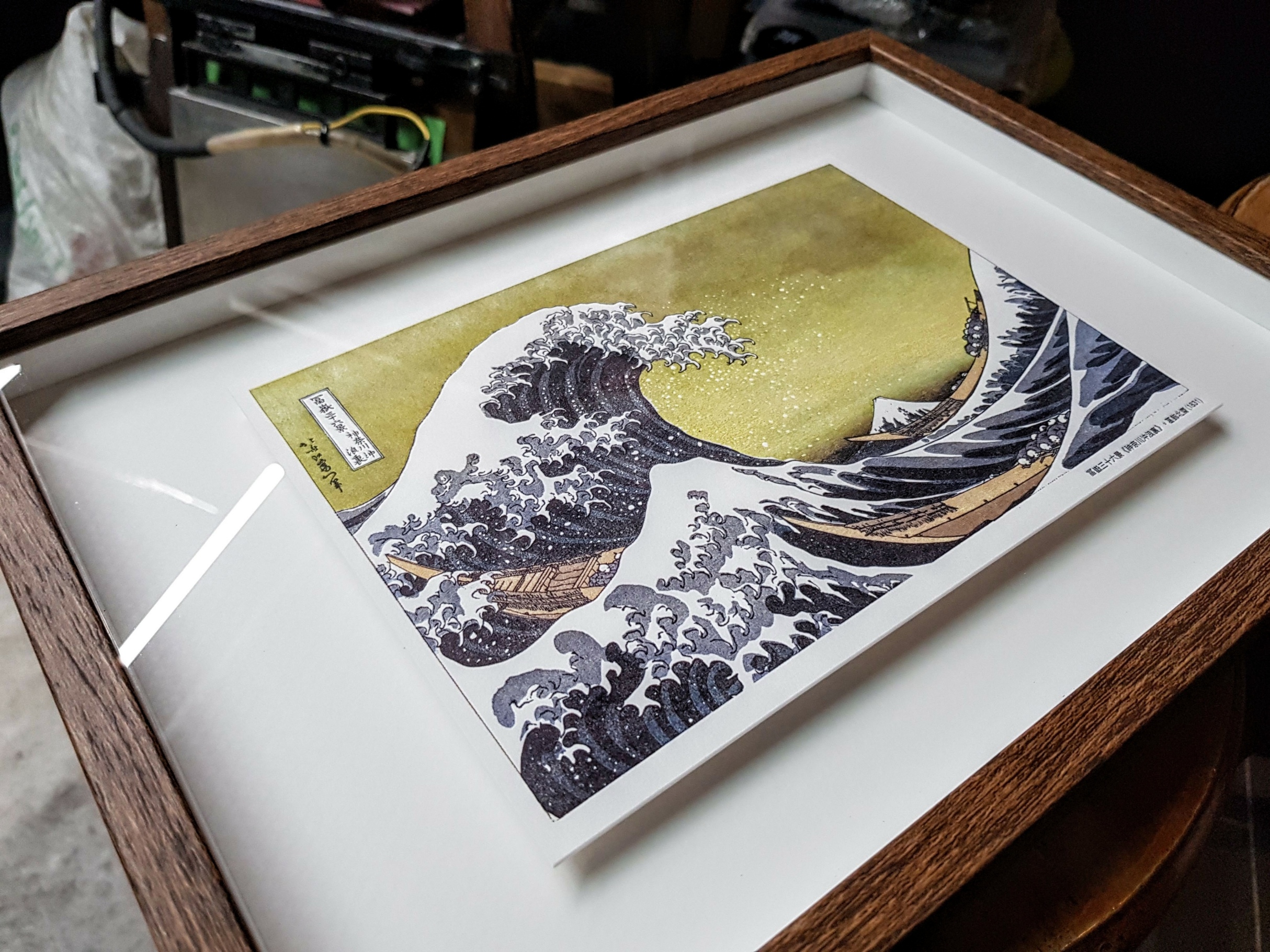
Letian’s work reaches beyond text into pictures. The studio made a centenary card for Taichung Station and later produced a process-colour letterpress version of The Great Wave off Kanagawa. Picture plates carry the image; ink, paper and pressure build its printed layers. Learning the machine leaves room for further experiments.
The studio’s current selection includes a Taichung-map notebook and postcards of Taiwanese stations. Roads, station façades and the island’s outline become things to write in, send or take away. Keeping the craft in use also means finding new work for older equipment.
At the old station, make a new ticket
Taichung Station Railway Cultural Park connects Letian’s work with present-day travellers. The park describes its letterpress and ticket experience, while the studio uses a personalised ticket as a way into the craft. In the old station hall, look at how type is held, then at the marks left on the paper after printing.
A visit can leave you with a small ticket you helped make and a clearer sense of the people behind it. Huang found the machine; Yam travelled to teach him; the learner continued practising. Check Letian’s latest opening and activity notices before travelling. The old-station location is at 1 Taiwan Boulevard, Section 1, Central District, Taichung.