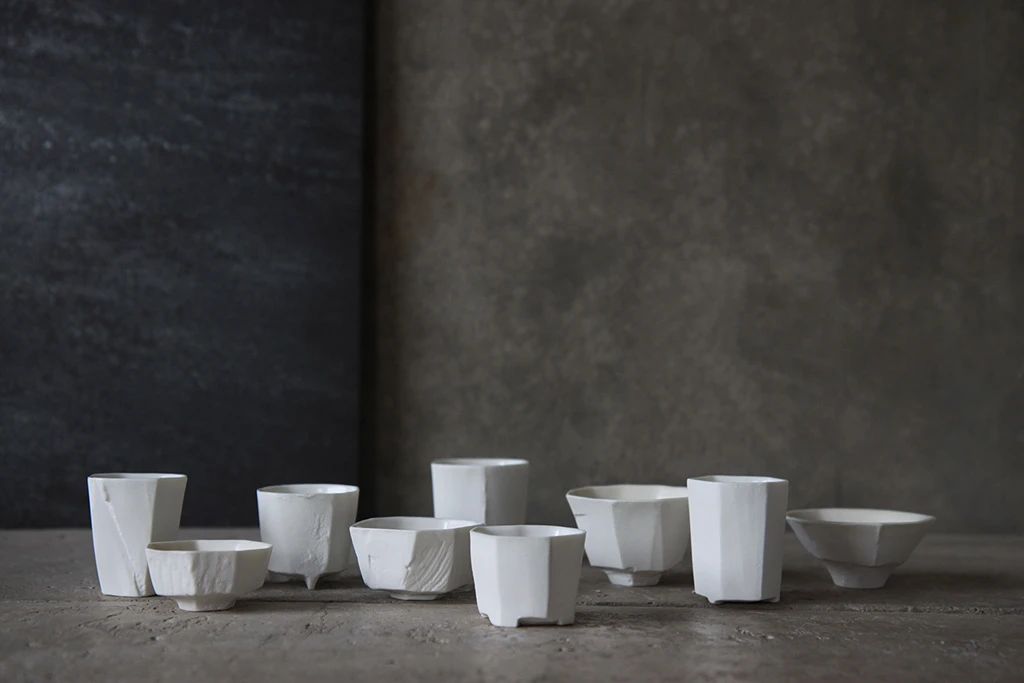
A cup with the presence of a small sculpture
A tea cup on the table is usually approached through what it holds. Hong Kong writer Ron Lam’s Obscura interview with Wu Wei Cheng began by looking closely at the vessels themselves. The published photographs show white porcelain cups with different heights, widths and feet. Knife cuts interrupt their surfaces, giving each small form a distinct outline. The cup asks to be looked at before it is picked up.
Lam described another part of that work: the apparently sharp lines had been polished smooth. The tactile impression belongs to the interviewer’s encounter with the cups. Wu, meanwhile, named architecture, interior design and Ju Ming’s sculpture among his interests, saying he wanted to bring the visual force of sculpture to teaware. For a Hong Kong reader, a familiar tea-table object thus opens onto a Taiwanese maker’s choices about volume, line and finishing.
A broken wheel made room for learning
Wu first encountered pottery in his final year of senior high school. After graduating, he received a broken potter’s wheel and repaired it. Two years later, his father gave him a gas kiln, allowing a simple workshop to take shape. The beginnings were concrete: one machine had to work again, and shaped clay needed a place to be fired. Each piece of equipment made another part of the process possible.
In a 2020 Taiwan interview, he described studying graphic design and spending years finding his way in ceramics. He had learned glaze combinations and recipes, but had otherwise developed his practice without apprenticing to a teacher. At first there was no market and few people knew his work; awards later brought approaches from shops. The visible confidence of a carved cup grew out of repeated attempts, before the work found people willing to carry it into other settings.
What a pot must do, and what its form can change
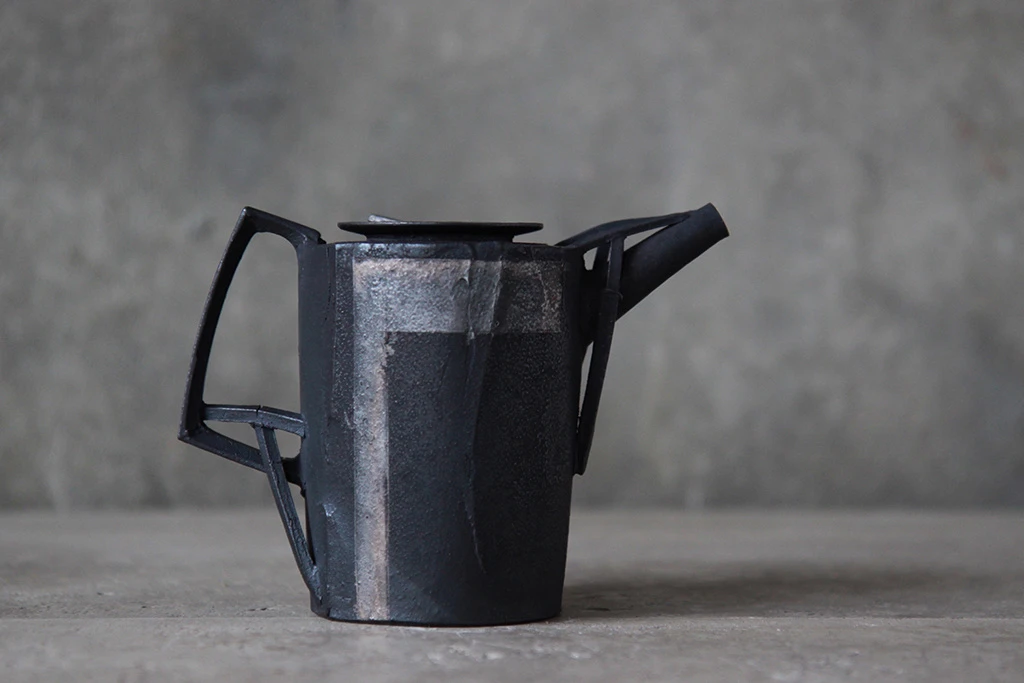
Wu’s usual sequence is to throw the clay, trim it and then sculpt it. Architecture books feed his attention to form. When discussing teapots in 2020, he identified a firm constraint: the spout, lid and handle must retain their functional structure. Around those requirements, he changes the shape. The black teapot in the Obscura interview photograph makes that question visible, with an angular body still organised around a handle, a lid and a projecting spout.
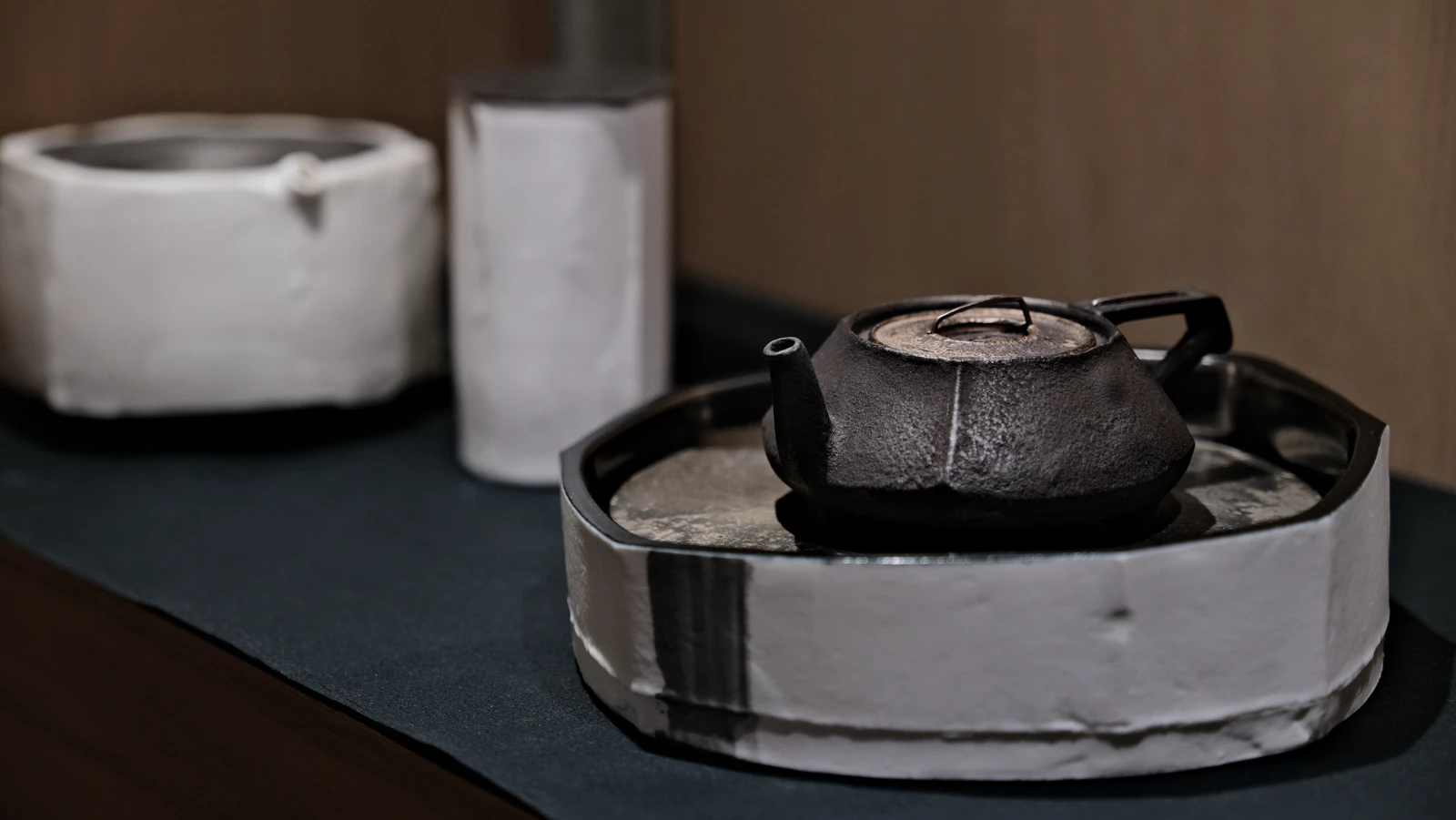
He also made stainless-steel frames that held tea implements while giving the whole arrangement a structure. The objects were independent pieces that users could combine, rather than a prescribed matching set. His tea bowls carried a different emphasis: he told Obscura that many buyers chose them for appreciation and selected what suited them. A pot’s working parts, a bowl’s sculptural presence and a frame’s organisation each leave a different space for the person using or collecting them.
Hong Kong gave those differences an exhibition setting
From 3 to 31 July 2022, Hong Kong’s Touch Ceramics presented the joint vessel exhibition 剛柔, bringing Wu together with Japanese ceramic artist Taketoshi Ito. The gallery’s account placed Ito’s carved floral patterns beside Wu’s architectural lines and black, white and grey palette. The encounter depended on the makers’ different decisions: how a surface was cut, how a form stood and how decoration occupied it. Hong Kong provided a setting in which those distinctions could be considered together.
Wu’s exhibition history also leads into Taiwan’s public ceramics institutions. It includes the 2017 exhibition 形塑無疆—台灣當代陶藝進行式 at Yingge Ceramics Museum. Taiwan’s craft centre records his participation in exhibitions at the museum and his view that everyday ceramics can also become a static installation. The move from cup to spatial arrangement has a place in his work; it also gives a visitor a reason to look beyond a vessel’s outline and ask how making, display and use meet.
Take the question of making clay to Yingge
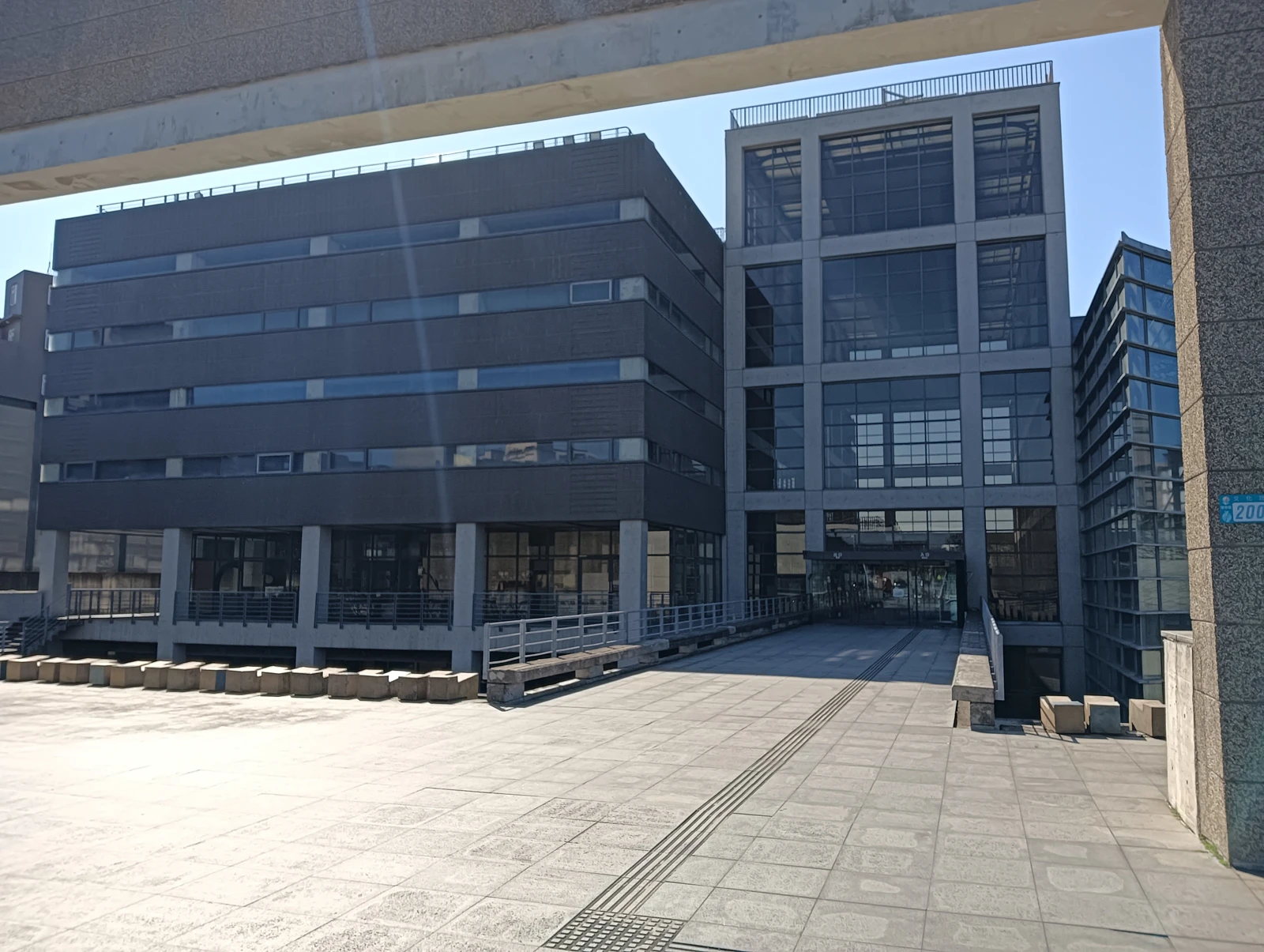
At New Taipei City Yingge Ceramics Museum, the permanent section 化泥成形 explains Taiwanese ceramics through objects, text and video about clay, techniques, glazes, fuel and kilns. Start with how a vessel is formed, then follow what happens to its surface and how it is fired. Wu’s repaired wheel and his father’s kiln now supply useful questions for the visit: what does each stage make possible, and where can the maker still alter the form?
Look through the displays for the relationship between a vessel’s body, foot and surface, using the process explanations to understand what you see. Museum objects are observed through the displays rather than handled. From the Culture Road exit of Yingge railway station, the museum is about a ten-minute walk along Culture Road. A Hong Kong interview’s small cup can lead to this public place in Taiwan, where the work behind ceramic forms becomes something a visitor can keep learning to read.