A moving question above the harbour
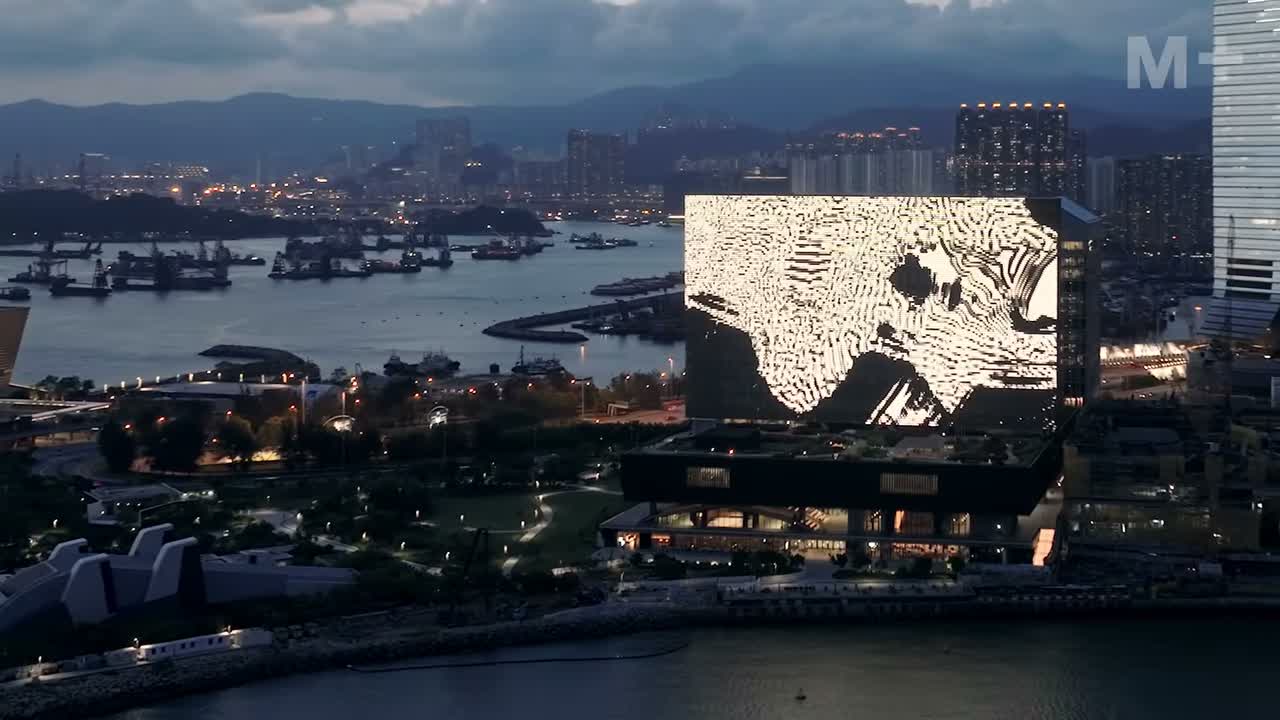
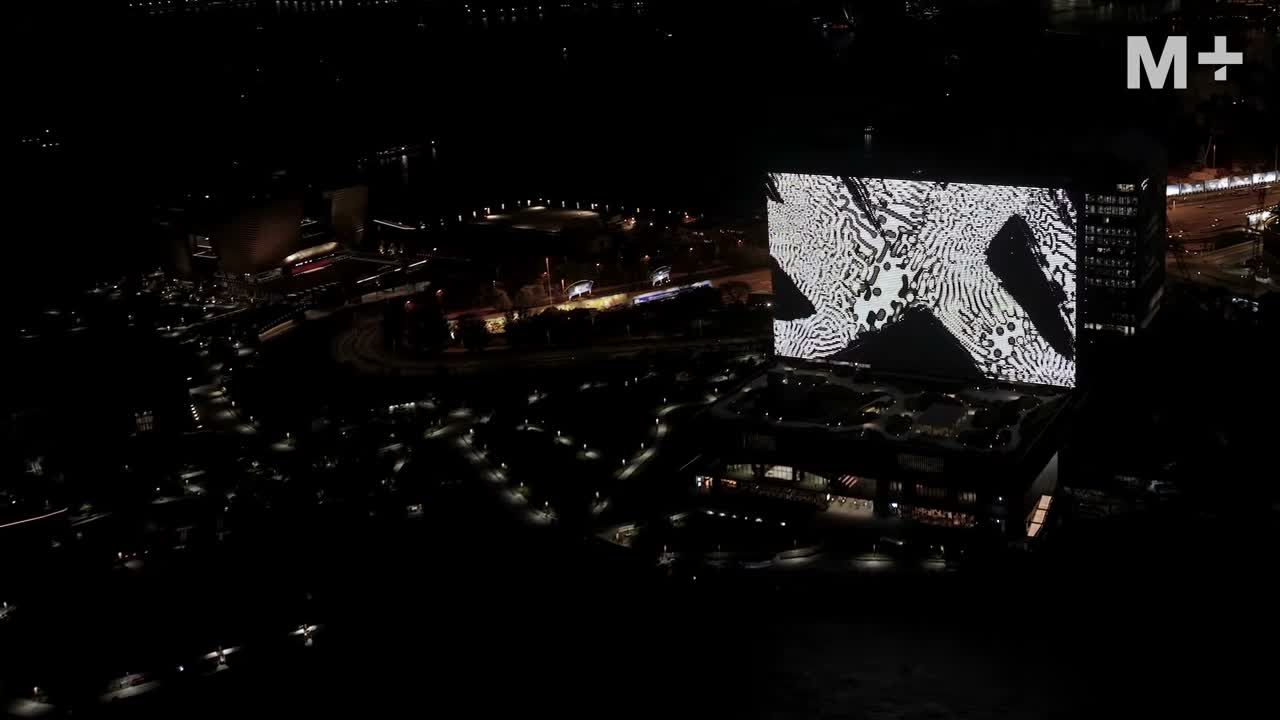
In 2023, a dark brush form opened into fine lines of light on Hong Kong’s M+ Facade. Across the harbour, the image joined the building and the city skyline; closer views revealed marks breaking apart and gathering again. Ink | Pulse brought together Taiwan’s Tong Yang-Tze and Hong Kong media artist Chris Cheung. Their collaboration gave traces left on paper a new way to move through a public space.
M+ presented the work from 30 June to 24 September 2023, as its first facade commission by a pair of artists. Tong’s ink and Cheung’s moving images met at the scale of the building: one supplied the physical traces, the other gave them changing forms. The screening has ended, but its record lets us follow the work from paper to light, then continue towards Tong’s writing in Taipei.
She kept the traces left by larger writing
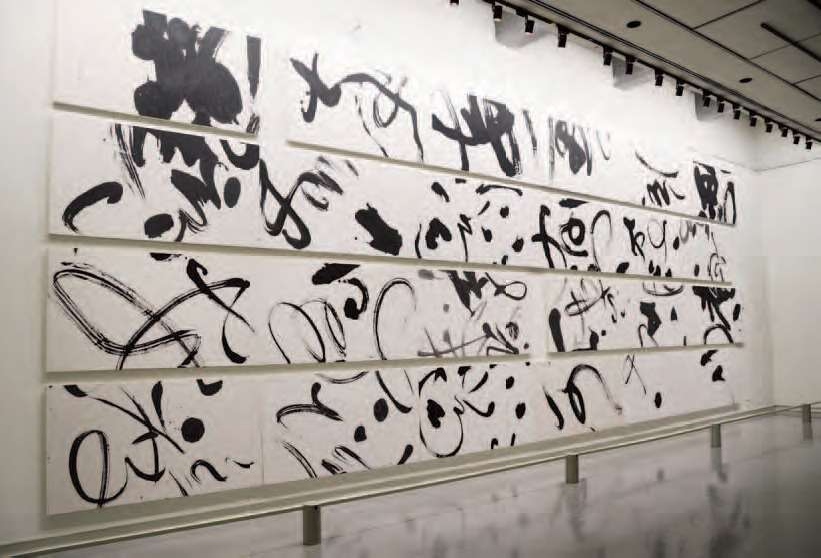
The starting point was Tong’s Silent Music series. Between 2003 and 2010, while making larger works in running and cursive scripts, she saved portions of brush traces she did not want to discard. In 2011, she selected a hundred from more than 130 pieces and had them mounted. Once separated from the larger writing, each fragment could draw attention to a turn, a weight of ink, or the paper left around it.
An exhibition photograph published by Taipei Fine Arts Museum shows 24 pieces arranged along a wall, with white intervals between the black marks. Their placement makes one fragment answer another across the gaps. The hundred ink works collected through Tong’s years of writing later became the basis of Ink | Pulse. Cheung could begin with those varied traces, following the possibilities already opened by their separation and arrangement.
Cheung gave the ink another way to change
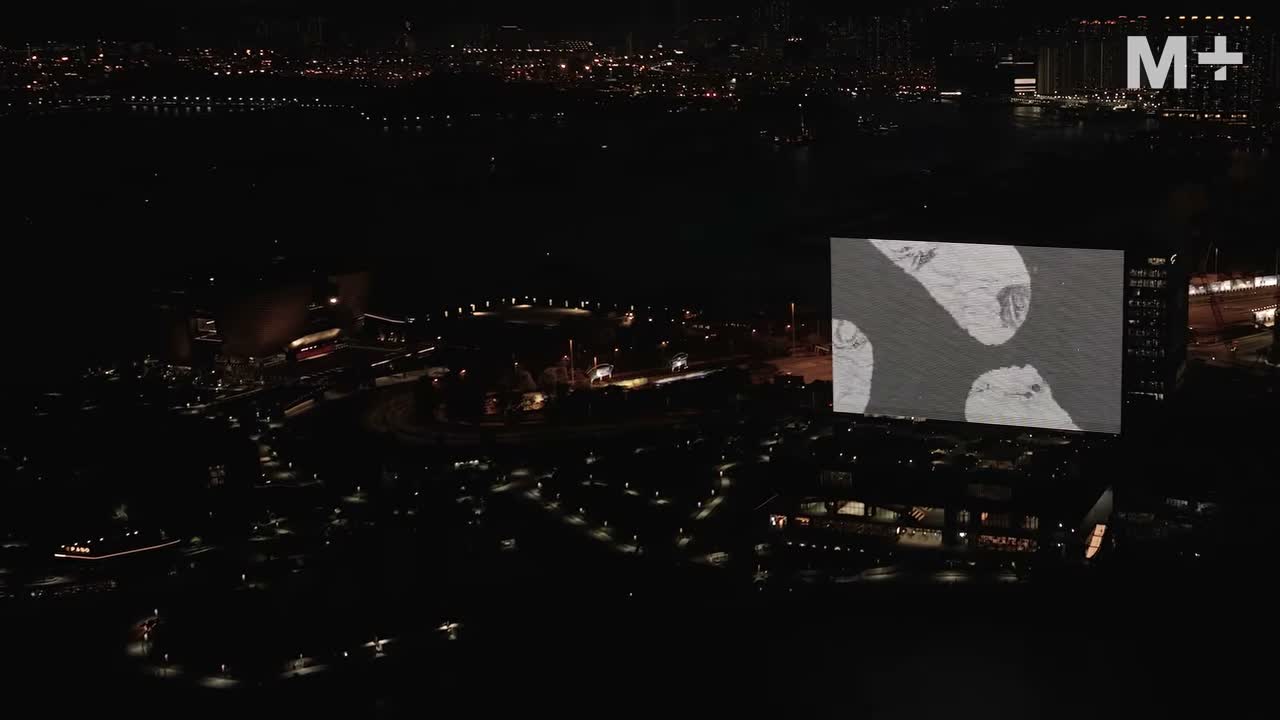
Paper holds the result of a brush moving through time. Cheung used an algorithm to respond to Tong’s strokes, dots and spaces, bringing those fixed traces into forms that could continue changing. A broad mark could open into a finer pattern; an interval could become part of the image’s rhythm. The ink supplied the shapes and contrasts, while the generative method gave the new work its unfolding movement.
M+’s 2023 annual review describes that rhythm through the pulse of a heart, blood circulation, cell division and nerves. On the facade, broad dark forms give way to delicate, branching patterns. Following these changes reveals the two artists’ contributions together: Tong’s traces remain the ink vocabulary, while Cheung’s transformation lets their outlines and surrounding spaces develop into new visual relationships.
The new work met Hong Kong in light
Scale changes how the work can be encountered. Across the harbour, the moving black-and-white forms sit within a much larger view of buildings and water. Closer to M+, their smaller divisions become easier to follow. The official film moves between these distances and people facing the illuminated facade, bringing the same collaboration into view as both a changing image and part of Hong Kong’s waterfront.
The physical ink series provided a vocabulary, and the facade gave the shared work a place to unfold in time. Tong’s marks could be followed as they dispersed, gathered and changed through Cheung’s generative method. Ink | Pulse thus carried the encounter beyond a sheet of paper: the traces of a Taiwanese artist’s writing became part of a new commission shaped with a Hong Kong artist, in Hong Kong’s public view.
At Taipei Main Station, look up at the lettering
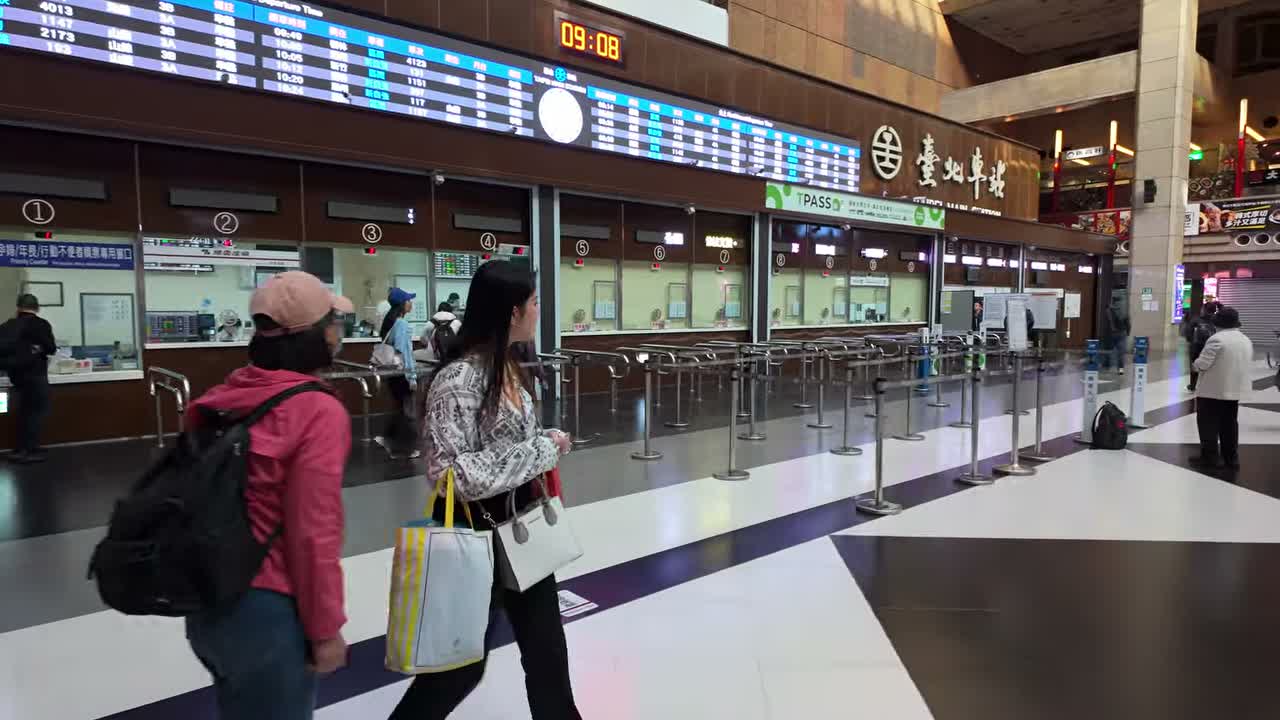
Tong’s writing also accompanies people moving through Taipei. Above the ticket counters in Taipei Main Station’s ground-floor hall, her four-character station name helps identify a place within the busy transport space. Taipei Fine Arts Museum includes this lettering among her works in everyday life. A 2025 Central News Agency feature pictured it in a photograph taken in 2020; a walking record published in 2025 brings us towards it through the hall.
In the public ticket hall, pause somewhere clear of queues and look up above the counters. Compare the joins, spacing and changing thickness of the strokes with the paper traces and moving forms in Hong Kong. This inscription is another work by Tong, carrying her writing into the routines of arrival and departure. Follow the station’s current signs for counters and circulation; a few minutes during an arrival or transfer can make room for a closer look.