
Records return across the sea
In 2011, the Gold Museum in Jinguashi invited the company that inherited Nippon Mining’s business to help stage an exhibition. Its Nippon Mining Museum in Hitachi supplied a link to an earlier period: Nippon Mining had bought the Taiwanese mine in 1933. Records were crossing the sea to a place the company had once operated.
The exhibition ran from 28 October to 4 December. Alongside Jinguashi’s operations, it presented Hitachi’s mining culture and responses to smoke pollution. A company’s machinery, its settlements and its environmental problems entered the same exhibition, decades after the Taiwanese operation had changed hands.
An office and a street
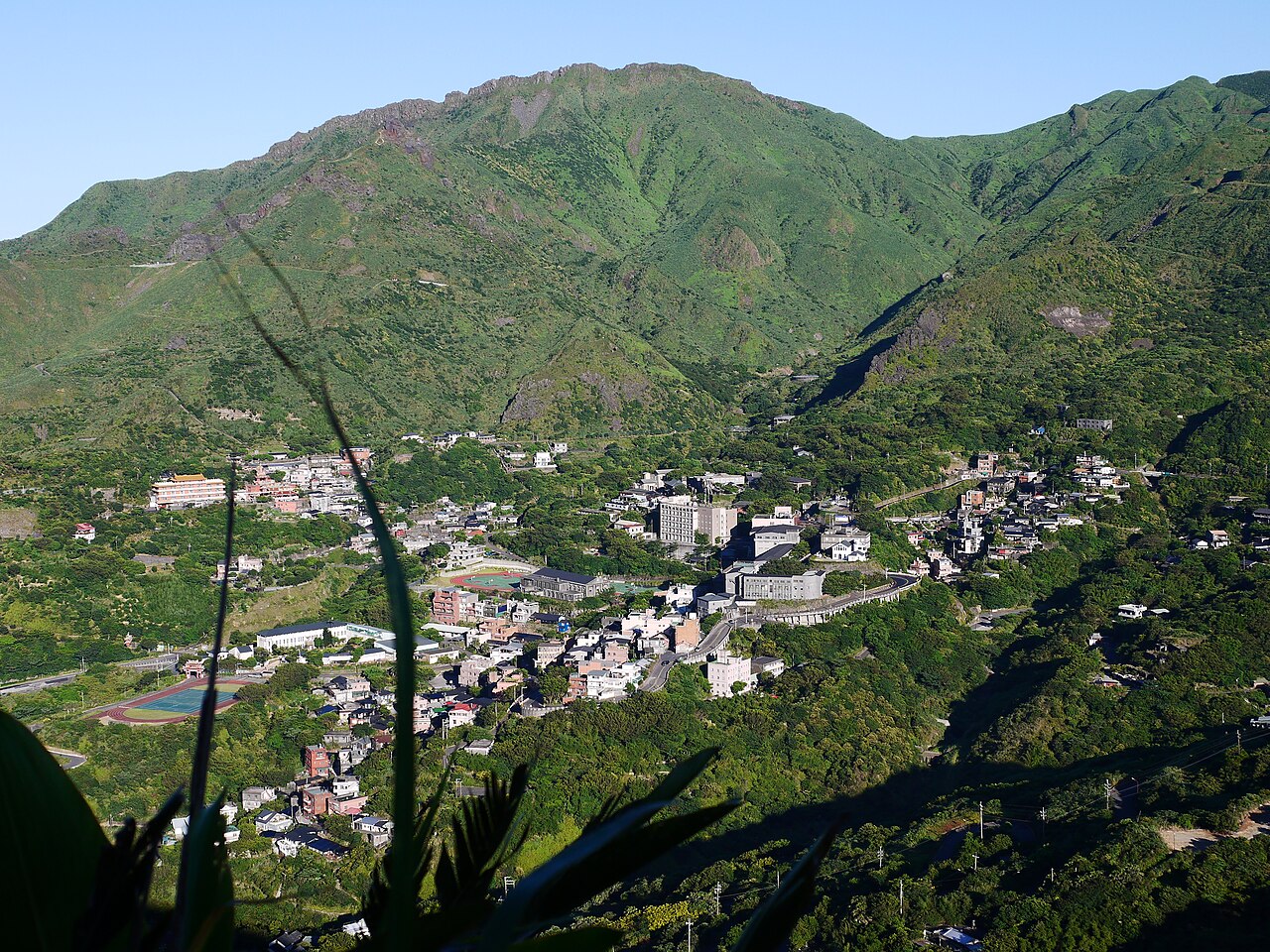
In Jinguashi, the former office gives that business history a physical address. The Gold Museum’s Earth Building served as Nippon Mining’s general office. Successive rebuilding used timber, brick and concrete; window forms and stair handrails preserve traces of older phases. A place used to administer the mine became a place for explaining it.
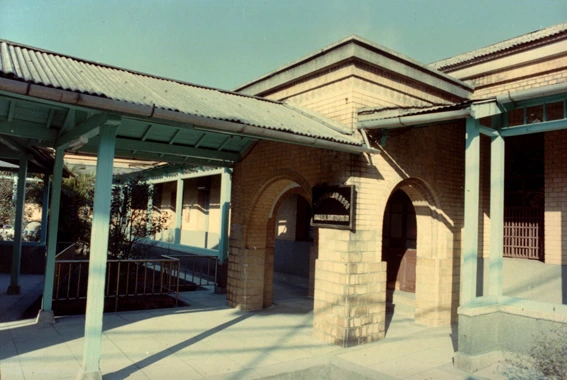
Local photographer Zheng Chun-shan recorded another office site in the 1970s: Taiwan Metal Mining Corporation’s headquarters, to the left of today’s Jinguashi post office. A fire destroyed it in 1986. Its photograph preserves a workplace that can no longer be read directly in the street, adding a resident’s camera to the company archive.
Another kind of record began on nearby Qitang Street. Chen Yu-an, later a member of the Golden Pals community group, lived there during alternative service at the museum. Curiosity about the old street led him and his colleagues to photograph and film residents’ life stories.
The people who stayed
At a 2015 screening, retired Taiwan Metal Mining Corporation worker Chang A-hui, then 90, joined the audience. He had retired with three hero medals. His wish was for Jinguashi to flourish again. Chen described a street once full of grocery shops, with only one remaining at the time, and older residents continuing their lives through its decline.
The former office and the street hold different parts of the mine’s afterlife. One preserves the organisation that directed production; the other keeps the people whose lives continued after its busiest years in view. The journey from Hitachi reaches beyond the museum walls, into the settlement those records describe.