
A new home in Hirado for worship linked to Tainan
In April 2024, residents in Hirado moved ritual objects and a statue to a new shrine. Its worship had been linked to Tainan’s Koxinga Shrine through a ritual transfer in 1962. Follow those actions alongside an actor’s print, a Qing title and a rebuilt temple: each age found its own way to remember Zheng Chenggong.
The actor is not the historical man
Someone familiar with Japanese theatre may first meet Koxinga through Chikamatsu Monzaemon’s The Battles of Coxinga. The play transformed the historical Zheng Chenggong into Watōnai, a dramatic character. An 1839 actor print by Utagawa Kunisada, later included in a Japanese museum exhibition, shows how that character circulated through performance and images long after Zheng’s death.
The print is evidence of a performance culture, not an eyewitness portrait of the seventeenth-century commander. Keeping that distinction opens a better question than whether the play reproduces his life: what made a later audience want to see this story? The stage gave the person another life, shaped by its own characters, conflicts and spectators.
A family crossed the sea before the memorials
Zheng was born in Hirado in 1624 to the maritime trader Zheng Zhilong and a woman of the local Tagawa family. Hirado therefore belongs to his family history, while Taiwan became part of his later military and political career. Those connections differ from Sakura, where the National Museum of Japanese History studies and exhibits his changing image. A birthplace, a place of action and a place of research are not interchangeable.
In Tainan, a surviving rubbing of an official communication records a later decision: the Qing court approved a shrine and the posthumous title Zhongjie in 1875. Zheng had fought for the restoration of the Ming. More than two centuries afterward, another ruling house incorporated his memory into official commemoration. The document makes that change visible without requiring the visitor to assume that everyone honoured him for the same reason.
The building also belongs to a later time
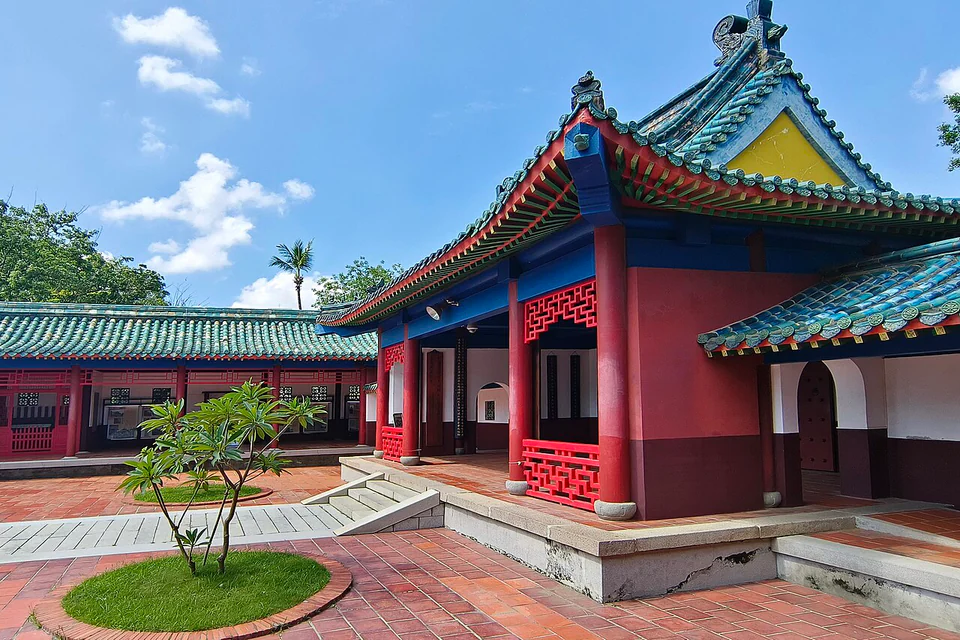
The shrine changed again under Japanese colonial rule, when it became Kaizan Shrine and Zheng’s Japanese family connection was used in colonial narratives. Its present architectural form is later still. Taiwan’s cultural-heritage register records demolition and rebuilding beginning in December 1963, with the main reconstruction completed in June 1964. The building visitors see is therefore part of the history of remembering him, not a structure surviving unchanged from his lifetime.
Taiwanese and Japanese museums brought these different afterlives together in an exhibition held in 2024–2025. Its comparison of the historical person, theatrical character and political uses offered a way to examine familiar images rather than simply repeat their praise. The exhibition has ended; its research remains useful when reading a memorial in Tainan today.
A place of worship linked to Tainan
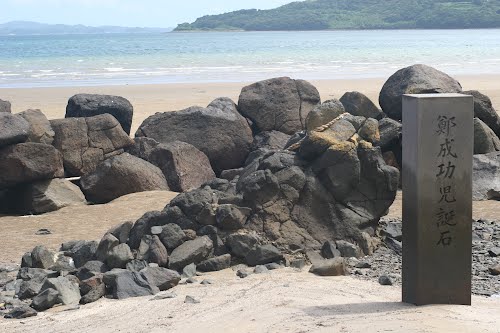
In 1962, a ritual branch of Tainan’s Koxinga Shrine was established at Maruyama in Hirado’s Kawachi district. This was a link between places of worship, beyond simply sharing an interest in the same historical figure. Hirado was Zheng’s birthplace; Tainan had become a major place of his later commemoration. The ritual affiliation gave communities in both places something they could continue to visit and maintain.
The relationship involved people from Tainan as well as Hirado. A Tainan city record in September 2016 describes a visiting group drawn from temples, Zheng family associations, businesses and residents setting out for a ceremony at the Koxinga Memorial Museum’s new gate. The same record traces earlier visits by Hirado tourism groups to Tainan’s Koxinga observances. The connection was being carried through organised visits and ritual participation, rather than remaining only a story of ancestry.
In 2024, residents carried the worship to a new home
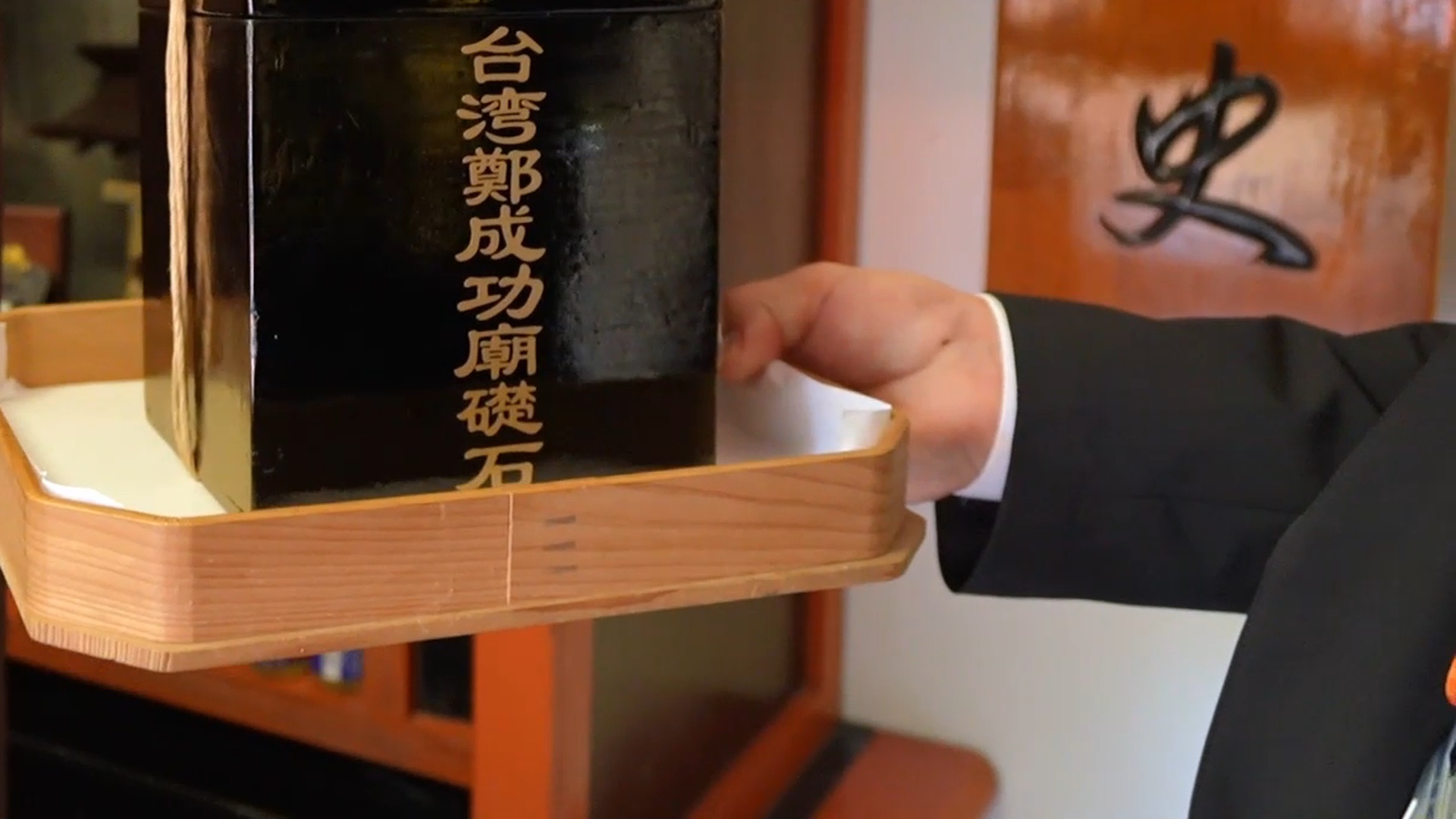
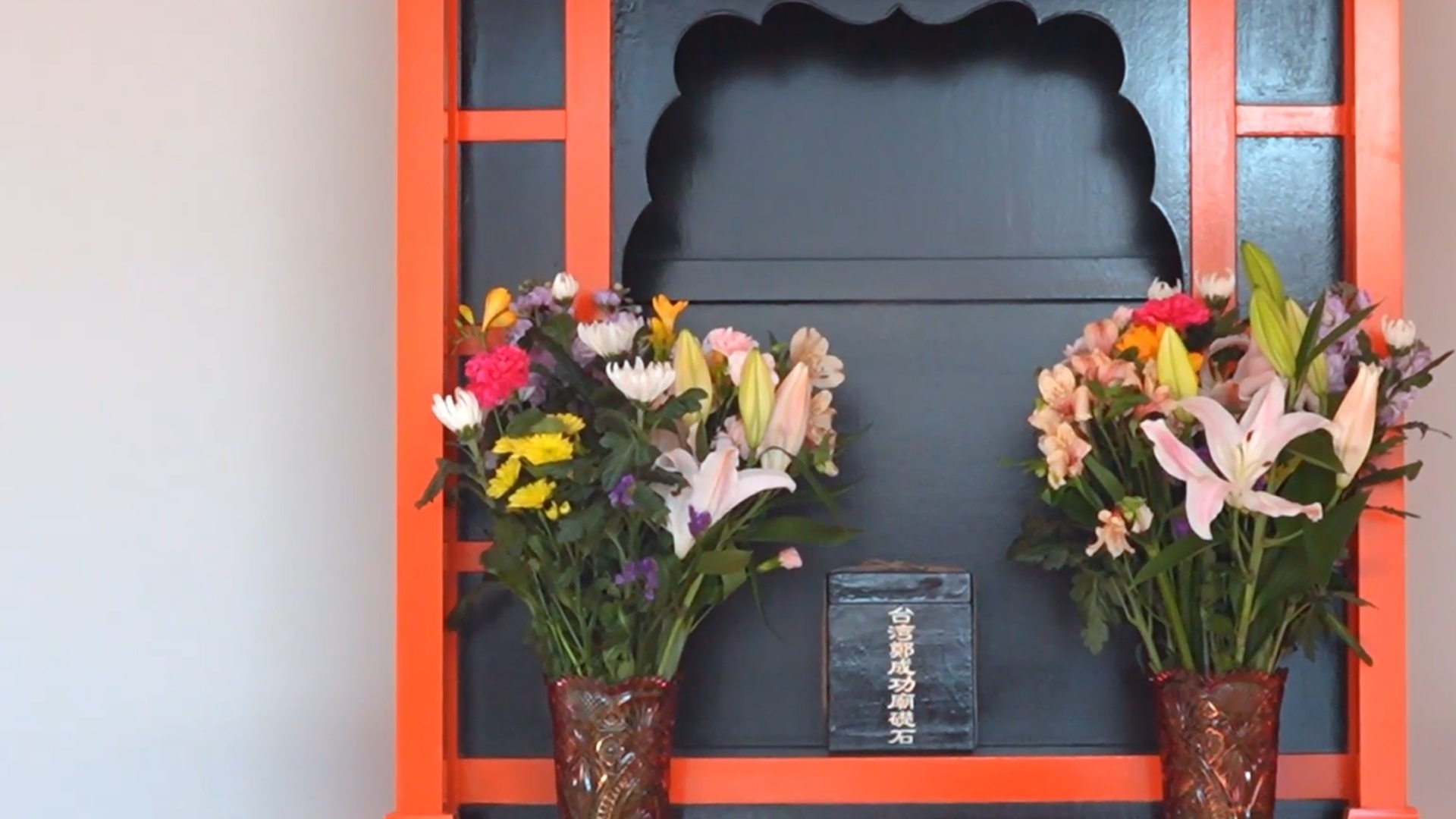
The old shrine at Maruyama deteriorated. As part of Koxinga’s four-hundredth birth-anniversary programme, Hirado built a new shrine beside the Koxinga Memorial Museum. On 14 April 2024, local residents accompanied the ritual foundation and the Koxinga statue from the old site to the new one. The rebuilding provided a new place for the worship inherited through the Tainan connection.
The ceremony’s filmed record preserves the work involved: a ritual object held on a tray, people accompanying the statue, movement through the town, and bows at the new shrine. These are actions by the present-day community, not scenes from Zheng’s lifetime. The date of the 1962 ritual transfer also does not by itself identify when every statue or object was made. Following the specific objects and gestures keeps different parts of the story distinct.
In Tainan, read the names as well as the building
Kaishan Temple, Kaizan Shrine and Koxinga Shrine belong to different periods in the site’s history. Set those names beside the later rebuilding and the ritual relationship with Hirado, and the place becomes more than an unchanged monument to one hero. Colonial policy, official commemoration and local worship each helped shape what later visitors encountered.
At the Koxinga Shrine, begin with the building, then compare the names, inscriptions and devotional arrangements that are actually accessible. Ask when each was made and whose account it expresses. Worshippers and visitors may approach the same place differently; leave space for ritual activity. The historic documents discussed here are not a promise of current display. Reading what is present carefully is more revealing than expecting one monument to speak for every period or community.
Visit information
- Taiwan site
- Koxinga Shrine, 152 Kaishan Road, West Central District, Tainan
- What to notice
- Compare the present shrine name and building with the site’s earlier names and dated reconstructions; leave room for worship.
- Access
- The official Tainan attraction page lists 08:30–17:30 and free admission. Recheck the current announcement before travelling; ritual activity and temporary restrictions take priority. Historic documents discussed in this article are not a promise of current display.
- Arrival
- From Tainan Railway Station, use the current city-bus network or walk by public streets to Kaishan Road. Confirm your return connection before extending the visit.
- Return
- Return towards Tainan Railway Station by the confirmed bus or walking route. Check the current timetable for your onward train; allow time for city traffic and station access.
- Hirado and past events
- The 2024 relocation ceremony and the 2024–2025 museum exhibition have ended. The Hirado scenes record those earlier activities. Visiting Tainan today does not reproduce that ceremony or guarantee a related event.