
A memorial object crossed the sea
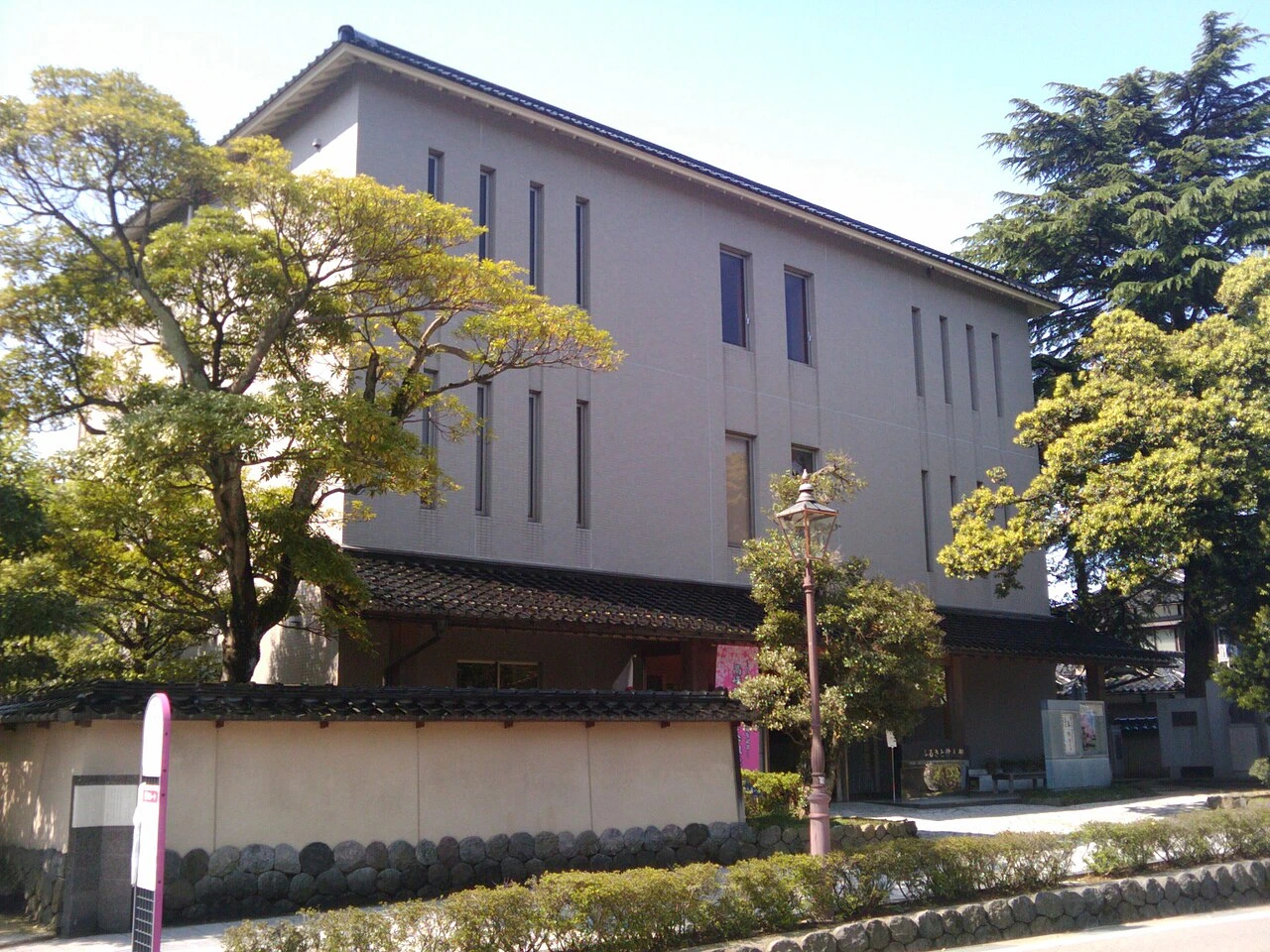
Hatta was born in Kanazawa’s Imamachi in 1886. Across from the family house, Hanazono Elementary School keeps a bust made by Hsu Wen-lung, the Taiwanese founder of Chi Mei. The sculpture brings a Taiwanese person’s act of remembrance into a Japanese local place. The school also holds photographs and books about Hatta.
For visitors, the publicly accessible Great People of Kanazawa Memorial Museum offers another way into that memory. Its exhibits connect Hatta to other people associated with the city. Beginning with an object and its maker changes the direction of the journey: a Japanese engineer’s work in Taiwan was later remembered and sent back to Japan by a Taiwanese sculptor.
The construction site also had to be a place to live
Work on the Chianan irrigation project began in 1920. Housing at Wushantou was built alongside it. During construction, Hatta lived there with his family while working with the engineering team. The surviving group includes several arrangements of shared and detached residences. Looking at the spaces between them brings the project’s households into view.
Builders made practical decisions with the timber available. In the houses, the tai-ko-otoshi method used logs cut on two or three sides in place of squared lumber. Reading that construction detail puts skilled carpenters beside the engineer in the story. A design became a place through the work of people who could join and shape its materials.
A completed reservoir did not end the question of water
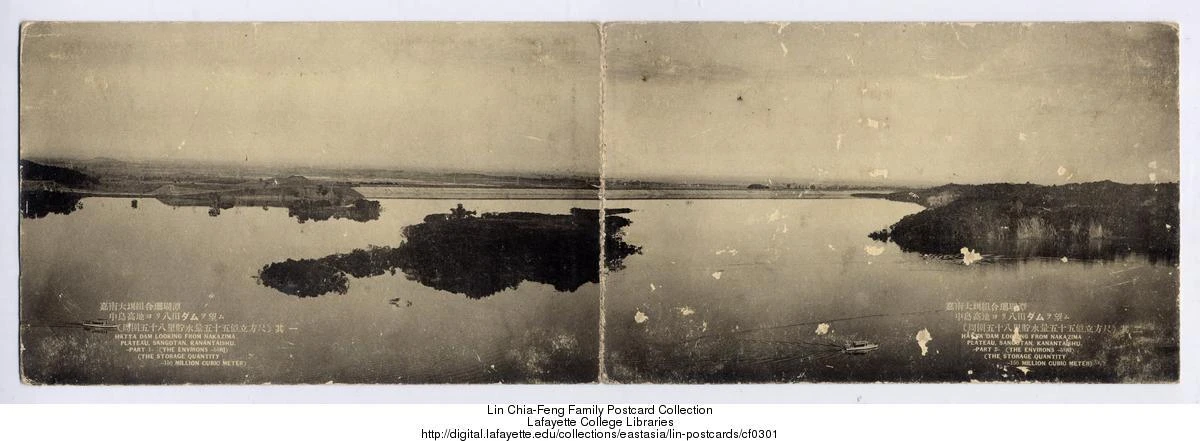
Wushantou Reservoir was completed in 1930. Its stored water then had to enter a wider irrigation system. A three-year rotation arranged rice, sugar cane and other crops in different zones. For farmers, this altered when to plant and where to invest labour and money. The infrastructure reached into decisions made within each household.
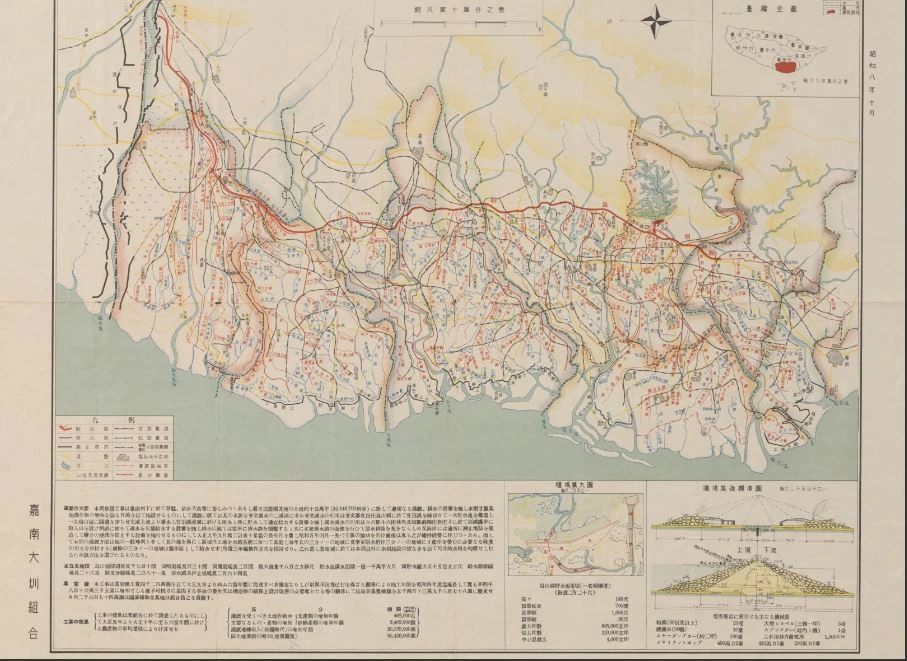
The severe drought of 1933 exposed the pressure on that system. Water was scarce, crops suffered and disagreements over access became urgent. An irrigation map helps us see channels and districts; the drought record asks a different question—who could receive water, and what happened to those still waiting? Holding both views together makes the agricultural landscape easier to read.
Later generations repaired the houses
The residential group was refurbished from 2009 and opened as the memorial park in 2011. Technicians travelled to Ishikawa to study building characteristics and used Japanese carpentry techniques in the restoration. The later work created another journey between Kanazawa and Tainan, concerned with how a house could remain legible after its original working life had changed.
The restored houses and the irrigation landscape preserve different parts of the past. Rooms and timber joints speak about construction and domestic space; the reservoir and channels speak about storage and distribution. Spend time with each before bringing them together. A memorial becomes richer when the visitor can also recognise the work around the person being remembered.
At Wushantou, look beyond the name
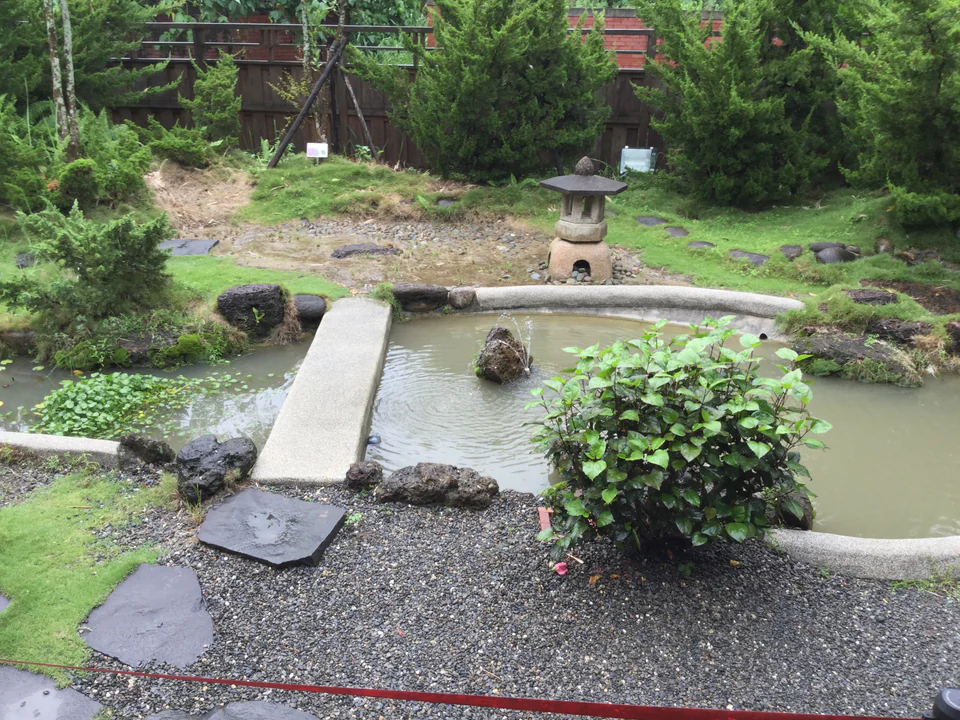
Begin at the memorial park with the houses and courtyard. Compare entrances, shared walls and the garden’s pool, whose outline takes Taiwan as its reference. Then use the reservoir’s public visitor areas to understand the relationship between stored water and the wider plain. Give the house and the water separate attention.
The story that began with a bust in Kanazawa now has several makers: the sculptor, the construction teams, farming households and restorers. Notice what each contributed and what each had to solve. Following those actions gives a visitor a more concrete connection to Taiwan than a monument alone can provide.