
A script and a performance arrive together
Hanoi offers a precise starting point: on the morning of 13 August 2018, the Vietnam Writers’ Association hosted a launch and literary exchange for the Vietnamese edition of Battle of Siraya. A participant’s published account identifies association president Hữu Thỉnh as the host and records the Wang Yi-Ming troupe performing excerpts. The event combined a book that could circulate in Vietnamese with a live example of Taiwanese glove puppetry.
The original script was written by Taiwanese poet Chen Chien-Cheng. Lù Việt Hùng, known in Taiwan as Lü Yueh-Hsiung, translated it; NCKU’s Center for Vietnamese Studies director Wi-vun Taiffalo Chiung supervised the publication, issued by Vietnam’s Thế Giới Publishers. Naming those roles makes the crossing visible: a troupe’s repertoire required a writer, a translator, publishing work and a Vietnamese host.
Wang Yi-Ming chooses stories close to home
The repertoire had begun before the translation. In a 2013 interview, founder Wang Yi-Ming recalled wanting to stage the Taiwanese legends he had heard from older people. Encouragement from friends working in Taiwanese-language literature helped bring that idea into scripts. In 2010, the troupe created Battle of Siraya, with Chen’s writing and a theme song by Hsieh Ming-Yu.
The play brings Han and Siraya characters together against supernatural adversaries. Its subject connects a familiar popular theatre with questions about living together in Taiwan. It is a creative drama drawing on local research and imagination. Reading it as theatre preserves room to ask how the characters are shaped, without treating its plot as a verbatim Siraya historical testimony.
Wang Hua-Tung learns with his body
The next generation faced the work of preserving Taiwanese-language performance while making changes that could be understood on stage. In a 2022 interview, troupe leader Wang Hua-Tung described learning from his strict father through watching and doing. When proposing a new technique, he found that physically demonstrating it helped the two discuss what the audience would actually see.
In the same interview, he recalled an exchange in Vietnam where he asked the host performers to let him enter the water and take a supporting part in a formal water-puppet performance. Working through long bamboo rods, against the pressure of water, gave him a bodily way to study another form. The interview does not date that episode or identify it as the 2018 book-launch trip, so the two remain separate episodes.
What the exchange changed, and what it left behind
Wang Hua-Tung linked the Vietnamese experience to seeing how an audience could follow a puppet performance across a language difference. He began imagining a repertory form using glove puppets to perform the formations of Taiwanese temple-procession troupes. The resulting zhentou puppetry could adapt local subjects and use visual action to make the story accessible. The account identifies an artistic response; it does not turn Taiwanese glove puppetry into Vietnamese water puppetry.
The 2018 delegation’s completed journey continued from Hanoi to Huế University and Hội An with puppet performances. A report published by NCKU’s Center for Vietnamese Studies after the Hội An appearances confirms those stops. These are limited but concrete results: a translated script, a launch with excerpts, and further performances. They leave open questions about print runs, later readership and enduring audience effects.
Return to a place in the troupe’s Taiwan history
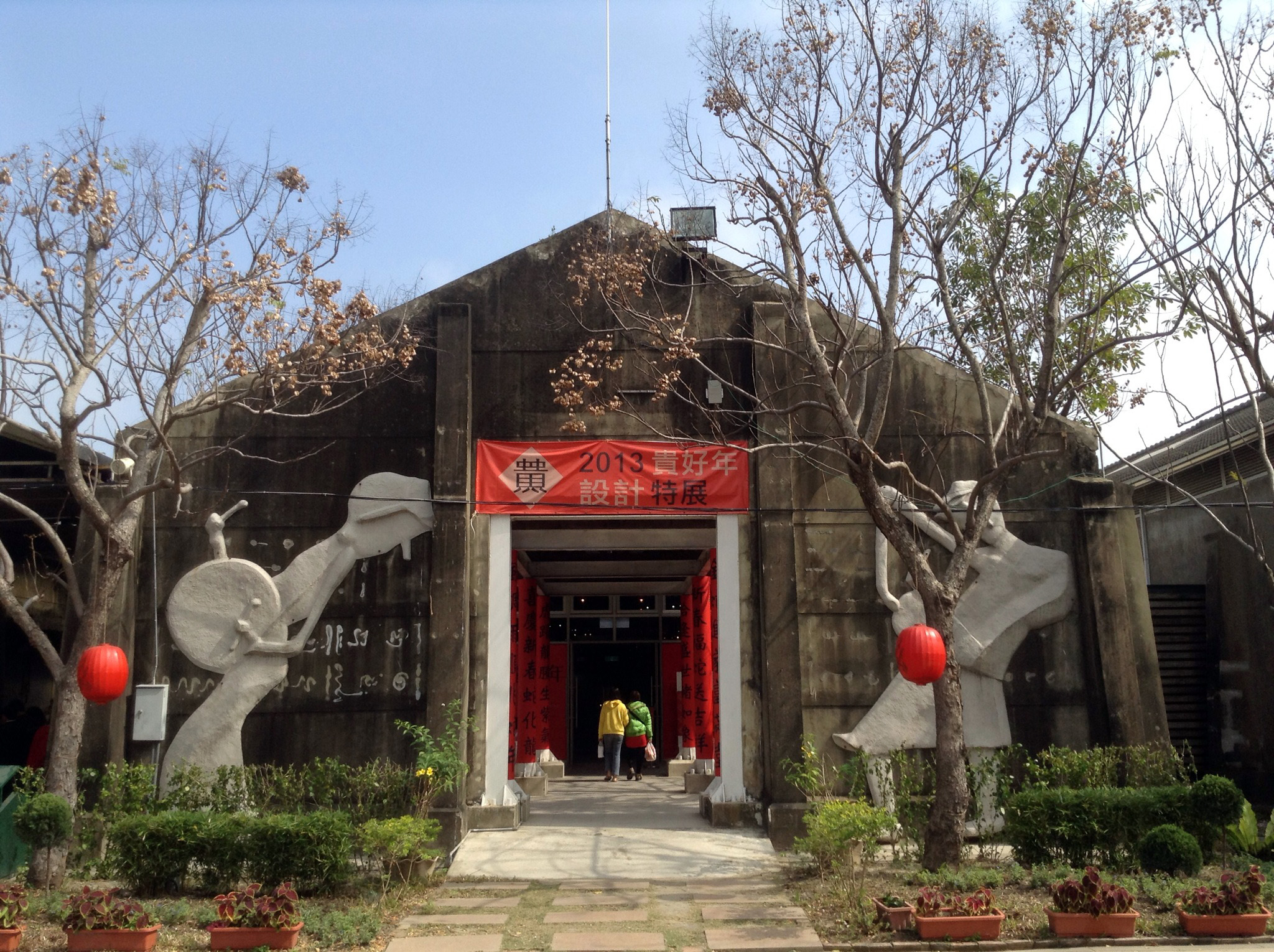
A related public stop in Taiwan is Soulangh Cultural Park in Jiali, Tainan. Wang Yi-Ming’s 2024 contribution to the city’s cultural programme lists the troupe as a resident team at Soulangh International Artist Village. The connection is to the troupe’s working history in an arts campus, rather than to a claimed current performance of Battle of Siraya.
Today, visitors can follow the park’s current exhibition notices through its public gallery spaces. In late October 2026 the official homepage listed current fibre and artist-residency exhibitions. The useful connection is a place where local and visiting artists work and present results. For this troupe’s puppets or a live performance, a dated programme and its admission conditions still need to be checked separately.
