
A vegetable garden changes who can teach
At Hanoi’s Á Space, which he helped found in 2018, Tuan Mami explained a practice built through learning from communities. The work begins before an exhibition has a shape. A person’s way of using a small piece of ground can give the artist his next question. For readers who know Vietnamese vegetables through a meal or a family garden, the movement starts with something ordinary: how to keep that part of life when home is elsewhere.
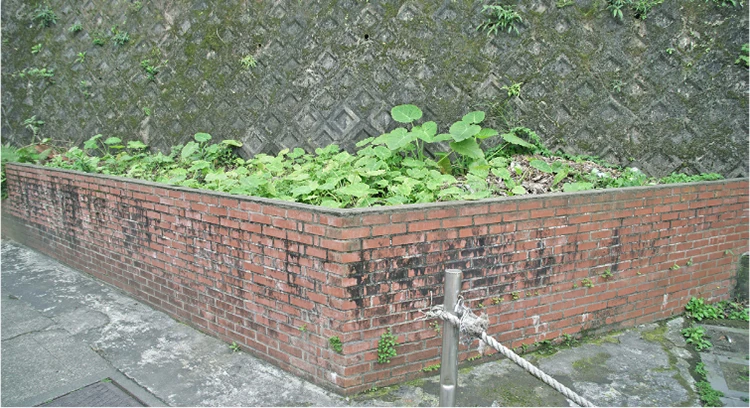
His Taiwan research photographed a garden in New Taipei’s public space: a red-brick bed against a stone wall. In the image, the plants have a defined edge and occupy a modest corner. That small scale gives the story its first foothold. A garden can sit within an existing city rather than wait for a large new site. The artist’s task is to learn what that occupied corner means to those tending it.
A family’s care has leaves
In Hsinchu, Mrs Dung’s garden gave the project a particular family. After she came from northern Vietnam to work in a factory, her parents brought plants on visits. Mami’s interview records her use of the garden for familiar cooking. This is care with a daily use. A parent’s visit can leave something a daughter continues to tend; the next meal gives that continuing work a place in the household.
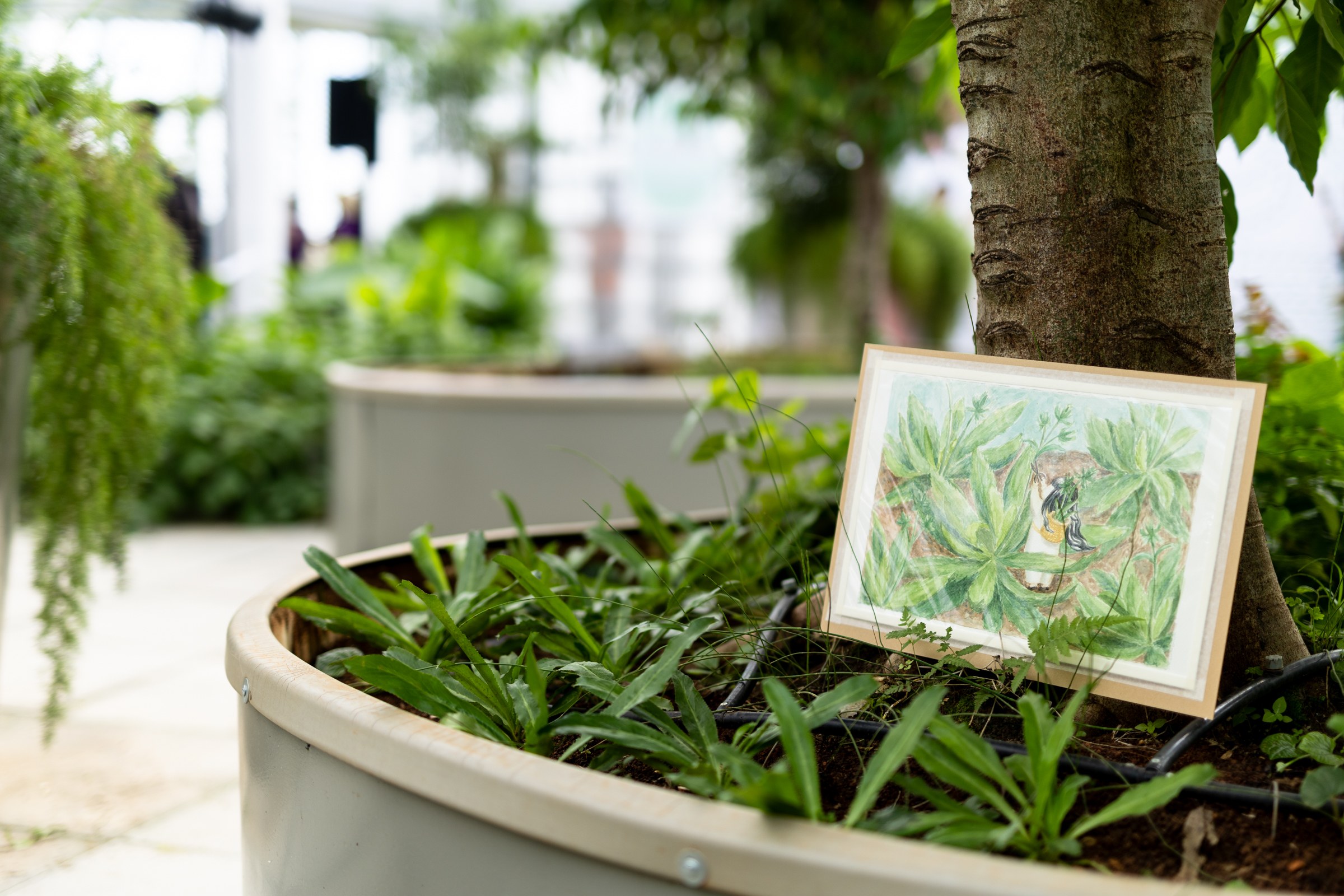
In another interview, Mami described a garden declining after the parents who established it died. Their daughter’s work left too little time to maintain it. The story gave him a new responsibility: collect and extend that loving effort through a shared garden. A plant can outlast the visit that brought it, but it still needs someone’s time. Continuing the care requires people who can share the work.
Being stranded creates time to listen
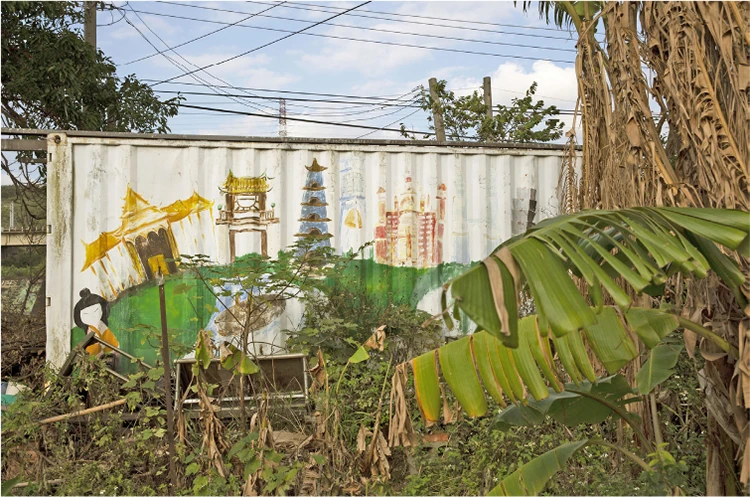
In early 2020, Covid-19 kept him in Taiwan for about eight months. He travelled to meet Vietnamese people and researched plants grown around homes, dormitories and factories. The time was unplanned; the attention that followed was work. A long stay gave him room to hear several accounts rather than turn one household into the explanation for everyone. The garden’s form could grow out of those differences.
The project could then be organised around a shared task: make a place where people can work, eat and support one another. A visitor sees plants; a participant also has to decide what to grow and how to maintain it. Those positions can meet without becoming identical. The work offers a way for someone’s practical knowledge to enter the exhibition, and for another person to learn by returning to the same living material.
The garden needs a production team
The 2024 Kuandu exhibition named Joyce Ho as art consultant and a museum production team alongside garden managers and community supporters. That credit makes cooperation visible. A growing installation needs people who help it meet an institution’s working conditions, as well as people with knowledge of the plants. The artist’s idea passes through those different jobs before visitors can encounter it.
In spring 2025, NCCU teacher Tzu-Chi Ou and students made a campus garden with Vietnamese marriage migrant Đinh Thị Thu. In spring 2026, students developed plant-story cards from interviews. Here the response to the artwork became another set of actions: grow, ask, record. A student cannot finish that work by recognising a flavour. Someone has to explain the plant, and someone else has to listen carefully enough to write a card.
Taichung gives the work another home
Taichung’s museum and library brought the project to the Green Museumbrary’s Cultural Forest with Vietnamese community collaborators. Their Borderless Garden occupies the meeting of the two institutions. A plant can be approached as an artwork and as something carrying knowledge. The shared site gives those readings room to meet, while the people growing it continue to supply the practical part of the story.
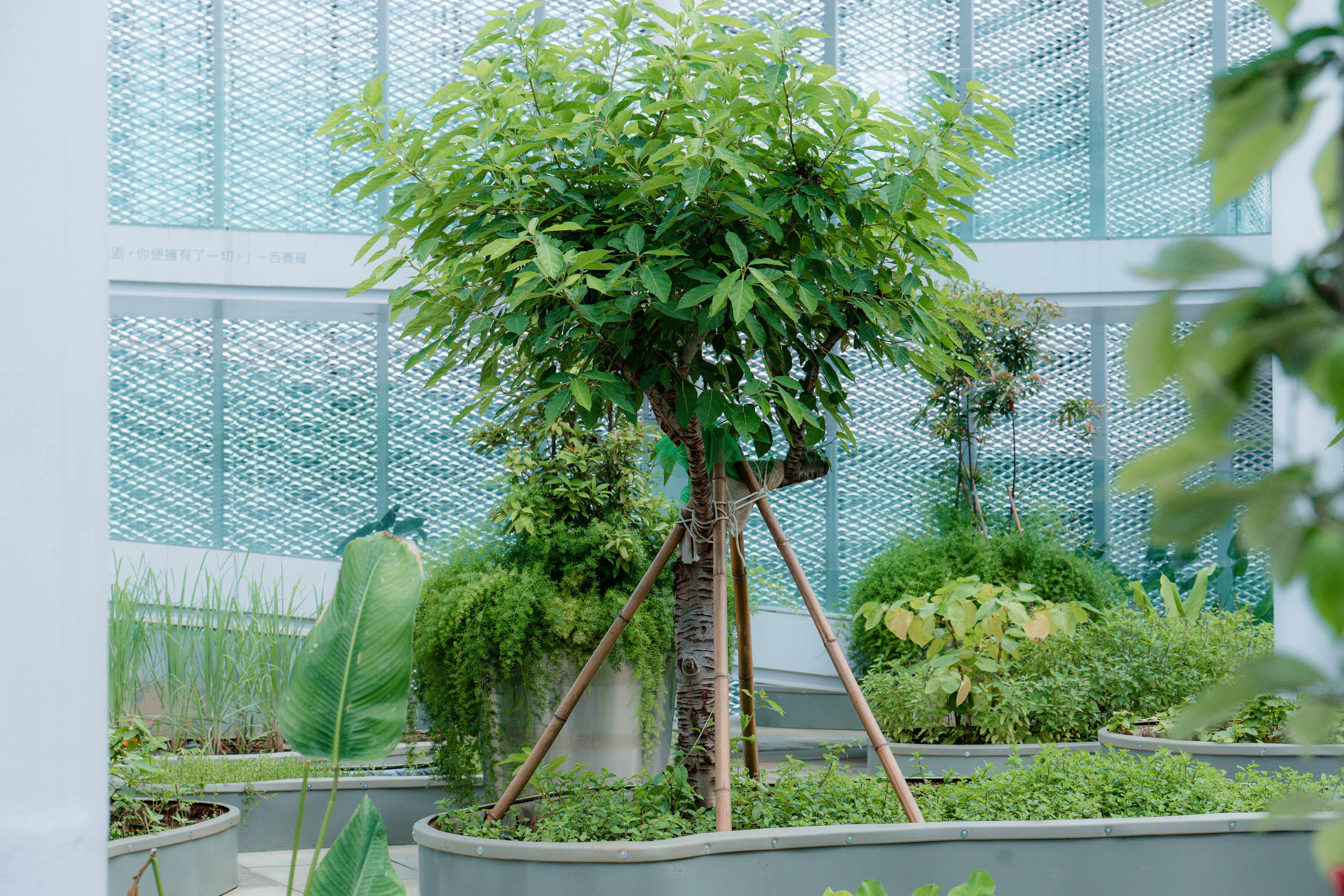
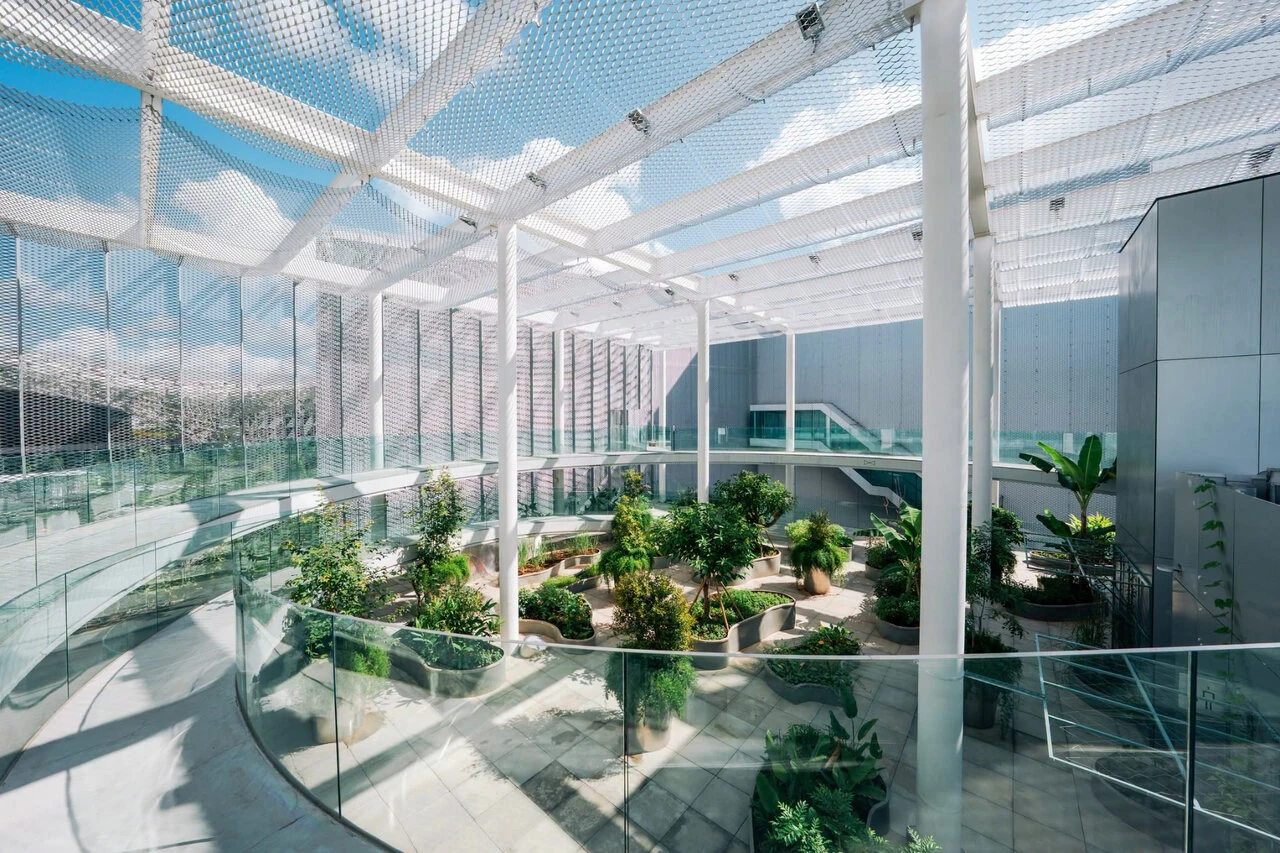
The 2026 photograph shows planted beds beside walkways, under a white roof structure. It is a garden inside a larger building. Follow the relationship between those spaces: where can someone stand and look, and where does cultivation need room? The architecture makes the collective work publicly visible. It also asks visitors to recognise that looking at a plant and tending it are different ways of spending time here.
Let a living work keep its time
The announced Taichung run is 16 May 2026 to 31 December 2027. Visit to look at how a growing work sits between a library and museum. Choose one planted area and compare it with the documentary gardens shown earlier in this story. The different settings reveal a change in visibility: a private or modest corner has helped generate a place where a wider public can begin to ask questions.
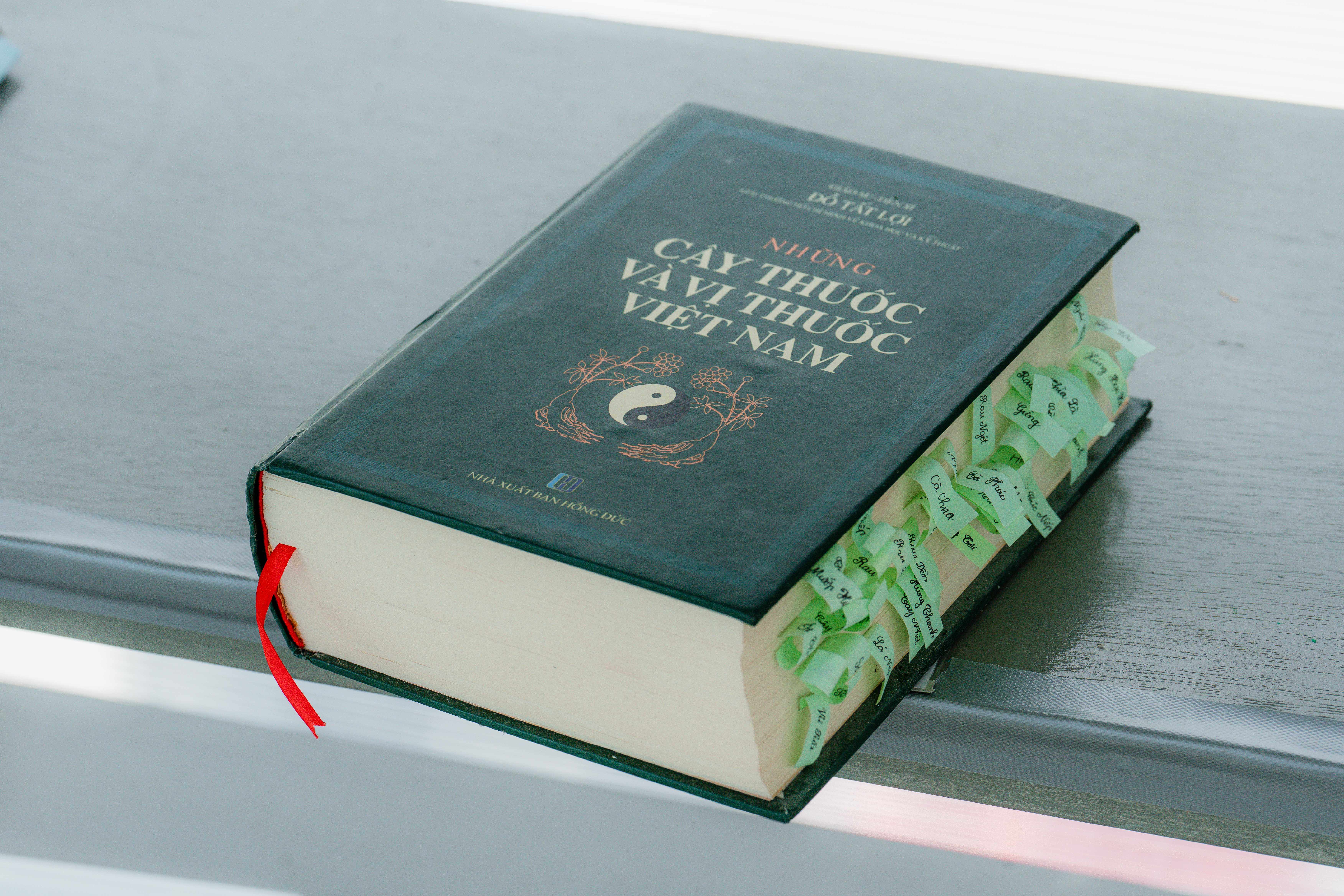
Rain or strong wind closes the Cultural Forest. On an open day, observe from the permitted paths and leave plants and materials in place. A garden’s appeal includes the work still ahead of it. You can carry away a question about a leaf, a household or a person’s move to Taiwan, then continue that conversation elsewhere. Giving the plants time to grow is one way to let the story keep going.