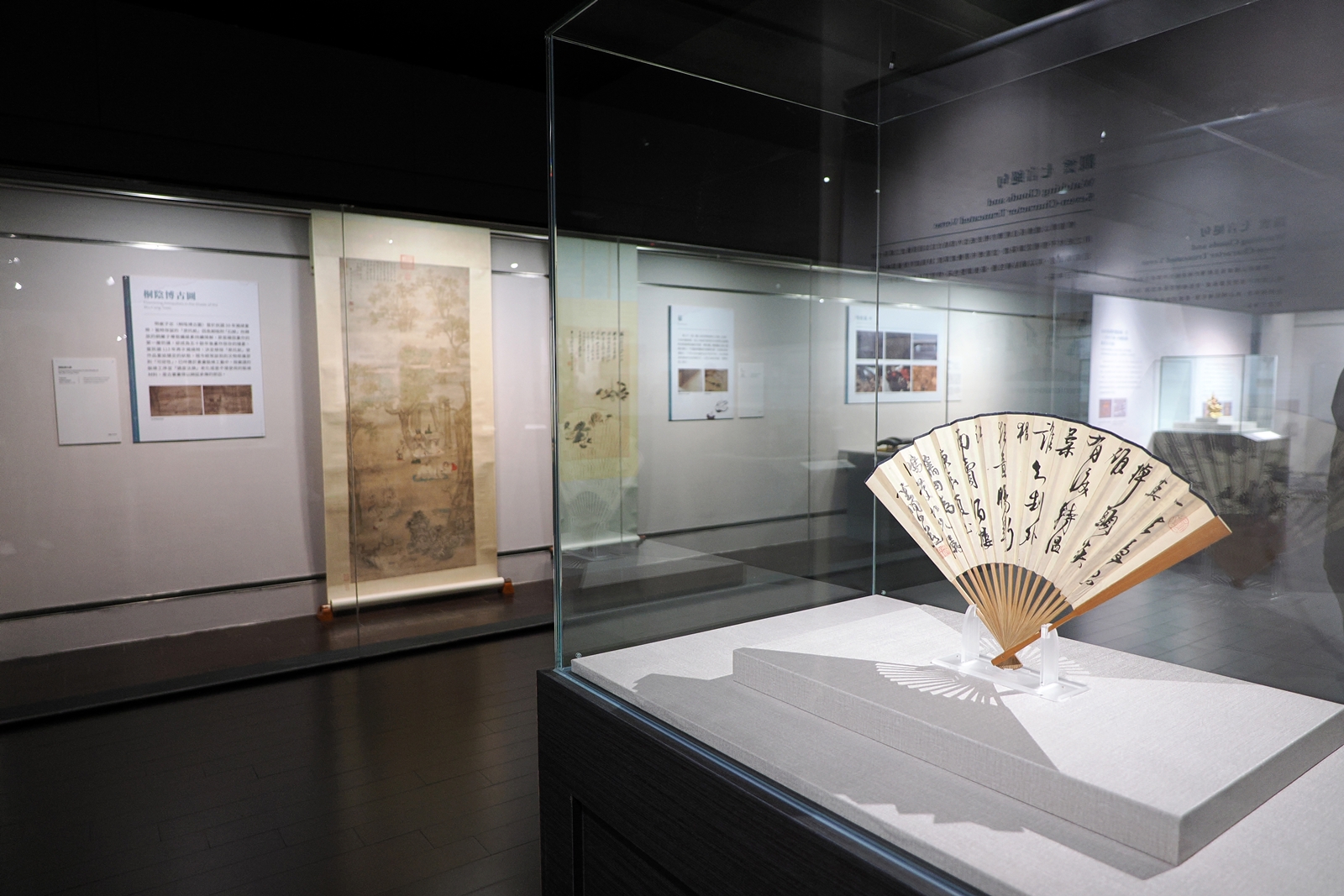
The short scroll in Hangzhou
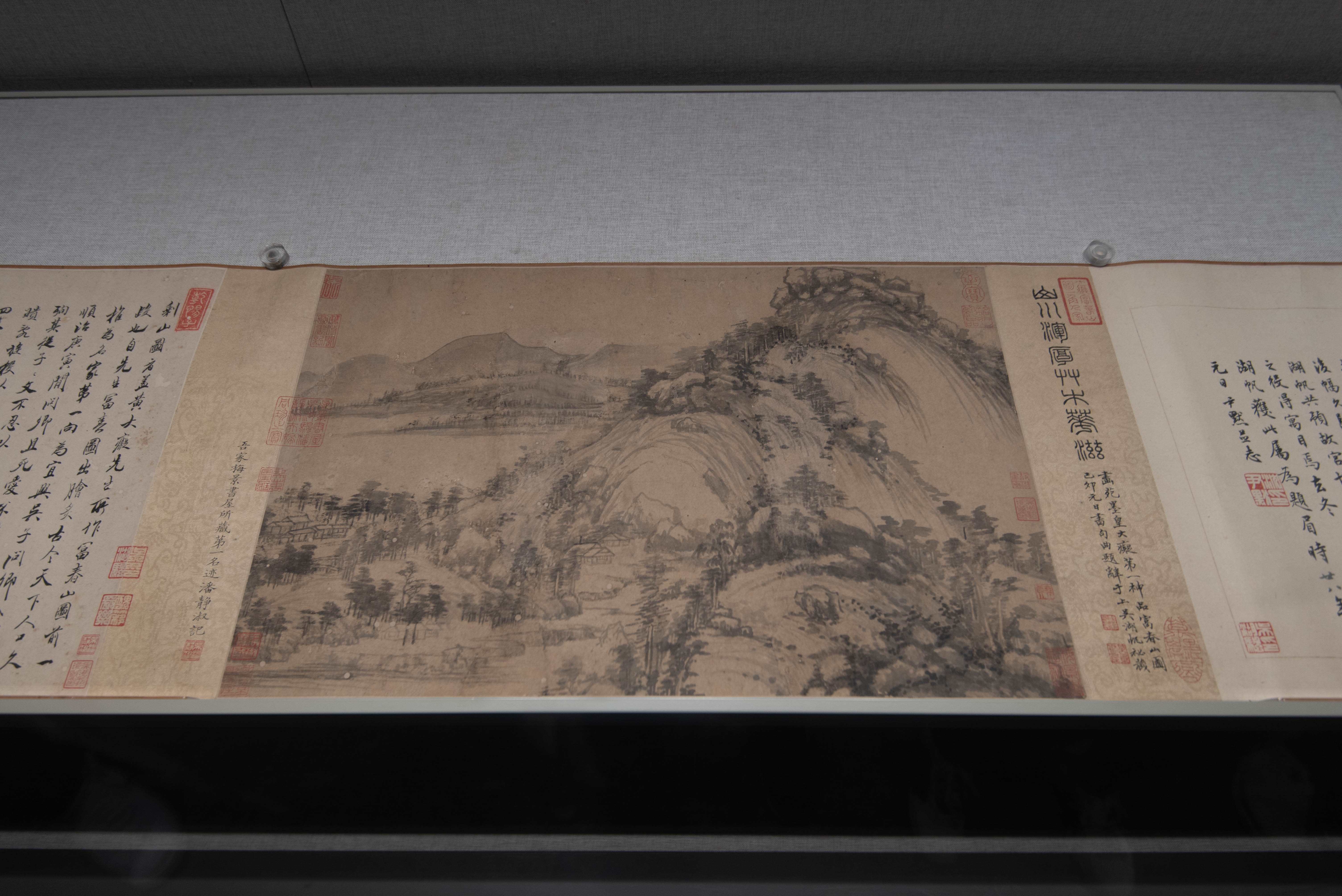
The Zhejiang Provincial Museum in Hangzhou holds Remaining Mountain, a fragment of Huang Gongwang’s Dwelling in the Fuchun Mountains. Its painted landscape is just 51.4 centimetres long. Looking for the rest leads across the Taiwan Strait: the much longer Master Wuyong Scroll belongs to Taipei’s National Palace Museum.
A fire in 1650 split the painting. The surviving sections subsequently travelled through different collections and were mounted separately. By the time a joint exhibition became possible, each scroll carried its own history of collecting and written responses. Bringing them together required decisions about those later lives as well as the original landscape.
An idea becomes a loan
In his account of the exhibition, curator Ho Chuan-hsing traced the proposal to a 2008 meeting between Phoenix Television chairman Liu Changle and museum director Chou Kung-hsin. Chou supported it for research and public education. In May 2010 she and museum colleagues visited the Zhejiang museum and reached a preliminary understanding with director Chen Hao.
That understanding still needed practical arrangements. In January 2011, Quanta Culture and Education Foundation chairman Barry Lam, acting on Chou’s behalf, signed the exhibition memorandum with Chen in Fuyang. On 18 May, Ho received Remaining Mountain in Beijing and accompanied it to Taipei. The person who would arrange its display also took responsibility for this part of its journey.
Room for the writing as well as the mountains
Ho explained that the two scrolls could not simply be glued back together: each had already been remounted as a separate work. The curatorial solution was to place them together in one long case, supported on sloping boards. Their reunion was a way of seeing two objects alongside one another while preserving their separate physical forms.

The measurements changed once the writing was included. Although its painted area is short, Remaining Mountain and its many colophons made a mounted length of about eight metres. Ho chose to unfold that whole length. The painted portion of Master Wuyong measures 636.9 centimetres; its display also extended to about eight metres, reaching a Ming-dynasty colophon by Zou Zhilin. Later readers therefore occupied real space in the reunion.

A reunion within a larger exhibition
The Taipei exhibition opened to the public on 2 June 2011. Remaining Mountain was assigned to its first phase; the exhibition as a whole continued until 5 September. For visitors to that early display, the long separation became something they could examine across one case, with both landscape and inscriptions in view.
Ho’s team also sought paintings from other collections for comparison. Their wider exhibition followed Huang’s work, his artistic relationships and later responses to him. This gave the reunion a scholarly setting: visitors could ask how a landscape was made, copied and understood, rather than treat the two fragments as an isolated spectacle.
Continue the looking in Taipei
The National Palace Museum’s Northern Branch is the Taiwan stop for this story. Master Wuyong remains part of its collection, but the 2011 joint display has ended. Check the current exhibition list before planning around a particular scroll; a collection image does not mean the work is on view.
In a painting gallery, give the mounts, seals and accompanying inscriptions some time alongside the landscape. The 2011 decisions offer a useful question to carry into the museum: how much of an artwork’s later life does a display allow us to see? The answer lies in details that can be easy to pass on the way to the famous image.