
A departure from the Hakata depot
For people who know Fukuoka through Hakata and its Shinkansen connections, this journey begins away from the passenger platform. The car can be identified precisely: 21-5035, previously numbered 21-1032, built by Tokyu Car in 1978. Its later history would depend on alterations to a passenger vehicle that already existed.
The conversion removed some passenger seats to make room for measuring equipment and added a roof observation window. Probes and ultrasonic sensors around the body checked its distance from surrounding structures. The rounded nose remained recognisable, while the spaces inside and around it served a different task.
Before passengers could use the line
In 2004, the measuring car arrived in Taiwan during construction of the high-speed railway. Platforms, tunnels and other structures had to leave sufficient clearance for trains. The old car helped the builders check those boundaries: a railway intended to move people first needed evidence that its vehicles could pass safely.
It no longer had the power to move by itself and relied on a locomotive to push or pull it. The instruments projecting from its body gave it the nickname “Oiran”, after the elaborate hair ornaments of the historical Japanese courtesan. In Taiwan, that distinctive appearance belonged to practical work on the new line.
One repair did not end the exposure
In a 2020 presentation, Taiwan High Speed Rail executive 鄒衡蕪 (Zou Heng-wu) traced what happened after the task ended. The car stood outdoors at Lioujia Depot from 2006. TSIEC transferred it to Taiwan High Speed Rail in 2012, and a repair followed in 2013. Remaining outside, however, left its panels and paint exposed to further deterioration.
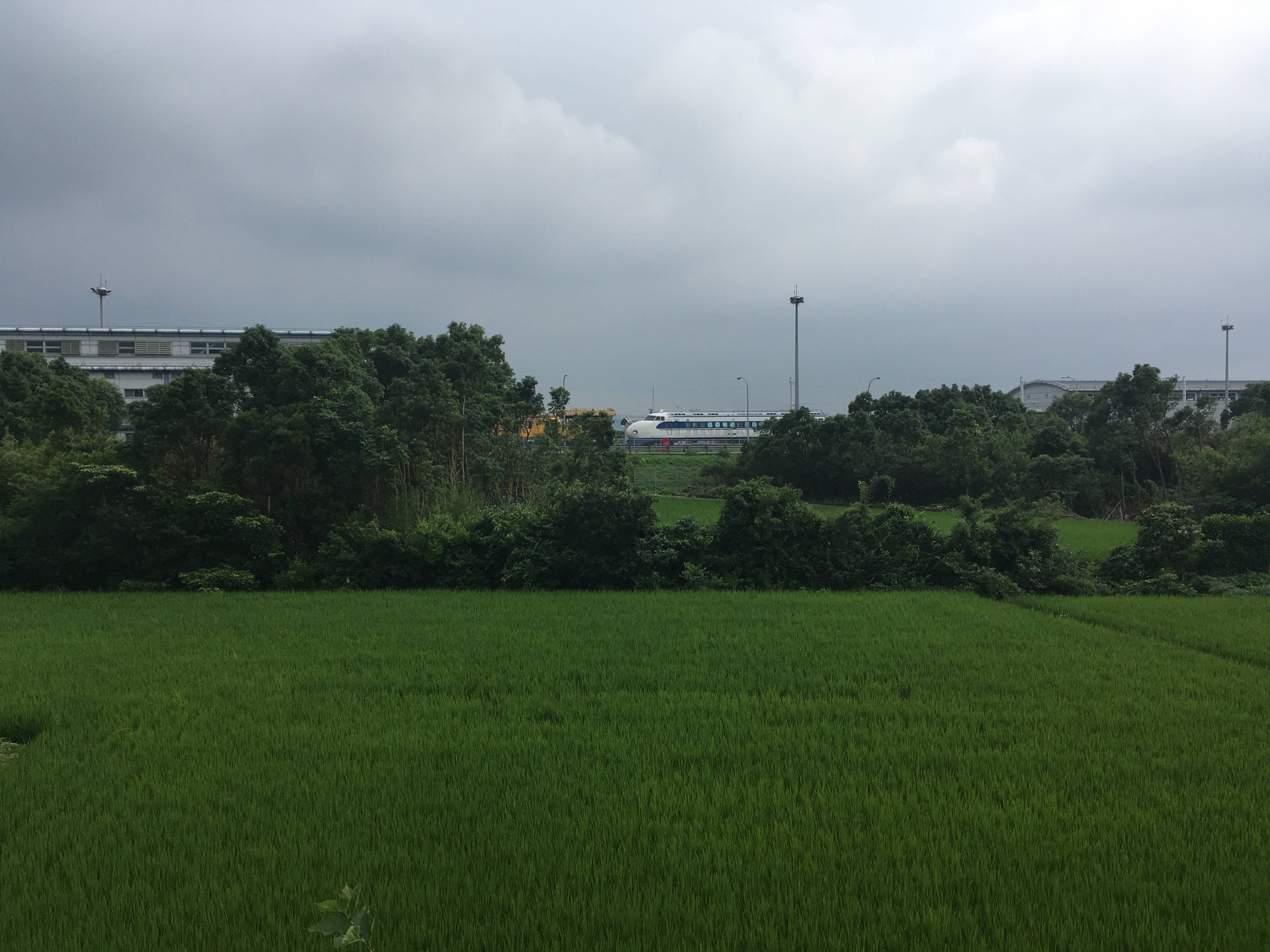
A photograph taken in May 2017 records the car still standing at Lioujia, seen across the fields outside the depot. It preserves the setting rather than a close inspection of its condition. Keeping the vehicle had created another responsibility: someone had to decide how this large object could survive, and which part of its history should guide the work.
The Taiwanese team chose a working period
In 2018, the National Science and Technology Museum and railway and conservation specialists undertook research for the project. The team selected the car’s 2004–2006 Taiwan measuring service as the restoration target. Zou’s presentation made the decision explicit: the exterior and interior should return to the condition associated with its arrival for work in Taiwan.
The 2019 work included treating corrosion, repairing body panels, restoring the paint scheme and recreating missing elements. Even the driver’s control panel required reconstruction. Such interventions need to be read alongside the surviving parts: the displayed car brings together retained material and later repair, all organised around the period the team chose to explain.
A vehicle’s working life becomes visible in Tainan
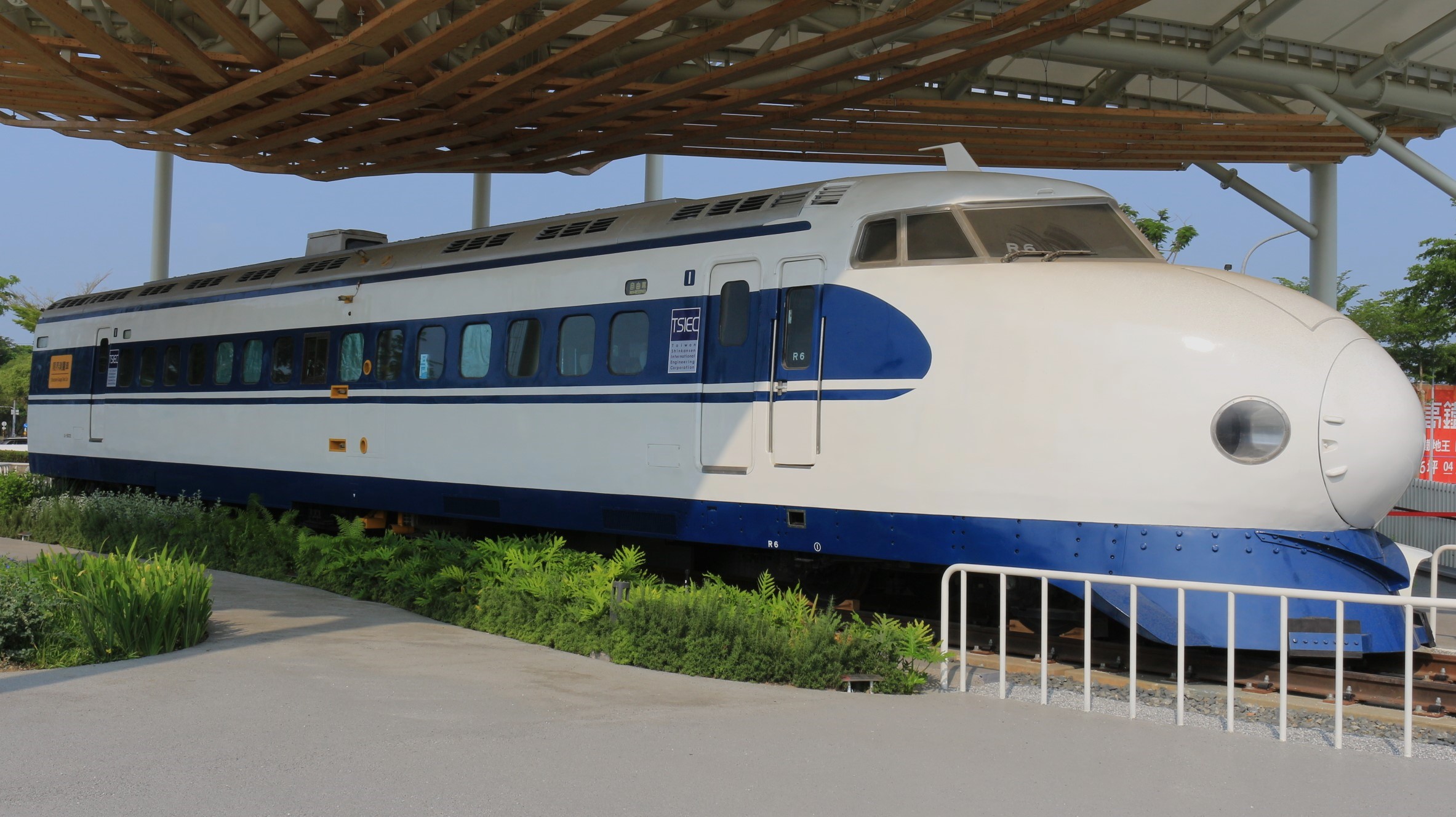
The Oiran Train Scenic Park opened outside THSR Tainan Station on 22 December 2023. At the opening, chairman 江耀宗 (Jiang Yao-zong) explained that the restoration team had also travelled to Japan for advice. A 2024 photograph shows the same 21-5035 under its new shelter. The object once kept at a working depot had gained a public setting.
Begin with the familiar blue-and-cream body, then use the interpretation to trace how a passenger car acquired a measuring role. The point of the visit lies in those changes. A vehicle associated with Japan’s high-speed travel now helps visitors see the less visible work that made Taiwan’s own railway possible—and the Taiwanese decisions that kept a record of it.