A first song appears while the equipment is being set up
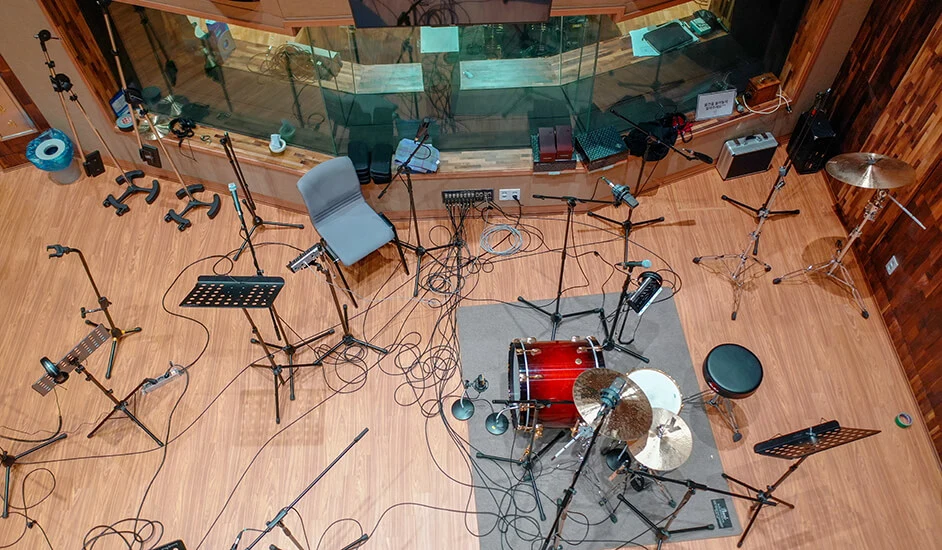
In May 2023, the Korean band HYUKOH and Taiwan’s Sunset Rollercoaster began a songwriting camp at Music Village 1939 in Gapyeong. For listeners following HYUKOH, this meant a new set of people joining the band’s creative work. The album notes place Kite War at the moment when the musicians were setting up for a group rehearsal and began improvising. A shared song emerged from playing in the same place.
Music Village 1939 occupies the former Gapyeong railway-station site. Its facilities bring recording studios, rehearsal rooms and accommodation for artists into one complex. That arrangement makes it possible to stay with a piece of work beyond a single session. In the published account of Kite War, Sunset Rollercoaster’s Kuo recalled recognising within about five minutes that the musicians were making a song together.
Playing together also means learning to wait
In a joint interview published by LIMINAL in October 2024, OHHYUK described communication as a difficulty the musicians had worked through. Kuo made the problem concrete: one team might feel ready to proceed while the other was still confirming a decision step by step. Replies could change after further discussion. Learning each other’s working methods gave them more patience to wait.
The exchange also changed how the singers saw their own work. Kuo said that working with OHHYUK had given him greater confidence in his singing. OHHYUK, in turn, spoke of learning from Kuo’s way of communicating with and respecting a team. The partnership involved choices about songs, but also the everyday work of keeping several musicians moving together.
The record keeps a working version in its track list
The musicians continued meeting in Gapyeong, Seoul and Jeju over roughly a year. AAA was released on 10 July 2024 with eight tracks and OHHYUK and KUO named as its producers. Its final track, 2F 年轻人 (2F Young Man), preserves a version of Young Man recorded in the second-floor rehearsal space at Music Village 1939. The song’s making became part of the released record.
The credits identify musician and recording worker Yuchain Wang (王昱辰) on both instruments and vocals for that track. They also list the two bands’ production companies side by side. Sunset Rollercoaster’s own shop lists the Taiwanese LP’s release as 25 September 2024, and the printed track list retains this recording. Korean Music Awards included AAA among its 2025 Album of the Year nominees, carrying the shared work into another Korean listening context.

A shared recording becomes a Kaohsiung stage
The collaboration then took on a physical stage in Taiwan. Critic Yin Feng’s account records the AAA tour performance at Kaohsiung Music Center’s Hi-Ing Music Hall on 23 February 2025. He described musicians arranged in a circle, with stage workers bringing equipment and cameras into view. A group rehearsal’s shared work was now accompanied by the practical work of presenting it to an audience.
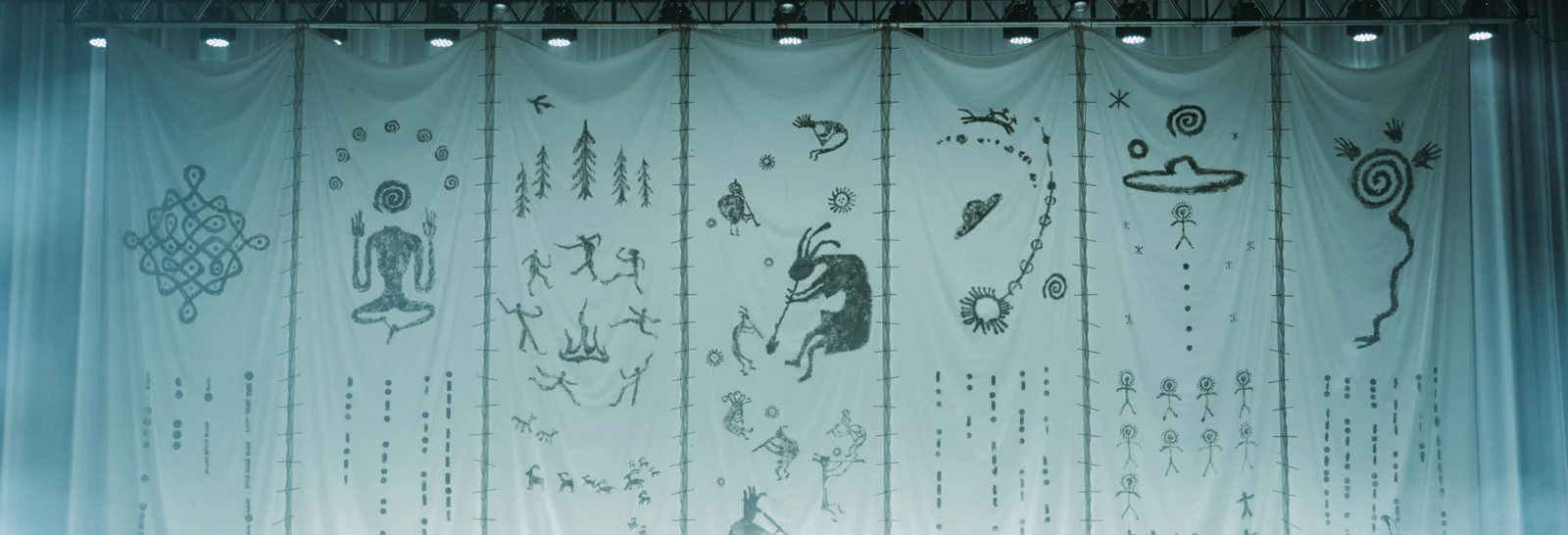
The article’s stage-design notes explain the illustrated curtain as a tent for imagined travelling musicians, with markings telling their journey. The photographed curtain gives that idea a material form: fabric, drawn figures and lighting framed the performance. The 2025 event belongs to the venue’s history. Its surviving photographs and account offer a way to follow how an album project acquired a setting outside the recording room.
Keep following the music on Kaohsiung’s waterfront
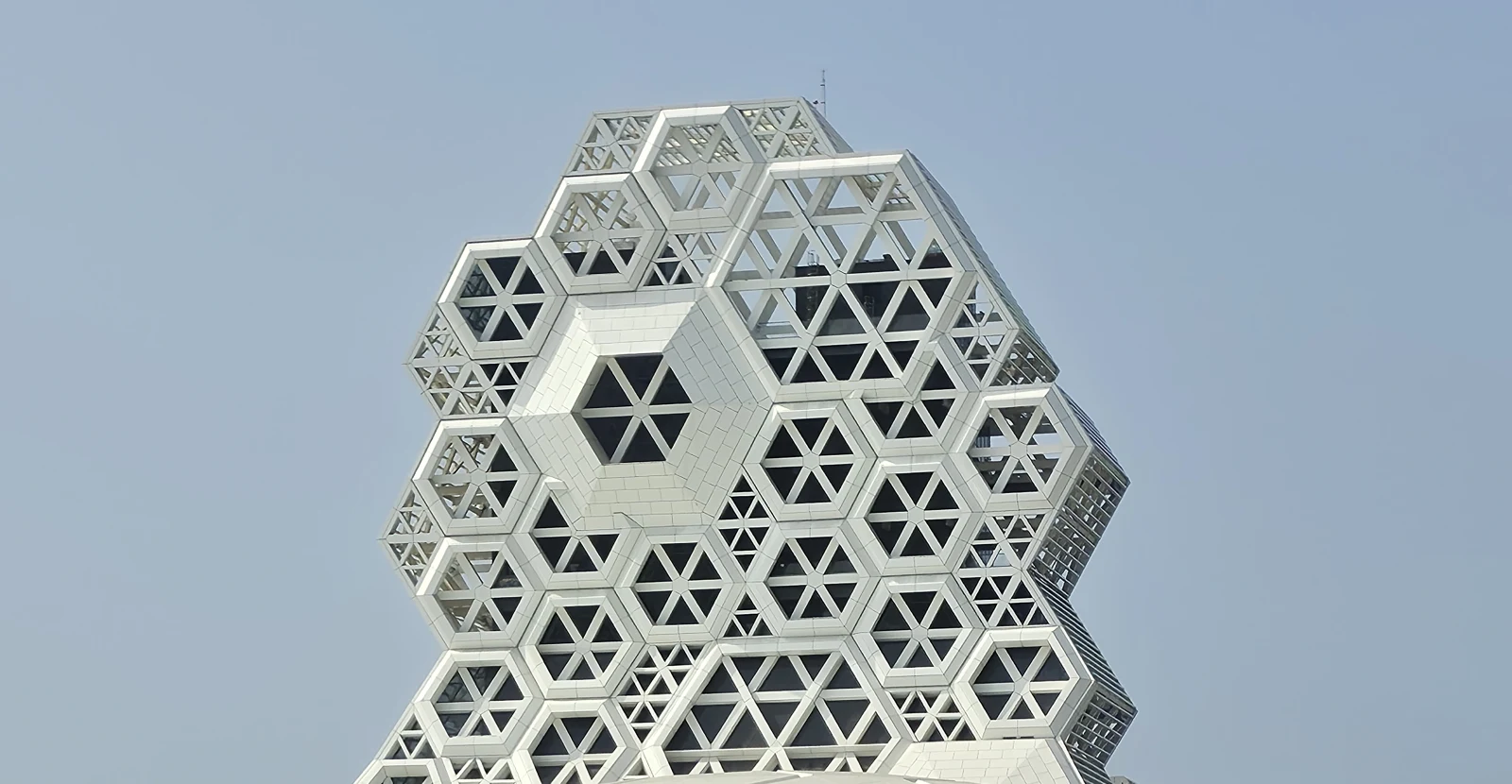
Kaohsiung Music Center provides a public continuation of the story. Start outside Hi-Ing Music Hall and the adjoining wave tower: the hexagonal structure is a recognisable landmark beside the waterfront. The center opens its outdoor areas to visitors, while entry to an indoor performance follows the announced programme. A daytime visit can therefore begin with the place where the two bands once brought their shared work.
For a performance visit, choose from the center’s current calendar and plan the return journey before entering the hall. Bring the questions raised by AAA: how many people make a piece of music, what remains in a working recording, and how does a stage give that work a place? The Gapyeong creative camp and the Kaohsiung concert are distinct moments; today’s visit follows the music-making spaces that remain in use.