
A departure from Kamakura
Enoden and Taiwan’s Pingxi Line began their tourism partnership in April 2013. On 23 July 2014, Taiwan’s Tourism Bureau, the Kanagawa Prefecture Tourist Association, China Airlines and Enoden marked a separate four-party promotional agreement and a decorated-train departure at Kamakura station. The connection expanded beyond the two railways.
For travellers who know Enoden, the agreement offered a way into a Taiwanese branch line. Once aboard, however, Pingxi’s landscape has its own industrial and everyday history. Reaching the terminus need not mean that the story ends there.
Beyond the train window
In 2018, The World from a Train Window included Pingxi, Neiwan and Alishan in its Taiwan series. Railway images can introduce an island in sequence; a small station offers a more local starting point. Jingtong is one such place.
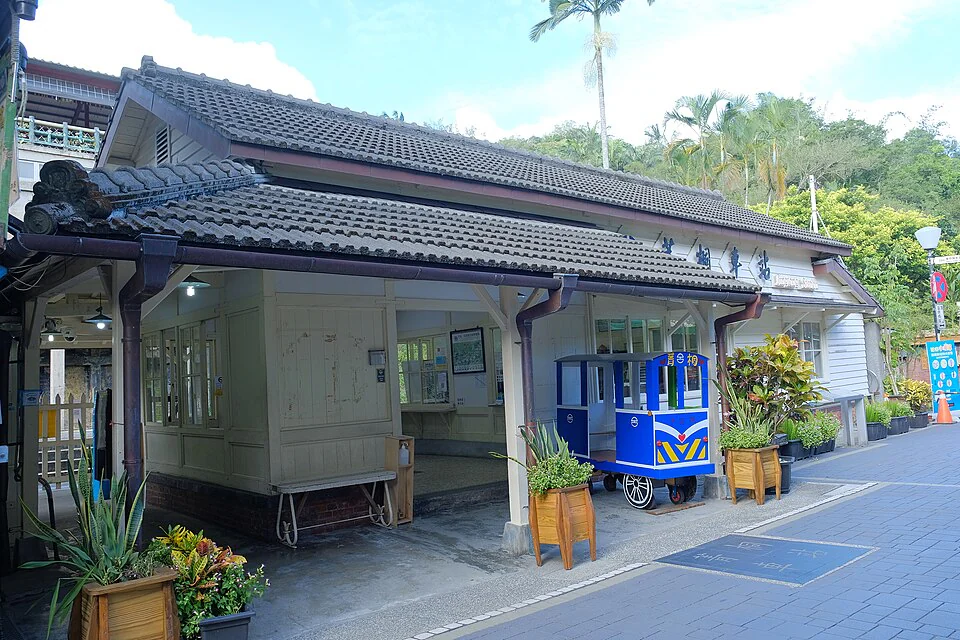
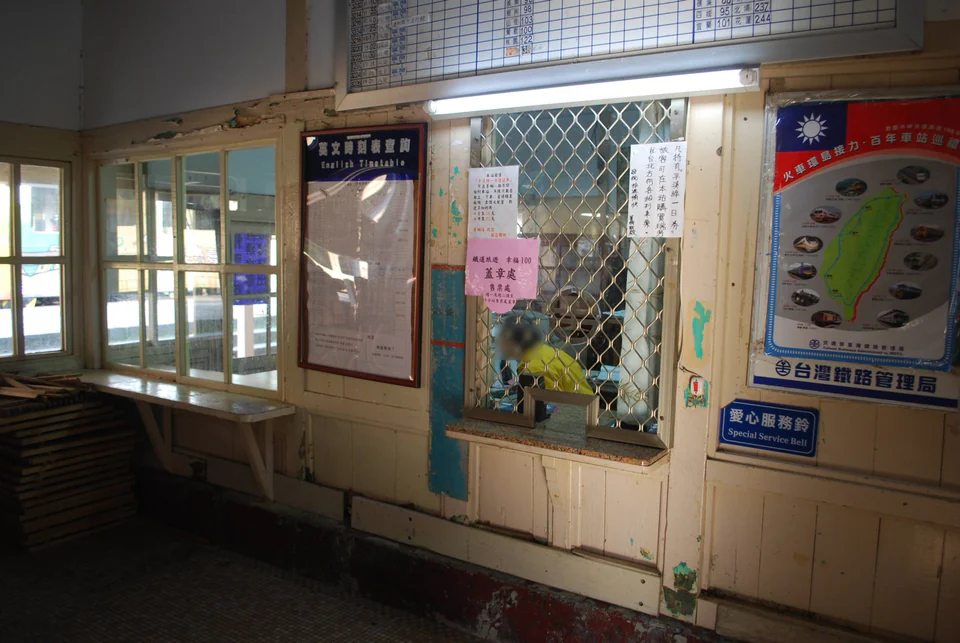
Jingtong’s wooden station was built in 1929 and designated a historic monument in 2003. The building provides a reference point. Looking beyond it, into the public streets outside the station, opens another question: what work could residents choose after mining?
A decision shaped by rent and home
In a 2021 interview, Pan Lung-chang (潘隆章) recalled that his parents knew the hardships of mining and encouraged him to learn a craft. After studying instrument making and woodwork in Banqiao and Taichung, he considered Jiufen and Shenkeng for a shop. Rent helped bring him back to Jingtong.
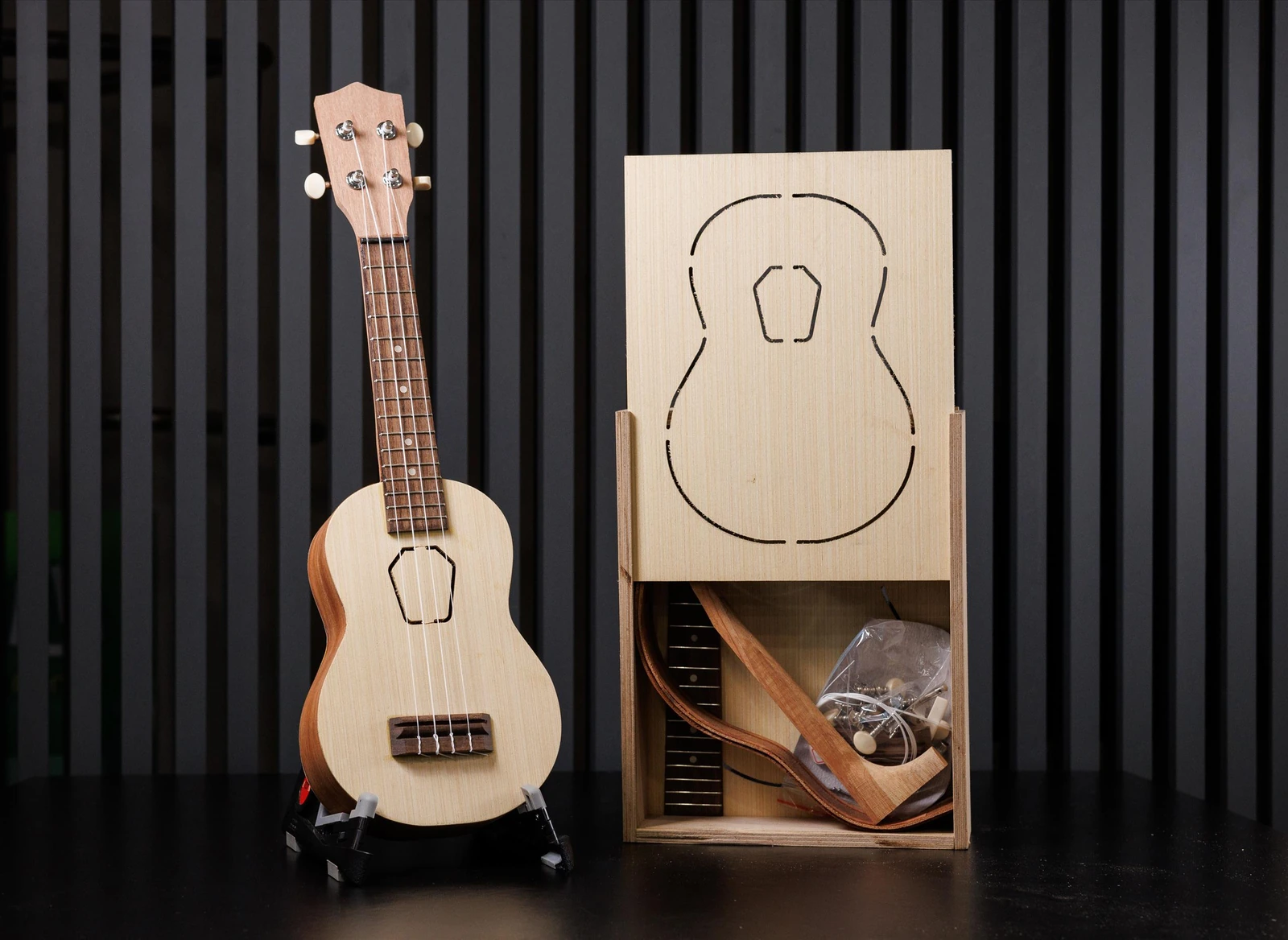
His work involved making auxiliary jigs, shaping a neck to fit the hand, and giving a ukulele a sky-lantern-shaped sound hole. The local image had to work within an instrument that could actually be played.
The city’s New Taipei Selected Goods directory gives the work another visible form: a complete ukulele-making kit whose parts were designed and made by Pan. In the product photograph, the flat body board and finished instrument sit side by side, both with a sky-lantern-shaped sound hole. That comparison makes the move from a cut piece of wood to a playable object easier to follow.
Read the station, then the work
The railway partnership and the maker’s return arose in different circumstances. One brought visitors to a branch line; the other brought a local motif into production. Read together, they make Jingtong more than a photograph of a terminus—a place where people have made decisions about tools, costs and livelihoods.
A visit begins with the station exterior and public streets. Check both outward and return trains before allowing time for the roof, timber construction and surrounding uses. The workshop belongs to the dated interview; this visit is centred on the station and public space.