
The festival came to Taipei on people’s shoulders
Matsuyama’s exchange with Taipei travelled through festivals, gifts and local institutions. Following those actions separates a recent relationship between hot-spring towns from the much older history of Beitou’s bathhouse.
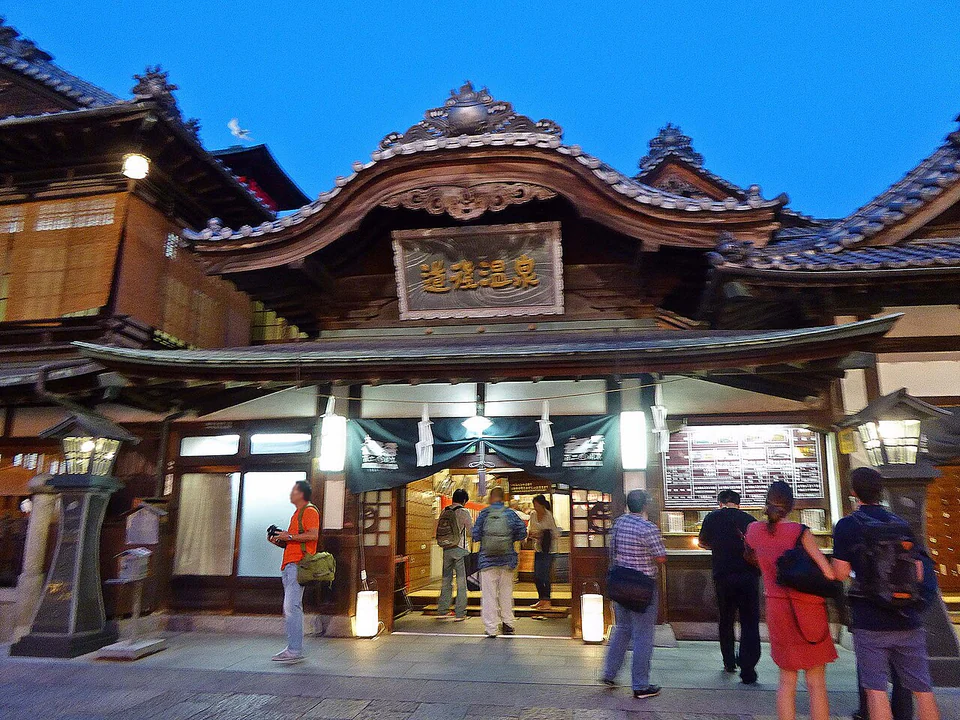
A festival has to be carried by people
For visitors who know Dōgo in Matsuyama, a hot-spring town includes streets, inns and festivals as well as bathing. In 2011, Matsuyama’s mikoshi—portable shrines carried by teams—took part in Taipei’s hot-spring festival. The exchange put a practice requiring coordinated human effort into another city’s event, rather than simply placing two destinations beside each other in a brochure.
The same year, Dōgo’s inn association and Beitou’s hot-spring association established an exchange relationship. The participants were local organisations with hosts, guests and events to arrange. A signed agreement could open the door, but a visit still required people to receive the travelling group and make space for a different festival practice.
The traffic moved in more than one direction
Matsuyama’s exchange record also includes Ciyou Temple in the history of assistance after Japan’s 2011 earthquake. Support went through Matsuyama to the affected area. Earthquake relief and festival visits were separate actions, not conditions exchanged for each other. They show that Taiwan’s local organisations also acted within the relationship, rather than simply receiving a Japanese performance.
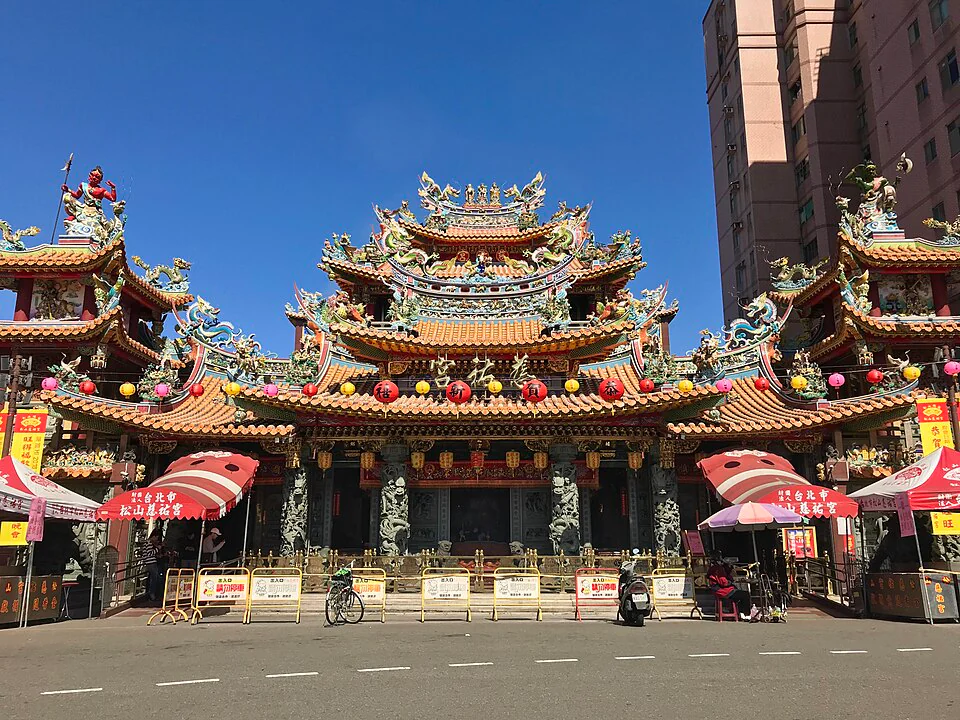
In 2013, a clock modelled on Dogo’s Botchan Karakuri Clock became a joint gift to Taipei. Matsuyama’s record identifies Ciyou Temple as participating in its creation, with the cooperation of Matsuyama City and the Matsuyama Tourism and Convention Association; the three parties presented it together. Taiwan’s account also places the gift in the context of gratitude for earthquake assistance and Ciyou Temple’s 260th anniversary. The clock belongs to Taipei’s Songshan neighbourhood around Ciyou Temple, a separate place from Beitou. Matsuyama in Japan and Songshan in Taipei use the same Chinese characters but have distinct local histories.
A joint gift also needed people to arrange its place in the city. The 2013 Taipei Pictorial records that Ciyou Temple chairman Chen Yu-feng coordinated with Songshan Elementary School and attended to transport, electrical supply and the base. These local arrangements helped turn the exchange into an object people could encounter on the street.
The clock also changed what it carried. Characters associated with Japan’s Botchan clock remained, while Mazu, Qianliyan and Shunfeng’er—the sea goddess and her two attendants in Taiwanese belief—were added alongside songs connected with Songshan. A visiting festival and a clock in a neighbourhood are different forms of exchange: one needs an announced gathering; the other lets people notice stories from both places in the same object.
Two hot-spring histories need to stay distinct
The recent Dōgo relationship does not explain the origin of Beitou’s historic public bathhouse. That building’s 1913 history is associated with Izusan in the Atami area, not Dōgo. Keeping the two connections distinct lets Beitou have more than one period of international contact instead of forcing every Japanese link into one origin story.
In Beitou, visit the hot-spring museum to read the bathhouse and its later preservation. In Taipei’s Songshan district, the clock offers another way to recognise the modern exchange within a working neighbourhood. Allow transport time between them. Neither visit guarantees a mikoshi event: a festival belongs to its announced dates and organisers, not to the permanent opening hours of a museum.
Look at what the exchange has left in ordinary space: a gift on a street, a museum given a new role, and organisations that continue to organise visits. The connection becomes more persuasive when each object is read at its own place and date. Dōgo can be the familiar starting point without becoming the explanation for everything encountered in Beitou.
Taiwan places
Beitou Hot Spring Museum and park; the Songshan exchange clock as a separate visit.
Use the existing Beitou cultural guide. Songshan requires a separate journey and does not form one continuous walk with Beitou.