

A word for the bite you already know
Take a boba pearl and pay attention to what happens after the first bite. Sweetness is only one part of the experience. There is also resistance, then a spring back against the teeth. A description limited to hard or soft misses something that makes the bite distinctive.
In a 2025 SAVEUR feature, food writer Cathy Erway introduced Q to English-language readers. Jessica Liang, a third-generation co-owner of Liang's Village in Cupertino, California, explained why texture belongs to a dish's remembered character alongside flavor. Getting the seasoning right does not necessarily bring the whole memory back.
That idea changes the question at the table. Instead of asking only what a dish tastes like, ask what your mouth expects it to do. A small detail in a familiar drink becomes an entry into the decisions and repeated work behind a meal.
A college meal became a way to carry home
Liang’s Village traces its family cooking to an air-force community in Pingtung, Taiwan. Mama Liang opened her first California restaurant in 1981 and later taught the recipes to her children and grandchildren. The food’s move across the Pacific became work continued within a family. This is a different story from Dong Dong’s independent business in Dakeng; the two are not presented as a line of apprenticeship.
By the time KQED profiled Liang's Village in 2021, Austin, Jessica and Erica were running the Cupertino business Austin opened in 2010. Erica recalled freezing their father's sauces at college and heating them with noodles. Cooking from home had already travelled beyond the restaurant.
The siblings developed a frozen-food business in 2018; pandemic delivery later extended that idea. A family habit had become a different format for a meal. The change is easy to overlook when the food arrives in a package: what looks like a finished product also holds a way of helping someone eat elsewhere.
There is a difference between inheriting a recipe and finding a form that fits another person's day. For a person preparing dinner away from home, an available meal has to fit the time and equipment at hand. Following this change means looking at how food reaches a person, alongside what that person remembers.
In Dakeng, the first problem was finding customers
In a 2020 Feng Chia alumni interview, Dong Zheng-sheng (東正勝) recalled returning to Dakeng in 1994 after a failed trading business. Unsold taro balls led him from wholesaling to a dessert stand beside his workshop. After the September 1999 earthquake, the business had to reopen as the district recovered.
Production and selling now met in the same small place. Making the food was not enough; people also had to choose it. Following that move from workshop stock to a customer's bowl makes the decision more concrete: the work changed when the person making food had to become the person offering a meal.
Read his story beside the Liang siblings' account and the distance becomes useful. These are separate businesses, facing different circumstances. One changed how a meal could travel; the other had to bring customers to a food. In both accounts, a familiar dish became a livelihood through practical changes.
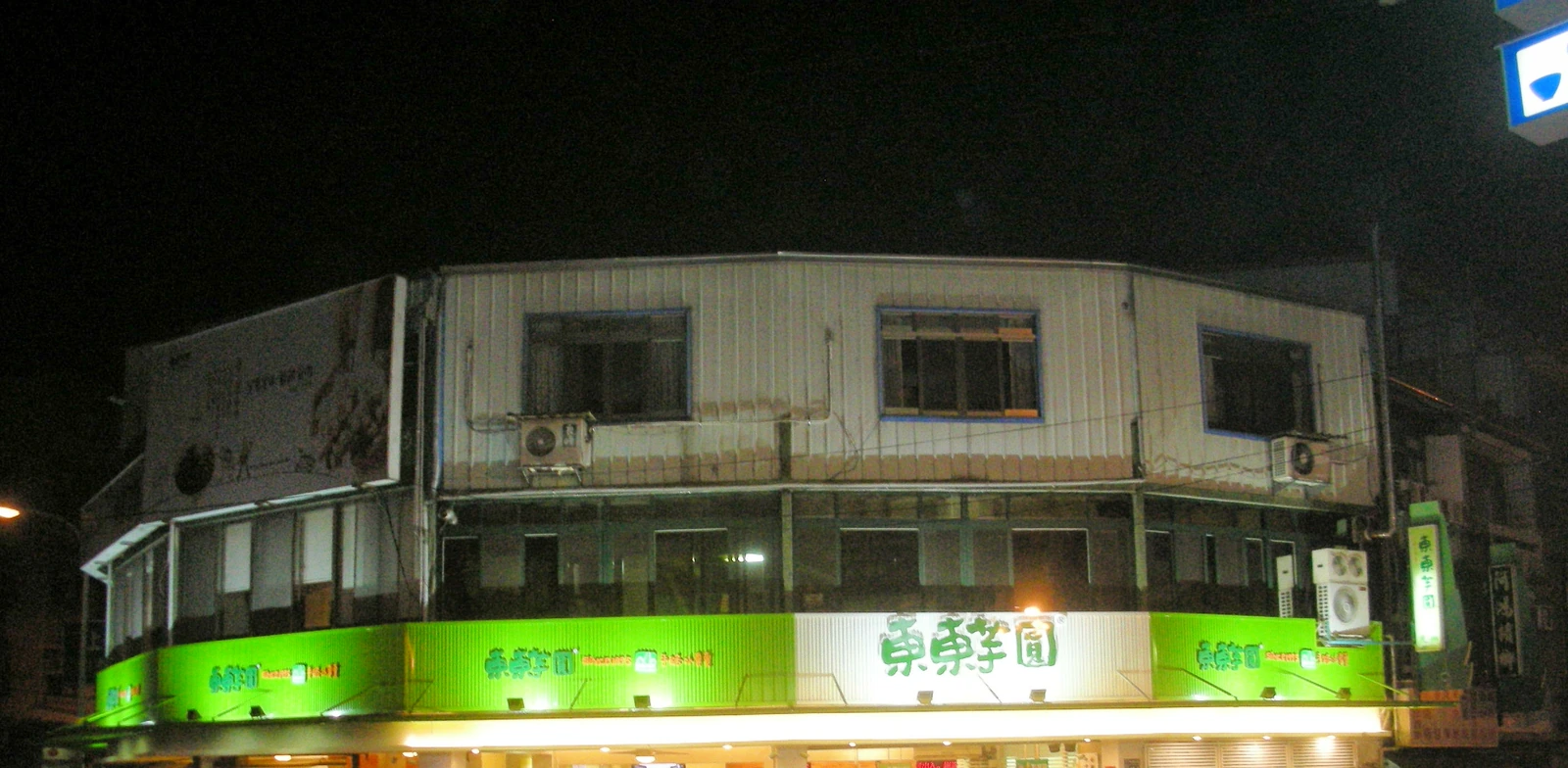
Q has to be made, not just named
Dong Dong's process, supplied by the business to Taichung's tourism site, starts with shredding and steaming taro. It is mashed while hot, mixed with tapioca starch, then rolled into strips and cut. The description takes a word about eating back to a sequence of work.
Each step gives you something more specific to think about than a general promise of deliciousness. The taro must be prepared; the mixture must be formed into pieces that can be served. The bowl in front of a customer is the endpoint of that sequence.
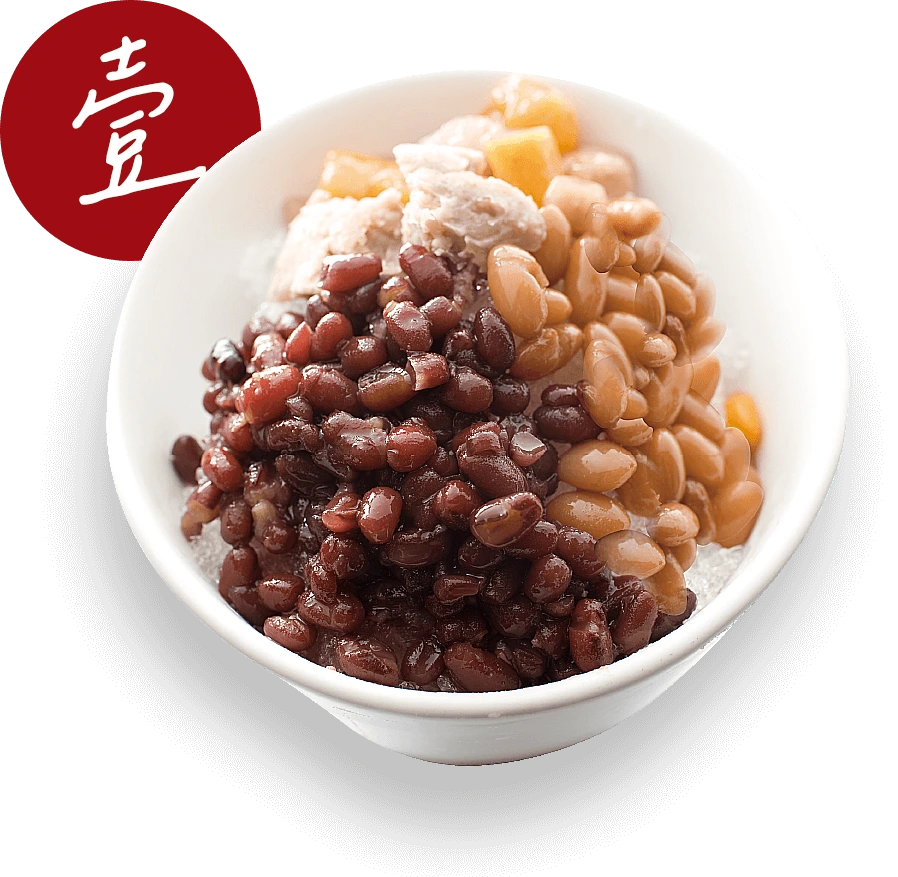
The shop's menu brings taro, pearls and grass jelly into different combinations. When you choose a bowl, try tasting the components separately before mixing everything together. The contrasts can help you describe your own experience more precisely, without expecting every ingredient to offer the same kind of bounce.
Leave time for one bowl in Dakeng
Dong Dong's original shop is on Dongshan Road in Dakeng, in Taichung's Beitun District. Its street address gives this story a straightforward place to continue. A dessert stop is enough; you do not need to attach a mountain walk to understand the work behind the bowl.
The original shop lists 09:00–22:00, giving a dessert stop its own window before or after another activity. Allow time to order and sit down. Notice how the available toppings become individual bowls; the factory is a separate working space.
The journey began with a word you may not have known, attached to a bite you might already enjoy. It ends with a more concrete question: who made that food available, and what did they have to change? Jessica's family meals and Dong's restarted business give that question two different human answers.
