An attorney chooses a different kind of work
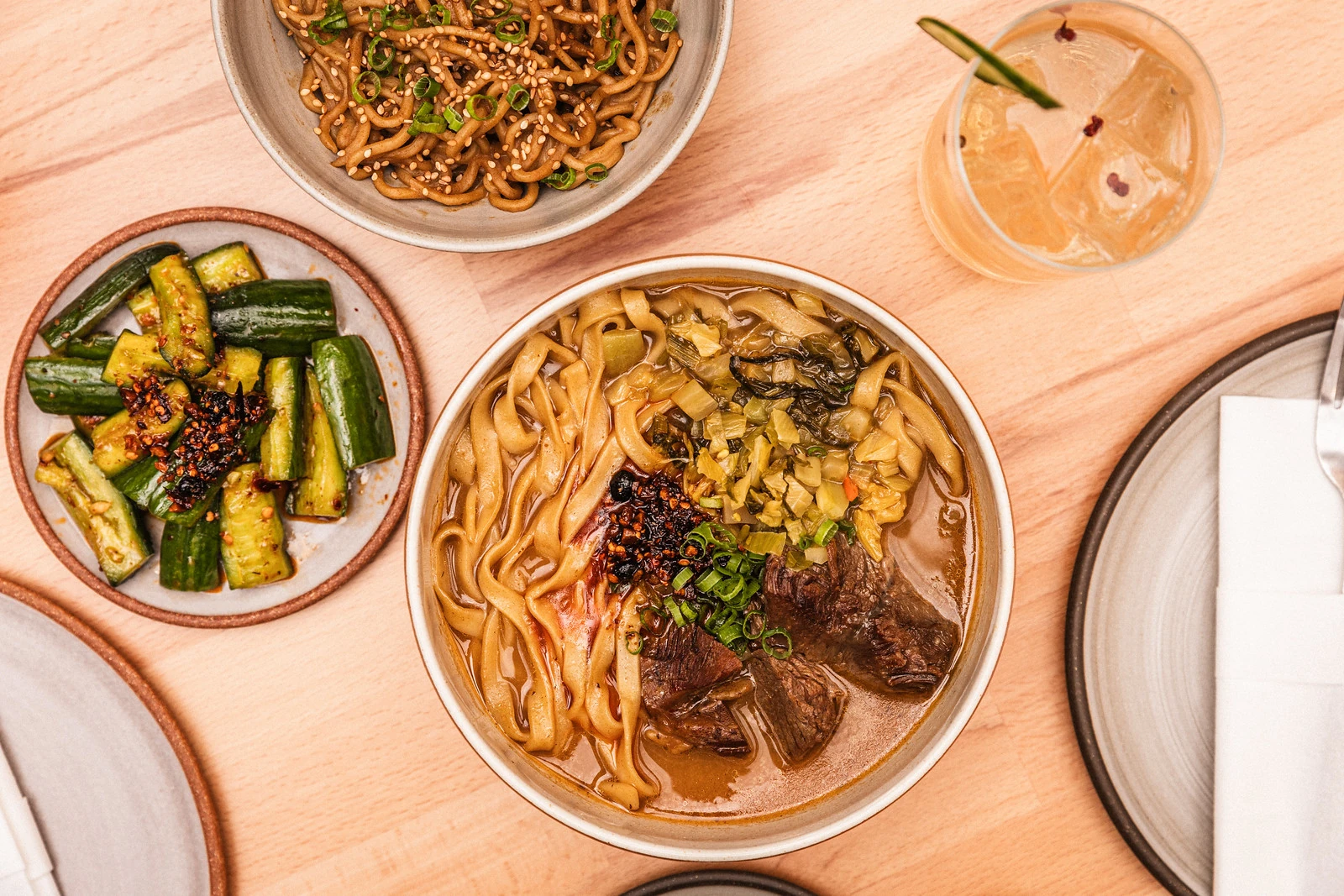
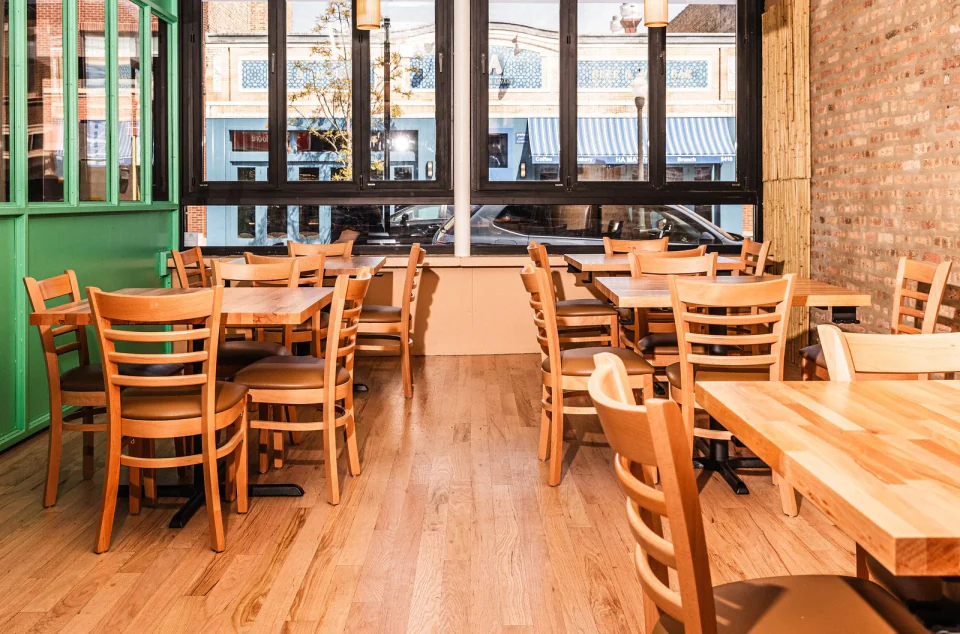
Minyoli opened in Andersonville on 9 May 2024. Its opening photographs show beef noodle soup, exposed Chicago brick, pale wooden tables and aquamarine walls. For someone choosing a neighborhood dinner, the bowl is an easy beginning. The harder question is how a remembered meal becomes something a restaurant can serve again tomorrow. That question takes us behind the table, to a decision made well before the first customer arrived.
Rich Wang, 王孝倫, moved to Chicago at sixteen. Before leaving law, he presented his parents with a business plan and financial analysis; they became supporters of his choice. He trained at Kendall College and, in 2019, studied handmade noodles in Lanzhou before working in Macau. A family could examine a plan before there was a dining room to enter. A customer can read the resulting bowl in the same practical way: as the work of someone who chose to learn, then make that learning answerable to other people.
The village survives in particular memories
Rich recalls his first nine years in Minyoli: a noodle shop downstairs and neighbors’ different accents. His paternal cousin X Wang moved from Atlanta to Chicago for the project. That childhood period is earlier than his teenage migration.
Minyoli takes its name from the chef’s Taipei childhood neighborhood, a juancun, or settlement for military families. X, the general manager, grew up near Los Angeles and had worked closely with growers as a Santa Cruz Farmers Market manager. X emphasized understanding ingredients’ origins and explaining them carefully. Different work follows from those backgrounds: making the food and making its story understandable have to meet at the table. The remembered neighborhood’s name gains a new use when someone unfamiliar with it can ask what it means over dinner.
A remembered sauce needs a supply chain
In 2024, the cousins described suppliers who would not sell Taiwanese black-bean soy sauce to restaurants. They arranged supermarket-style purchasing and imported a whole pallet; local grocery stores could not replenish it fast enough.
Other ingredients have a Chicago address. In January 2026, Wang named Jenny’s Tofu/Phoenix Bean as a local brand whose products he used at the restaurant. The current menu identifies Phoenix Bean tofu in the century-egg salad and juancun-style zhajiangmian. Imported seasoning and local tofu can meet in the same meal. Following the ingredient, rather than only the dish’s name, reveals a more precise crossing: a cook decides which taste to seek across the ocean and which producer can help make the meal here.
A city gives the memory another vocabulary
The menu gives unfamiliar names something a diner can work with. Red-braised beef noodle soup lists black-bean soy sauce and fermented broad-bean chili paste; fried chicken is described through sweet-potato batter, sour-plum powder and Taiwanese basil. The vegan lu-rou-fan keeps the familiar dish name while listing mushrooms and Phoenix Bean tofu as its ragu ingredients. Someone who has never eaten the dish has a way to decide, ask and compare. The kitchen can retain a reference to home while the menu supplies a vocabulary for the next person at the table.
In his January 2025 interview, Wang described teaching neighbors dumpling-making, noodle-rolling and chili-sauce preparation, and investing in training servers to explain Taiwan and village life. The lesson changes the position of the customer: hands can try a process, while questions can be answered before a dish arrives. That is work shared across a restaurant. The chef’s account gives the team something to explain; the general manager and dining-room staff give it a setting in which people can respond.
By late 2024, X found that regulars needed less explanation. In that same 2025 interview, Wang described a customer bringing visiting family from South Africa to eat there. A return visit and an invitation are small but legible consequences. The restaurant has become somewhere a customer can introduce another person to, carrying the conversation beyond the first bowl. A neighborhood table begins to hold a story of its own, alongside the one brought from Taipei.
In Taipei, visit a different village with its own story
Taipei’s Four Four South Village offers a public comparison with a different settlement from Rich’s childhood home. After residents left in 1999, community and cultural workers sought preservation of four buildings. The site reopened in 2003 as a public hall and village cultural park. Here, keeping a place available required another kind of work. The Chicago story can bring a useful question to this site: which parts of everyday life do people choose to carry forward, and how do those choices become public?
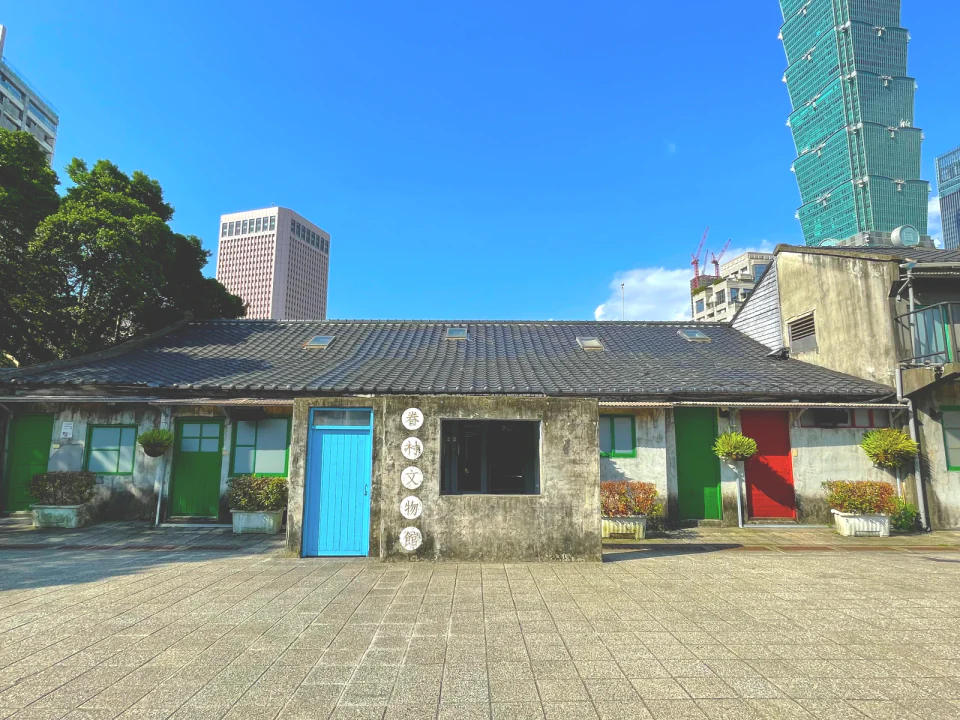
Building B’s exhibition covers the village’s history, mothers, food and everyday life. Outside, its low buildings stand beside Taipei’s high-rise district. Choose one display about food and one about household life, and read whose experience each describes. Then return to the building’s doorways and the space between buildings. This is a way to compare a remembered neighborhood with a preserved one while giving the residents represented here room to speak for themselves.
The 2022 photograph shows a vertical village-museum sign between blue and green doorways, beneath a low tiled roof. Notice how several entrances fit beneath one roof, then compare that scale with the tower in the background. After the exhibition, step back into the courtyard to look at the building as a whole. In Chicago, the menu led to questions about what goes into a meal; here, the preserved space invites questions about how a household fits into a neighborhood.