
A journey that began beside the tracks
Alishan’s mountain train is an inviting image for a first trip to Taiwan. But where do its locomotives go when they need repair—and what lies between the city and the mountain tea fields? Chiayi, a city in southwestern Taiwan, makes a useful starting point for both questions.
A 2026 Korean travel account by 강경록 followed the railway heritage in the city, then travelled uphill by road towards tea country rather than taking the forest train. Around Beimen, workshops, timber-processing remains and former forestry housing show why this was more than a boarding point. The uphill road leads to Xiding, a tea-growing settlement with a different kind of production to explore.
The skills behind a stationary locomotive
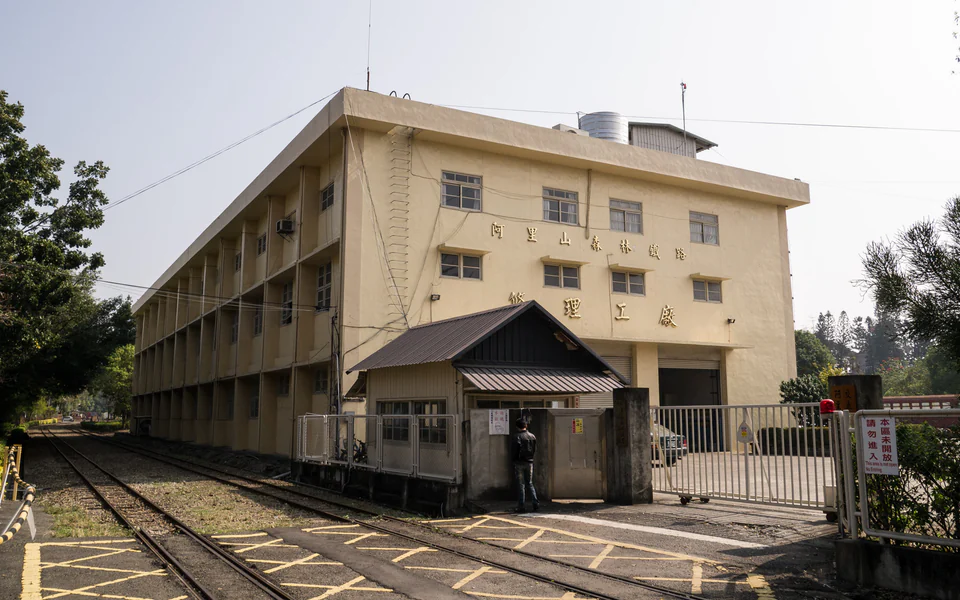
Chiayi Garage Park was once the Beimen repair workshop, formally opened in 1912. Imported locomotives needed people here who could keep them working. The workshop repaired, altered and built equipment; damaged parts could be made locally. Its history is therefore also a history of technical knowledge, not only of machines purchased abroad.
A fire in 1993 destroyed wooden workshop buildings and some old vehicles. The site became Chiayi Garage Park in 2005, opening this history to visitors. The surviving vehicles are not an untouched collection from one moment. They have passed through use, damage, repair and decisions about preservation. Looking closely at a wheel or carriage asks us to notice those accumulated acts of work.
That knowledge still needs people to pass it on. In its account of the 2022 restoration of Shay No. 21, the Forestry Bureau describes retired railway workers including Chen Heming (陳河銘) demonstrating preparation and operation to new drivers. An eighteen-month restoration brought back a locomotive, but keeping it alive also required teaching the work of firing, starting and running it.
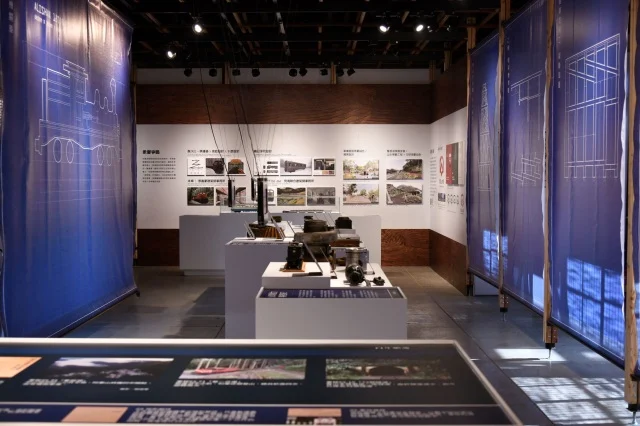
Mechanical parts also became a way to explain this work. The 2021–2022 Alishan on the Move exhibition used vehicle components, diagrams and workers’ tools to tell the railway’s technical history. Its photograph preserves that earlier display; it is not a promise that the same exhibition remains in place today.
Tea has a place and a maker
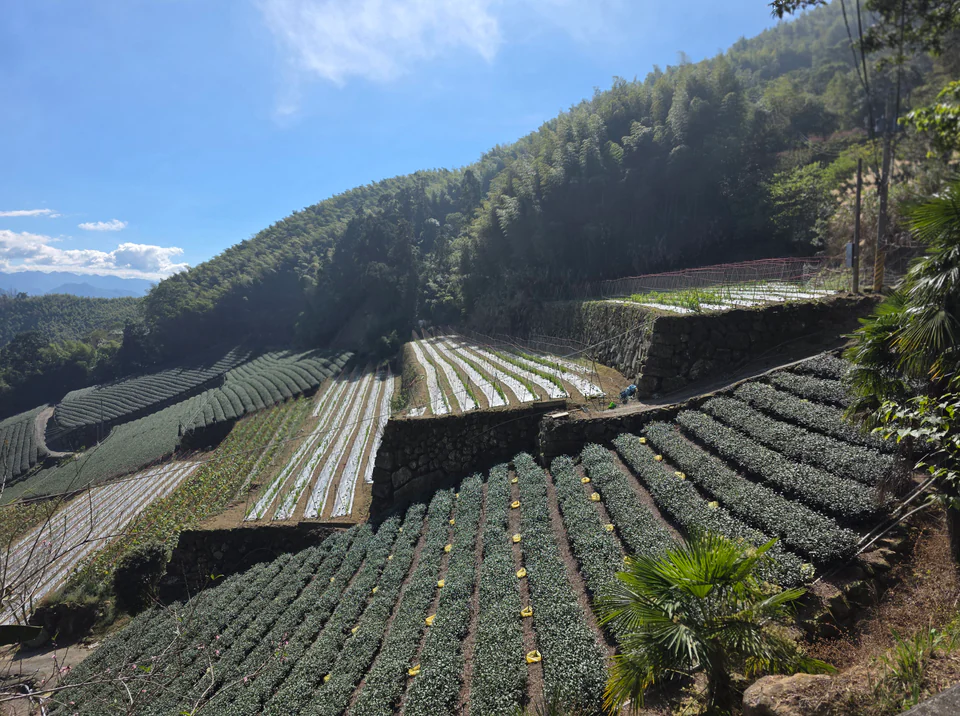
The mountain half of the story needs a different vocabulary. Alishan high-mountain tea names a region that includes tea-growing areas in Meishan, Zhuqi, Fanlu and Alishan townships. It does not name a single summit or a single farm. Qingxin oolong and Taiwan Tea No. 12 are important varieties in this broader region.
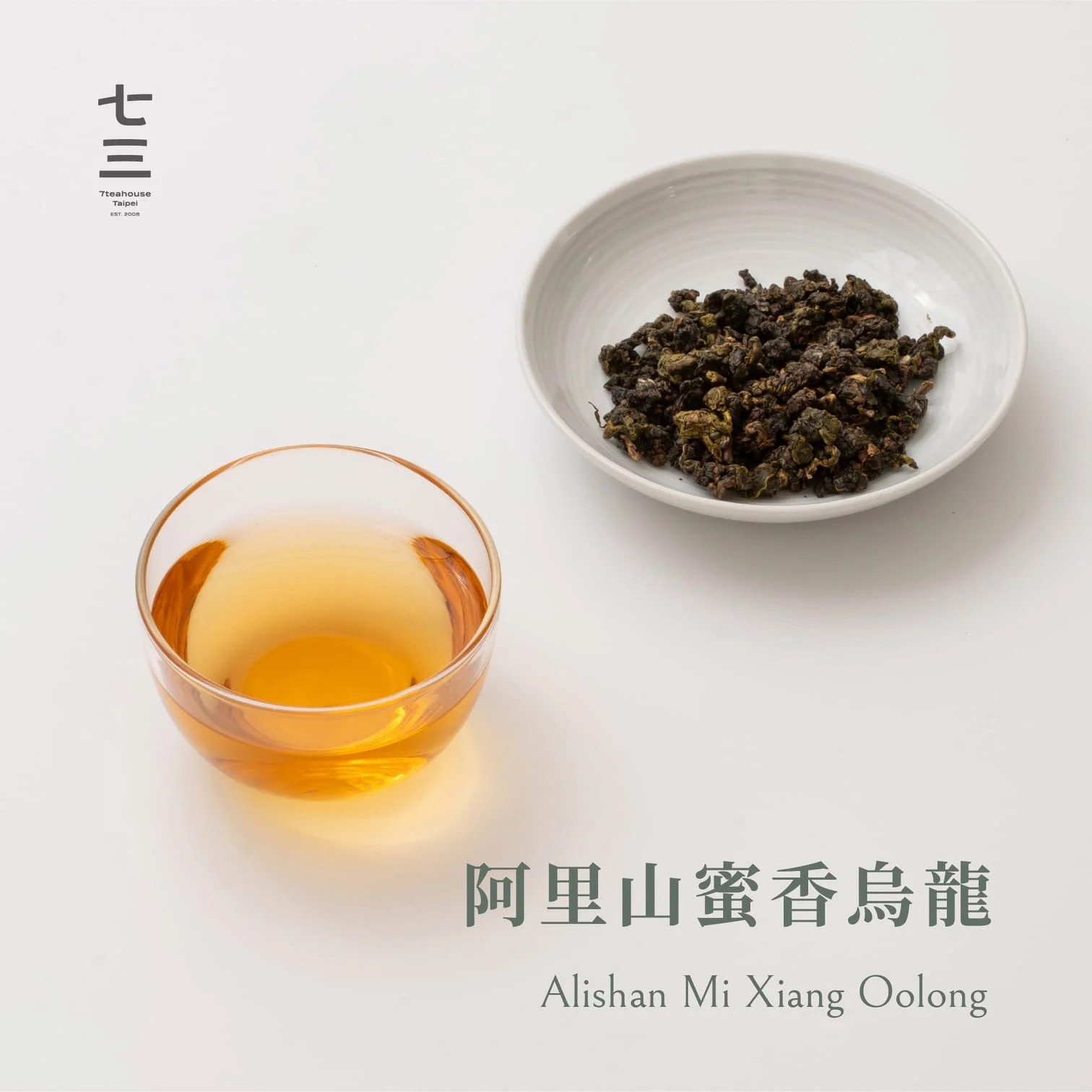
Xiding, in Fanlu, offers one specific example of how a producer works with a crop. In its account of honey-scented oolong, 7teahouse describes leafhoppers appearing in its Xiding Jinxuan tea garden, followed by picking and processing the leaves into rolled oolong. It gives a useful question to take to a tea table: what happened to these leaves before they reached this cup?
This Taiwanese tea knowledge also entered a Korean tea course. 7teahouse founder Wang Ming-hsiang turned ten years of learning into The Knowledge Within the Flavor of Tea. In 2021, Korea’s Tea Sommelier Institute translated and published the Korean edition, 대만차의 이해, designated as a textbook for the Korea Tea Association’s oolong course. For the 7teahouse team, growing, making and sensory evaluation remain things to keep learning. A Jin Xuan tea from Xiding then invites more specific questions: which cultivar is it, and how was it processed?
Two places, two ways of looking
Begin in Chiayi with the garage park if the railway’s machinery interests you. The city gives the repair story a place: old vehicles can be read alongside the account of experienced mechanics teaching a new generation.
Xiding is a separate stop higher on the road. Its public Xiding Star Trail and viewing platform offer a place to see the settlement and surrounding slopes. At a tea shop, ask which cultivar is in the cup and how it was processed; a regional name such as Alishan leaves those details open. Allow separate travel time for the city and the tea-growing hills.