An opening outside the museum
On 9 December 2023, the opening of the Thailand Biennale took place beside Chiang Rai International Art Museum and a large woven work, Beyond the Site. The work was by Taiwanese artist Wang Wen-chih, but its making joined his team with people in Chiang Rai. The local bamboo was part of the work’s connection to the place.
Its partially open form invited visitors inside. That changed the role of the audience: a person could look at the structure, then move into the space it enclosed. The weave was both something to see and a way of arranging where people stood, passed and encountered one another.
A choice learned through work
Wang grew up in the mountains of Chiayi. Public Television Service’s account links his emphasis on collective labour to working in the mountains with his elder brother when he was young. Later, friends from home joined his projects abroad. A work signed by one artist can carry a much wider group’s practical knowledge.
In an interview with Matichon Weekly, Wang connected the form to Thai hats and the museum’s roof. He also described using more steel support to help the work last. After making it, he left tools and materials with local craftspeople; they shared betel with him. The collaboration continued through these small exchanges.
From protest to a shared space
His practice did not begin with these welcoming enclosures. His artist biography identifies Appeal of Nature, made in 1988, with anger at damage to the natural world. Over the following years he searched for his own artistic language; large woven spaces became a way for people to spend time within a work, not merely observe it.
There is continuity in the labour, too. His wife and artistic director, Tsai Mei-wen, joined him in recording accounts of the projects in a podcast series. Those accounts preserve another part of a temporary artwork’s life: the people and decisions around making it. They are a way to return to a work after its exhibition period, without assuming it is still there to visit.
In Chiayi, the weave becomes aluminium
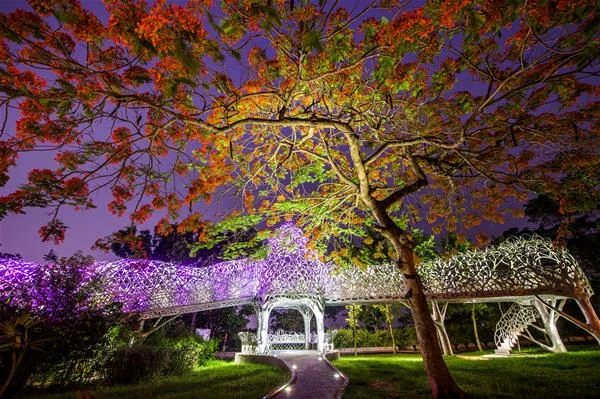
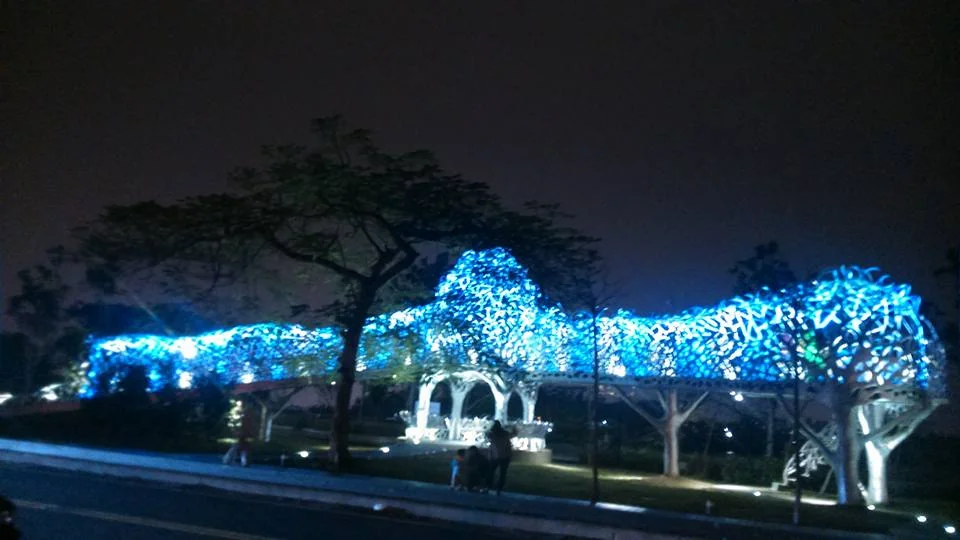
At Lantan in Chiayi, Wang’s Rippling Moonlit Talk offers a different material to look at. The city’s description identifies its openwork structure as woven aluminium strips. The nest-like form remains connected to its surroundings, but the surface is metal. Knowing the bamboo work in Chiang Rai gives a visitor a useful question: what does the act of weaving keep, even when the material changes?
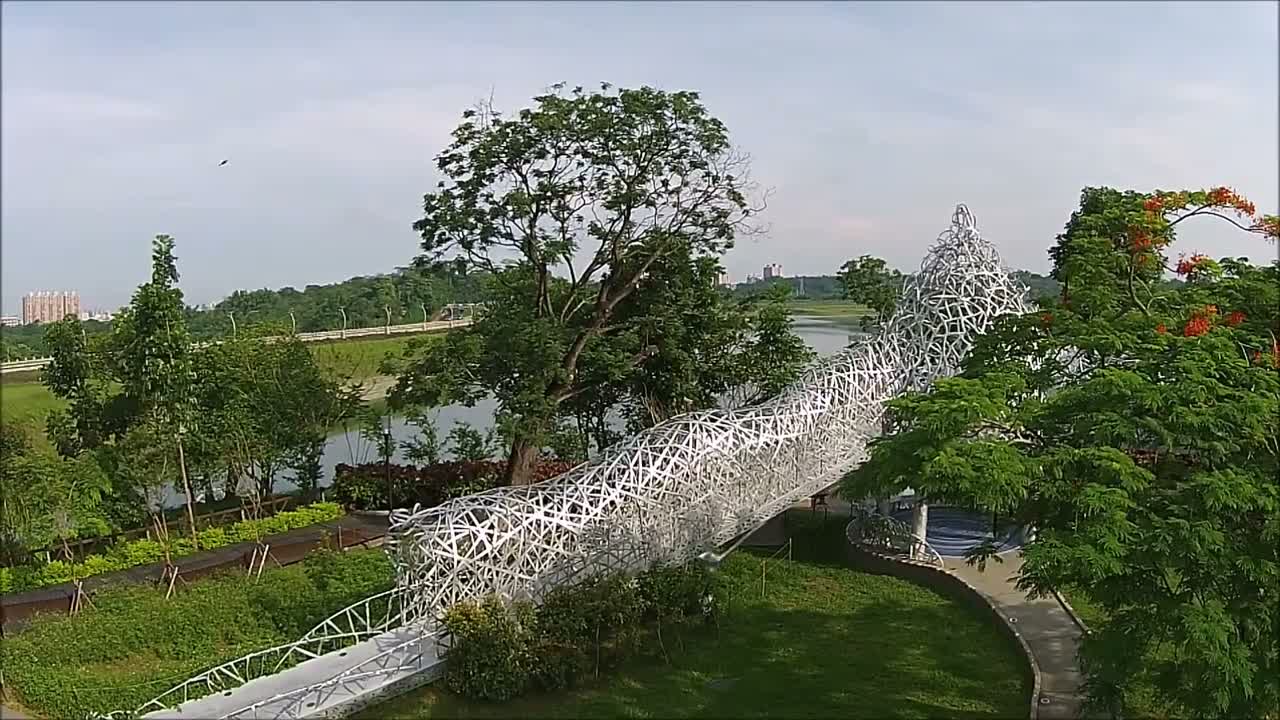
Rippling Moonlit Talk is an independent work in Wang’s home region. Its aluminium lattice frames views towards Lantan, carrying his interest in woven spaces into a different material and landscape. In Chiang Rai, another group of makers worked with local bamboo; in Chiayi, the lake becomes part of the encounter.