
A train waiting in Changwon
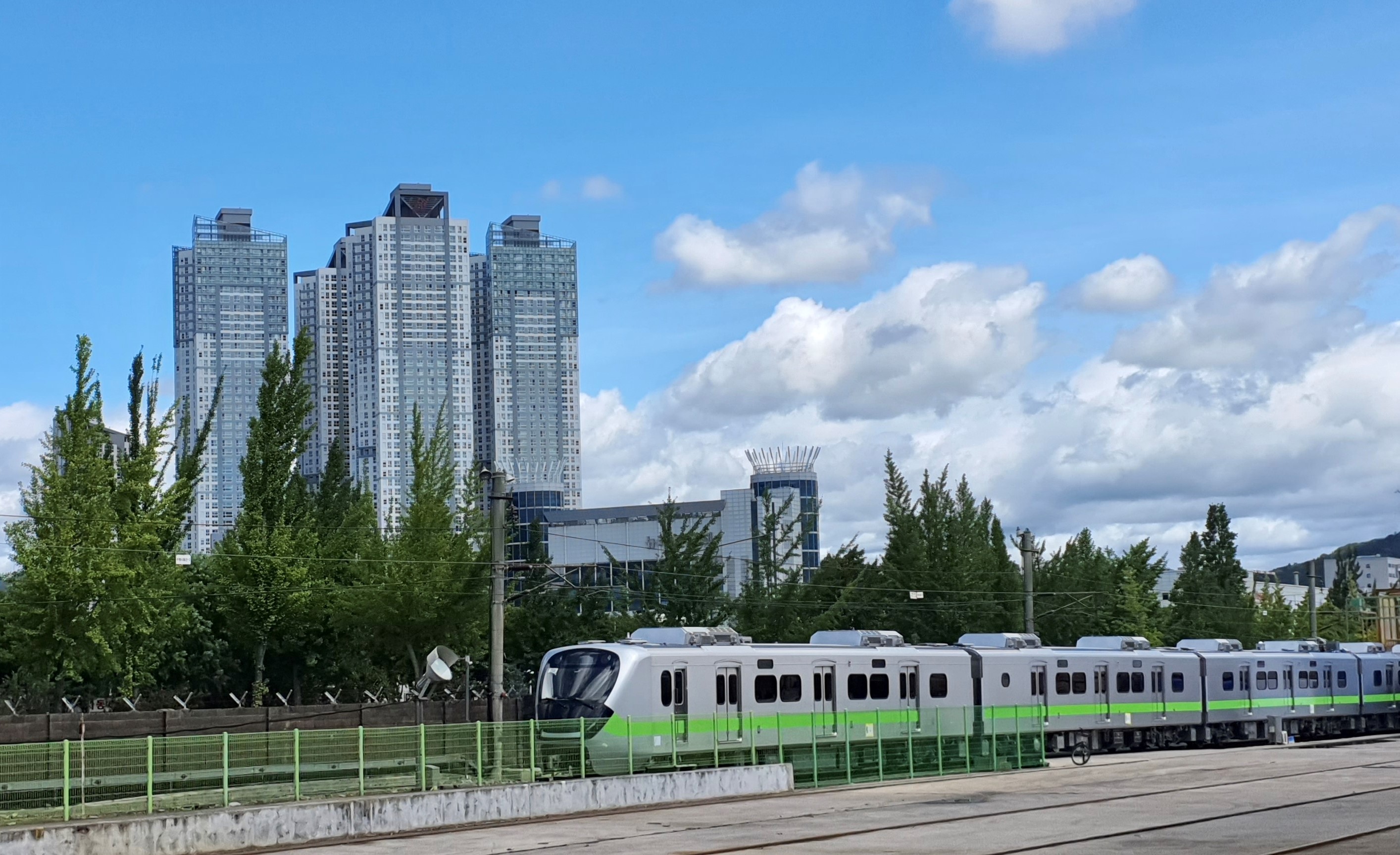
A September 2020 photograph shows a silver-and-green EMU900 outside Hyundai Rotem’s factory in Changwon. Its destination was Taiwan’s commuter railway. The factory setting gives the vehicle a different starting point from the platform where a passenger would eventually meet it: before carrying people, it was an overseas project that Taiwan’s railway staff had to help turn into a working service.
The manufacturer’s August 2019 project account records a visit by a Taiwan Railways Administration delegation to the Changwon factory. Staff examined production and testing and discussed the need for regular, close communication. Questions about the vehicle therefore crossed the sea before the vehicle itself did.
Who would need the space?
Taiwan’s transport yearbook describes a ten-car fixed formation intended to increase capacity during commuting peaks. Yet a longer train also had to accommodate different ways of travelling. It placed bicycle racks in the end cars and introduced a display intended to prompt passengers to offer designated seats to pregnant travellers.
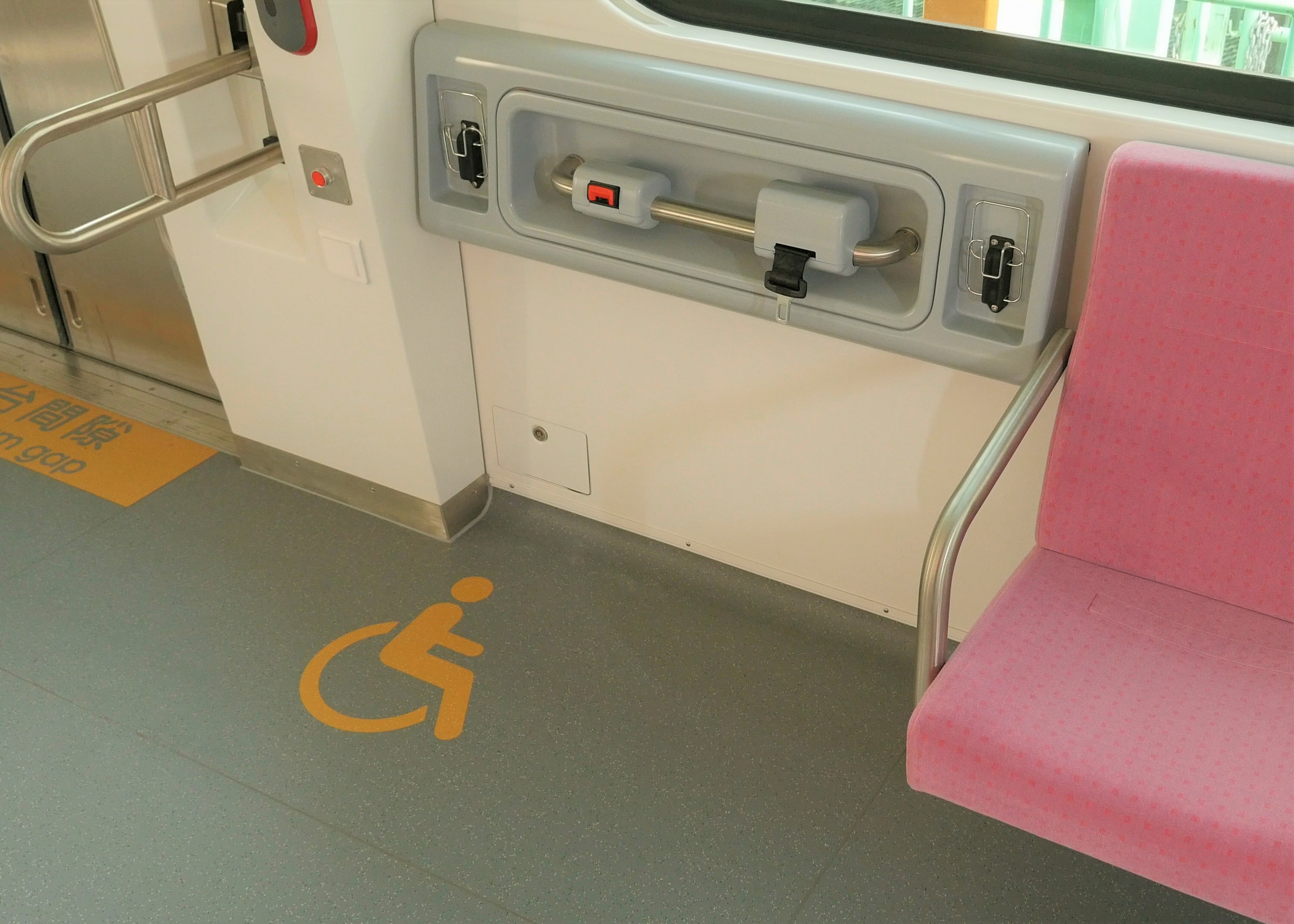
The same official specification concentrates eight wheelchair spaces in car 6 to make it easier for the conductor to provide service. Each space has a 110-volt socket for electric wheelchairs. A pre-delivery photograph shows the wheelchair marking and securing equipment. Those fittings make the design concrete: space, power and help from staff were being considered together.
Landing was only one stage
The first twenty cars arrived through Hualien Port on 24 October 2020. Adjustment and trial running followed. On 19 March 2021, before regular operation, TRA arranged a different kind of test at Nangang Station: it invited people to try the passenger-service equipment.
The official chronicle names the Spinal Cord Injury Federation of the Republic of China, the Cycling Life-Style Foundation and other organisations among eleven invited groups, with 108 participants in total. They tried the accessible spaces, bicycle areas and pregnancy-seat facilities. The people represented by symbols and equipment descriptions were now present to use them.
Letting intended users onto the train
That invitation was a concrete choice by the Taiwan railway team. Production checks in Korea and railway trials in Taiwan addressed the making and running of a train; the Nangang event added an opportunity to examine how its service spaces worked for people. The railway’s own record reports favourable responses from participants.
The documented outcome is participation in that practical test. It does not tell us which individual suggestion changed a fitting or whether every later journey worked equally well. On 1 April, EMU900’s inauguration was held in Keelung. The new commuter train was entering public service with a record of intended users having tried its equipment first.
Start again at Nangang
Nangang is the Taiwan place to continue this story. The station brings TRA, high-speed rail and the Taipei Metro together, so a journey can begin there without treating the railway as a display of vehicles. Look at how station guidance, lifts and a train’s own spaces connect for the trip you actually need.
EMU900 is an operating train type, not a permanent exhibit at Nangang. Confirm the service and accessibility arrangements with TRA if a particular train or assistance matters to your visit. Should you board one, the wheelchair areas offer a precise detail to notice: a mark on the floor is connected to room, securing equipment and the conductor’s work.