
Six satellites on a night launch
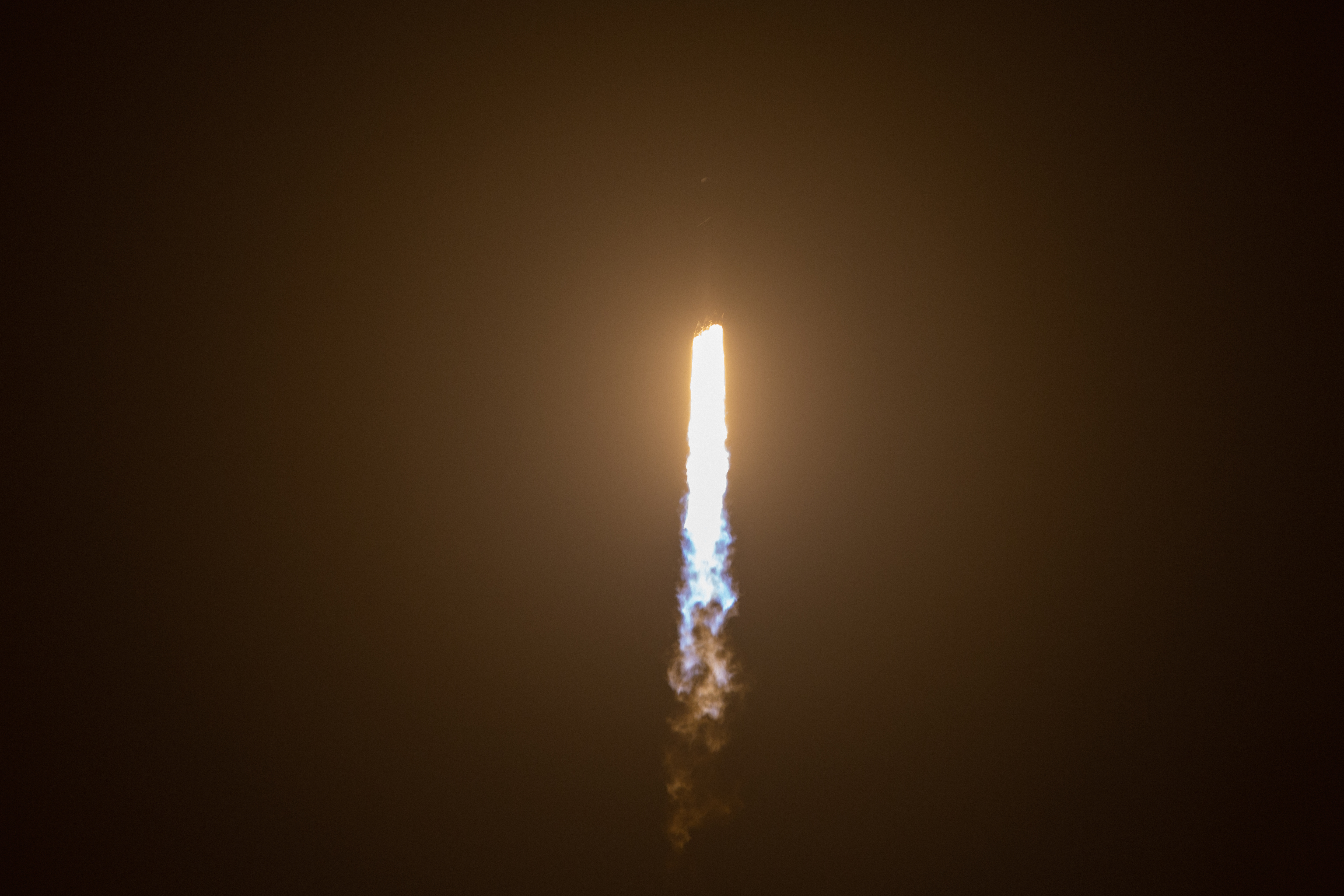
At 2:30 a.m. in Florida on 25 June 2019, a Falcon Heavy lifted off from Kennedy Space Center’s Launch Complex 39A. NASA photographer Cory Huston recorded its ascent. Six of the 24 payloads were COSMIC-2 satellites, known in Taiwan as FORMOSAT-7. NOAA’s launch report identified them as satellites owned and operated by Taiwan.
The launch connected the Space Coast with a team in Hsinchu. Its leader, Vicky Chu, had trained in atmospheric science before joining Taiwan’s space programme. She and her husband, Jia-Jing Yeh, were among the seed engineers sent to the American company TRW in 1994. By 2019 she led FORMOSAT-7, while he was responsible for its electrical power system and electrical integration testing.
Choosing cooperation, and working across time zones
Taiwan’s team had already worked with the United States on FORMOSAT-3. With FORMOSAT-5 under development at the same time, staffing and funding helped shape the choice to continue that partnership for FORMOSAT-7. The work crossed more than two countries: NSPO integrated, tested and operated the satellites, with the spacecraft buses contracted to Britain’s Surrey Satellite Technology and instruments supplied by American teams.
In a 2018 interview, Chu described early meetings with American partners, evening meetings with British partners and testing work in between. At the airport cargo facility the following April, she and Yeh were again discussing the mission with colleagues. Their work followed them home too. Yeh told the interviewer that they respected each other’s expertise, with final project decisions left to its leader.
The satellite was listening to the atmosphere
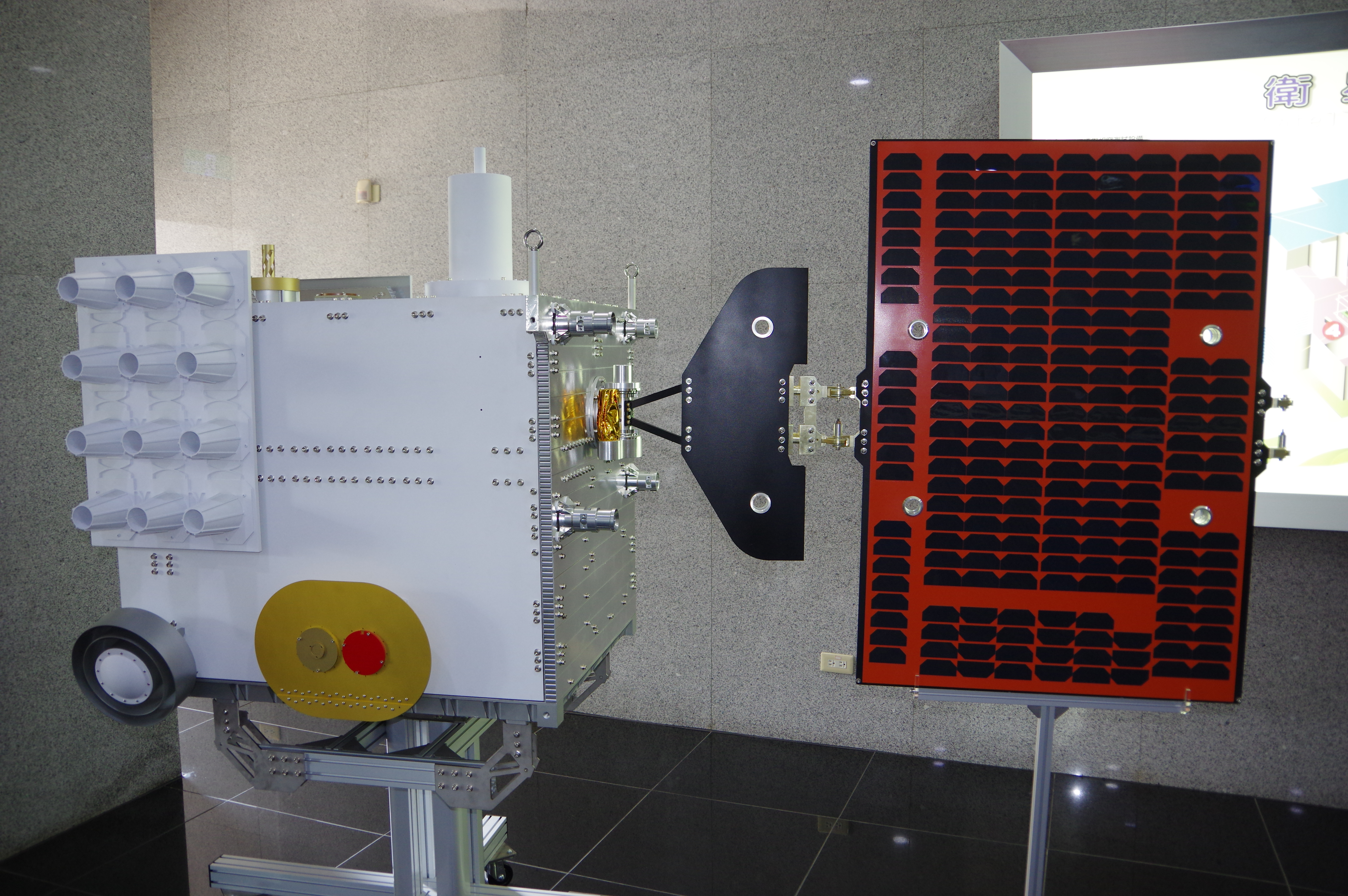
A physical FORMOSAT-7 model photographed by Hsin-Jen Hsu in 2015 gives the mission a shape, with a box-like body and an extended solar-panel representation. It is a display model, not one of the six flight satellites. The mission’s purpose was to receive navigation-satellite radio signals after they had passed through the atmosphere, using changes in those signals to learn about the air.
The technique is radio occultation. As signals bend and slow, researchers can derive information about temperature, pressure and moisture, including over oceans where conventional observations are sparse. For the Taiwanese team, getting the spacecraft into orbit was therefore the beginning of a continuing relationship between satellite operations and weather-data work on the ground.
Contact first, then a constellation
The first milestone after launch was contact with all six satellites. Public Television Service reported that contact was confirmed on 25 June, followed by health checks in Taiwan. NSPO deputy director Shiann-Jeng Yu also described a less visible result: where FORMOSAT-3’s data processing had relied on UCAR’s assistance, Taiwan had now developed its own capacity to analyse and process radio-occultation data.
The six satellites did not reach their final arrangement on launch day. Taiwan’s science ministry records completion on 3 February 2021, after initial health checks and 18 months of orbit transfers. Atmospheric observations had already been released internationally with NOAA on 7 March 2020. The Florida photograph captures the departure; these later dates record the patient work that made the mission usable.
The Taiwanese site has a conditional doorway
To follow the story in Taiwan, begin with TASA’s group-visit conditions. The agency accepts booked groups of 20–40 people, aged at least Grade 5, rather than individual walk-ins. Its current notice says the satellite integration and testing facility is closed to visitors; available visits cover the satellite control centre and satellite or rocket models. The notice gives approximately 50 minutes.
Apply through the official visit page and obtain confirmation of eligibility, a meeting address and transport arrangements before travelling. Two Hsinchu correspondence addresses on the contact page are not identified as visitor entrances. Nor does the 2015 photograph establish that its model is still displayed there. What this visit can continue is the human story behind the launch: people on the ground keeping a mission working after the rocket has gone.