

A cookbook becomes a shared task
San Francisco photographer Anna Wu wrote about her A-Gong’s Table cookbook gathering in July 2024. She made plum-pickled cherry tomatoes; another participant made three-cup lion’s mane mushrooms using fresh mushrooms available locally.
A cookbook gathering puts a recipe into several people’s hands at once. Each cook has to find ingredients, follow a process and bring a finished dish. The table is the visible result of separate decisions. For someone encountering Taiwanese food through a book, that work can create a more lasting connection than simply learning a dish’s name.
Begin with the change in scale. A writer records a way of cooking; a reader makes enough for other people to taste. The reader becomes responsible for texture, seasoning and timing. A story about food has entered the practical business of feeding someone, and the next conversation can begin with what the cook actually did.
The family table leads to another kitchen
George Lee, 李芳成, grew up in Tamsui. In his book’s introduction, his architect grandfather’s house and table frame a family memory. After his grandfather died, seventeen-year-old Lee visited a temple and met the nun Huìshàn, whose cooking became part of his learning.
This gives the recipe book a particular beginning. Food connects a remembered home with people working in another kitchen. Learning from that work means paying attention to how ingredients are handled and how a meal comes together. The family story continues through a skill that can be practiced.
Read a recipe with those people in mind. A dish has instructions, but it also has someone who chose to keep working on it and someone from whom that person learned. A family table can outlast its first household in this form: another cook repeats a process, makes choices and gives the result to someone else.
A familiar mouthfeel has to be rebuilt
Lee told the Taipei Times that his vegan braised rice took at least fifteen versions. Recreating the sticky mouthfeel of pork involved experiments with peach resin, golden fungus and yam. Extra oil helped replace fat missing from plant-based ingredients.
The problem is specific enough to make the work visible. Removing an ingredient changes what the dish can do in the mouth. A cook then has to separate the parts of the remembered result: richness, texture, seasoning and the way the topping meets the rice. Each choice can solve one part while changing another.
This is a useful way to read the finished recipe. Pay attention to the function of an ingredient as well as its name. The dish becomes the result of testing, rather than a list of substitutes. When someone cooks it elsewhere, the question continues: which available ingredient will carry the particular texture the recipe is asking for?
Lee also brings this attention to plant ingredients into his filmed cooking. In a TaiwanPlus demonstration, eggplants are coated, fried and returned to an aromatic sauce. Hands, heat and seasoning make the work visible, one action at a time.
At a Taipei meal, rice becomes the center
Yun Hai founder Lisa Cheng Smith described a March 2024 meal with Lee and Laurent Hsia at Taipei’s Rice Canteen, 泔米食堂. Rice, vegetables, tofu and tofu pudding gave the gathering another setting for discussing food.
An earlier Ministry of Agriculture feature introduced the restaurant’s rice adviser, A-Xian, 阿仙, and the work of washing, draining and adjusting water for rice. These are operations a diner may never see, although their result sits at the center of a meal.
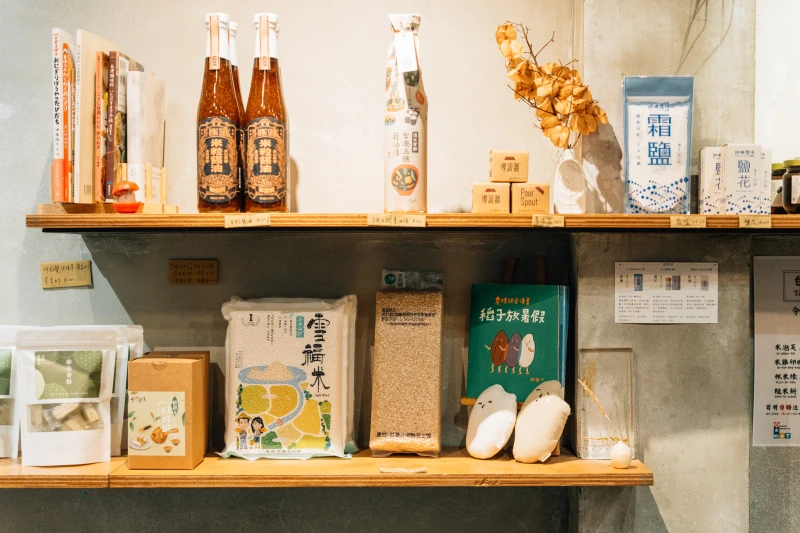
Bring the question of texture to the rice itself. Taste it before adding the rest of a dish; notice how it holds together and how the next bite changes with a vegetable or sauce. This is a small act of attention a visitor can carry out at a table. The meal becomes a way to notice the work behind an everyday staple.
The next cook carries the story forward
Anna’s gathering included a radish dish adapted with eggs. The book’s vegan recipes and the choices of the people cooking from it produced different plates at the same gathering.
That detail makes a food journey more interesting. A recipe can offer a shared starting point while each cook decides what to do with it. Read the name, ask about the ingredients and find the version being served to you. In Taipei, a restaurant meal can continue that inquiry through rice, seasoning and the practical choices of a working kitchen.
The connection across the Pacific is made through these acts. A family memory becomes a book; readers turn it into food; another meal makes the work of rice worth noticing. You can join through a meal or through cooking. Choose one dish, understand what gives it its texture, and let that knowledge shape the next time you feed someone.