Philippines × Dongqing Bay, eastern Lanyu — a community shoreline, not an Ovayan exhibition
Before Ovayan reached Batan, six Lanyu communities had to find one rhythm
On 16 June 2026, the twenty-seat Ovayan reached Batan Island in the Philippines. Behind the welcome were builders who needed timber longer than Lanyu could provide, rowers learning to work across six communities, and people deciding when the sea would let them leave.
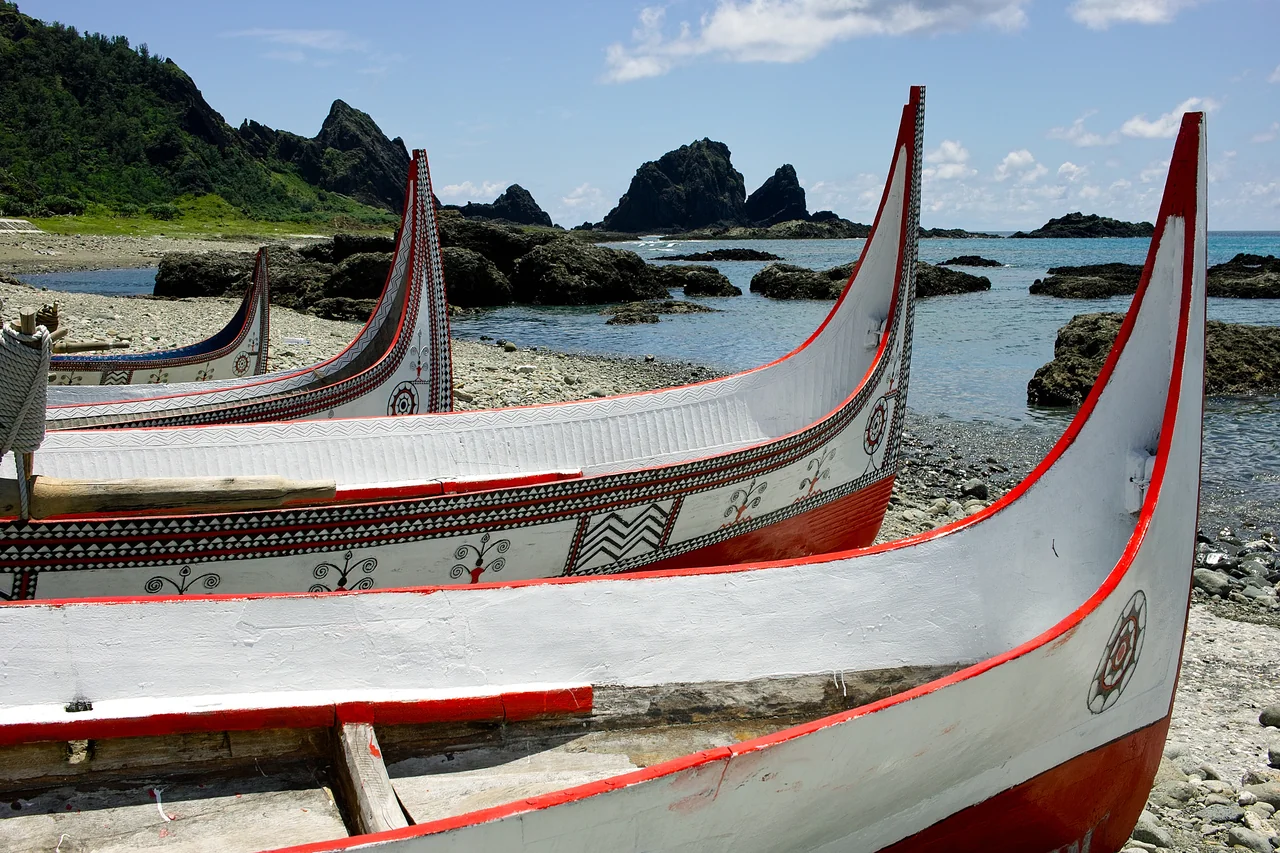
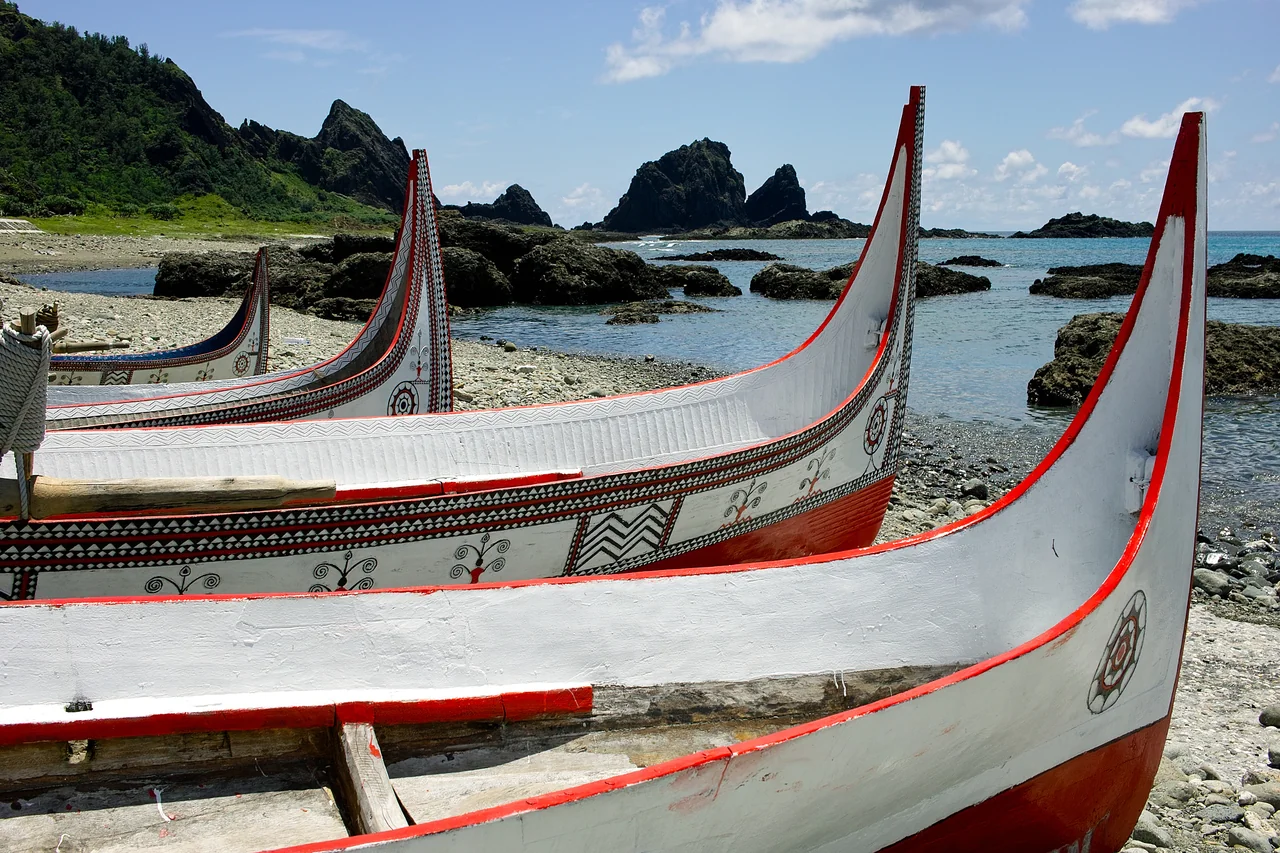
Traditional Tao plank-built boats in a 2013 photograph, showing joined boards and raised ends; these are not the 2026 Ovayan.
A boat arrived, rather than a promise of arrival
The Philippine Department of Tourism’s account records Ivatan residents welcoming the Tao rowers and the boat being carried ashore on 16 June. From Batan, the important object is this particular wooden vessel, not an interchangeable symbol of island friendship. The date matters too: earlier reports described a voyage still being prepared; this welcome followed a completed crossing from Lanyu, also known as Orchid Island, southeast of Taiwan.
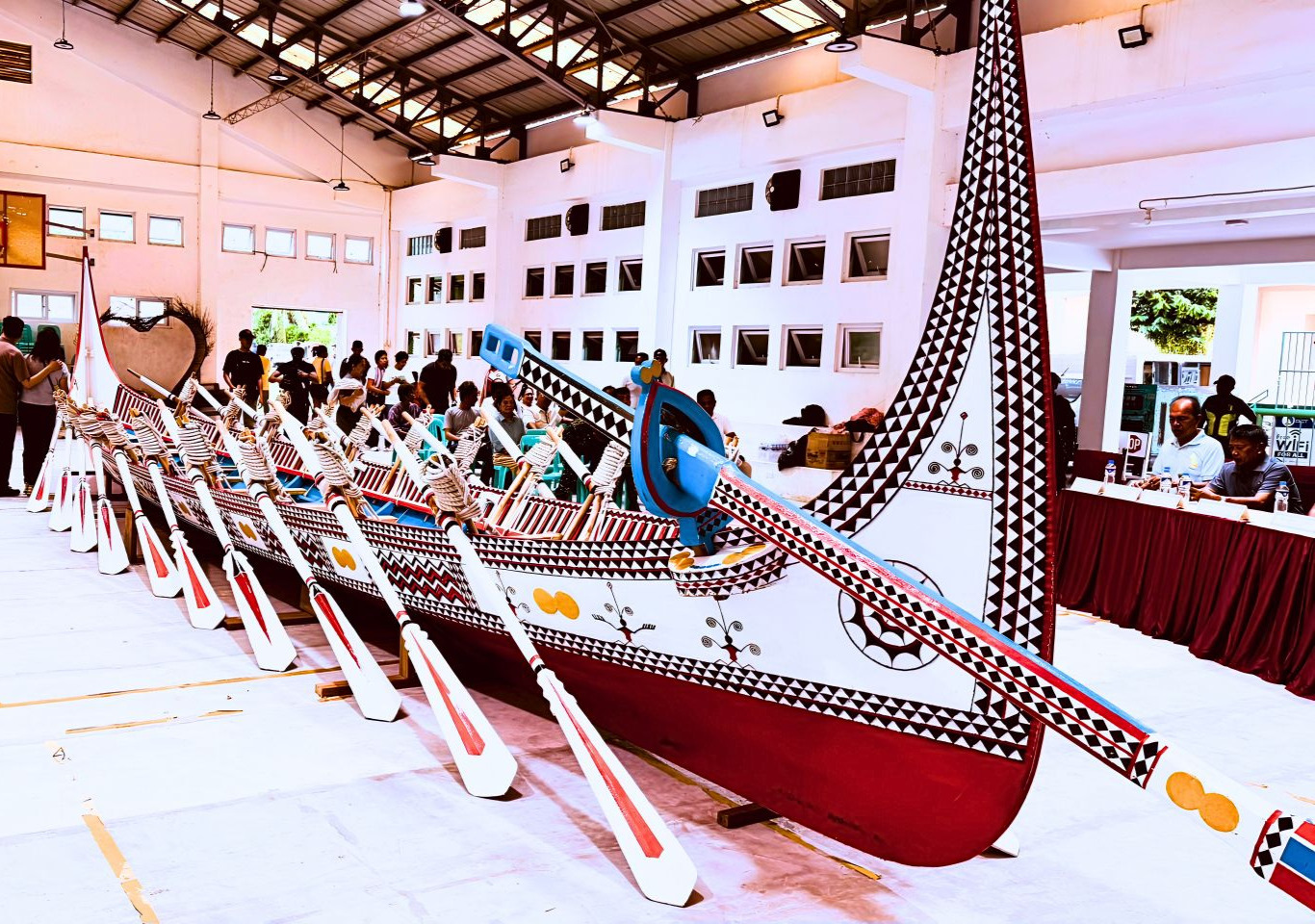
The actual Ovayan boat displayed during the June 2026 handover in Batan; Council of Indigenous Peoples event photograph.
A later June 2026 Council of Indigenous Peoples album records the boat’s handover in Batan and reciprocal gifts, including a painting of a stone house. That gathering followed the completed crossing; it was not a new sailing or a tourist service.
The long piece of timber had to come from elsewhere
Before there could be a crossing, there had to be a boat large enough for twenty rowers. In April’s trial report, builder Hsieh Hsiu-hsiung explained that Lanyu did not have a tree long enough for the required keel, so a particularly long piece was brought from Taiwan’s main island. His explanation describes an actual material decision: extending a familiar boat-building method required finding something the local forest could not supply.
The trial at Longmen Harbor also tested the people. The team checked fittings and practised changing crews. Its assessment separated two results: the hull was stable, while speed still depended on improving the rowers’ coordination. A sound boat did not automatically produce a crew that could move it together.
Relatives usually shared a boat; this time six communities did
Captain Chung Ma-hsiung explained the difference before departure. A traditional fishing group often consisted of related men—brothers, cousins, uncles. Ovayan instead brought sixty rowers from six Lanyu communities into a rotating team. Rower Tseng Chih-chen described a change from competing between villages to trying to reach Batan together. Those statements locate the cultural work inside the organisation of the voyage, not only in the boat’s painted surface.
People carry Ovayan together during the pre-departure ceremony; the Ocean Affairs Council credits the Council of Indigenous Peoples.
Elder Huang Kuang-te described the training as a chance for younger people to observe their elders and learn what to watch for while rowing. Learning thus took place within preparation for a real journey. The task was larger than repeating a ceremony for spectators: a new combination of people had to use the knowledge together.
A departure depended on the weather
The departure was delayed more than once by weather. On 15 June, Ovayan finally left Lanyu as wind and waves eased. Rower Yang Ma-lun spoke of apprehension about conditions alongside his excitement at following the ancestral route. Maraos, chair of the Indigenous Peoples Cultural Foundation, explained the allocation of duties: Dongqing’s rowers would take the departure because other villages had already carried earlier tasks. The celebration rested on both waiting and distributing responsibility.
The sea exposed the need for that shared rhythm
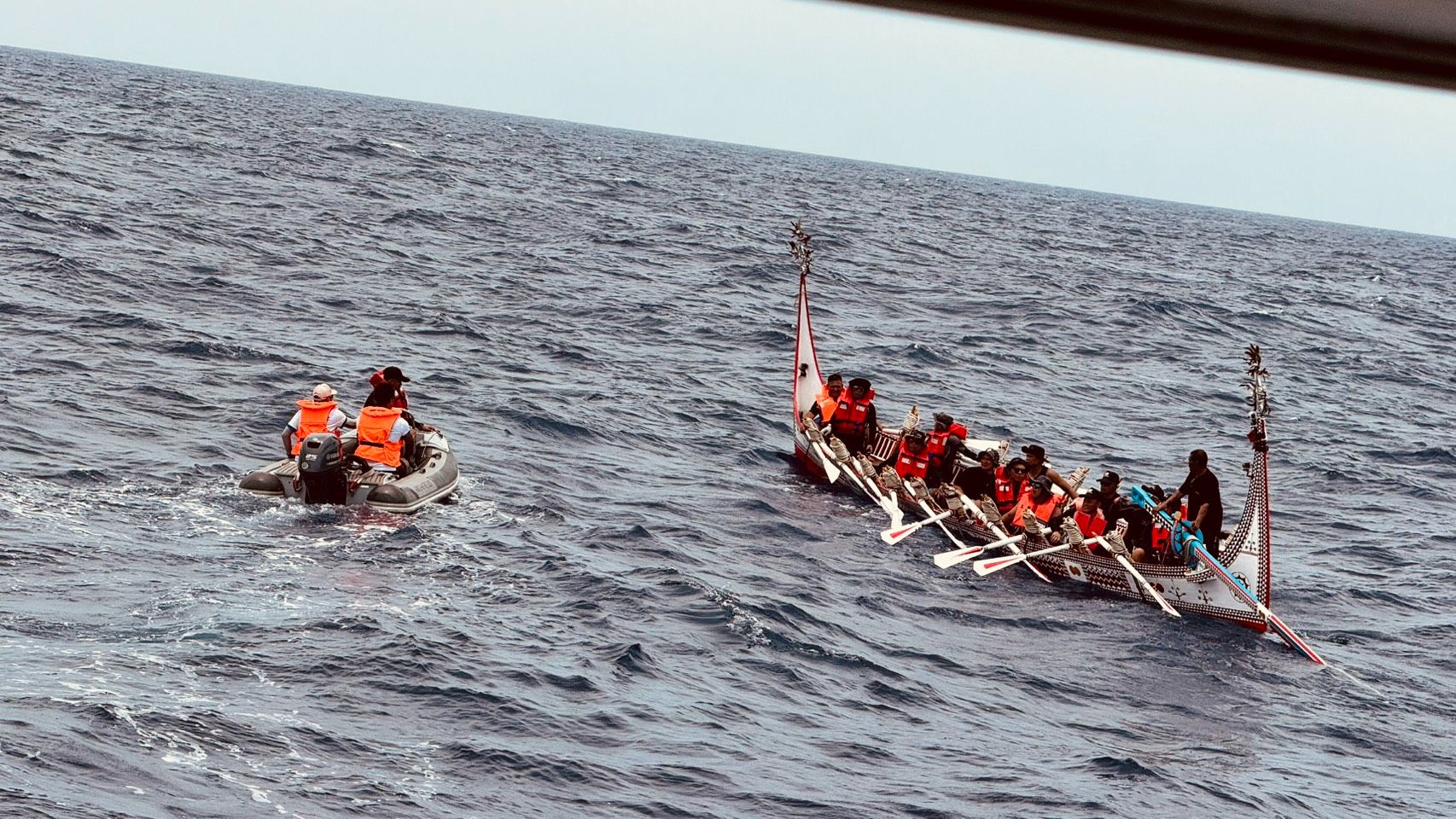
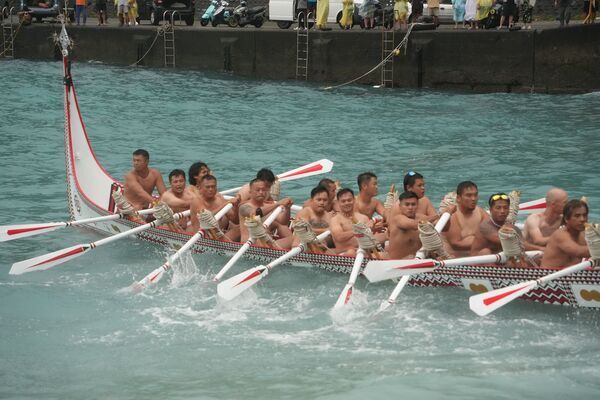
The arrival report records conditions the plans could not make disappear. Rower Hsieh Chin-tao described headwinds pushing the boat backwards if they stopped working. Chang Chi-hsuan, rowing farther back, explained that water delayed his stroke and that he had to follow the people ahead. The accompanying support vessel and encouragement from elders were part of the crossing. Sixty people taking turns did not mean sixty independent efforts; each change had to rejoin the motion of one boat.
Ovayan at sea in the primary arrival report published on 17 June 2026; this is the actual voyage vessel.
Ovayan reached Batan on 16 June after two days and a night at sea. The welcome gave the journey a visible outcome, but it did not establish a scheduled passenger route or an annual event that travellers can assume will recur. For readers in Batan, looking back towards Lanyu now means seeing the builders, elders and rowers behind a boat that actually arrived.
On Lanyu, look at the working shoreline
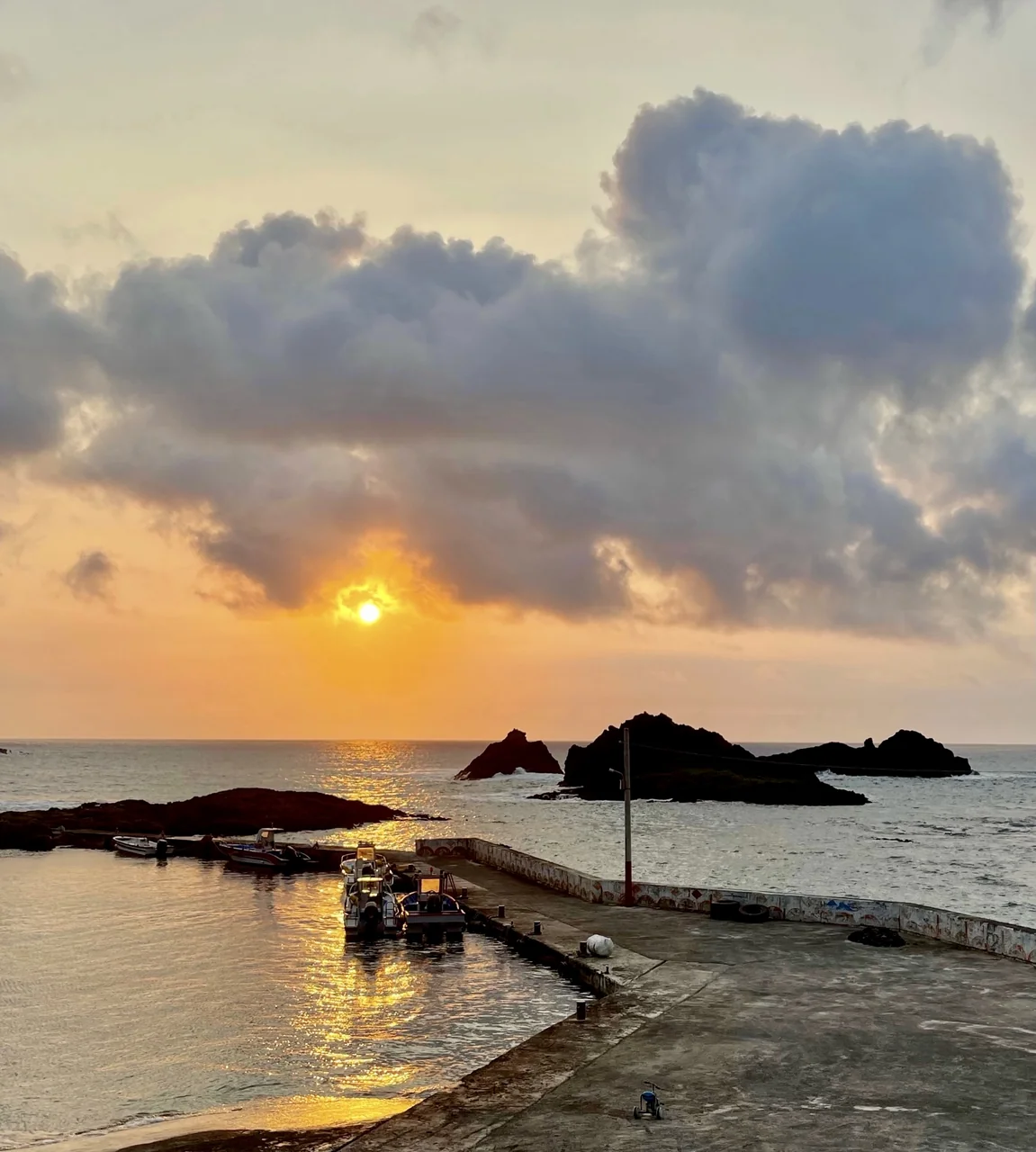
Dongqing Bay on Lanyu’s east coast offers a different scale of looking. The official local visitor description identifies plank-built boats along its shore and explains that they are assembled from boards, rather than hollowed from one log. Seen with permission and from a respectful distance, that construction can bring Hsieh’s material problem back into view. These are working boats belonging to people; they are not automatically available for touching, boarding or photography.
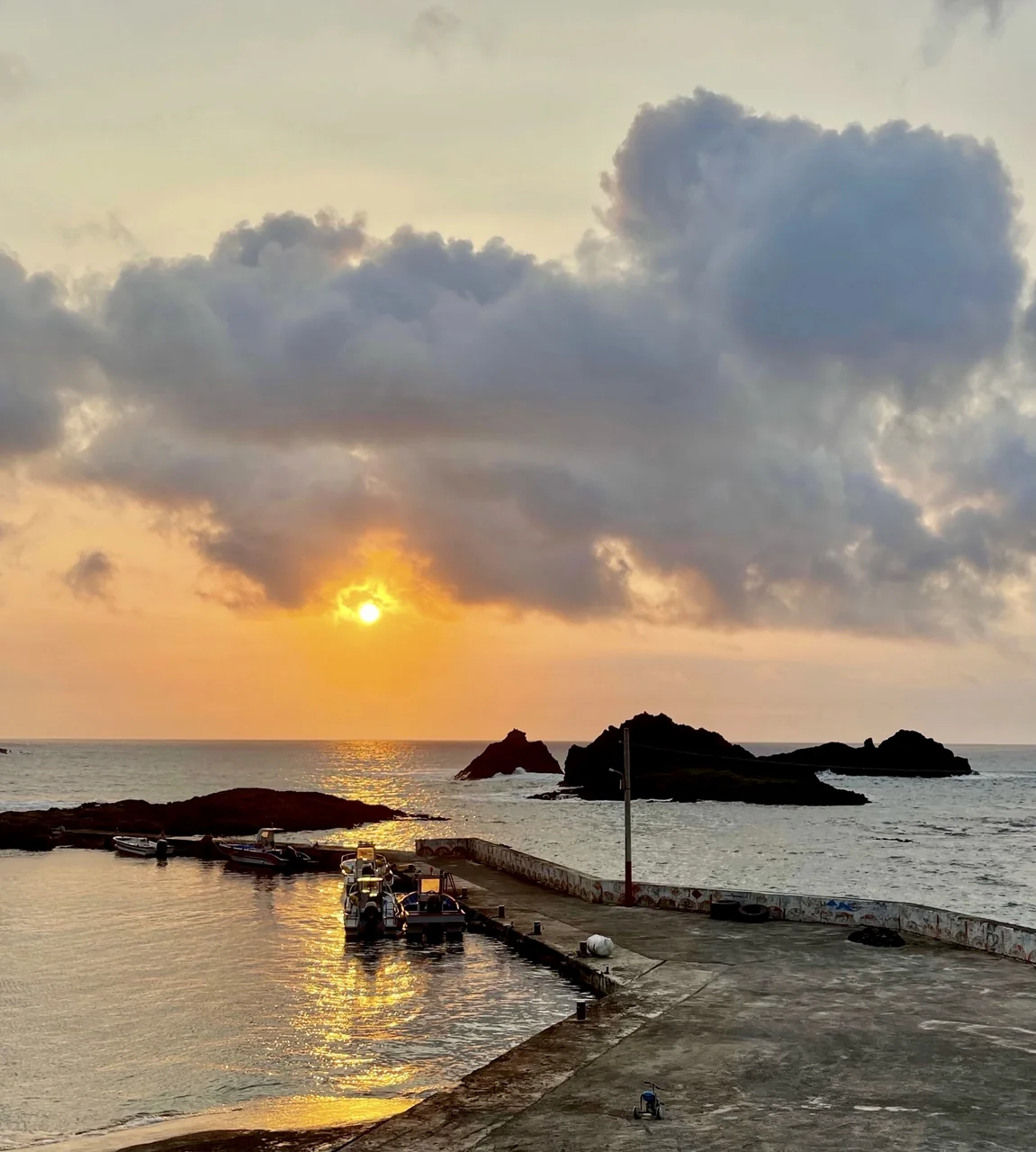
Dongqing Bay’s small working harbor in a 2022 sunrise photograph, with fishing boats, a slipway and the rocky shoreline; not the 2026 Ovayan voyage.
Find this story in Taiwan
What to see
Dongqing was one of the six participating communities and supplied the departure crew. The bay makes plank construction legible without pretending that the 2026 voyage is being repeated.
Visitor information
Location: the shoreline in front of Dongqing village, Lanyu Township, Taitung County. Plan a short daytime observation from an appropriate public place and seek local advice about the permitted area. Boats and local restrictions can vary; no specific boat, workshop, ritual or demonstration is guaranteed. Allow roughly 30–45 minutes only as an editorial planning suggestion after permission and transport are confirmed.
Before visiting
Travel from Taiwan’s main island by a booked flight from Taitung to Lanyu, or a confirmed seasonal ferry to Kaiyuan Harbor from Fugang or Houbihu. The county’s transport guide gives about 25 minutes for the flight and approximately 120–150 minutes for ferry journeys, but these are reference durations, not a live timetable. Arrange island transport between the airport or Kaiyuan Harbor and Dongqing, including a return pickup.
Before visiting
Confirm the return flight or sailing before leaving, recheck weather and operator notices, and retain time in case services are cancelled. The island bus is infrequent according to the county guide; this package has not verified a current bus timetable and does not promise a convenient return after a spontaneous stop. The Lanyu–Batan crossing described above is not a tourist ferry option.
Before visiting
Ask before photographing or approaching boats, do not cross work areas, and follow the boat owners’ and community’s instructions. A bay’s general visitor listing is not permission to enter a boathouse or a ritual.
Time to allow
30–45 minutes after local permission and transport confirmation; an editorial suggestion.
Ten different whole photographs are used. Eight show the actual Ovayan vessel and related June2026events in primary reports or the Council of Indigenous Peoples album. The Ocean Affairs Council’s two600×400public event images remain standard definition. The original2013Tao boats and2022DongqingHarbour retain their dates, creators and licence records; neither is misidentified as the2026voyage. A gift painting remains a painting, not a photograph of a visited house.
Ovayan official event photograph 4 · Council of Indigenous Peoples / Indigenous Peoples Cultural Foundation; published in the linked primary event report or album.
Traditional Tao plank-built boats in a 2013 photograph, showing joined boards and raised ends; these are not the 2026 Ovayan. · Image informationTraditional Tao plank-built boats in a 2013 photograph, showing joined boards and raised ends; these are not the 2026 Ovayan. · Use the original bilingual alternative text / retained image information; do not infer current event, display or opening from the photograph. · Yang Yao Long · CC BY-SA 3.0 · Image record · Reuse termsTraditional Tao plank-built boats in a 2013 photograph, showing joined boards and raised ends; these are not the 2026 Ovayan. · Yang Yao Long · Original · CC BY-SA 3.0 · Unmodified source photograph; 2013-07-27 · Traditional Tao plank-built boats in a 2013 photograph, showing joined boards and raised ends; these are not the 2026 Ovayan. · Web delivery: proportionally resized WebP; no crop or generative alteration.Unmodified source photograph; 2013-07-27 · Traditional Tao plank-built boats in a 2013 photograph, showing joined boards and raised ends; these are not the 2026 Ovayan. · Web delivery: proportionally resized WebP; no crop or generative alteration.
槳手扛起20人拼板舟「Ovayan黃金友誼號」祈福(圖片為原民會提供) · Council of Indigenous Peoples / Indigenous Peoples Cultural Foundation; published in the linked primary event report or album.
Ovayan official event photograph 5 · Council of Indigenous Peoples / Indigenous Peoples Cultural Foundation; published in the linked primary event report or album.
原民會贈送「Ovayan黃金友誼號」 攜手續寫三百年海路文化連結 · Council of Indigenous Peoples / Indigenous Peoples Cultural Foundation; published in the linked primary event report or album.
原民會贈送「Ovayan黃金友誼號」 攜手續寫三百年海路文化連結 · Council of Indigenous Peoples / Indigenous Peoples Cultural Foundation; published in the linked primary event report or album.
原民會贈送「Ovayan黃金友誼號」 攜手續寫三百年海路文化連結 · Council of Indigenous Peoples / Indigenous Peoples Cultural Foundation; published in the linked primary event report or album.
原民會贈送「Ovayan黃金友誼號」 攜手續寫三百年海路文化連結 · Council of Indigenous Peoples / Indigenous Peoples Cultural Foundation; published in the linked primary event report or album.
Dongqing Bay’s small working harbor in a 2022 sunrise photograph, with fishing boats, a slipway and the rocky shoreline; not the 2026 Ovayan voyage. · Image informationDongqing Bay’s small working harbor in a 2022 sunrise photograph, with fishing boats, a slipway and the rocky shoreline; not the 2026 Ovayan voyage. · Use the original bilingual alternative text / retained image information; do not infer current event, display or opening from the photograph. · Image recordDongqing Bay’s small working harbor in a 2022 sunrise photograph, with fishing boats, a slipway and the rocky shoreline; not the 2026 Ovayan voyage. · 尚青 · Original · CC BY-SA 4.0 · Unmodified source photograph; 2022-06-20 · Dongqing Bay’s small working harbor in a 2022 sunrise photograph, with fishing boats, a slipway and the rocky shoreline; not the 2026 Ovayan voyage. · Web delivery: proportionally resized WebP; no crop or generative alteration.