
A familiar form with several purposes
The National Museum of Chang-ton in Bangkok introduces tung as offerings associated with northern Thai religious traditions. Cotton, silk and other materials take different forms for different occasions; a funeral banner is not interchangeable with one used in a celebration. The museum also distinguishes rigid banners made from durable materials, which do not move with the wind. The name opens a question about use, rather than a single decorative style.
At the Southern Branch in Chiayi, 杜士宜 approached textiles through the theme of protection and blessing. The museum’s 2025 Asian textile exhibition placed this alongside wrapping and carrying, and decoration and identification. The choice gave ritual cloth a place among things people made and used, while the accompanying research examined what individual objects could tell us.
Four metres of cloth, with words to read
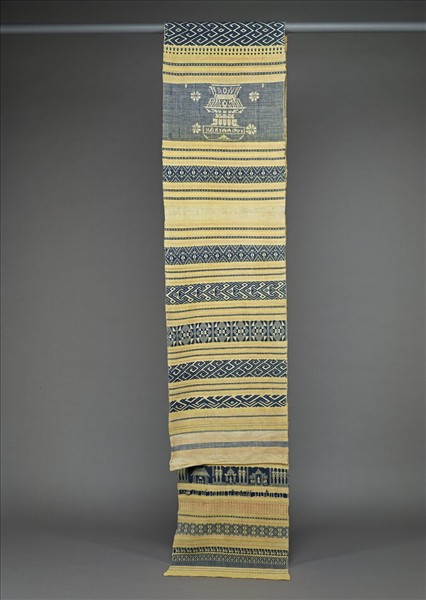
One object was the Lao banner 南購織000562. The official catalogue records a length of 413 centimetres and a width of 49 centimetres. The 2025 study describes a cotton ground woven with supplementary-weft patterns: temples, stupas, people, animals, offerings and geometric bands. Among them are words made in the weave and words written in ink.
A photograph could show the arrangement, but reading the words required another kind of knowledge. 杜士宜’s published acknowledgement names Suppawan Nongnut, a senior curator at the National Museum Bangkok, as assisting with both forms of lettering. The cross-sea work here was an exchange of interpretation: a collection in Taiwan benefited from a Thai colleague’s ability to read its surviving text.
A maker returns to the account
From the surviving letters, the study identifies the maker as Nang Plian and places the weaving in the Buddhist Era 2400s. It tentatively connects the offering to Pra Tat Tum Pa Wang, a temple in what is now Khammouan Province, Laos. Some lettering is blurred or missing, so the proposed temple connection remains open to further comparison.
The result changes how the object can be discussed. Alongside its woven buildings and animals, there is now an identifiable person and a possible dedication. The study explains that women’s banner offerings in these Buddhist traditions could express wishes and make merit for deceased relatives. That context helps a reader understand the practice; the damaged inscription does not supply a complete biography of Nang Plian or name every person remembered by the cloth.
Another banner adds bamboo to the story

A second object in the same study, 南購織001279, is catalogued as Thai. At 441 by 38 centimetres in the official record, it is longer and narrower than the Lao example. Its red ground and pale figures form a different material example. The study describes narrow bamboo strips woven with fine warp and weft threads, making a firm banner less liable to curl in the wind. Animals, buildings and geometric designs extend across its length.
The two collection numbers keep the examples distinct. The Thai banner illustrates a construction discussed by the researcher; it is not the Lao banner whose lettering Suppawan helped read. Together they show why a curator needs material description as well as language, and why a regional resemblance is only the beginning of an object’s explanation.
Take the questions to Chiayi
Start with the museum’s two online records, then read the 2025 discussion with the numbers beside you. Notice which information comes from measurements, which comes from reading words, and which is a proposed interpretation. A maker’s name and an uncertain temple connection can sit together in an account without making them equally certain.
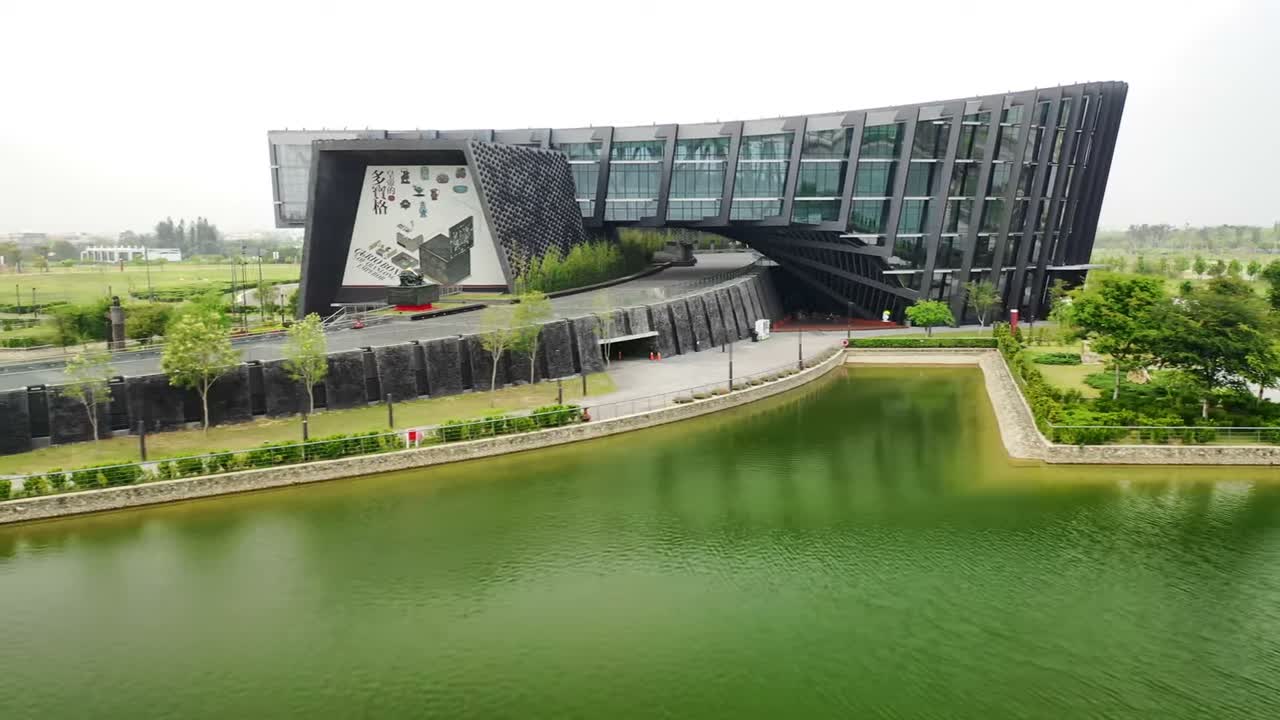
The Southern Branch in Taibao was the setting for the 2025 exhibition. Its current programme lists an Asian textile exhibition through 1 November 2026, so check the latest display before choosing a travel date. Neither original banner is confirmed on view now. In the galleries, follow the labels from material and technique to use: that is where a cloth’s appearance begins to connect with the people who made, offered and studied it.
Visit update — 6 November 2026: the 1 November 2026 end date quoted above has passed. Consult the current exhibition list before visiting. Display of these two banners remains unconfirmed.